
Kirjailija
William Thomas
Kirjat ja teokset yhdessä paikassa: 86 kirjaa, julkaisuja vuosilta 1996-2026, suosituimpien joukossa The Works of William Thomas, Clerk of the Privy Council in the Year 1549. Consisting of a Very Curious and Circumstancial Account of the Reign of King Henry the Eight. Vertaile teosten hintoja ja tarkista saatavuus suomalaisista kirjakaupoista.
86 kirjaa
Kirjojen julkaisuhaarukka 1996-2026.

Is it enough to insist that Germans were free, ultimately, either to refuse or go along with the Nazification of their society -- holding up as evidence of this freedom the relatively few who did attempt to subvert the process? Should the Holocaust itself be attributed to ideologically-driven will, on individual and collective levels? Can the conditions for its occurrence be traced to political "choices" made in the course of Germany's development, in its national character-formation? In short, is there a moral culpability here that can be identified and set into its proper categories, the roots of the evil named and thereby differentiated from forces of "Life"? Or is the Final Solution in fact a window onto some more fundamental or general catastrophe? In these Notes, William Thomas examines how interpretation of the Holocaust usually functions as a conceptual-moral buffering, e.g., in using it as an occasion for the reaffirmation of favored ideological or philosophical views -- as if we might after all gain a certain benefit from it... But there is no benefit, Thomas suggests; the catastrophe is endless -- thus no affirmation of life is possible now, without "euphemizing" the impact of the Final Solution and what was revealed in it...

This is the story of one of the great literary rows of the nineteenth century, between one of its greatest historians and one of its sharpest critics. The quarrel began in the House of Commons during the debates of 1831-2 on parliamentary reform and was continued in the quarterly reviews. Even in a political setting, it had a historical dimension. Croker taunted Macaulay for being ignorant of the French Revolution. Macaulay replied by pouring scorn on Croker's accuracy as editor of Boswell's Johnson. The bitterness of the clash made subsequent compromise impossible. Sixteen years later, Croker wrote a long damning review of the first two volumes of Macaulay's History of England. Posterity admires success, and as Macaulay's writings have eclipsed Croker's it has usually been assumed that Croker was moved by mere political spite. In this highly readable study, William Thomas shows that this verdict is unfair, that Croker's political opinions were both less rancorous and more interesting, and that Macaulay's own scholarship was far from faultless. He also considers each man's historical writing alongside his politics and argues that, while Croker's critical method was sharpened by his politics, Macaulay's political opinions were much more independent of party, and that he is not the typical Whig historian of legend. William Thomas illustrates how the two men actually had many ideas in common, and the commentators who have seen only political dislike have missed the real purpose of the History of England and what made it the most successful historical work in English literature.
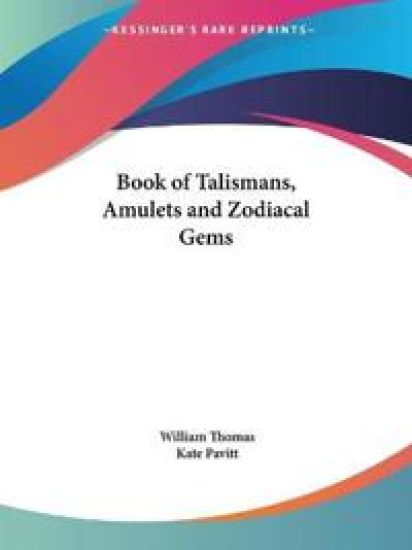
The Book of Talismans, Amulets and Zodiacal Gems - 1914
William Thomas; Kate Pavitt
Kessinger Pub
1997
pokkari
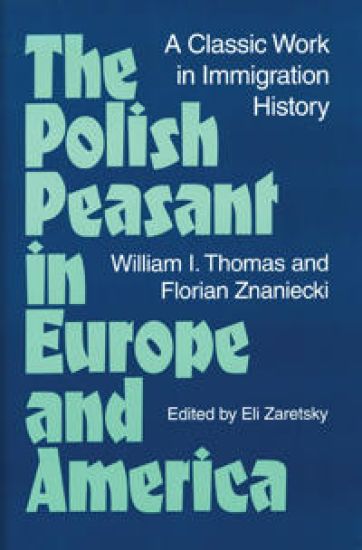
The Polish Peasant in Europe and America
William Thomas; Florian Znaniecki
University of Illinois Press
1996
nidottu
Focusing on the immigrant family, this new, abridged edition of the classic The Polish Peasant in Europe and America brings together documents and commentary that will be valuable in teaching United States history survey courses as well as immigration history and introductory sociology courses. It includes a new introduction and epilogue.