

Kirjailija
William Thompson
Kirjat ja teokset yhdessä paikassa: 50 kirjaa, julkaisuja vuosilta 1999-2025, suosituimpien joukossa Hidden N' the Light. Vertaile teosten hintoja ja tarkista saatavuus suomalaisista kirjakaupoista.
50 kirjaa
Kirjojen julkaisuhaarukka 1999-2025.





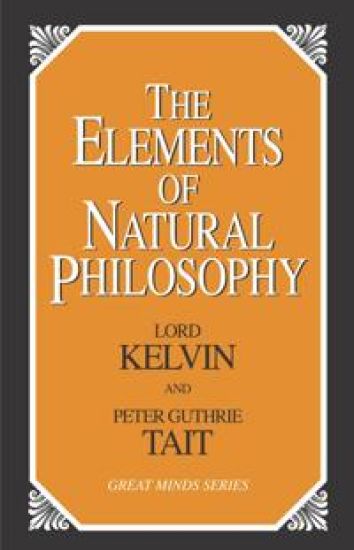
The Elements of Natural Philosophy
William Thompson; Lord Kelvin; Peter Guthrie Tait
Humanity Books
2002
pokkari
One of the most celebrated scientists of the 19th century, William Thomson, Lord Kelvin, was said to have more letters after his name than any man in the British Empire. His prodigious accomplishments included both theoretical insights and significant inventions. Among his contributions to theory were advances in hydrodynamics, an innovative synthesis of the mathematical relationship between electricity and heat, and major work in the second law of thermodynamics. In the practical realm he created the absolute temperature scale (which bears his name); worked on the development of the first transatlantic telegraph cable; and invented a telegraph receiver, a compass adopted by the British Admiralty, a form of analog computer for measuring tides, and sounding equipment. Always in the forefront of the leading scientists of the day, he collaborated with James Clerk Maxwell, Hermann von Helmholtz, James Prescott Joule, and Peter Guthrie Tait. The Elements of Natural Philosophy was done with Tait, a pioneering physicist and mathematician whose work in advanced algebra formed the basis of vector analysis and was instrumental in the later development of modern mathematical physics. An abridgement of their original Treatise on Natural Philosophy, this work was designed to be accessible to students with a basic knowledge of algebra, geometry, and trigonometry. As such it is a book that nonspecialists can still appreciate. Like Isaac Newton's great summation of "natural philosophy" in the late 17th century (The Principia Mathematica), this work remains of interest to historians of science because it represented a similar summation of the grand synthesis that scientists, building upon Newton's work, envisioned at the end of the 19th century. Not long after its publication, however, was the advent of relativity and quantum physics, which considerably changed and enlarged the picture of the natural world as conceived by earlier generations of scientists.

Environmental Regulation and Competitive Advantage
David Hitchens; Esmond Birnie; William Thompson; Ursula Triebswetter; Paolo Bertossi; Luciano Messori
Edward Elgar Publishing Ltd
2000
sidottu
This study focuses in detail on the environmental compliance/competitiveness relationship with respect to the regulation of packaging waste. An important and innovative feature of the study is its emphasis on backward and forward linkages. An entire supply chain is considered: packaging manufacturers and suppliers, food processors and the food retail sector, to study the competitive effects of environmental standards on manufacturing companies and the vertical links and supply responses. A variety of regulatory regimes is represented by including within the study companies from Germany, Italy, the Republic of Ireland and the United Kingdom. While it is of note that the relatively strong regulation in Germany has indeed had effects on company behaviour, there is no evidence that environmental regulations hindered companies from achieving competitive performance.Analyses consider: the response of individual firms to different levels of regulation; the cost of compliance; impact on employment; the influence of the supply chain on environmental and competitive performance; the importance of firm size and ownership; and the impact of regulation on competitiveness, and firm competitiveness on the efficiency of adjustment to regulation.
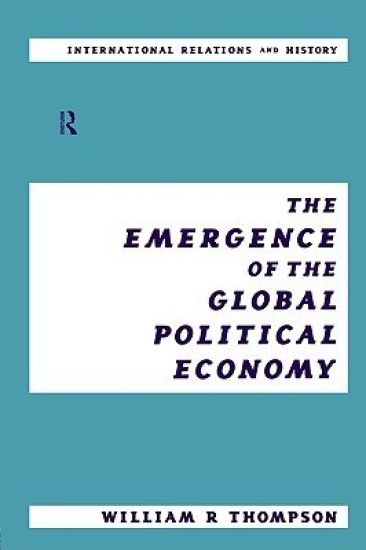
The Emergence of the Global Political Economy challenges the assumption that the international political economy is a recent phenomenon. Instead this volume asserts that the current global political economy began to take shape around 1500 and that some of today's key processes were already perceivable several hundred years ago.The book explains the interdependence between long-term economic growth, global political leadership and global war and how this interdependence has evolved over the last 500 years, and includes discussion of:*the ascendence of Western Europe and the significance of the 1490s *the military superiority thesis*sequences of leadership and of challenge to the global political economy*the importance of commodities from sugar and cloth to slaves and bullion*the Anglo-American rivalry until the First World War.
The Emergence of the Global Political Economy challenges the assumption that the international political economy is a recent phenomenon. Instead this volume asserts that the current global political economy began to take shape around 1500 and that some of today's key processes were already perceivable several hundred years ago.The book explains the interdependence between long-term economic growth, global political leadership and global war and how this interdependence has evolved over the last 500 years, and includes discussion of:*the ascendence of Western Europe and the significance of the 1490s *the military superiority thesis*sequences of leadership and of challenge to the global political economy*the importance of commodities from sugar and cloth to slaves and bullion*the Anglo-American rivalry until the First World War.