Kirjojen hintavertailu. Mukana 12 595 353 kirjaa ja 12 kauppaa.

Kirjailija

William V. Spanos

Kirjat ja teokset yhdessä paikassa: 14 kirjaa, julkaisuja vuosilta 1995-2020, suosituimpien joukossa The Legacy of Edward W. Said. Vertaile teosten hintoja ja tarkista saatavuus suomalaisista kirjakaupoista.

Mukana myös kirjoitusasut: William V Spanos

14 kirjaa

Kirjojen julkaisuhaarukka 1995-2020.

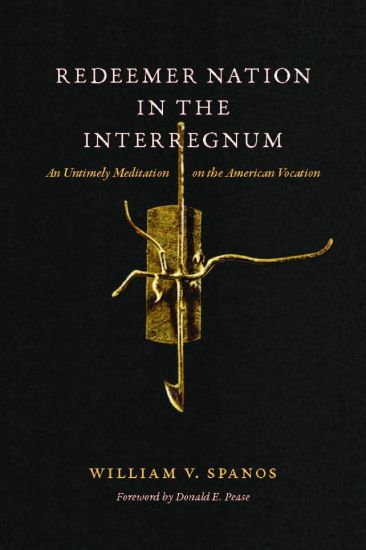
Redeemer Nation in the Interregnum

Redeemer Nation in the Interregnum

William V. Spanos; Donald E. Pease

Fordham University Press
2016
pokkari
Redeemer Nation in the Interregnum interrogates the polyvalent role that American exceptionalism continues to play after 9/11. Whereas American exceptionalism is often construed as a discredited Cold War–era belief structure, Spanos persuasively demonstrates how it operationalizes an apparatus of biopolitical capture that saturates the American body politic down to its capillaries. The exceptionalism that Redeemer Nation in the Interregnum renders starkly visible is not a corrigible ideological screen. It is a deeply structured ethos that functions simultaneously on ontological, moral, economic, racial, gendered, and political registers as the American Calling. Precisely by refusing to answer the American Calling, by rendering inoperative (in Agamben's sense) its covenantal summons, Spanos enables us to imagine an alternative America. At once timely and personal, Spanos's meditation acknowledges the priority of being. He emphasizes the dignity not simply of humanity but of all phenomena on the continuum of being, "the groundless ground of any political formation that would claim the name of democracy."
The Legacy of Edward W. Said

The Legacy of Edward W. Said

William V. Spanos

University of Illinois Press
2008
nidottu
With the untimely death of Edward W. Said in 2003, various academic and public intellectuals worldwide have begun to reassess the writings of this powerful oppositional intellectual. Figures on the neoconservative right have already begun to discredit Said’s work as that of a subversive intent on slandering America’s benign global image and undermining its global authority. On the left, a significant number of oppositional intellectuals are eager to counter this neoconservative vilification, proffering a Said who, in marked opposition to the “anti-humanism” of the great poststructuralist thinkers who were his contemporaries--Jacques Derrida, Jean-Francois Lyotard, Jacques Lacan, Louis Althusser, and Michel Foucault--reaffirms humanism and thus rejects poststructuralist theory.In this provocative assessment of Edward Said’s lifework, William V. Spanos argues that Said’s lifelong anti-imperialist project is actually a fulfillment of the revolutionary possibilities of poststructuralist theory. Spanos examines Said, his legacy, and the various texts he wrote--including Orientalism,Culture and Imperialism, and Humanism and Democratic Criticism--that are now being considered for their lasting political impact.
The Legacy of Edward W. Said

The Legacy of Edward W. Said

William V. Spanos

University of Illinois Press
2008
sidottu
With the untimely death of Edward W. Said in 2003, various academic and public intellectuals worldwide have begun to reassess the writings of this powerful oppositional intellectual. Figures on the neoconservative right have already begun to discredit Said’s work as that of a subversive intent on slandering America’s benign global image and undermining its global authority. On the left, a significant number of oppositional intellectuals are eager to counter this neoconservative vilification, proffering a Said who, in marked opposition to the “anti-humanism” of the great poststructuralist thinkers who were his contemporaries--Jacques Derrida, Jean-Francois Lyotard, Jacques Lacan, Louis Althusser, and Michel Foucault--reaffirms humanism and thus rejects poststructuralist theory.In this provocative assessment of Edward Said’s lifework, William V. Spanos argues that Said’s lifelong anti-imperialist project is actually a fulfillment of the revolutionary possibilities of poststructuralist theory. Spanos examines Said, his legacy, and the various texts he wrote--including Orientalism,Culture and Imperialism, and Humanism and Democratic Criticism--that are now being considered for their lasting political impact.
On the Ethical Imperatives of the Interregnum

On the Ethical Imperatives of the Interregnum

William V. Spanos

Springer International Publishing AG
2018
nidottu
This book is an autobiographical meditation on the way in which the world’s population has been transformed into a society of refugees and émigrés seeking –indeed, demanding– an alternative way of political belonging. Focusing on the interregnum we have precariously occupied since the end of World War II—and especially after 9/11— it constitutes a series of genealogical chapters that trace the author’s journey from his experience as a prisoner of war in Nazi Germany to the horrific fire-bombing of Dresden in February 1945. In doing so, it explores his search for an intellectual vocation adequate to the dislocating epiphany he experienced in bearing witness to these traumatising events. Having subsequently lost faith in the logic of belonging perpetuated by the nation-state, Spanos charts how he began to look in the rubble of that zero zone for an alternative way of belonging: one in which the old binary —whose imperative was based on the violence of the Friend/enemy opposition— wasreplaced by a paradoxical loving strife that enriched rather than negated the potential of each side. The chapters in this book trace this errant vocational itinerary, from the author’s early undergraduate engagement with Kierkegaard and Heidegger to Cornel West, moving from that disclosive occasion in the zero zone to this present moment.
Toward a Non-humanist Humanism

Toward a Non-humanist Humanism

William V. Spanos

State University of New York Press
2017
sidottu
Assesses the limits and possibilities of humanism for engaging with issues of pressing political and cultural concern.In his book The End of Education: Toward Posthumanism, William V. Spanos critiqued the traditional Western concept of humanism, arguing that its origins are to be found not in ancient Greece's love of truth and wisdom, but in the Roman imperial era, when those Greek values were adapted in the service of imperialism on a deeply rooted, metaphysical level. Returning to that question of humanism in the context of the United States' war on terror in the post-9/11 era, Toward a Non-humanist Humanism points out the dehumanizing dynamics of Western modernity in which the rule of law is increasingly made flexible to defend against threats both real and potential. Spanos considers and assesses the work of thinkers such as Giorgio Agamben, Alain Badiou, Judith Butler, Jacques Rancière, and Slavoj Žižek as humanistic reformers and concludes with an effort to imagine a different kind of humanism-a non-humanist humanism-in which the old binary of friend versus foe gives way to a coming community without ethnic, cultural, or sexual divisions.
On the Ethical Imperatives of the Interregnum

On the Ethical Imperatives of the Interregnum

William V. Spanos

Springer International Publishing AG
2017
sidottu
This book is an autobiographical meditation on the way in which the world’s population has been transformed into a society of refugees and émigrés seeking –indeed, demanding– an alternative way of political belonging. Focusing on the interregnum we have precariously occupied since the end of World War II—and especially after 9/11— it constitutes a series of genealogical chapters that trace the author’s journey from his experience as a prisoner of war in Nazi Germany to the horrific fire-bombing of Dresden in February 1945. In doing so, it explores his search for an intellectual vocation adequate to the dislocating epiphany he experienced in bearing witness to these traumatising events. Having subsequently lost faith in the logic of belonging perpetuated by the nation-state, Spanos charts how he began to look in the rubble of that zero zone for an alternative way of belonging: one in which the old binary —whose imperative was based on the violence of the Friend/enemy opposition— wasreplaced by a paradoxical loving strife that enriched rather than negated the potential of each side. The chapters in this book trace this errant vocational itinerary, from the author’s early undergraduate engagement with Kierkegaard and Heidegger to Cornel West, moving from that disclosive occasion in the zero zone to this present moment.
Redeemer Nation in the Interregnum

Redeemer Nation in the Interregnum

William V. Spanos; Donald E. Pease

Fordham University Press
2016
sidottu
Redeemer Nation in the Interregnum interrogates the polyvalent role that American exceptionalism continues to play after 9/11. Whereas American exceptionalism is often construed as a discredited Cold War–era belief structure, Spanos persuasively demonstrates how it operationalizes an apparatus of biopolitical capture that saturates the American body politic down to its capillaries. The exceptionalism that Redeemer Nation in the Interregnum renders starkly visible is not a corrigible ideological screen. It is a deeply structured ethos that functions simultaneously on ontological, moral, economic, racial, gendered, and political registers as the American Calling. Precisely by refusing to answer the American Calling, by rendering inoperative (in Agamben's sense) its covenantal summons, Spanos enables us to imagine an alternative America. At once timely and personal, Spanos's meditation acknowledges the priority of being. He emphasizes the dignity not simply of humanity but of all phenomena on the continuum of being, "the groundless ground of any political formation that would claim the name of democracy."

In the Neighborhood of Zero

In the Neighborhood of Zero

William V. Spanos

University of Nebraska Press
2010
sidottu
Like so many soldiers of his generation, William V. Spanos was not much more than a boy when he went off to fight in World War II. In the chaos of his first battle, what would later become legendary as the Battle of the Bulge, he was separated from his antitank gun crew and taken prisoner in the Ardennes forest. Along with a procession of other prisoners of war, he was marched and conveyed by freight train to Dresden. Surviving the brutal conditions of the labor camps and the Allies' devastating firebombing of the city, he escaped as the losing German army retreated. For Spanos, this was never a "war story." It was the singular, irreducible, unnameable, dreadful experience of war. In the face of the American myth of the greatest generation, this renowned literary scholar looks back at that time and crafts a dissident, dissonant remembrance of the "just war." Retrieving the singularity of the experience of war from the grip of official American cultural memory, Spanos recaptures something of the boy's life that he lost. His book is an attempt to rescue some semblance of his awakened being—and that of the multitude of young men who fought—from the oblivion to which they have been relegated under the banalizing memorialization of the "sacrifices of our greatest generation."
Herman Melville and the American Calling

Herman Melville and the American Calling

William V. Spanos

State University of New York Press
2009
pokkari
Argues that Herman Melville's later work anticipates the resurgence of an American exceptionalist ethos underpinning the U.S.-led global "war on terror."Oriented by the new Americanist perspective, this book constitutes a rereading of Herman Melville's most prominent fiction after Moby-Dick. In contrast to prior readings of this fiction, William V. Spanos's interpretation takes as its point of departure the theme of spectrality precipitated by the metaphor of orphanage-disaffiliation from the symbolic fatherland, on the one hand, and the myth of American exceptionalism on the other-that emerged as an abiding motif in Melville's creative imagination. This book voices an original argument about Melville's status as an "American" writer, and foregrounds Melville's remarkable anticipation and critique of the exceptionalism that continues to drive American policy in the post-9/11 era.
Herman Melville and the American Calling

Herman Melville and the American Calling

William V. Spanos

State University of New York Press
2008
sidottu
Argues that Herman Melville's later work anticipates the resurgence of an American exceptionalist ethos underpinning the U.S.-led global "war on terror."Oriented by the new Americanist perspective, this book constitutes a rereading of Herman Melville's most prominent fiction after Moby-Dick. In contrast to prior readings of this fiction, William V. Spanos's interpretation takes as its point of departure the theme of spectrality precipitated by the metaphor of orphanage-disaffiliation from the symbolic fatherland, on the one hand, and the myth of American exceptionalism on the other-that emerged as an abiding motif in Melville's creative imagination. This book voices an original argument about Melville's status as an "American" writer, and foregrounds Melville's remarkable anticipation and critique of the exceptionalism that continues to drive American policy in the post-9/11 era.
America's Shadow

America's Shadow

William V. Spanos

University of Minnesota Press
2000
nidottu
Examines the mind-set of Western imperialism from its origins in the Roman Empire to the Vietnam War.A study of imperialism that stretches from ancient Rome to the post–Cold War world, this provocative work boldly revises our assumptions about the genealogy of the West. Rather than locating its source in classical Greece, William V. Spanos argues, we should look to ancient Rome, which first articulated the ideas that would become fundamental to the West’s imperial project. These founding ideas, he claims, have informed the American national identity and its foreign policy from its origins.The Vietnam War is at the center of this book. In the contradiction between the “free world” logic used to justify U.S. intervention in Vietnam and the genocidal practices used to realize that logic, Spanos finds the culmination of an imperialistic discourse reaching back to the colonizing rationale of the Roman Empire. Spanos identifies the language of expansion in the “white” metaphors used in Western philosophical discourse since the colonization of Greek thought by the Romans. He shows how these metaphors, and their use in metaphysical discourse, have long been complicit in the violence of imperialism. Unique in the context of postcolonial studies, this book emphasizes what is largely overlooked by commentators on imperialism: its metaphysical source. By interpreting U.S. conduct in the Vietnam War as the fulfillment of the logic springing from ancient Rome, America’s Shadow calls on us to confront our past, our “truths,” and the imperialistic violence latent in our inherited frame of reference. It urges us to discover the positive critical and political possibilities that lie in an examination of the contradictions that haunt the language of Western thought.
The Errant Art of Moby-Dick

The Errant Art of Moby-Dick

William V. Spanos

Duke University Press
1995
pokkari
In The Errant Art of Moby-Dick, one of America’s most distinguished critics reexamines Melville’s monumental novel and turns the occasion into a meditation on the history and implications of canon formation. In Moby-Dick-a work virtually ignored and discredited at the time of its publication-William V. Spanos uncovers a text remarkably suited as a foundation for a "New Americanist" critique of the ideology based on Puritan origins that was codified in the canon established by "Old Americanist" critics from F. O. Matthiessen to Lionel Trilling. But Spanos also shows, with the novel still as his focus, the limitations of this "New Americanist" discourse and its failure to escape the totalizing imperial perspective it finds in its predecessor.Combining Heideggerian ontology with a sociopolitical perspective derived primarily from Foucault, the reading of Moby-Dick that forms the center of this book demonstrates that the traditional identification of Melville’s novel as a "romance" renders it complicitous in the discourse of the Cold War. At the same time, Spanos shows how New Americanist criticism overlooks the degree to which Moby-Dick anticipates not only America’s self-representation as the savior of the world against communism, but also the emergent postmodern and anti-imperial discourse deployed against such an image. Spanos’s critique reveals the extraordinary relevance of Melville’s novel as a post-Cold War text, foreshadowing not only the self-destructive end of the historical formation of the American cultural identity in the genocidal assault on Vietnam, but also the reactionary labeling of the current era as "the end of history."This provocative and challenging study presents not only a new view of the development of literary history in the United States, but a devastating critique of the genealogy of ideology in the American cultural establishment.
The Errant Art of Moby-Dick

The Errant Art of Moby-Dick

William V. Spanos

Duke University Press
1995
sidottu
In The Errant Art of Moby-Dick, one of America’s most distinguished critics reexamines Melville’s monumental novel and turns the occasion into a meditation on the history and implications of canon formation. In Moby-Dick-a work virtually ignored and discredited at the time of its publication-William V. Spanos uncovers a text remarkably suited as a foundation for a "New Americanist" critique of the ideology based on Puritan origins that was codified in the canon established by "Old Americanist" critics from F. O. Matthiessen to Lionel Trilling. But Spanos also shows, with the novel still as his focus, the limitations of this "New Americanist" discourse and its failure to escape the totalizing imperial perspective it finds in its predecessor.Combining Heideggerian ontology with a sociopolitical perspective derived primarily from Foucault, the reading of Moby-Dick that forms the center of this book demonstrates that the traditional identification of Melville’s novel as a "romance" renders it complicitous in the discourse of the Cold War. At the same time, Spanos shows how New Americanist criticism overlooks the degree to which Moby-Dick anticipates not only America’s self-representation as the savior of the world against communism, but also the emergent postmodern and anti-imperial discourse deployed against such an image. Spanos’s critique reveals the extraordinary relevance of Melville’s novel as a post-Cold War text, foreshadowing not only the self-destructive end of the historical formation of the American cultural identity in the genocidal assault on Vietnam, but also the reactionary labeling of the current era as "the end of history."This provocative and challenging study presents not only a new view of the development of literary history in the United States, but a devastating critique of the genealogy of ideology in the American cultural establishment.