Kirjojen hintavertailu. Mukana 12 458 677 kirjaa ja 12 kauppaa.
Kirjailija
William W. Fortenbaugh
Kirjat ja teokset yhdessä paikassa: 12 kirjaa, julkaisuja vuosilta 2002-2024, suosituimpien joukossa From Beaton's to Beach Haven: A Cat Ghost BH G. Vertaile teosten hintoja ja tarkista saatavuus suomalaisista kirjakaupoista.
William Fortenbaugh, Ph.D. (1964) in Classics, University of Pennsylvania is Professor Emeritus at Rutgers University. He is the author of Aristotle on Emotion, an edition of Theophrastus' work On Sweat, and commentaries on Theophrastus' rhetoric and ethics. In retirement, he came to recognize the unique value of a twenty-eight-foot wooden Catboat named Ghost, its construction and remarkable success on the race course are recorded in detail.
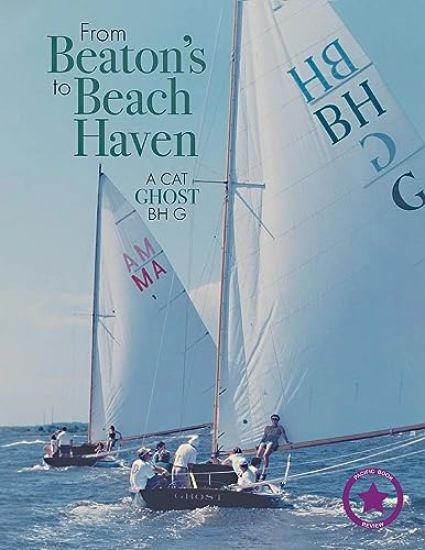
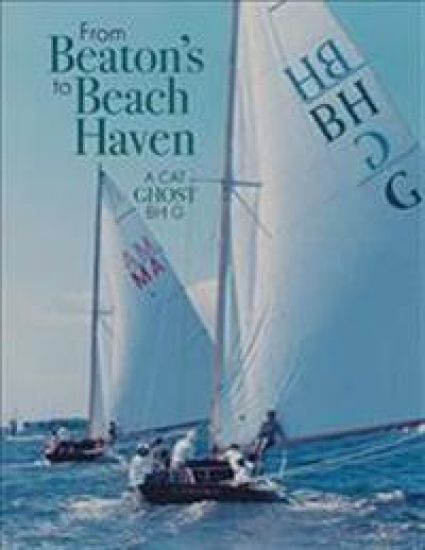
The present book focuses on a twenty-eight-foot wooden Catboat called Ghost. She belongs to a class of boats unique to Barnegat Bay in New Jersey. The class originated in 1922 and by 1924 was recognized as a racing class under the name A Cat. The class was seriously affected by the Great Depression, but it survived and began a renaissance in 1980, when David Beaton and Sons built Wasp, a new A Cat, following plans dating to 1923. Ghost was Beaton's second A Cat and was an immediate success. Not only did she win seven consecutive Bay championships, 1994-2000 but also exhibited extraordinary craftsmanship. We might say that Ghost was and remains a paradigm of excellence in the construction of wooden boats. Happily, the building process was photographed in detail and is now recorded in book form. Photos paired with explanation take the reader from making patterns and preparing the woodshop to a celebratory launch at Beaton's rigging dock. That is followed by an account of Ghost's initial disaster on the racecourse, a remarkable recovery and then twenty-two years of continuous competition. What made Ghost fast on the racecourse and what did not work are recorded for the reader's consideration. The conclusion focuses on Ghost's new home at the New Jersey Maritime Museum.
The present book focuses on a twenty-eight-foot wooden Catboat called Ghost. She belongs to a class of boats unique to Barnegat Bay in New Jersey. The class originated in 1922 and by 1924 was recognized as a racing class under the name A Cat. The class was seriously affected by the Great Depression, but it survived and began a renaissance in 1980, when David Beaton and Sons built Wasp, a new A Cat, following plans dating to 1923. Ghost was Beaton's second A Cat and was an immediate success. Not only did she win seven consecutive Bay championships, 1994-2000 but also exhibited extraordinary craftsmanship. We might say that Ghost was and remains a paradigm of excellence in the construction of wooden boats. Happily, the building process was photographed in detail and is now recorded in book form. Photos paired with explanation take the reader from making patterns and preparing the woodshop to a celebratory launch at Beaton's rigging dock. That is followed by an account of Ghost's initial disaster on the racecourse, a remarkable recovery and then twenty-two years of continuous competition. What made Ghost fast on the racecourse and what did not work are recorded for the reader's consideration. The conclusion focuses on Ghost's new home at the New Jersey Maritime Museum.
William Fortenbaugh, Ph.D. (1964) in Classics, University of Pennsylvania is Professor Emeritus at Rutgers University. He is the author of Aristotle on Emotion, an edition of Theophrastus' work On Sweat, and commentaries on Theophrastus' rhetoric and ethics. In retirement, he came to recognize the unique value of a twenty-eight-foot wooden Catboat named Ghost, its construction and remarkable success on the race course are recorded in detail.
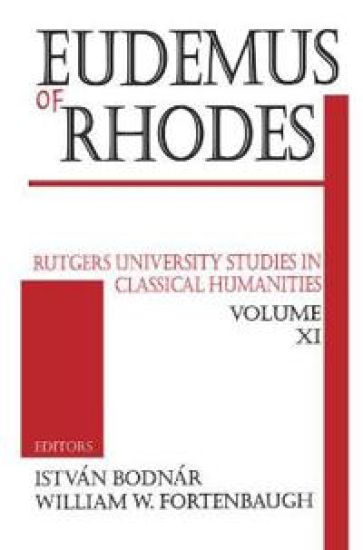
Eudemus of Rhodes was a pupil of Aristotle in the second half of the fourth century BCE. When Aristotle died, having chosen Theophrastus as his successor, Eudemus returned to Rhodes where it appears he founded his own school. His contributions to logic were significant: he took issue with Aristotle concerning the status of the existential "is," and together with Theophrastus he made important contributions to hypothetical syllogistic and modal logic. He wrote at length on physics, largely following Aristotle, and took an interest in animal behavior. His histories of geometry, arithmetic, and astronomy were of great importance and are responsible for much of what we know of these subjects in earlier times.Volume 11 in the series Rutgers Studies in Classical Humanities is different in that it is composed entirely of articles that discuss Eudemus from a variety of viewpoints. Sixteen scholars representing seven nations have contributed essays to the volume. A special essay by Dimitri Gutas brings together for the first time the Arabic material relating to Eudemus. Other contributors and essays are: Hans B. Gottschalk, "Eudemus and the Peripatos"; Tiziano Dorandi, "Quale aspetto controverso della biografia di Eudemo di Rodi"; William W. Fortenbaugh, "Eudemus' Work On Expression"; Pamela M. Huby, "Did Aristotle Reply to Eudemus and Theophrastus on Some Logical Issues?"; Robert Sharples, "Eudemus Physics: Change, Place and Time"; Han Baltussen, "Wehrli's Edition of Eudemus of Rhodes: The Physical Fragments from Simplicius' Commentary on Aristotle's Physics"; Sylvia Berryman, "Sumphues and Suneches: Continuity and Coherence in Early Peripatetic Texts"; Istvbn Bodnbr, "Eudemus' Unmoved Movers: Fragments 121-123b Wehrli"; Deborah K. W. Modrak, "Phantasia, Thought and Science in Eudemus"; Stephen White, "Eudemus the Naturalist"; J orgen Mejer, "Eudemus and the History of Science"; Leonid Zhmud, "Eudemus' History of Mathematics"; Alan C. Bowen, "Eudemus' History of Early Greek Astronomy: Two Hypotheses"; Dmitri Panchenko, "Eudemus Fr. 145 Wehrli and the Ancient Theories of Lunar Light"; and Gbbor Betegh, "On Eudemus Fr. 150 Wehrli.""[Eudemus of Rhodes] marks a substantial progress in our knowledge of Eurdemus. For it enlarges the scope of the information available on this author, highlights the need of, and paves the way to, a new critical edition of the Greek fragments of his works, and provides a clearer view of his life, thought, sources and influence. In all these respects, it represents a necessary complement to Wehrli's edition of Eudemus' fragments." -Amos Bertolacci, The Classical BulletinIstvbn Bodnbr is a member of the philosophy department at the Eotvos University in Budapest, where he teaches and does research on ancient philosophy. He has been a junior fellow at the Center for Hellenic Studies and most recently has been an Alexander von Humboldt Stipendiat in Berlin at the Max Plank Institut for Wissenschaftsgeschichte and at the Freie Universitot.William W. Fortenbaugh is professor of classics at Rutgers University. In addition to editing several books in this series, he has written Aristotle on Emotion and Quellen zur Ethik Theophrastus. New is his edition of Theophrastus's treatise On Sweat.
The present book focuses on a twenty-eight foot woodenCatboot called Ghost. She belongs to a class of boatsunique to Bornegat Boy in New Jersey. The classoriginated in 1922 and by 1924 was recognized asa racing class under the name A Cat. The class wasseriously affected by the Great Depression, but it survivedand began a renaissance in 1980, when David Beotonand Sons built Wasp, a new A Cat, following plansdating to i923. Ghost was Beaton's second A Cat andwas an immediate success. Not only did she win sevenconsecutive Bay championships, 1994-2000 but alsoexhibited extraordinary craftsmanship. We might saythat Ghost was and remains a paradigm of excellencein the construction oi wooden boats. Happily thebuilding process was photographed in detail and is nowrecorded in book form. Photos paired with explanationtake the reader from making patterns and preparing thewoodshop to a celebratory launch at Beaton's riggingdock. That is followed by an account of Ghost's initialdisaster on the race course, a remarkable recovery andthen twenty-two years of continuous competition. Whatmade Ghost fast on the race course and what did notwork are recorded for the reader's consideration. Theconclusion focuses on Ghost's new home at the NewJersey Maritime Museum.
The present book focuses on a twenty-eight foot woodenCatboot called Ghost. She belongs to a class of boatsunique to Bornegat Boy in New Jersey. The classoriginated in 1922 and by 1924 was recognized asa racing class under the name A Cat. The class wasseriously affected by the Great Depression, but it survivedand began a renaissance in 1980, when David Beotonand Sons built Wasp, a new A Cat, following plansdating to i923. Ghost was Beaton's second A Cat andwas an immediate success. Not only did she win sevenconsecutive Bay championships, 1994-2000 but alsoexhibited extraordinary craftsmanship. We might saythat Ghost was and remains a paradigm of excellencein the construction oi wooden boats. Happily thebuilding process was photographed in detail and is nowrecorded in book form. Photos paired with explanationtake the reader from making patterns and preparing thewoodshop to a celebratory launch at Beaton's riggingdock. That is followed by an account of Ghost's initialdisaster on the race course, a remarkable recovery andthen twenty-two years of continuous competition. Whatmade Ghost fast on the race course and what did notwork are recorded for the reader's consideration. Theconclusion focuses on Ghost's new home at the NewJersey Maritime Museum.
Providing the only full-length study of the compendium of Greek philosophy attributed to Arius Didymus, court philosopher to the Roman emperor Caesar Augustus, this volume elucidates Stoic and Peripatetic ethics for classicists and philosophers. The authors provide careful textual analysis of important passages by this synthesizer of the major schools of Greek thought. Essays include translations of major passages.
When "Aristotle on Emotion" was first published it showed how discussion within Plato's Academy led to a better understanding of emotional response, and how that understanding influenced Aristotle's work in rhetoric, poetics, politics and ethics. The subject has been much discussed since then: there are numerous articles, anthologies and large portions of books on emotion and related topics. In a new epilogue to this second edition, W.W. Fortenbaugh takes account of points raised by other scholars and clarifies some of his earlier thoughts, focusing on the central issue: how Aristotle conceived of emotional response. Among other matters, he considers laughter, emotion in relation to belief and appearance, the effect of emotion on judgement, and the involvement of pain and pleasure in emotional response.
Providing the only full-length study of the compendium of Greek philosophy attributed to Arius Didymus, court philosopher to the Roman emperor Caesar Augustus, this volume elucidates Stoic and Peripatetic ethics for classicists and philosophers. The authors provide careful textual analysis of important passages by this synthesizer of the major schools of Greek thought. Essays include translations of major passages.
Eudemus of Rhodes was a pupil of Aristotle in the second half of the fourth century BCE. When Aristotle died, having chosen Theophrastus as his successor, Eudemus returned to Rhodes where it appears he founded his own school. His contributions to logic were significant: he took issue with Aristotle concerning the status of the existential "is," and together with Theophrastus he made important contributions to hypothetical syllogistic and modal logic. He wrote at length on physics, largely following Aristotle, and took an interest in animal behavior. His histories of geometry, arithmetic, and astronomy were of great importance and are responsible for much of what we know of these subjects in earlier times.Volume 11 in the series Rutgers Studies in Classical Humanities is different in that it is composed entirely of articles that discuss Eudemus from a variety of viewpoints. Sixteen scholars representing seven nations have contributed essays to the volume. A special essay by Dimitri Gutas brings together for the first time the Arabic material relating to Eudemus. Other contributors and essays are: Hans B. Gottschalk, "Eudemus and the Peripatos"; Tiziano Dorandi, "Quale aspetto controverso della biografia di Eudemo di Rodi"; William W. Fortenbaugh, "Eudemus' Work On Expression"; Pamela M. Huby, "Did Aristotle Reply to Eudemus and Theophrastus on Some Logical Issues?"; Robert Sharples, "Eudemus Physics: Change, Place and Time"; Han Baltussen, "Wehrli's Edition of Eudemus of Rhodes: The Physical Fragments from Simplicius' Commentary on Aristotle's Physics"; Sylvia Berryman, "Sumphues and Suneches: Continuity and Coherence in Early Peripatetic Texts"; Istvbn Bodnbr, "Eudemus' Unmoved Movers: Fragments 121-123b Wehrli"; Deborah K. W. Modrak, "Phantasia, Thought and Science in Eudemus"; Stephen White, "Eudemus the Naturalist"; J orgen Mejer, "Eudemus and the History of Science"; Leonid Zhmud, "Eudemus' History of Mathematics"; Alan C. Bowen, "Eudemus' History of Early Greek Astronomy: Two Hypotheses"; Dmitri Panchenko, "Eudemus Fr. 145 Wehrli and the Ancient Theories of Lunar Light"; and Gbbor Betegh, "On Eudemus Fr. 150 Wehrli.""[Eudemus of Rhodes] marks a substantial progress in our knowledge of Eurdemus. For it enlarges the scope of the information available on this author, highlights the need of, and paves the way to, a new critical edition of the Greek fragments of his works, and provides a clearer view of his life, thought, sources and influence. In all these respects, it represents a necessary complement to Wehrli's edition of Eudemus' fragments." -Amos Bertolacci, The Classical BulletinIstvbn Bodnbr is a member of the philosophy department at the Eotvos University in Budapest, where he teaches and does research on ancient philosophy. He has been a junior fellow at the Center for Hellenic Studies and most recently has been an Alexander von Humboldt Stipendiat in Berlin at the Max Plank Institut for Wissenschaftsgeschichte and at the Freie Universitot.William W. Fortenbaugh is professor of classics at Rutgers University. In addition to editing several books in this series, he has written Aristotle on Emotion and Quellen zur Ethik Theophrastus. New is his edition of Theophrastus's treatise On Sweat.