

Kirjailija
William Walker Atkinson
Kirjat ja teokset yhdessä paikassa: 860 kirjaa, julkaisuja vuosilta 1908-2026, suosituimpien joukossa Thought Vibration. Vertaile teosten hintoja ja tarkista saatavuus suomalaisista kirjakaupoista.
860 kirjaa
Kirjojen julkaisuhaarukka 1908-2026.
Thought Vibration or the Law of Attraction in the Thought World (1906)
William Walker Atkinson
Kessinger Pub
1997
pokkari
Dynamic Thought or the Law of Vibrant Energy (1906)
William Walker Atkinson
Kessinger Pub
1997
pokkari
The Subconscious and the Superconscious Planes of Mind - 1909
William Walker Atkinson
Kessinger Pub
1997
pokkari


Your Mind and How to Use It is a practical guide to the psychology and science of the mind. These self-help writings offer wisdom regarding consciousness, perception, mental state, imagination and memory, emotion, laws of thought and how the mind cooperates with the physical for manifestation. As one of the leaders of the influential New Thought movement, author William Walker Atkinson had an unshakable belief in the power of the human mind -- and he was convinced that most of us fail to fully tap into its remarkable capabilities. This book offers an interesting overview of the basic principles of what Atkinson calls "practical psychology," including actionable tips and techniques to begin to make use of the innate powers of the human mind.
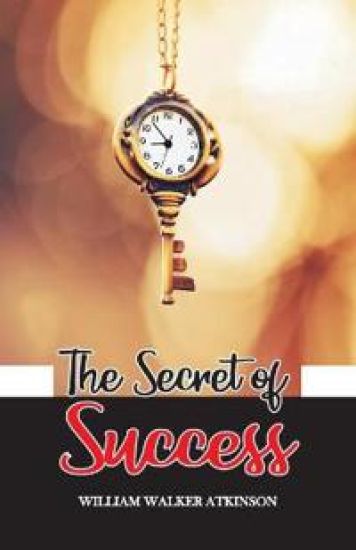
The Secret of Success is an important motivational book written by author William Walker Atkinson. Atkinson teaches in this work that individuality is inherent in each of us, and which may be developed and brought into activity in each one of us if we go about it right. Individuality is the expression of our Self - that Self which is what we mean when we say "I". Each of us is an Individual - an "I" - differing from every other "I" in the universe, so far as personal expression is concerned. And in the measure that we express and unfold the powers of that "I", so are we great, strong and successful. We all "have it in us" - it depends upon us to get it out into Expression. And, this Individual Expression lies at the heart of the "Secret of Success". And that is why we use the term - and that is what we shall tell you about in this little book. It will pay for you to learn this "Secret".
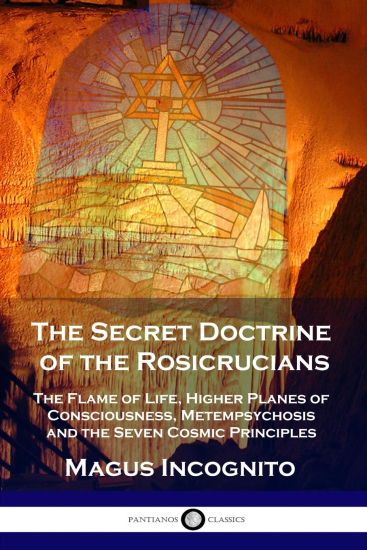
The Secret Doctrine of the Rosicrucians
Magus Incognito; William Walker Atkinson
Pantianos Classics
1918
pokkari
This superb study explains the spiritual doctrines of the Rosicrucian order, and the esoteric and occultist knowledge which the group has researched and taught for centuries.Founded in the early 17th century, the Rosicrucian order began as a curiosity - a group of individuals citing ancient knowledge of Egyptian and other spiritual orders. With this knowledge, these sages were said to understand the interplay between the physical world and the spiritual planes, and the relationship of the human soul to these multiple realms of consciousness. Such vivid and striking claims attracted popular attention; for centuries to follow the Rosicrucian order has remained manifest in one form or another.William Walker Atkinson, writing here under one of his pseudonyms - "Magus Incognito" - begins with a summary concerning the Rosicrucians. He then delves sequentially into matters of alchemy, the multifaceted nature of the soul, and the relationships between our lives in the physical reality and the realms beyond. He explores the symbolism inherent to the occult, the phrases and terms esoteric investigators use, cogently revealing the broad range of doctrines that have developed over generations.
Theron Q. Dumont demonstrates various intricate and advanced thought processes, writing about how to employ them in order to achieve The Master Mind.For the author, individuals are split into two categories. Firstly, there are those who possess normal, sub-optimal minds; this group comprises the vast majority of humanity. The second group are those who, whether through conscious effort of will, self-belief, mindfulness or otherwise have achieved a higher, self-actualized state; those with a 'Master Mind'. Through sheer conscious will, and careful tending over a span of months and years, such a mind can be cultivated. This practical and instructive text tells us how to properly make use of our mental faculties, that we may increase our mental efficiency and thereby achieve goals in life. Such success may be simply intellectual; the desire to learn and recall knowledge as a good unto itself. It may be related to lifestyle; an outlook required to succeed in life and career. Or it may be related to desire; achieving one's material or other aspirations. William Walker Atkinson - who writes here under his pen name of Theron Q. Dumont - spent years devising methods of thought organization and categorization. The interplay of emotion, will and desire fascinated the author, who spent his multi-faceted career utilizing his brain as a merchant, lawyer, writer and publisher.
William Walker Atkinson, an attorney by trade, explains different kinds of logic and reasoning - deductive, inductive and hypothetical.The author begins by describing how the mind forms ideas and concepts, and then subjects these to the mental processes of higher reasoning. The memory stores a repository of terms, which are different from concepts in that they apply exclusively to the name of things. Through reasoning the mind can arrive at a judgment of a given thing or idea, and through simple distinction can reject what is false - for instance, the notion that a horse is a cow.Moving on from these simple examples, Atkinson describes how complex judgments and analyses are formed by the mind. Piecing together an accurate chain of events forms a kind of inductive reasoning - for example, if several people enters a store empty-handed, and later emerge with bags of fruit and vegetables, is it sensible to infer that it is a grocery store. Deriving conclusions from facts and events is forming a hypothesis; with the use of information, assertions can be made to arrive at a sensible conclusion - without personally entering said store, based on known facts it is credible to hypothesize that it sells groceries.
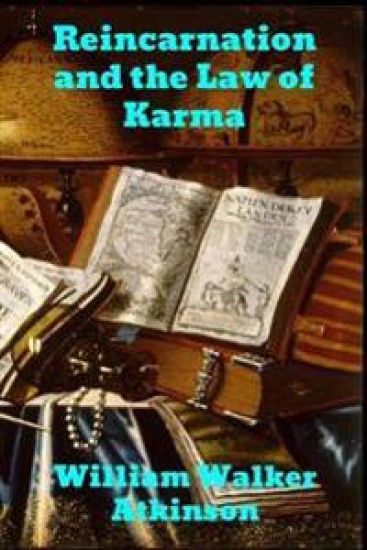
By "Reincarnation" we mean the repeated incarnation, or embodiment in flesh, of the soul or immaterial part of man's nature. The term "Metempsychosis" is frequently employed in the same sense, the definition of the latter term being: "The passage of the soul, as an immortal essence, at the death of the body, into another living body." The term "Transmigration of Souls" is sometimes employed, the term being used in the sense of "passing from one body into another." But the term "Transmigration" is often used in connection with the belief of certain undeveloped races who held that the soul of men sometimes passed into the bodies of the lower animals, as a punishment for their sins committed during the human life. But this belief is held in disrepute by the adherents of Reincarnation or Metempsychosis, and has no connection with their philosophy or beliefs, the ideas having sprung from an entirely different source, and having nothing in common. There are many forms of belief--many degrees of doctrine--regarding Reincarnation, as we shall see as we proceed, but there is a fundamental and basic principle underlying all of the various shades of opinion, and divisions of the schools. This fundamental belief may be expressed as the doctrine that there is in man an immaterial Something (called the soul, spirit, inner self, or many other names) which does not perish at the death or disintegration of the body, but which persists as an entity, and after a shorter or longer interval of rest reincarnates, or is re-born, into a new body--that of an unborn infant--from whence it proceeds to live a new life in the body, more or less unconscious of its past existences, but containing within itself the "essence" or results of its past lives, which experiences go to make up its new "character," or "personality." It is usually held that the rebirth is governed by the law of attraction, under one name or another, and which law operates in accordance with strict justice, in the direction of attracting the reincarnating soul to a body, and conditions, in accordance with the tendencies of the past life, the parents also attracting to them a soul bound to them by some ties in the past, the law being universal, uniform, and equitable to all concerned in the matter. This is a general statement of the doctrine as it is generally held by the most intelligent of its adherents.