Kirjailija
William Wordsworth
Kirjat ja teokset yhdessä paikassa: 460 kirjaa, julkaisuja vuosilta 1959-2026, suosituimpien joukossa Peter Bell. Vertaile teosten hintoja ja tarkista saatavuus suomalaisista kirjakaupoista.
460 kirjaa
Kirjojen julkaisuhaarukka 1959-2026.

Ever since dogs came to warm themselves at a crackling fire, rejecting the wild and taking their place as 'man's best friend' it's likely that humans have written poetry about their canine shadows. This lovely hardback edition collects poems about all kinds of dogs, from Walter Raleigh's ode 'To a Lady With an Unruly and Ill-Mannered Dog Who Bit Several Persons of Importance' to William Cowper's delight at being presented with a water-lily by his adored spaniel. It's a wonderful gift for anyone with an affinity for dogs.
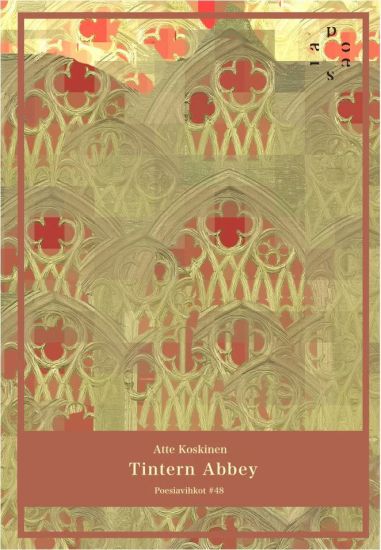
Tintern Abbey (Poesiavihkot #48) koostuu William Wordsworthin runon ”Lines Written a Few Miles Above Tintern Abbey, on Revisiting the Banks of the Wye During a Tour. July 13, 1798” silosäesuomennoksesta ja tuota runoa käsittelevästä esseestä. Esseessään Koskinen kulkee Wordsworthin runon kautta topografisen runouden, maiseman, kirjoittamisen ja muistamisen kysymyksiin. Millä tavoin paikka voi kirjoituttaa itsensä? Voiko muisto paikasta kohota tärkeämmäksi kuin paikka itse? Mikä on kirjoittamisen suhde etäisyyteen, niin ajalliseen kuin tilalliseen? Koskisen silosäkeinen suomennos on vaikuttava esitys mitallisen runouden mahdollisuuksista ajatella - ja olla - toisin. Vihkon loppuun on liitetty mukaan runon alkukielinen versio.
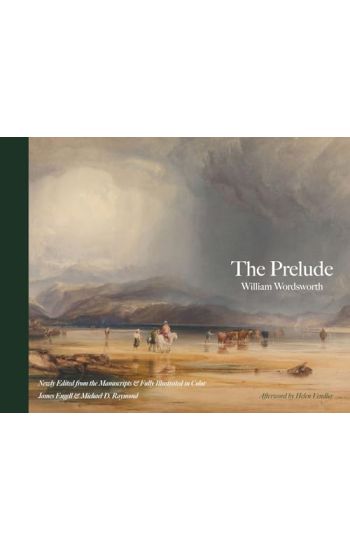
A gorgeous new edition of the definitive text of Wordsworth’s The Prelude, with full-color contemporaneous illustrations that illuminate this epic poem. With a new afterword by Helen Vendler. The Prelude, William Wordsworth’s masterful autobiographical work composed in blank verse, is generally considered the poem at the heart of the Romantic movement and one of the great poems in the English language. In this fully illustrated and annotated edition, the work receives the treatment it deserves. Inspired by his dear friend, Samuel Taylor Coleridge, the poem charts the development of the author’s mind from childhood to his experiences in Cambridge, London, the Alps, and France, touching on subjects ranging from leisure to literature, nature to imagination, and everything in between. A meditation on the self, this work still stands as a masterpiece of English literature and is here complemented and enhanced by two hundred contemporaneous color plates that illuminate the text. Scrupulously selected and newly re-edited from the definitive manuscripts in existence, the marginal notes and glosses provide an extra touch that makes this a truly enlightening reading experience. Helen Vendler’s afterword is an appreciation of the poem which also puts in it context for American readers.
Peter Bell (1819) by: William Wordsworth. / Poetry /
William Wordsworth
Createspace Independent Publishing Platform
2017
nidottu
English romantic poet who, with Samuel Taylor Coleridge, helped launch the Romantic Age in English literature. Works include Lyrical Ballads William Wordsworth (7 April 1770 - 23 April 1850) was a major English Romantic poet who, with Samuel Taylor Coleridge, helped to launch the Romantic Age in English literature with their joint publication Lyrical Ballads (1798). Wordsworth's magnum opus is generally considered to be The Prelude, a semi-autobiographical poem of his early years that he revised and expanded a number of times. It was posthumously titled and published, before which it was generally known as "the poem to Coleridge". Wordsworth was Britain's poet laureate from 1843 until his death from pleurisy on 23 April 1850.The second of five children born to John Wordsworth and Ann Cookson, William Wordsworth was born on 7 April 1770 in Wordsworth House in Cockermouth, Cumberland, part of the scenic region in northwestern England known as the Lake District. His sister, the poet and diarist Dorothy Wordsworth, to whom he was close all his life, was born the following year, and the two were baptised together. They had three other siblings: Richard, the eldest, who became a lawyer; John, born after Dorothy, who went to sea and died in 1805 when the ship of which he was captain, the Earl of Abergavenny, was wrecked off the south coast of England; and Christopher, the youngest, who entered the Church and rose to be Master of Trinity College, Cambridge

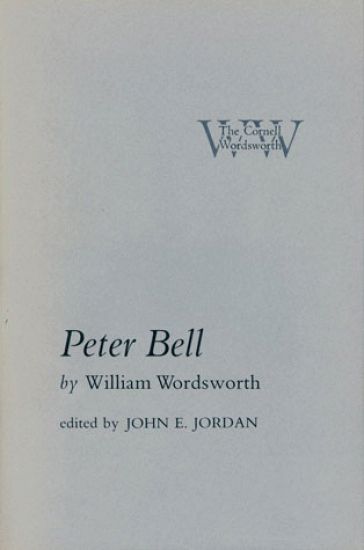
Peter Bell (1819). By: William Wordsworth: Peter Bell: A Tale in Verse is a long narrative poem by William Wordsworth, written in 1798, but n
William Wordsworth
Createspace Independent Publishing Platform
2017
nidottu
Peter Bell: A Tale in Verse is a long narrative poem by William Wordsworth, written in 1798, but not published until 1819. Synopsis: In a tone of straight-faced humour the prologue tells of the poet's travels over the face of the earth and through the heavens in a boat of the imagination, which urges him to choose some exotic or otherworldly theme. The poet rejects the suggestion, and opts for the more homely subject of Peter Bell. The poem proper begins with a description of him as a hard-hearted sinner, impervious to the softening influence of nature, who makes his living as an itinerant hawker (or potter, in Wordsworth's northern expression) of earthenware. One night, while walking through Swaledale by night, he loses his way. He comes across an ass standing untended, gazing into the river Swale, and he tries to ride away on it, but the ass does not respond to his furious beating of it. Peter sees the face of a corpse in the river, and faints from shock. On recovering consciousness he drags the dead man, once the owner of the ass, onto dry land. The ass now consents to start for home, taking Peter with him. A loud cry is heard in the distance, which, though Peter does not know it, comes from the dead man's young son, who is searching for his father. Unnerved by this, and by the sight of the bloody wounds he has inflicted on the ass, Peter begins to feel unaccustomed pangs of conscience. His mind turns to his many past sins, and as he passes an outdoor Methodist meeting his heart responds to the preacher's calls for repentance. The ass reaches the home of the dead man, whose wife is waiting for him. She learns that she is a widow, and her children orphans. And now is Peter taught to feel That man's heart is a holy thing; And Nature, through a world of death, Breathes into him a second breath, More searching than the breath of spring. The poem closes with Peter downcast by his experiences, but eventually emerging as a better man.......... William Wordsworth (7 April 1770 - 23 April 1850) was a major English Romantic poet who, with Samuel Taylor Coleridge, helped to launch the Romantic Age in English literature with their joint publication Lyrical Ballads (1798). Wordsworth's magnum opus is generally considered to be The Prelude, a semiautobiographical poem of his early years that he revised and expanded a number of times. It was posthumously titled and published, before which it was generally known as "the poem to Coleridge".Wordsworth was Britain's Poet Laureate from 1843 until his death from pleurisy on 23 April 1850. Early life: Main article: Early life of William Wordsworth The second of five children born to John Wordsworth and Ann Cookson, William Wordsworth was born on 7 April 1770 in Wordsworth House in Cockermouth, Cumberland, part of the scenic region in northwestern England known as the Lake District. His sister, the poet and diarist Dorothy Wordsworth, to whom he was close all his life, was born the following year, and the two were baptised together. They had three other siblings: Richard, the eldest, who became a lawyer; John, born after Dorothy, who went to sea and died in 1805 when the ship of which he was captain, the Earl of Abergavenny, was wrecked off the south coast of England; and Christopher, the youngest, who entered the Church and rose to be Master of Trinity College, Cambridge. Wordsworth's father was a legal representative of James Lowther, 1st Earl of Lonsdale and, through his connections, lived in a large mansion in the small town. He was frequently away from home on business, so the young William and his siblings had little involvement with him and remained distant from him until his death in 1783. However, he did encourage William in his reading, and in particular set him to commit to memory large portions of verse, including works by Milton, Shakespeare and Spenser.....
In this series, a contemporary poet selects and introduces a poet of the past. By their choice of poems and by the personal and critical reactions they express in their prefaces, the editors offer insights into their own work as well as providing an accessible and passionate introduction to the most important poets in our literature.Earth has not anything to show more fair:Dull would he be of soul who could pass by A sight so touching in its majesty . . .-- Composed Upon Westminster Bridge,September 3, 1802
Peter Bell. a Lyrical Ballad. [by J. H. Reynolds. Signed
John Hamilton Reynolds; William Wordsworth
British Library, Historical Print Editions
2011
pokkari

Collection Of Poems From Various Authors
Mary Howitt; Isaac Watts; William Wordsworth
KESSINGER PUBLISHING CO
2009
pokkari
Collection Of Poems From Various Authors
Mary Howitt; Isaac Watts; William Wordsworth
KESSINGER PUBLISHING CO
2009
muu


A Selection From The Sonnets Of William Wordsworth
William Wordsworth; Alfred (ILT) Parsons
Kessinger Pub
2007
pokkari
The Poetical Works Of William Wordsworth
William Wordsworth; Thomas (EDT) Hutchinson
Kessinger Pub
2007
pokkari
The Poetical Works Of William Wordsworth
William Wordsworth; Thomas (EDT) Hutchinson
Kessinger Pub
2007
pokkari


In this series, a contemporary poet selects and introduces a poet of the past. By their selection of verses and by the personal and critical reactions they express in their introductions, the selectors offer a passionate and accessible introduction to some of the greatest poets in history. William Wordsworth (1770-1850) was born in Cockermouth, Cumberland. In 1798 he published the Lyrical Ballads with Coleridge, settling shortly after in Dove Cottage, Grasmere, with his sister Dorothy. He died at Rydal Mount in 1850, shortly before the posthumous publication of that landmark of English Romanticism, The Prelude.
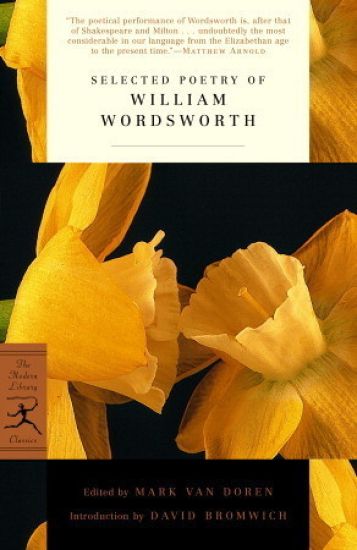
Selected Poetry of William Wordsworth represents Wordsworth’s prolific output, from the poems first published in Lyrical Ballads in 1798 that changed the face of English poetry to the late “Yarrow Revisited.” Wordsworth’s poetry is celebrated for its deep feeling, its use of ordinary speech, the love of nature it expresses, and its representation of commonplace things and events. As Matthew Arnold notes, “[Wordsworth’s poetry] is great because of the extraordinary power with which [he] feels the joy offered to us in nature, the joy offered to us in the simple elementary affections and duties.”