Kirjailija
Williamson Murray
Kirjat ja teokset yhdessä paikassa: 25 kirjaa, julkaisuja vuosilta 1999-2025, suosituimpien joukossa The Iran–Iraq War. Vertaile teosten hintoja ja tarkista saatavuus suomalaisista kirjakaupoista.
25 kirjaa
Kirjojen julkaisuhaarukka 1999-2025.
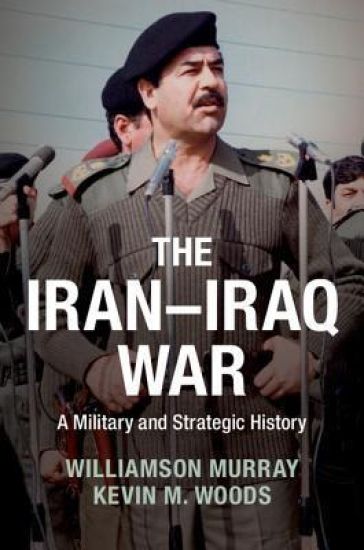
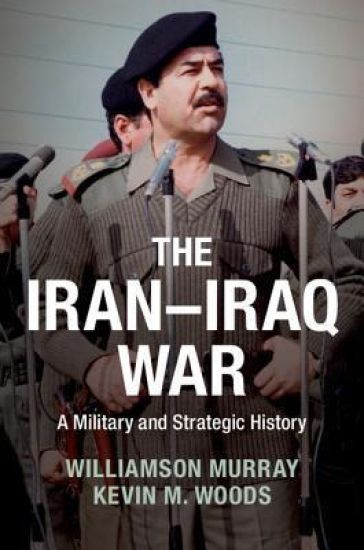
The Iran-Iraq War is one of the largest, yet least documented conflicts in the history of the Middle East. Drawing from an extensive cache of captured Iraqi government records, this book is the first comprehensive military and strategic account of the war through the lens of the Iraqi regime and its senior military commanders. It explores the rationale and decision-making processes that drove the Iraqis as they grappled with challenges that, at times, threatened their existence. Beginning with the bizarre lack of planning by the Iraqis in their invasion of Iran, the authors reveal Saddam's desperate attempts to improve the competence of an officer corps that he had purged to safeguard its loyalty to his tyranny, and then to weather the storm of suicidal attacks by Iranian religious revolutionaries. This is a unique and important contribution to our understanding of the history of war and the contemporary Middle East.
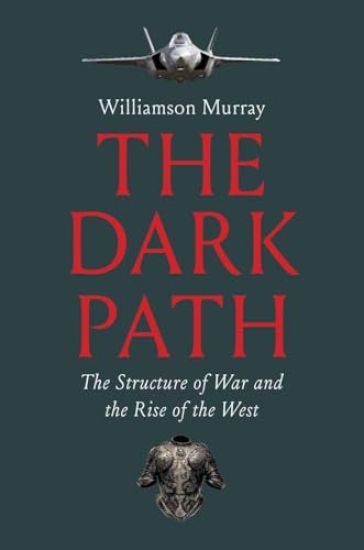
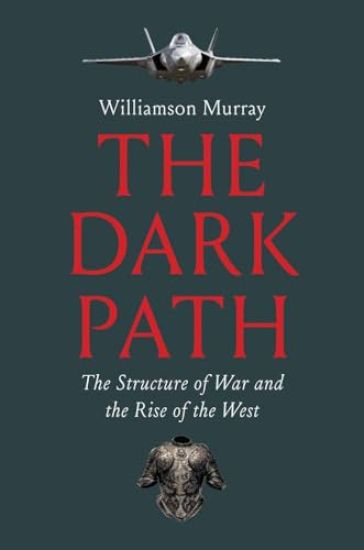
From an esteemed military historian, a sweeping history of the revolutions in war-fighting that have shaped the modern world Heraclitus wrote that “war is the father of all,” and it has formed much of the modern world. Although the fundamental nature of war has not altered over the centuries, constant change, innovation, and adaptation have repeatedly reshaped how wars are fought in the West. Revolutions in military practice cannot be separated from larger social developments in areas like logistics, finance and economics, and the culture of military organizations. In The Dark Path, Williamson Murray argues that the history of warfare in the West hinged on five revolutions, which both reflected the social, political, and economic conditions that produced them and in turn influenced how those conditions evolved. These five key turning points are the advent of the modern state, which formed bureaucracies and professional militaries; the Industrial Revolution, which produced the financial and industrial means to sustain and equip large armies; the French Revolution, which provided the ideological basis needed to sustain armies through continent-sized wars; the merging of the Industrial and French Revolutions in the U.S. Civil War; and the accelerating integration of technological advancement, financial capacity, ideology, and government that unleashed the modern capacity for total warfare. An ambitious work of synthesis, this book shows how the world continually re-creates war—and how war, in turn, continually re-creates the world.
This book, first published in 1985, is an in-depth analysis of the Luftwaffe in the Second World War, using previously untapped German archives and newly-released ‘Ultra’ intelligence records. It looks at the Luftwaffe within the context of the overall political decision-making process within the Third Reich. It is especially valuable for its careful study of industrial production and pilot losses in the conduct of operations.
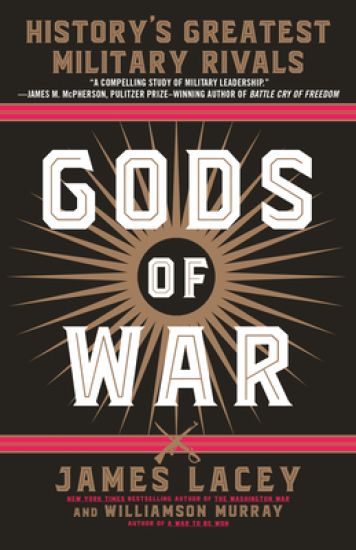
Hannibal vs. Scipio. Grant vs. Lee. Rommel vs. Patton. The greatest battles, commanders, and rivalries of all time come to life in this engrossing guide to the geniuses of military history. "A compelling study of military leadership."--James M. McPherson, Pulitzer Prize-winning author of Battle Cry of Freedom Any meeting of genius may create sparks, but when military geniuses meet, their confrontations play out upon a vast panorama of states or civilizations at war, wielding the full destructive power of a mighty nation's armies. Gods of War is the first single-volume, in-depth examination of the most celebrated military rivalries of all time, and of the rare, world-changing battles in which these great commanders in history matched themselves against true equals. From Caesar and Pompey deciding the fate of the Roman Republic, to Grant and Lee battling for a year during the American Civil War, to Rommel and Montgomery and Patton meeting in battle after battle as Hitler strove for European domination, these match-ups and their corresponding strategies are among the most memorable in history. A thrilling look into both the generals' lives and their hardest-fought battles, Gods of War is also a thought-provoking analysis of the qualities that make a strong commander and a deep exploration of the historical context in which the contestants were required to wage war, all told with rousing narrative flair. And in a time when technology has made the potential costs of war even greater, it is a masterful look at how military strategy has evolved and what it will take for leaders to guide their nations to peace in the future.
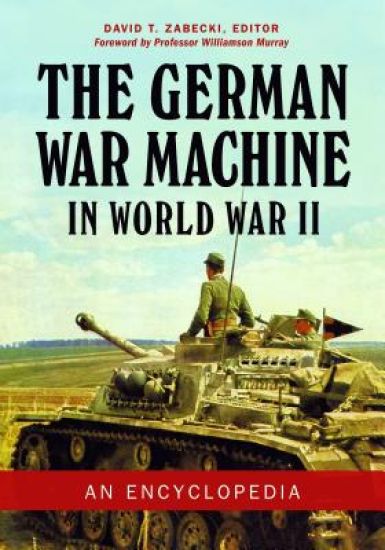
This invaluable resource offers students a comprehensive overview of the German war machine that overran much of Europe during World War II, with close to 300 entries on a variety of topics and a number of key primary source documents.This book provides everything the reader needs to know about the German war machine that developed into the potent armed force under Adolf Hitler. This expansive encyclopedia covers the period of the German Third Reich, from January 1933 to the end of World War II in Europe, in May 1945. Dozens of entries on key battles and military campaigns, military and political leaders, military and intelligence organizations, and social and political topics that shaped German military conduct during World War II are followed by an illuminating epilogue that outlines why Germany lost World War II.A documents section includes more than a dozen fascinating primary sources on such significant events as the Tripartite Pact among Germany, Italy, and Japan; the Battle of Stalingrad; the Normandy Invasion; the Ardennes Offensive; and Germany's surrender. In addition, six appendices provide detailed information on a variety of topics such as German aces, military commanders, and military medals and decorations. The book ends with a chronology and a bibliography of print resources.
How the Civil War changed the face of warThe Civil War represented a momentous change in the character of war. It combined the projection of military might across a continent on a scale never before seen with an unprecedented mass mobilization of peoples. Yet despite the revolutionizing aspects of the Civil War, its leaders faced the same uncertainties and vagaries of chance that have vexed combatants since the days of Thucydides and the Peloponnesian War. A Savage War sheds critical new light on this defining chapter in military history.In a masterful narrative that propels readers from the first shots fired at Fort Sumter to the surrender of Robert E. Lee's army at Appomattox, Williamson Murray and Wayne Wei-siang Hsieh bring every aspect of the battlefield vividly to life. They show how this new way of waging war was made possible by the powerful historical forces unleashed by the Industrial Revolution and the French Revolution, yet how the war was far from being simply a story of the triumph of superior machines. Despite the Union’s material superiority, a Union victory remained in doubt for most of the war. Murray and Hsieh paint indelible portraits of Abraham Lincoln, Ulysses S. Grant, William Tecumseh Sherman, and other major figures whose leadership, judgment, and personal character played such decisive roles in the fate of a nation. They also examine how the Army of the Potomac, the Army of Northern Virginia, and the other major armies developed entirely different cultures that influenced the war’s outcome.A military history of breathtaking sweep and scope, A Savage War reveals how the Civil War ushered in the age of modern warfare.
The Civil War represented a momentous change in the character of war. It combined the projection of military might across a continent on a scale never before seen with an unprecedented mass mobilization of peoples. Yet despite the revolutionizing aspects of the Civil War, its leaders faced the same uncertainties and vagaries of chance that have vexed combatants since the days of Thucydides and the Peloponnesian War. A Savage War sheds critical new light on this defining chapter in military history. In a masterful narrative that propels readers from the first shots fired at Fort Sumter to the surrender of Robert E. Lee's army at Appomattox, Williamson Murray and Wayne Wei-siang Hsieh bring every aspect of the battlefield vividly to life. They show how this new way of waging war was made possible by the powerful historical forces unleashed by the Industrial Revolution and the French Revolution, yet how the war was far from being simply a story of the triumph of superior machines. Despite the Union's material superiority, a Union victory remained in doubt for most of the war. Murray and Hsieh paint indelible portraits of Abraham Lincoln, Ulysses S. Grant, William Tecumseh Sherman, and other major figures whose leadership, judgment, and personal character played such decisive roles in the fate of a nation. They also examine how the Army of the Potomac, the Army of Northern Virginia, and the other major armies developed entirely different cultures that influenced the war's outcome. A military history of breathtaking sweep and scope, A Savage War reveals how the Civil War ushered in the age of modern warfare.
Strategic Challenges for Counterinsurgency and the Global War on Terrorism - War College Series
Williamson Murray
War College Series
2015
pokkari
As the United States enters a new century, its army confronts the difficult problems associated with transformation in an uncertain world. Moreover, the strategic environment makes it entirely unclear where, or when, or for what strategic purposes U.S. ground forces will find themselves committed to battle in coming decades.1 Yet, both the strategic environment as well as the harsh lessons of the past have a direct bearing on why the Army has begun the processes of transformation.2 The study of the past cannot lead to prediction as to the nature and conduct of war in the 21st century, but it does underline that sometime in the future the Army will find itself committed to a major conflict. Moreover, the nature of the current strategic environment suggests the parameters within which the future Army will have to operate. Finally, history is crucial to understanding what factors and approaches might best prepare the Army to meet future threats.
Transformation Concepts for National Security in the 21st Century
Williamson Murray
Lulu.com
2014
nidottu
The famous Confederate General Stonewall Jackson noted that "To move swiftly, strike vigorously, and secure all the fruits of the victory is the secret of successful war." This observation is at the very heart of the current discussion and experimentation on how the transformed joint services of the United States should employ force in the 21st century. The services are exploring concepts such as Effects Based Operations and Rapid Decisive Operations to move swiftly and strike vigorously to secure victory in the coming decades. At the same time the nation and its armed forces are developing new concepts of homeland security to defend the country in the war on terrorism. The following chapters represent some of the thinking by students at the U.S. Army War College, considering the nature and direction of transformation concepts that deal with these issues.
National Security Challenges for the 21st Century
Williamson Murray; Strategic Studies Institute
Lulu.com
2014
nidottu
September 11, 2001 changed many things in the United States not the least of which was our national defense policy and military strategy. The challenges facing the defense establishment in the United States at the beginning of the 21st century are daunting indeed; however, the thoughtful essays included in this volume by students at the U.S. Army War College provide insights into those trials that will prove useful to policymakers both in and out of uniform. Offi cers who participated in the Advanced Strategic Art Program (ASAP) during their year at the U.S. Army War College wrote these chapters. The ASAP is a unique program that offers selected students a rigorous course of instruction in theater strategy. Solidly based in theory, doctrine, and history, the program provides those students a rich professional experience that includes staff rides, exercises, and the best instructional expertise available. The program is designed to provide the Joint team with the military's best theater strategists.
The President, Secretary of Defense, and the Army's Chief of Staff have all stated that the United States is a "Nation at War." This fundamental fact is key to what we do at the U.S. Army War College. Because of our continued emphasis on the Global War on Terrorism, we face significant strategic challenges as we continue to transform the force, improve interagency integration into joint operations, and, all the while, engage in active combat operations. This collection of outstanding essays-three of which won prestigious writing awards-by the students enrolled in the Army War College Advanced Strategic Art Program (ASAP) highlights some of these strategic challenges and offers thoughtful solutions. The authors provide insights that undoubtedly will prove useful to decisionmakers at the highest levels of our national security establishment.
Strategic Challenges for Counterinsurgency and the Global War on Terrorism
Williamson Murray; Strategic Studies Institute
Lulu.com
2014
nidottu
In March 2006, President George W. Bush signed a new National Security Strategy that he refers to as a "wartime national security strategy." He also states in the introduction that to follow the path the United States has chosen, we must "maintain and expand our national strength." One way to do this is to study and propose solutions to the complex challenges the United States faces in the 21st century. At the U.S. Army War College, the students have embraced this challenge and spend a year developing their intellectual strength in areas that extend well beyond the familiar operational and tactical realm to which they are accustomed. This collection of essays written by students enrolled in the U.S. Army War College Advanced Strategic Art Program (ASAP) reflects the development of their strategic thought applied to a wide range of contemporary issues.
This collection of articles represents Professor Williamson Murray's efforts to elucidate the role that history should play in thinking about both the present and the future. They reflect three disparate themes in Professor Murray's work: his deep fascination with history and those who have acted in the past; his fascination with the similarities in human behavior between the past and the present; and his belief that the study of military and strategic history can be of real use to those who will confront the daunting problems of war and peace in the twenty-first century. The first group of essays addresses the relevance of history to an understanding of the present and to an understanding of the possibilities of the future. The second addresses the possible direct uses of history to think through the problems involved in the creation of effective military institutions. The final group represents historical case studies that serve to illuminate the present.
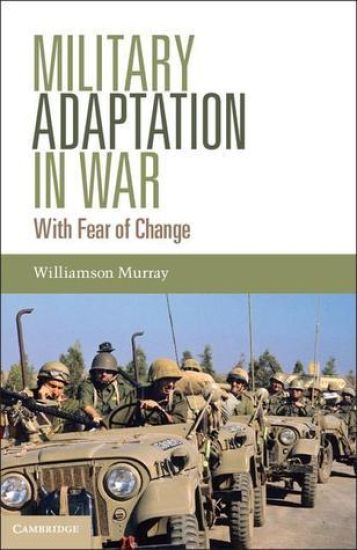
Military Adaptation in War addresses one of the most persistent problems that military organizations confront: namely, the problem of how to adapt under the trying, terrifying conditions of war. This work builds on the volume that Professor Williamson Murray edited with Allan Millett on military innovation (a quite different issue, though similar in some respects). In Clausewitzian terms, war is a contest, an interactive duel, which is of indeterminate length and presents a series of intractable problems at every level, from policy and strategy down to the tactical. Moreover, the fact that the enemy is adapting at the same time presents military organizations with an ever-changing set of conundrums that offer up no easy solutions. As the British general, James Wolfe, suggested before Quebec: 'War is an option of difficulties'. Dr Murray provides an in-depth analysis of the problems that military forces confront in adapting to these difficulties.
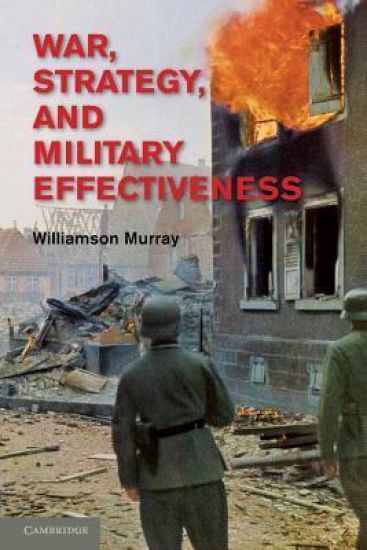
This collection of articles represents Professor Williamson Murray's efforts to elucidate the role that history should play in thinking about both the present and the future. They reflect three disparate themes in Professor Murray's work: his deep fascination with history and those who have acted in the past; his fascination with the similarities in human behavior between the past and the present; and his belief that the study of military and strategic history can be of real use to those who will confront the daunting problems of war and peace in the twenty-first century. The first group of essays addresses the relevance of history to an understanding of the present and to an understanding of the possibilities of the future. The second addresses the possible direct uses of history to think through the problems involved in the creation of effective military institutions. The final group represents historical case studies that serve to illuminate the present.