Kirjojen hintavertailu. Mukana 12 390 323 kirjaa ja 12 kauppaa.

Kirjailija

Willie James Jennings

Kirjat ja teokset yhdessä paikassa: 22 kirjaa, julkaisuja vuosilta 2011-2024, suosituimpien joukossa Faith Confronts Evil. Vertaile teosten hintoja ja tarkista saatavuus suomalaisista kirjakaupoista.

22 kirjaa

Kirjojen julkaisuhaarukka 2011-2024.

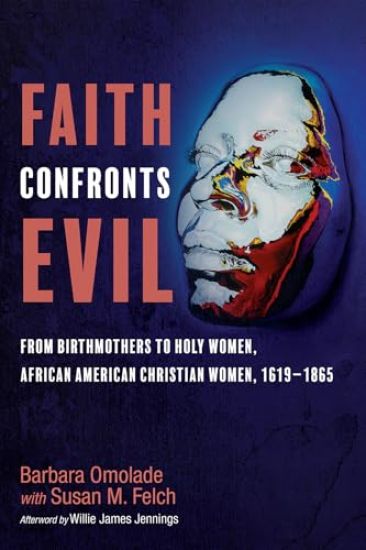
Faith Confronts Evil

Faith Confronts Evil

Barbara Omolade; Willie James Jennings

Cascade Books
2024
pokkari
Faith Confronts Evil tells the stories of African American women before the Civil War who countered the rampant evil of slavery with the strength of their Christian faith. They claimed the words of the gospel, that Jesus comes to set the captives free. They embraced Christianity as the source of liberty, humanity, and justice in which God was on their side, Jesus was their friend, and the Holy Spirit was their guide to all truth. Their stories are essential for understanding the central role Christian faith played in realizing, however imperfectly, the promises the US Constitution made to all its citizens. As we listen to Phillis Wheatley, Jarena Lee, Betsy Crissman, Mary Reynolds, Harriet Tubman, Sojourner Truth, and many others, we discover that their shared stories turn strangers into acquaintances, acquaintances into friends. These stories of antebellum African American Christian women are our story, an "our" that embraces anyone who identifies as a Christian or anyone who is merely interested in the early formation of the United States of America.
Faith Confronts Evil

Faith Confronts Evil

Barbara Omolade; Willie James Jennings

Cascade Books
2024
sidottu
Faith Confronts Evil tells the stories of African American women before the Civil War who countered the rampant evil of slavery with the strength of their Christian faith. They claimed the words of the gospel, that Jesus comes to set the captives free. They embraced Christianity as the source of liberty, humanity, and justice in which God was on their side, Jesus was their friend, and the Holy Spirit was their guide to all truth. Their stories are essential for understanding the central role Christian faith played in realizing, however imperfectly, the promises the US Constitution made to all its citizens. As we listen to Phillis Wheatley, Jarena Lee, Betsy Crissman, Mary Reynolds, Harriet Tubman, Sojourner Truth, and many others, we discover that their shared stories turn strangers into acquaintances, acquaintances into friends. These stories of antebellum African American Christian women are our story, an "our" that embraces anyone who identifies as a Christian or anyone who is merely interested in the early formation of the United States of America.
Faith Seeking Conviviality

Faith Seeking Conviviality

Samuel E Ewell; Willie James Jennings

Cascade Books
2019
sidottu
Faith Seeking Conviviality traces the journey of a U.S. missionary into Brazil (and beyond), seeking to be faithfully present while also questioning the default settings of ""good intentions."" Taking Ivan Illich as the primary theological guide on that journey, Faith Seeking Conviviality narrates the discovery of a renewed imagination for Christian mission that arises as a response to two persistent questions. First, given the colonial history of Christian missionary expansion, on what basis do we go on fulfilling the ""Great Commission"" (Matt 28:16-20) as Christ's disciples? A second question, intimately related to the first, is: What makes it possible to embody a distinctively Christian presence that is missionary without being manipulative? In doing theology with and after Ivan Illich, Faith Seeking Conviviality does not offer a pull-off-the-shelf model for mission, but rather a framework for embodying the incarnational logic of mission that entails a ""convivial turn""--delinking missionary discipleship from the lure of techniques and institutional dependence in order to receive and to share the peace of Christ relationally.
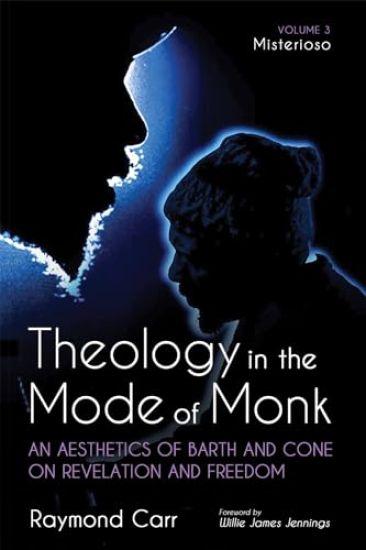
Theology in the Mode of Monk: An Aesthetics of Barth and Cone on Revelation and Freedom, Volume 3
This captivating study engages two of the most influential theologians of the twentieth century: Karl Barth, the Swiss Protestant theologian, who constructed his theology ""from above"" and engaged the powers in the background of Nazi Germany, and James H. Cone, the father of Black Theology in America, who constructed his theology ""from below"" and confronted white racism--the most intractable issue in America's history. In this three-volume project, Carr employs the aesthetic thinking of the jazz legend Thelonious Monk to reconceptualize, restructure, and advance the theologies of Barth and Cone. In this final volume, Carr appeals to Thelonious Monk's tune ""Misterioso"" as the analogical framework for exploring the freedom of God as the melodic foundation for black liberation. Monk's mode of musical thinking encourages the jazz artist in us all to play in the mystery of God's freedom as the true ground for living freely within the world of the principalities and powers.
Theology in the Mode of Monk: An Aesthetics of Barth and Cone on Revelation and Freedom, Volume 3
This captivating study engages two of the most influential theologians of the twentieth century: Karl Barth, the Swiss Protestant theologian, who constructed his theology "from above" and engaged the powers in the background of Nazi Germany, and James H. Cone, the father of Black Theology in America, who constructed his theology "from below" and confronted white racism--the most intractable issue in America's history. In this three-volume project, Carr employs the aesthetic thinking of the jazz legend Thelonious Monk to reconceptualize, restructure, and advance the theologies of Barth and Cone. In this final volume, Carr appeals to Thelonious Monk's tune "Misterioso" as the analogical framework for exploring the freedom of God as the melodic foundation for black liberation. Monk's mode of musical thinking encourages the jazz artist in us all to play in the mystery of God's freedom as the true ground for living freely within the world of the principalities and powers.
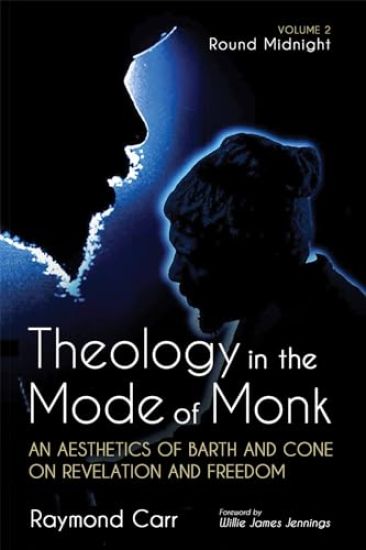
Theology in the Mode of Monk: An Aesthetics of Barth and Cone on Revelation and Freedom, Volume 2
This captivating study engages two of the most influential theologians of the twentieth century: Karl Barth, the Swiss Protestant theologian, who constructed his theology "from above" and engaged the powers in the background of Nazi Germany, and James H. Cone, the father of Black Theology in America, who constructed his theology "from below" and confronted white racism--the most intractable issue in America's history. In this three-volume project, Carr employs the aesthetic thinking of the jazz legend Thelonious Monk to reconceptualize, restructure, and advance the theologies of Barth and Cone. In this second volume, Carr appeals to Monk's tune "'Round Midnight" as the analogical framework for articulating the meaning between Christ, the cantus firmus, and the sociopolitical histories of Karl Barth and James Cone. Monk's encouragement to "improvise on the melody" is heard as the melodic foundation for a new form of christological reflection.
Theology in the Mode of Monk: An Aesthetics of Barth and Cone on Revelation and Freedom, Volume 2
This captivating study engages two of the most influential theologians of the twentieth century: Karl Barth, the Swiss Protestant theologian, who constructed his theology "from above" and engaged the powers in the background of Nazi Germany, and James H. Cone, the father of Black Theology in America, who constructed his theology "from below" and confronted white racism--the most intractable issue in America's history. In this three-volume project, Carr employs the aesthetic thinking of the jazz legend Thelonious Monk to reconceptualize, restructure, and advance the theologies of Barth and Cone. In this second volume, Carr appeals to Monk's tune "'Round Midnight" as the analogical framework for articulating the meaning between Christ, the cantus firmus, and the sociopolitical histories of Karl Barth and James Cone. Monk's encouragement to "improvise on the melody" is heard as the melodic foundation for a new form of christological reflection.
Theology in the Mode of Monk: An Aesthetics of Barth and Cone on Revelation and Freedom, Volume 1
This captivating study engages two of the most influential theologians of the twentieth century: Karl Barth, the Swiss Protestant theologian who constructed his theology "from above" and engaged the powers in the background of Nazi Germany, and James H. Cone, the father of Black Theology in America, who constructed his theology "from below" and confronted white racism--the most intractable issue in America's history. In this three-volume project, Carr employs the aesthetic thinking of the jazz legend Thelonious Monk to reconceptualize, restructure, and advance the theologies of Barth and Cone. This first volume appeals to the Bebop tune "Epistrophy" as the analogical framework for (re)conceptualizing the historical form and hermeneutical backgrounds of Karl Barth and James H. Cone. Monk's mode of musical thinking establishes the aesthetic theological architecture Carr uses to reiterate and reimagine the revolutionary theological contributions of Barth and Cone.
Theology in the Mode of Monk: An Aesthetics of Barth and Cone on Revelation and Freedom, Volume 1
This captivating study engages two of the most influential theologians of the twentieth century: Karl Barth, the Swiss Protestant theologian who constructed his theology "from above" and engaged the powers in the background of Nazi Germany, and James H. Cone, the father of Black Theology in America, who constructed his theology "from below" and confronted white racism--the most intractable issue in America's history. In this three-volume project, Carr employs the aesthetic thinking of the jazz legend Thelonious Monk to reconceptualize, restructure, and advance the theologies of Barth and Cone. This first volume appeals to the Bebop tune "Epistrophy" as the analogical framework for (re)conceptualizing the historical form and hermeneutical backgrounds of Karl Barth and James H. Cone. Monk's mode of musical thinking establishes the aesthetic theological architecture Carr uses to reiterate and reimagine the revolutionary theological contributions of Barth and Cone.
Gone for Good?

Gone for Good?

Willie James Jennings

WILLIAM B EERDMANS PUBLISHING CO
2024
pokkari
Is your church facing the difficult decision to sell property? Consider using church buildings and land to further the gospel mission. Mark Elsdon, author of We Aren't Broke: Uncovering Hidden Resources for Mission and Ministry, revisits questions of church resources with a team of pastors, scholars, developers, urban planners, and more. This collection of essays sheds light on how church communities can transform their properties to serve their neighborhoods. Essays explore spiritual, sociological, and practical aspects of church property transition, including: - assessing the impacts of churches on their neighborhoods--and the gaps they will leave behind - developing church property into affordable housing - transforming ministry in rural churches - partnering with Indigenous peoples to return land - fostering cooperation between congregations, developers, and city planners - navigating zoning laws - working with foundations and funders Thousands of church properties worth billions of dollars are being sold or repurposed each year. Nothing can stop the currents of change. But congregations and cities can take steps now to ensure a legacy directed toward communal good rather than private interests. Gone for Good? will be an invaluable guide in navigating these radical shifts in church life and ministry. Contributors: Jennie Birkholz, David Bowers, Philip Burns, Mark D. Constantine, Joseph Daniels Jr., Patrick Duggan, Mark Elsdon, Ashley Goff, Jim Bear Jacobs, A. Robert Jaeger, Willie James Jennings, Tyler Krupp-Qureshi, Eileen Lindner, Elizabeth Lynn, Nadia Mian, Kurt Paulsen, Jill Shook, Cot Soerens, Rochelle A. Stackhouse, Keith Starkenburg, Andre Johnny White
Acts of the Apostles

Acts of the Apostles

Linda M. Maloney; Ivoni Richter Reimer; Willie James Jennings

Liturgical Press
2022
sidottu
2023 Catholic Media Association Third Place Award, Scripture – Academic Studies The Acts of the Apostles, the earliest work of its kind to have survived from Christian antiquity, is not “history” in the modern sense, nor is it about what we call “the church.” Written at least half a century after the time it describes, it is a portrait of the Movement of Jesus’ followers as it developed between 30 and 70 CE. More important, it is a depiction of the Movement of what Jesus wanted: the inbreaking of the reign of God. In this commentary, Linda Maloney, Ivoni Richter Reimer, and a host of other contributing voices look at what the text does and does not say about the roles of the original members of the Movement in bringing it toward fruition, with a special focus on those marginalized by society, many of them women. The author of Acts wrote for followers of Jesus in the second century and beyond, contending against those who wanted to break from the community of Israel and offering hope against hope, like Israel’s prophets before him.
Becoming Human

Becoming Human

Luke A. Powery; Willie James Jennings

WESTMINSTER/JOHN KNOX PRESS,U.S.
2022
pokkari
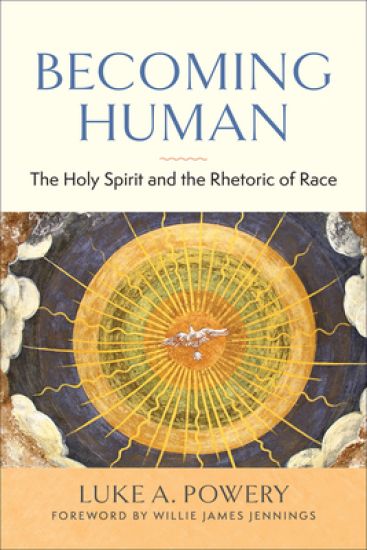
Discussions of racial difference always embody a story. The dominant story told in our society about race has many components, but two stand out: (1) racial difference is an essential characteristic, fully determining individual and group identity; and (2) racial difference means that some bodies are less human than others.The church knows another story, says Luke Powery, if it would remember it. That story says that the diversity of human bodies is one of the gifts of the Spirit. That story’s decisive chapter comes at Pentecost, when the Spirt embraces all bodies, all flesh, all tongues. In that story, different kinds of materiality and embodiment are strengths to be celebrated rather than inconvenient facts to be ignored or feared. In this book, Powery urges the church to live up to the inclusive story of Pentecost in its life of worship and ministry. He reviews ways that a theology and practice of preaching can more fully exemplify the diversity of gifts God gives to the church. He concludes by entering into a conversation with the work of Howard Thurman on doing ministry to and with humanity in the light of the work of the Spirit.
The Scandal of the Gospel

The Scandal of the Gospel

Charles L. Campbell; Willie James Jennings

WESTMINSTER/JOHN KNOX PRESS,U.S.
2021
nidottu
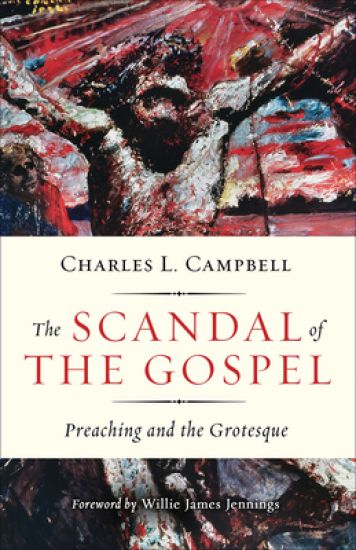
Through its shocking incongruities and transgressive forms, the grotesque offers an intriguing lens for exploring the scandal of the gospel and the challenges of Christian preaching. Drawing on diverse sources—from Swedish crime fiction and contemporary poetry to James Cone, Harriet Beecher Stowe, and Pussy Riot—this book will examine the theological, homiletical, and social implications of a grotesque gospel for contemporary preachers. The book focuses on three aspects of preaching and the grotesque: (1) the ways in which a grotesque gospel unsettles the preacher and challenges the "false patterns" that often shape Christian preaching; (2) the importance and challenges of resisting the weaponized grotesque, which dehumanizes people and furthers the power of dominant groups; (3) the incarnate Word as the carnivalesque, grotesque body of Jesus, which calls the church to become the porous and inclusive body of Christ. The Scandal of the Gospel is the written adaptation of Yale Divinity School's Beecher Lectures, given by Charles Campbell in 2018. The last chapter, "Preaching and the Environmental Grotesque," is a new addition.
The Fullness of Time

The Fullness of Time

Kara N Slade; Willie James Jennings

Wipf Stock Publishers
2021
pokkari
While human existence in time is determined by the time of Jesus Christ, by the logic of the incarnation, passion, resurrection, and ascension, the predominant accounts of time in the modern West have proceeded from a very different basis. The implications of these approaches are not just a matter of epistemology, or of abstract doctrinal and philosophical claims. Instead, they have had, and continue to have, concrete ramifications for human life together. They have overwhelmingly been death-dealing rather than life-giving, marked by a series of temporal moral errors that this book hopes to address. As a counterexample, this book reads Soren Kierkegaard alongside Karl Barth to highlight the ways that both figures rejected a Hegelian approach to time that was, and is, not coincidentally intertwined with a racialized account of history and the co-opting of Christianity by the modern Western state.
The Fullness of Time

The Fullness of Time

Kara N Slade; Willie James Jennings

Wipf Stock Publishers
2021
sidottu
While human existence in time is determined by the time of Jesus Christ, by the logic of the incarnation, passion, resurrection, and ascension, the predominant accounts of time in the modern West have proceeded from a very different basis. The implications of these approaches are not just a matter of epistemology, or of abstract doctrinal and philosophical claims. Instead, they have had, and continue to have, concrete ramifications for human life together. They have overwhelmingly been death-dealing rather than life-giving, marked by a series of temporal moral errors that this book hopes to address. As a counterexample, this book reads Soren Kierkegaard alongside Karl Barth to highlight the ways that both figures rejected a Hegelian approach to time that was, and is, not coincidentally intertwined with a racialized account of history and the co-opting of Christianity by the modern Western state.
After Whiteness: An Education in Belonging

After Whiteness: An Education in Belonging

Willie James Jennings

William B. Eerdmans Publishing Company
2020
nidottu
On forming people who form communion Theological education has always been about formation: first of people, then of communities, then of the world. If we continue to promote whiteness and its related ideas of masculinity and individualism in our educational work, it will remain diseased and thwart our efforts to heal the church and the world. But if theological education aims to form people who can gather others together through border-crossing pluralism and God-drenched communion, we can begin to cultivate the radical belonging that is at the heart of God's transformative work. In this inaugural volume of the Theological Education between the Times series, Willie James Jennings shares the insights gained from his extensive experience in theological education, most notably as the dean of a major university's divinity school--where he remains one of the only African Americans to have ever served in that role. He reflects on the distortions hidden in plain sight within the world of education but holds onto abundant hope for what theological education can be and how it can position itself at the front of a massive cultural shift away from white, Western cultural hegemony. This must happen through the formation of what Jennings calls erotic souls within ourselves--erotic in the sense that denotes the power and energy of authentic connection with God and our fellow human beings. After Whiteness is for anyone who has ever questioned why theological education still matters. It is a call for Christian intellectuals to exchange isolation for intimacy and embrace their place in the crowd--just like the crowd that followed Jesus and experienced his miracles. It is part memoir, part decolonial analysis, and part poetry--a multimodal discourse that deliberately transgresses boundaries, as Jennings hopes theological education will do, too. Lilly Fellows Program Book Award (2023)
Faith Seeking Conviviality

Faith Seeking Conviviality

Samuel E Ewell; Willie James Jennings

Cascade Books
2019
pokkari
Faith Seeking Conviviality traces the journey of a U.S. missionary into Brazil (and beyond), seeking to be faithfully present while also questioning the default settings of ""good intentions."" Taking Ivan Illich as the primary theological guide on that journey, Faith Seeking Conviviality narrates the discovery of a renewed imagination for Christian mission that arises as a response to two persistent questions. First, given the colonial history of Christian missionary expansion, on what basis do we go on fulfilling the ""Great Commission"" (Matt 28:16-20) as Christ's disciples? A second question, intimately related to the first, is: What makes it possible to embody a distinctively Christian presence that is missionary without being manipulative? In doing theology with and after Ivan Illich, Faith Seeking Conviviality does not offer a pull-off-the-shelf model for mission, but rather a framework for embodying the incarnational logic of mission that entails a ""convivial turn""--delinking missionary discipleship from the lure of techniques and institutional dependence in order to receive and to share the peace of Christ relationally.
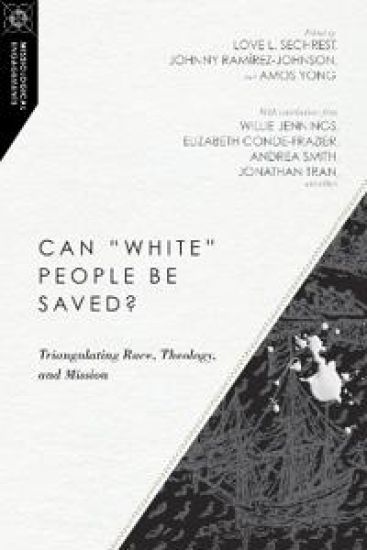
Can "White" People Be Saved? – Triangulating Race, Theology, and Mission

Can "White" People Be Saved? – Triangulating Race, Theology, and Mission

Love L. Sechrest; Johnny Ramírez–johnson; Amos Yong; Willie James Jennings; Elizabeth Conde–frazier

IVP Academic
2018
nidottu
Yes, White people can be saved. In God's redemptive plan, that goes without saying. But what about the reality of white normativity? This idea and way of being in the world has been parasitically joined to Christianity, and this is the ground of many of our problems today. It is time to redouble the efforts of the church and its institutions to muster well-informed, gospel-based initiatives to fight racialized injustice and overcome the heresy of whiteness. Written by a world-class roster of scholars, Can “White” People Be Saved? develops language to describe the current realities of race and racism. It challenges evangelical Christianity in particular to think more critically and constructively about race, ethnicity, migration, and mission in relation to white supremacy. Historical and contemporary perspectives from Africa and the African diaspora prompt fresh theological and missiological questions about place and identity. Native American and Latinx experiences of colonialism, migration, and hybridity inspire theologies and practices of shalom. And Asian and Asian American experiences of ethnicity and class generate transnational resources for responding to the challenge of systemic injustice. With their call for practical resistance to the Western whiteness project, the perspectives in this volume can revitalize a vision of racial justice and peace in the body of Christ. Missiological Engagements charts interdisciplinary and innovative trajectories in the history, theology, and practice of Christian mission, featuring contributions by leading thinkers from both the Euro-American West and the majority world whose missiological scholarship bridges church, academy, and society.
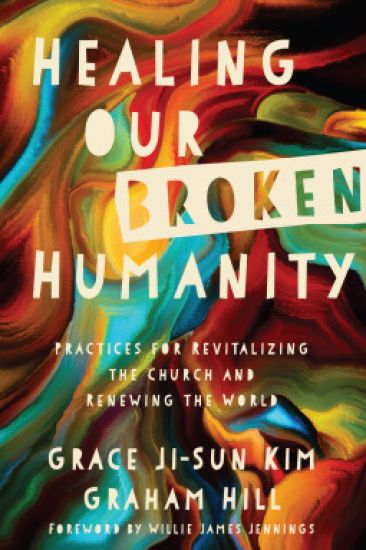
Healing Our Broken Humanity – Practices for Revitalizing the Church and Renewing the World

Healing Our Broken Humanity – Practices for Revitalizing the Church and Renewing the World

Grace Ji–sun Kim; Graham Hill; Willie James Jennings

IVP Books
2018
nidottu
16th Annual Outreach Magazine Resource of the Year - Culture We live in conflicted times. Our newsfeeds are filled with inequality, division, and fear. We want to make a difference and see justice restored because Jesus calls us to be a peacemaking and reconciling people. But how do we do this? Based on their work with diverse churches, colleges, and other organizations, Grace Ji-Sun Kim and Graham Hill offer Christian practices that can bring healing and hope to a broken world. They provide ten ways to transform society, from lament and repentance to relinquishing power, reinforcing agency, and more. Embodying these practices enables us to be the new humanity in Jesus Christ, so the church and world can experience reconciliation, justice, unity, peace, and love. With small group activities, discussion questions, and exercises in each chapter, this book is ideal to read together in community. Discover here how to bring real change to a dehumanized world.