Kirjojen hintavertailu. Mukana 12 364 718 kirjaa ja 12 kauppaa.
Kirjailija
Wilson G. Pond
Kirjat ja teokset yhdessä paikassa: 6 kirjaa, julkaisuja vuosilta 1991-2021, suosituimpien joukossa Pork Production Systems. Vertaile teosten hintoja ja tarkista saatavuus suomalaisista kirjakaupoista.
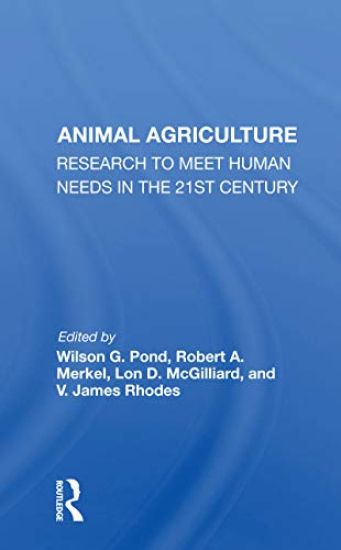
First published in 1980. Animal agriculture serves human needs. Three-fourths of the protein, one-third of the energy, most of the calcium and phosphorus and substantial amounts of essential vitamins and other minerals in the American diet are from animal products. Recognizing that innovative research holds the key to meeting these challenges, 210 concerned individuals convened at Boyne Mountain, Michigan, May 4 to 9, 1980. Their goal was to identify priorities for future research to enable animal agriculture to efficiently and effectively serve human needs in the 21st century. These proceedings represent the best collective judgment on research priorities by a group of informed and dedicated people concerned with the future role of animal agriculture in meeting human needs.
First published in 1980. Animal agriculture serves human needs. Three-fourths of the protein, one-third of the energy, most of the calcium and phosphorus and substantial amounts of essential vitamins and other minerals in the American diet are from animal products. Recognizing that innovative research holds the key to meeting these challenges, 210 concerned individuals convened at Boyne Mountain, Michigan, May 4 to 9, 1980. Their goal was to identify priorities for future research to enable animal agriculture to efficiently and effectively serve human needs in the 21st century. These proceedings represent the best collective judgment on research priorities by a group of informed and dedicated people concerned with the future role of animal agriculture in meeting human needs.
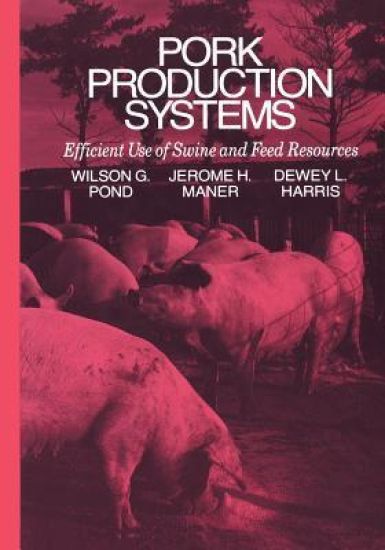
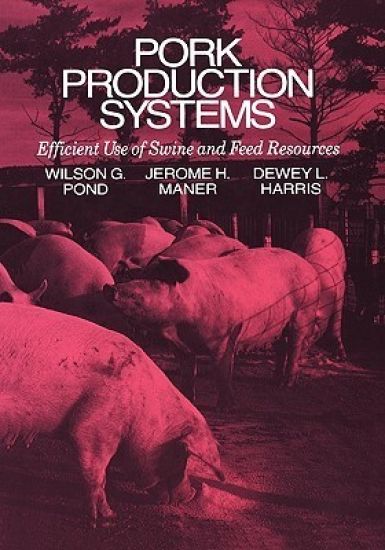
Pork continues to occupy an important position as a food source in affluent societies as well as in developing countries with slower economic growth. The growth of the world swine population continues at a faster rate than that of the human population, a reflection of the sustained demand for pork in all parts of the world. The technical basis for commercial production of swine was presented in our two earlier textbooks-Swine Production in Temperate and Tropical Environ ments, by Pond and Maner, 1974, and Swine Production and Nutrition, by Pond and Maner, 1984. In view of rapidly advancing technology and an appreciation for the systems approach in industry and agriculture, this third book has been restructured to provide the student and practitioner with an integrated concept of pork production. We have attempted to blend the fundamental principles from genetics, physiology, nutrition, and biotechnology into the modern concepts of systems analysis and simulation modeling. The objective is to create a teaching approach which empha sizes the integrated synthesis of biological with physical and environmental sci ences and economics. This approach is expected to provide an overall pork pro duction systems view that individual producers can adapt to their specific resources, needs, and goals. Our new co-author, Dr. Dewey Harris, has used his expertise and perspective on interacting systems to change the complexion of the book to fulfill this objective. In addition, Dr.
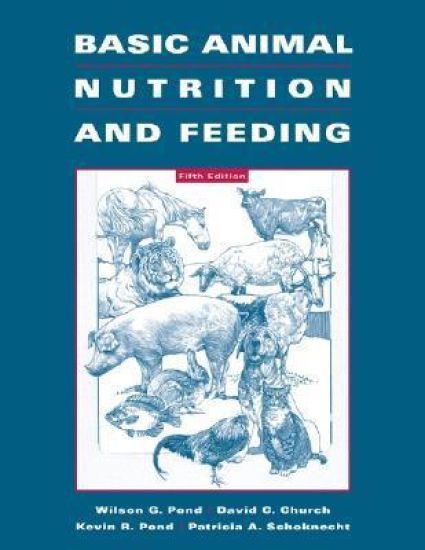
The fifth edition arms readers with the latest information on nutrient metabolism and the formulation of diets from an array of available feedstuffs. The authors discuss animals' role in ecological balance, environmental stability and sustainable agriculture and food production. A new chapter on Regulation of Nutrient Partitioning offers a lively and timely discussion of emerging technologies in modifying and increasing efficiency of nutrient metabolism and animal food composition. A new chapter on Toxic Minerals in the Food Chain addresses the role of agricultural production animal nutrition in protecting the environment from toxic levels of minerals and nitrogen in the food chain.
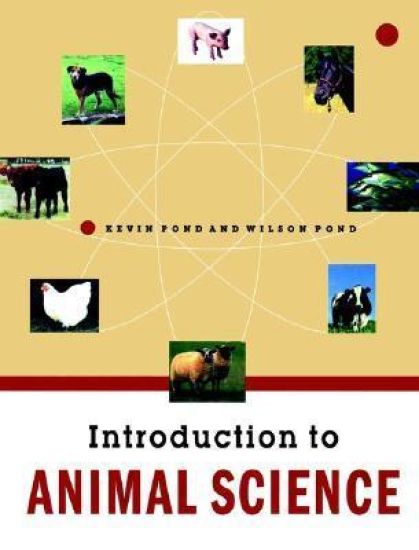
A comprehensive and balanced overview of animal agriculture in contemporary society! It develops the principles of animal biology as a science within the context of life-cycle production of animals for economic and biologic efficiency. Individual chapters describe and analyze particular animal industries such as dairy cattle, poultry, aquatic animals, etc. The book also discusses a wide variety of animal products.
Pork continues to occupy an important position as a food source in affluent societies as well as in developing countries with slower economic growth. The growth of the world swine population continues at a faster rate than that of the human population, a reflection of the sustained demand for pork in all parts of the world. The technical basis for commercial production of swine was presented in our two earlier textbooks-Swine Production in Temperate and Tropical Environ ments, by Pond and Maner, 1974, and Swine Production and Nutrition, by Pond and Maner, 1984. In view of rapidly advancing technology and an appreciation for the systems approach in industry and agriculture, this third book has been restructured to provide the student and practitioner with an integrated concept of pork production. We have attempted to blend the fundamental principles from genetics, physiology, nutrition, and biotechnology into the modern concepts of systems analysis and simulation modeling. The objective is to create a teaching approach which empha sizes the integrated synthesis of biological with physical and environmental sci ences and economics. This approach is expected to provide an overall pork pro duction systems view that individual producers can adapt to their specific resources, needs, and goals. Our new co-author, Dr. Dewey Harris, has used his expertise and perspective on interacting systems to change the complexion of the book to fulfill this objective. In addition, Dr.