Kirjojen hintavertailu. Mukana 12 537 462 kirjaa ja 12 kauppaa.

Kirjailija

Wilson R. Nyemba

Kirjat ja teokset yhdessä paikassa: 7 kirjaa, julkaisuja vuosilta 2021-2026, suosituimpien joukossa Computer Aided Design. Vertaile teosten hintoja ja tarkista saatavuus suomalaisista kirjakaupoista.

Mukana myös kirjoitusasut: Wilson R Nyemba

7 kirjaa

Kirjojen julkaisuhaarukka 2021-2026.

Computer Aided Design

Computer Aided Design

Wilson R Nyemba

TAYLOR FRANCIS LTD
2026
nidottu
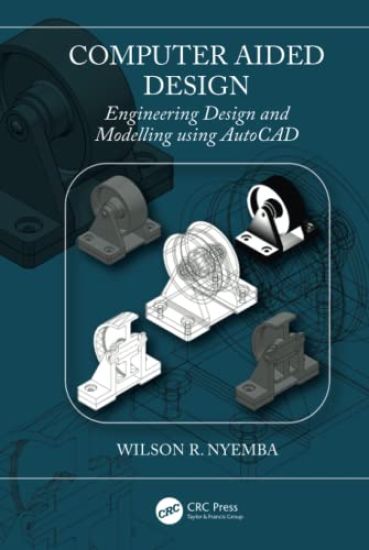
The book comprehensively discusses principles, techniques, research activities, applications and case studies of computer-aided design in a single volume. The textbook will serve as ideal study material for undergraduate, and graduate students in a multitude of engineering disciplines. The book: Discusses techniques for wireframe, surface and solid modelling including practical cases and limitations Each chapter contains solved examples and unsolved exercises Includes research case studies and practical examples in enabling the user to link academic theory to engineering practice Highlights the ability to convert graphic to non-graphic information such as in drawing up bills of materials in practice Discusses important topics including constructive solid geometry, Boolean operations on solid primitives and Boolean algebra This text covers different aspects of computer-aided design, from the basic two-dimensional constructions through modifications, use of layers and dimensioning to advanced aspects such as three-dimensional modelling and customization of the package to suit different applications and disciplines. It further discusses important concepts including orthographic projections, isometric projections, 3D wireframe modelling, 3D surface modelling, solids of extrusion and solids of revolution. It will serve as ideal study material for undergraduate, and graduate students in the fields of mechanical engineering, industrial engineering, electrical and electronic engineering, civil and construction engineering, aerospace engineering and manufacturing engineering.
Computer-Integrated Engineering Design and Manufacture
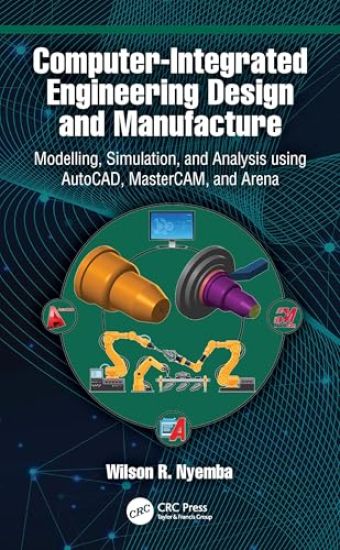
This book presents advanced concepts of computer-aided design, and computer-aided manufacture, through modelling and computer numerical control, coupled with simulation of production systems. It dwells on the subtle and key features such as the applications and effective use of dynamic blocks in modelling, subtractive and additive layer manufacturing, flexible manufacturing systems as well as automation and robotics.The text:Discusses principles of computer-aided design in a comprehensive manner and applications of the AutoCAD interface programming language.Covers aspects of product development and design, together with accompanying principles of design for manufacture and assembly.Explains the integrated approach to design and manufacture, enhanced by modelling, simulation, and analysis software, with capabilities for electronic transfer and interchange between the software packages.Presents process planning and part programming with MasterCAM, generating toolpaths, and selecting machine tools for subtractive manufacturing and step-by-step worked examples to enhance understanding of the principles and concepts of engineering design and manufacture.Explores sequential control and logical sequencing, configuration of industrial robots, and challenges in programming robots. The integrated nature of this book and the examples therein, are intended for senior undergraduates, graduate students, academic researchers, and practising engineers in various fields of engineering, such as, but not limited to; aeronautical, civil, electrical, industrial, manufacturing, mechanical, mechatronics, and production engineering.
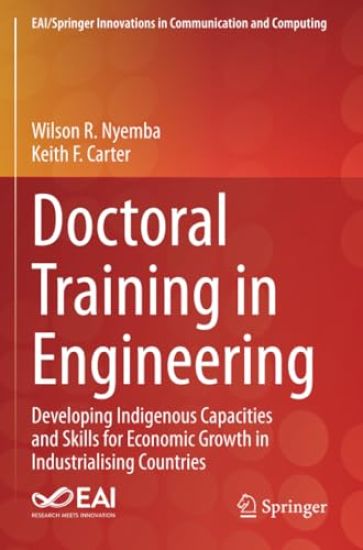
Doctoral Training in Engineering

Doctoral Training in Engineering

Wilson R. Nyemba; Keith F. Carter

Springer International Publishing AG
2025
nidottu
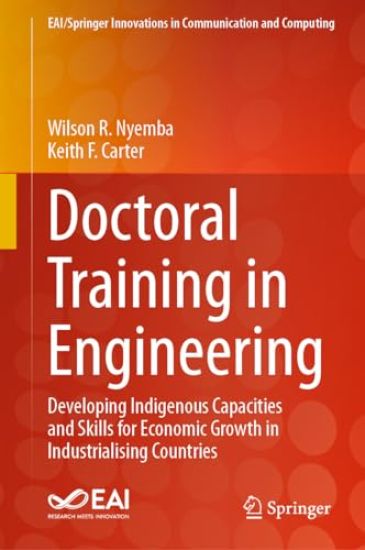
The book provides a comprehensive analysis of Engineering Education in industrialising countries, with Southern Africa as the case study, benchmarked on institutions from the industrialised world, with UK institutions as the reference. This was motivated by the perennial shortage of engineers and engineering skills to drive industry in Southern Africa, compounded by the mismatch of skills between those produced by tertiary institutions and those required by industry. This book focuses on the insufficiencies in training, through addressing the gap where the majority of engineering academics’ qualifications at MSc/MEng level fall short of the internationally acceptable PhD/DEng/DTech. In order to address such insufficiencies, the book proposes and advocates for reskilling and doctoral training of engineering academics through the proposed and established DTCs within the region. The book is targeted at graduate students, engineering academics, researchers, university administrators, foreign aid agencies, captains of industry and policy-makers in governments. To all these readers, the book offers:
Doctoral Training in Engineering

Doctoral Training in Engineering

Wilson R. Nyemba; Keith F. Carter

Springer International Publishing AG
2024
sidottu
The book provides a comprehensive analysis of Engineering Education in industrialising countries, with Southern Africa as the case study, benchmarked on institutions from the industrialised world, with UK institutions as the reference. This was motivated by the perennial shortage of engineers and engineering skills to drive industry in Southern Africa, compounded by the mismatch of skills between those produced by tertiary institutions and those required by industry. This book focuses on the insufficiencies in training, through addressing the gap where the majority of engineering academics’ qualifications at MSc/MEng level fall short of the internationally acceptable PhD/DEng/DTech. In order to address such insufficiencies, the book proposes and advocates for reskilling and doctoral training of engineering academics through the proposed and established DTCs within the region. The book is targeted at graduate students, engineering academics, researchers, university administrators, foreign aid agencies, captains of industry and policy-makers in governments. To all these readers, the book offers:
Computer Aided Design

Computer Aided Design

Wilson R Nyemba

TAYLOR FRANCIS LTD
2022
sidottu
The book comprehensively discusses principles, techniques, research activities, applications and case studies of computer-aided design in a single volume. The textbook will serve as ideal study material for undergraduate, and graduate students in a multitude of engineering disciplines.The book:Discusses techniques for wireframe, surface and solid modelling including practical cases and limitationsEach chapter contains solved examples and unsolved exercisesIncludes research case studies and practical examples in enabling the user to link academic theory to engineering practiceHighlights the ability to convert graphic to non-graphic information such as in drawing up bills of materials in practiceDiscusses important topics including constructive solid geometry, Boolean operations on solid primitives and Boolean algebraThis text covers different aspects of computer-aided design, from the basic two-dimensional constructions through modifications, use of layers and dimensioning to advanced aspects such as three-dimensional modelling and customization of the package to suit different applications and disciplines.It further discusses important concepts including orthographic projections, isometric projections, 3D wireframe modelling, 3D surface modelling, solids of extrusion and solids of revolution. It will serve as ideal study material for undergraduate, and graduate students in the fields of mechanical engineering, industrial engineering, electrical and electronic engineering, civil and construction engineering, aerospace engineering and manufacturing engineering.
Bridging the Academia Industry Divide

Bridging the Academia Industry Divide

Wilson R. Nyemba; Charles Mbohwa; Keith F. Carter

Springer Nature Switzerland AG
2022
nidottu
This book is the result of years of research following a realization of the mismatch of engineering skills produced by universities and those that industry required, based on the situation in Sub-Saharan Africa, equally applicable to other regions in Africa and indeed worldwide. The book is meant to assist engineering academics and engineers in industry to build capacity and cope with the dynamic trends in technology brought on by the 4th Industrial Revolution and to prepare for the 5th Industrial Revolution, an era predicted to be dominated by critical and system thinkers with creative and innovative skills as basic necessities. The book is also useful for policy-making researchers in academia, industrial and public sector researchers, and implementers in governments that provide required funding for the development of human resources and skills. The book primarily consists of the novel research and innovation approaches of modelling and building systems thinking sub-models which were ultimately integrated into the Universal Systems Thinking (UST) model aimed at improving the quality of engineers and engineering practice. The initiatives in this book include strategies for bridging the gap between industry and academia through systems thinking research. The book provides information on how to model, simulate, adjust and implement integrated systems thinking approaches to engineering education and training for capacity building and sustainability. The book also covers approaches to address research gaps and mismatch of skills while capitalizing on the successes of several projects carried out and supported by the Royal Academy of Engineering over the years.
Bridging the Academia Industry Divide

Bridging the Academia Industry Divide

Wilson R. Nyemba; Charles Mbohwa; Keith F. Carter

Springer Nature Switzerland AG
2021
sidottu
This book is the result of years of research following a realization of the mismatch of engineering skills produced by universities and those that industry required, based on the situation in Sub-Saharan Africa, equally applicable to other regions in Africa and indeed worldwide. The book is meant to assist engineering academics and engineers in industry to build capacity and cope with the dynamic trends in technology brought on by the 4th Industrial Revolution and to prepare for the 5th Industrial Revolution, an era predicted to be dominated by critical and system thinkers with creative and innovative skills as basic necessities. The book is also useful for policy-making researchers in academia, industrial and public sector researchers, and implementers in governments that provide required funding for the development of human resources and skills. The book primarily consists of the novel research and innovation approaches of modelling and building systems thinking sub-models which were ultimately integrated into the Universal Systems Thinking (UST) model aimed at improving the quality of engineers and engineering practice. The initiatives in this book include strategies for bridging the gap between industry and academia through systems thinking research. The book provides information on how to model, simulate, adjust and implement integrated systems thinking approaches to engineering education and training for capacity building and sustainability. The book also covers approaches to address research gaps and mismatch of skills while capitalizing on the successes of several projects carried out and supported by the Royal Academy of Engineering over the years.