Kirjojen hintavertailu. Mukana 12 390 323 kirjaa ja 12 kauppaa.
Kirjailija
Wolfgang J. Mommsen
Kirjat ja teokset yhdessä paikassa: 12 kirjaa, julkaisuja vuosilta 1982-2021, suosituimpien joukossa RLE: Weber. Vertaile teosten hintoja ja tarkista saatavuus suomalaisista kirjakaupoista.
Max Weber (1894-1920) is generally recognized as one of the founding fathers of modern sociology. This collection pays homage to his continuing influence, not just within sociology, but also political theory, science and religion. The books carefully chosen for this collection provide an overview of all his most important ideas. They are critically assessed and analyzed to gain a real comprehension of his life's work.
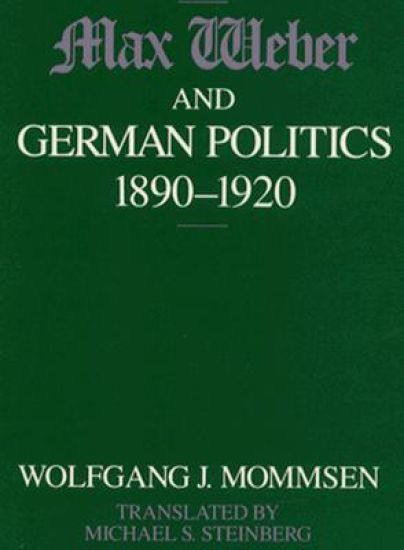
A major work of German historiography, this comprehensive account of Weber's political views and activities reveals that, paradoxically, Weber was at once an ardent liberal and a determined German nationalist and imperialist. Wolfgang J. Mommsen shows the important links between these seemingly conflicting positions and provides a critique of Weber's sociology of power and his concept of democratic rule. First published in German in 1959, Max Weber and German Politics appeared in a revised edition in 1974 and became available in an English translation only in 1984. In writing this work, Mommsen drew extensively on Weber's published and unpublished essays, newspaper articles, memoranda, and correspondence.
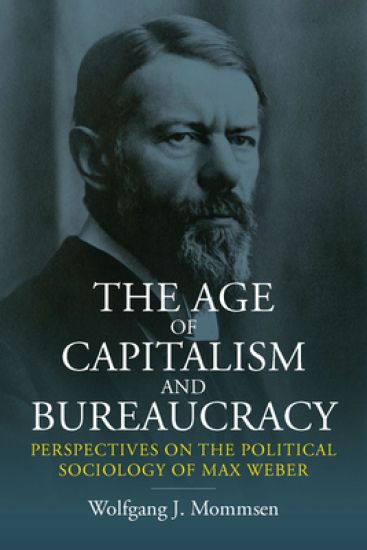
The historian Wolfgang Mommsen was one of the foremost experts on Max Weber as well as an insightful and accessible interpreter of his work. Mommsen’s classic book, first published in 1974 under the title The Age of Bureaucracy, not only concisely explains the basic concepts underlying Weber’s worldview, but also explores the historical, social, and intellectual contexts in which he operated, including Weber’s development as an academic, his relationship to German nationalism, and his engagement with Marxism. Supplemented with a new foreword, a bibliography that includes recent studies, and a postscript by Volker Berghahn that surveys the most important debates on Weber's work since his death, this short volume serves as an excellent resource for scholars and students alike.
The historian Wolfgang Mommsen was one of the foremost experts on Max Weber as well as an insightful and accessible interpreter of his work. Mommsen’s classic book, first published in 1974 under the title The Age of Bureaucracy, not only concisely explains the basic concepts underlying Weber’s worldview, but also explores the historical, social, and intellectual contexts in which he operated, including Weber’s development as an academic, his relationship to German nationalism, and his engagement with Marxism. Supplemented with a new foreword, a bibliography that includes recent studies, and a postscript by Volker Berghahn that surveys the most important debates on Weber's work since his death, this short volume serves as an excellent resource for scholars and students alike.
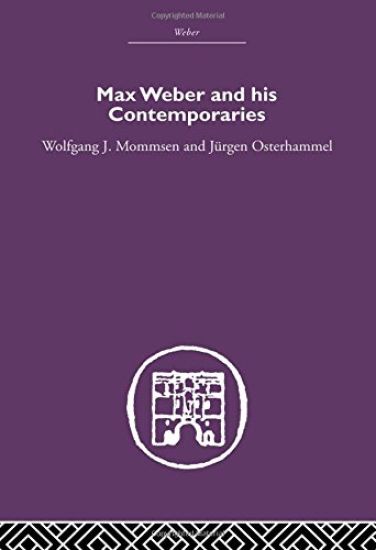
Max Weber and His Contemporaries provides an unrivalled tour d'horizon of European intellectual life in the late nineteenth and early twentieth centuries and an assessment of the pivotal position within it occupied by Max Weber. Weber's many interests in and contributions to, such diverse fields as epistemology, political sociology, the sociology of religion and economic history are compared with and connected to those of his friends, pupils and antagonists and also of those contemporaries with whom he had neither a personal relationship nor any kind of scholoarly exchange. Several contributors also explore Weber's attitudes towards the most important political positions of his time (socialism, conservatism and anarchism) and his own involvement in German politics. This volume contributes not only to a better understanding of one of the most eminent modern thinkers and social scientists, but also provides an intellectual biography of a remarkable generation.This book was first published in 1987.
Max Weber and His Contemporaries provides an unrivalled tour d'horizon of European intellectual life in the late nineteenth and early twentieth centuries and an assessment of the pivotal position within it occupied by Max Weber. Weber's many interests in and contributions to, such diverse fields as epistemology, political sociology, the sociology of religion and economic history are compared with and connected to those of his friends, pupils and antagonists and also of those contemporaries with whom he had neither a personal relationship nor any kind of scholoarly exchange. Several contributors also explore Weber's attitudes towards the most important political positions of his time (socialism, conservatism and anarchism) and his own involvement in German politics. This volume contributes not only to a better understanding of one of the most eminent modern thinkers and social scientists, but also provides an intellectual biography of a remarkable generation.This book was first published in 1987.
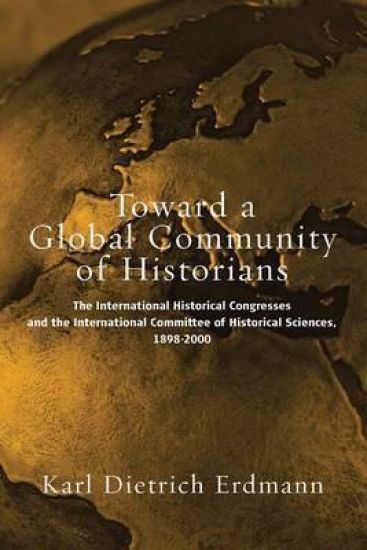
Globalization presents major challenges to scholars of history. Different variants of global history and world history compete with, and transform, more traditional approaches of national, regional, and local scope, accompanied by new forms of international and transcultural cooperation. However, as this book shows, these transnational trends in the historical discipline are not without precedent. Based on painstaking research, this volume reconstructs the history of the International Congresses of Historians from the first one in The Hague, 1898, to the nineteenth in Oslo, 2000. It also tells the story of the International Committee of the Historical Sciences, the world organization of historians, which was founded, with much American support, in 1926 and today includes 54 national committees and 28 affiliated international organizations from all parts of the world. Karl Dietrich Erdmann, former president of this organization, covered the story up to 1985. Wolfgang J. Mommsen continued it into the twenty-first century. This book traces and analyzes the changes of historians’ problems, topics, and methods, as reflected at their International Congresses and in the work of their international organization. It describes the cleavages, debates, and forging of ties among historians from different parts of the world and ideological camps. It demonstrates how historians fought against academic nationalism–or succumbed to its seduction. It shows how the Cold War polarized the world of historians whereas the International Congresses offered a platform for bridging the gap. Since 1990, they have helped to redefine the relationship between historians from the West and from other parts of the world. The internationalization of the study of history is reaching a new quality. Karl Dietrich Erdmann†’s book was first published in German in 1987. It has been translated, updated, and edited for an international audience of the twenty-first century.
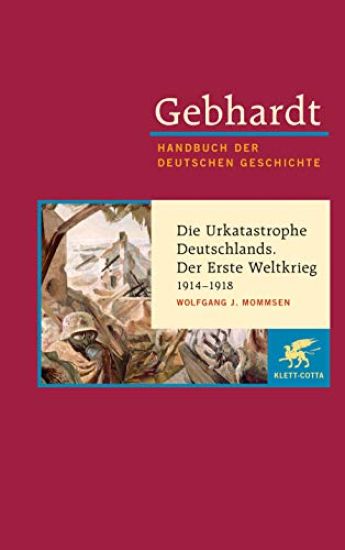
Band 17: Die Urkatastrophe Deutschlands. Der erste Weltkrieg 1914-1918 Der Erste Weltkrieg, die Urkatastrophe, steht am Anfang einer Epoche gewaltiger Umwälzungen. In seinem Gefolge ereigneten sich politische und soziale Erschütterungen, die die überkommene bürgerliche Ordnung Europas zerstörten: Mit diesem Niedergang begann der Aufstieg von Faschismus und Nationalsozialismus und die Stabilisierung des sowjetischen Herrschaftssystems.
The German Empire owed its existence to a 'revolution from above' but in time its citizens came to perceive it as the embodiment of the German nation state. The power of the Prusso-German state - with its outward splendour and military pageantry, and with the prestige that it began to enjoy within the system of European states - gradually came to outweigh older, more broadly based traditions of cultural identity. The Imperial period saw the formation of all the principal institutional structures that have continued to govern life in Germany, and the foundations of present-day cultural life. Yet the German Empire never broke free from the shackles of its origins; it remained a state distorted by authoritarianism. All areas of life were affected - politics, the economy, the arts, education, foreign policy (where an aggressive Weltpolitik sought to secure domestic stability) - and a widening gulf opened between the political system and society, putting at risk the very governability of the Empire. It was in these conditions that Germany went to war in 1914, a conflict that ended with the collapse of the Hohenzollern monarchy and the revolution of 1918-20.
Wolfgang J. Mommsen is one of the foremost Weberian scholars writing today. In this volume, a sequel to his monumental study Max Weber and German Politics , he provides succinct and incisive statements on current developments in the analysis of Weber's work. The book concentrates upon Weber's engagement with political issues and their influence over his more theoretical concepts. Mommsen offers a critical analysis of Weber's notion of democracy and provides a thorough assessment of Weber's views of socialism against the backcloth of German Social Democracy.
In recent years the discussion of imperialism has become so compartmentalized that it is difficult for somebody who is not directly involved to put the often polemical discussion and the various scientific and political positions forward into a relevant context. Mommsen's survey is an excellent guide.--German Studies, on the German edition. Theories of Imperialism is the most succinct, fairest, and most sophisticated statement I have seen of the range of theories of imperialism. Each set of theorists is come at in their own terms, described fairly, and summarized fully. The book is objective, readable, and short.--Robin W. Winks, Yale University