Kirjojen hintavertailu. Mukana 12 595 353 kirjaa ja 12 kauppaa.

Kirjailija

Wolfgang Kröger

Kirjat ja teokset yhdessä paikassa: 8 kirjaa, julkaisuja vuosilta 2011-2021, suosituimpien joukossa Global Energy Supply and Emissions. Vertaile teosten hintoja ja tarkista saatavuus suomalaisista kirjakaupoista.

8 kirjaa

Kirjojen julkaisuhaarukka 2011-2021.

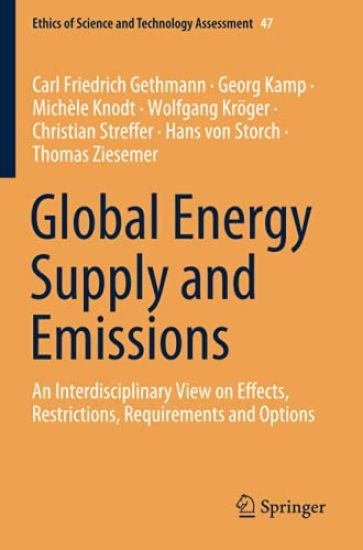
Global Energy Supply and Emissions

Global Energy Supply and Emissions

Carl Friedrich Gethmann; Georg Kamp; Michèle Knodt; Wolfgang Kröger; Christian Streffer; Hans von Storch; Thomas Ziesemer

Springer Nature Switzerland AG
2021
nidottu
This book offers an authoritative analysis of the state-of-the art in energy and climate research and policy. It starts by describing the current status of technologies that are expected to have an influence on the energy systems of the future. For an adequate evaluation, it presents the latest findings on the effects of energy supply and consumption as well as of the emissions on both the environment and people’s health. This is followed by an extensive discussion of the economic and social problems related to climate change, the need for energy transitions, and other issues that may require public investment and international agreements. The book reviews the problem of energy policy from a global perspective, providing readers with the technical, political, economic and ethical background needed to understand the current situation and work at better solutions for a sustainable, just and prospering world.
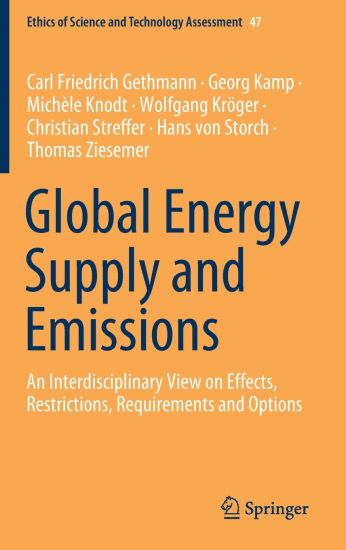
Global Energy Supply and Emissions

Global Energy Supply and Emissions

Carl Friedrich Gethmann; Georg Kamp; Michèle Knodt; Wolfgang Kröger; Christian Streffer; Hans von Storch; Thomas Ziesemer

Springer Nature Switzerland AG
2020
sidottu
This book offers an authoritative analysis of the state-of-the art in energy and climate research and policy. It starts by describing the current status of technologies that are expected to have an influence on the energy systems of the future. For an adequate evaluation, it presents the latest findings on the effects of energy supply and consumption as well as of the emissions on both the environment and people’s health. This is followed by an extensive discussion of the economic and social problems related to climate change, the need for energy transitions, and other issues that may require public investment and international agreements. The book reviews the problem of energy policy from a global perspective, providing readers with the technical, political, economic and ethical background needed to understand the current situation and work at better solutions for a sustainable, just and prospering world.
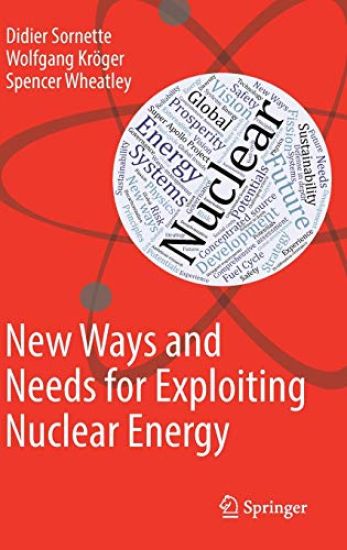
New Ways and Needs for Exploiting Nuclear Energy

New Ways and Needs for Exploiting Nuclear Energy

Didier Sornette; Wolfgang Kröger; Spencer Wheatley

Springer Nature Switzerland AG
2019
nidottu
The history of mankind is a story of ascent to unprecedented levels of comfort, productivity and consumption, enabled by the increased mastery of the basic reserves and flows of energy. This miraculous trajectory is confronted by the consensus that anthropogenic emissions are harmful and must decrease, requiring de-carbonization of the energy system. The mature field of indicator-based sustainability assessment provides a rigorous systematic framework to balance the pros and cons of the various existing energy technologies using lifecycle assessments and weighting criteria covering the environment, economy, and society, as the three pillars of sustainability. In such a framework, nuclear power is ranked favorably, but since emphasis is often placed on radioactive wastes and risk aversion, renewables are usually ranked top. However, quantifying the severity of the consequences of nuclear accidents on a rough integral cost basis and balancing severity with low core-damage accident probabilities indicates that the average external cost of such accidents is similar to that of modern renewables, and far less than carbon-based energy. This book formulates the overall goal and associated unprecedented demanding criteria of taming nuclear risks by excluding mechanisms that lead to serious accidents and avoiding extremely long stewardship times as far as possible, by design. It reviews the key design features of nuclear power generation, paving the way for the exploration of radically new combinations of technologies to come up with “revolutionary” or even “exotic” system designs. The book also provides scores for the selected designs and discusses the high potential for far-reaching improvements, with small modular lines of the best versions as being most attractive. Given the ambition and challenges, the authors call for an urgent increase in funding of at least two orders of magnitude for a broad international civilian “super-Apollo” program on nuclear energy systems. Experience indicates that such investments in fundamental technologies enable otherwise unattainable revolutionary innovations with massive beneficial spillovers to the private sector and the public for the next generations.
New Ways and Needs for Exploiting Nuclear Energy

New Ways and Needs for Exploiting Nuclear Energy

Didier Sornette; Wolfgang Kröger; Spencer Wheatley

Springer International Publishing AG
2018
sidottu
The history of mankind is a story of ascent to unprecedented levels of comfort, productivity and consumption, enabled by the increased mastery of the basic reserves and flows of energy. This miraculous trajectory is confronted by the consensus that anthropogenic emissions are harmful and must decrease, requiring de-carbonization of the energy system. The mature field of indicator-based sustainability assessment provides a rigorous systematic framework to balance the pros and cons of the various existing energy technologies using lifecycle assessments and weighting criteria covering the environment, economy, and society, as the three pillars of sustainability. In such a framework, nuclear power is ranked favorably, but since emphasis is often placed on radioactive wastes and risk aversion, renewables are usually ranked top. However, quantifying the severity of the consequences of nuclear accidents on a rough integral cost basis and balancing severity with low core-damage accident probabilities indicates that the average external cost of such accidents is similar to that of modern renewables, and far less than carbon-based energy. This book formulates the overall goal and associated unprecedented demanding criteria of taming nuclear risks by excluding mechanisms that lead to serious accidents and avoiding extremely long stewardship times as far as possible, by design. It reviews the key design features of nuclear power generation, paving the way for the exploration of radically new combinations of technologies to come up with “revolutionary” or even “exotic” system designs. The book also provides scores for the selected designs and discusses the high potential for far-reaching improvements, with small modular lines of the best versions as being most attractive. Given the ambition and challenges, the authors call for an urgent increase in funding of at least two orders of magnitude for a broad international civilian “super-Apollo” program on nuclear energy systems. Experience indicates that such investments in fundamental technologies enable otherwise unattainable revolutionary innovations with massive beneficial spillovers to the private sector and the public for the next generations.
Radioactive Waste

Radioactive Waste

Christian Streffer; Carl Friedrich Gethmann; Georg Kamp; Wolfgang Kröger; Eckard Rehbinder; Ortwin Renn

Springer-Verlag Berlin and Heidelberg GmbH Co. K
2014
nidottu
Radioactive waste (above all highly radioactive wastes from nuclear installations) caused by research, medicine and technology must be disposed of safely. However both the strategies disputed for the disposal of radioactive waste as well as concrete proposals for choosing a location for final waste disposal are highly debatable. An appropriate disposal must conform to both complex, technical requirements and fulfill the radio-biological conditions to appropriately protect man and nature. Ethical, legal and social conditions must also be considered. An interdisciplinary team from various, relevant fields compiled the current status-quo and developed criteria and strategies, which on the one hand meet the requirements of optimal warning and prevention of risk for present and future generations, and additionally on the other hand meet the needs of what current society agrees what is expected to be allowed. This study can be understood as an advanced and continuing contribution to the corresponding scientific specialized debates, due to its interdisciplinary treatment. At the same time it serves as a fundamentally informing contribution to public and political debates, offering an easily comprehensible executive summary and precise content recommendations.
Vulnerable Systems

Vulnerable Systems

Wolfgang Kröger; Enrico Zio

Springer London Ltd
2014
nidottu
The safe management of the complex distributed systems and critical infrastructures which constitute the backbone of modern industry and society entails identifying and quantifying their vulnerabilities to design adequate protection, mitigation, and emergency action against failure. In practice, there is no fail-safe solution to such problems and various frameworks are being proposed to effectively integrate different methods of complex systems analysis in a problem-driven approach to their solution. Vulnerable Systems reflects the current state of knowledge on the procedures which are being put forward for the risk and vulnerability analysis of critical infrastructures. Classical methods of reliability and risk analysis, as well as new paradigms based on network and systems theory, including simulation, are considered in a dynamic and holistic way. Readers of Vulnerable Systems will benefit from its structured presentation of the current knowledge base on this subject. It will enable graduate students, researchers and safety and risk analysts to understand the methods suitable for different phases of analysis and to identify their criticalities in application.
Radioactive Waste

Radioactive Waste

Christian Streffer; Carl Friedrich Gethmann; Georg Kamp; Wolfgang Kröger; Eckard Rehbinder; Ortwin Renn

Springer-Verlag Berlin and Heidelberg GmbH Co. K
2011
sidottu
Radioactive waste (above all highly radioactive wastes from nuclear installations) caused by research, medicine and technology must be disposed of safely. However both the strategies disputed for the disposal of radioactive waste as well as concrete proposals for choosing a location for final waste disposal are highly debatable. An appropriate disposal must conform to both complex, technical requirements and fulfill the radio-biological conditions to appropriately protect man and nature. Ethical, legal and social conditions must also be considered. An interdisciplinary team from various, relevant fields compiled the current status-quo and developed criteria and strategies, which on the one hand meet the requirements of optimal warning and prevention of risk for present and future generations, and additionally on the other hand meet the needs of what current society agrees what is expected to be allowed. This study can be understood as an advanced and continuing contribution to the corresponding scientific specialized debates, due to its interdisciplinary treatment. At the same time it serves as a fundamentally informing contribution to public and political debates, offering an easily comprehensible executive summary and precise content recommendations.
Vulnerable Systems

Vulnerable Systems

Wolfgang Kröger; Enrico Zio

Springer London Ltd
2011
sidottu
The safe management of the complex distributed systems and critical infrastructures which constitute the backbone of modern industry and society entails identifying and quantifying their vulnerabilities to design adequate protection, mitigation, and emergency action against failure. In practice, there is no fail-safe solution to such problems and various frameworks are being proposed to effectively integrate different methods of complex systems analysis in a problem-driven approach to their solution. Vulnerable Systems reflects the current state of knowledge on the procedures which are being put forward for the risk and vulnerability analysis of critical infrastructures. Classical methods of reliability and risk analysis, as well as new paradigms based on network and systems theory, including simulation, are considered in a dynamic and holistic way. Readers of Vulnerable Systems will benefit from its structured presentation of the current knowledge base on this subject. It will enable graduate students, researchers and safety and risk analysts to understand the methods suitable for different phases of analysis and to identify their criticalities in application.