Kirjojen hintavertailu. Mukana 12 595 353 kirjaa ja 12 kauppaa.

Kirjailija

World Bank

Kirjat ja teokset yhdessä paikassa: 131 kirjaa, julkaisuja vuosilta 1985-2025, suosituimpien joukossa Farm Sector Restructuring in Belarus. Vertaile teosten hintoja ja tarkista saatavuus suomalaisista kirjakaupoista.

131 kirjaa

Kirjojen julkaisuhaarukka 1985-2025.

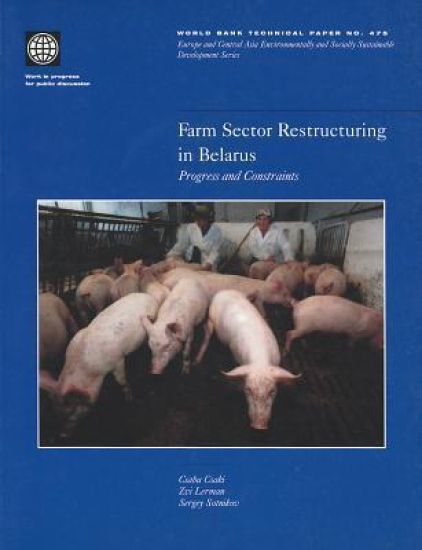
Farm Sector Restructuring in Belarus

Farm Sector Restructuring in Belarus

Csaba Csaki; Zvi Lerman; Sergey Sotnikov; World Bank

World Bank Publications
2000
nidottu
Agriculture remains the main source of employment and livelihood for the large rural population of many transition countries, especially among the former Soviet republics. Accordingly, the World Bank continuously monitors the progress of land reform and farm restructuring in the region because of the potential impact of these processes on rural development and poverty alleviation in rural areas. The present study on Belarus is the latest addition to a long and growing series of World Bank publications on land reform and farm restructuring in the former socialist countries of Europe and Central Asia. The unique features of all these publications is their reliance on first-hand empirical information collected through extensive farm surveys of various rural constituencies. Analysis of survey findings enables the World Bank to base its policy dialogue with governments in the region on solid empirical facts, making the Bank's recommendations more credible and relevant. The survey findings in this volume will provide a platform for useful policy discussions with this country's government and supply international donors that are active there with essential information to design their strategic programs.
Urban Air Quality Management

Urban Air Quality Management

Masami Kojima; Magda Lovei; World Bank

World Bank Publications
2001
nidottu
'Urban Air Quality Management' examines the contribution of vehicles to urban air pollution which is a growing problem in many cities in developing countries. It evaluates the priorities for air quality management programs, and reviews national, municipal, and World Bank experience with pollution-reduction efforts. This book draws lessons from this assessment and offers recommendations for priorities in developing coordinated assistance strategies in the environment, urban transport, and energy sectors.
World Bank Group in Africa

World Bank Group in Africa

World Bank

Hassell Street Press
2021
nidottu
This work has been selected by scholars as being culturally important and is part of the knowledge base of civilization as we know it.This work is in the public domain in the United States of America, and possibly other nations. Within the United States, you may freely copy and distribute this work, as no entity (individual or corporate) has a copyright on the body of the work.Scholars believe, and we concur, that this work is important enough to be preserved, reproduced, and made generally available to the public. To ensure a quality reading experience, this work has been proofread and republished using a format that seamlessly blends the original graphical elements with text in an easy-to-read typeface.We appreciate your support of the preservation process, and thank you for being an important part of keeping this knowledge alive and relevant.
International debt statistics 2017

International debt statistics 2017

World Bank

World Bank Publications
2017
nidottu
The World Bank's annual report on the external debt of developing countries includes comprehensive data for 125 developing countries, as well as summary data for regions and income groups. This year's edition of International Debt Statistics is designed to respond to user demand for timely, comprehensive data on trends in external debt in developing countries. As in previous years, IDS provides statistical tables showing the external debt of developing countries that report public and publicly guaranteed external debt to the World Bank's Debtor Reporting System (DRS). In addition, the publication showcases the broader spectrum of debt data collected and compiled by the World Bank. These include the high frequency, quarterly data for high-income economies and select developing countries reporting to the joint World Bank-IMF Quarterly External Debt Statistics (QEDS) and the Public Sector Debt Statistics (PSDS) database. Presentation and access to data have been rendered to improve the user experience.
Global economic prospects, June 2016

Global economic prospects, June 2016

World Bank

World Bank Publications
2016
nidottu
Global growth prospects have deteriorated in 2016. Emerging market and developing economies are facing increased external headwinds, including softer growth in advanced economies. Commodity exporters are struggling with particularly challenging conditions, while commodity importers are thus far showing greater resilience. Global growth is expected to gradually accelerate in 2017-18, but downside risks to the outlook are increasingly pronounced. In addition to discussing global and regional economic developments and prospects, this edition of Global Economic Prospects includes two Special Focus essays of critical importance for emerging and developing economies: an analysis of the buildup of private debt in emerging and frontier markets and a quantitative study of uncertainties surrounding global growth.
Enabling the Business of Agriculture 2016

Enabling the Business of Agriculture 2016

World Bank

World Bank Publications
2016
nidottu
Enabling the Business of Agriculture 2016: Comparing Regulatory Good Practices provides a tool for policymakers to identify and analyze legal barriers for the business of agriculture and to quantify transaction costs of dealing with government regulations. Building on an earlier progress report published in November 2014, this volume presents the main results for 40 countries, for the first time using indicator scores to showcase good practices among countries in different stages of agricultural development. It also presents interesting results on the relationship between efficiency and quality of regulations, discriminatory practices in the laws, and whether regulatory information is accessible. Regional, income-group and country-specific trends and data observations are presented on six topics: seed, fertilizer, machinery, finance, markets and transport. The report also discusses the continued development of several topics which will be added in future reports: information and communication technology, land, water, livestock, gender and environmental sustainability.
World Development Report 2015

World Development Report 2015

World Bank

World Bank Publications
2014
sidottu
Entrepreneurship is a fundamental driver of growth, development, and job creation. While Latin America and the Caribbean has a wealth of entrepreneurs, firms in the region, compared to those in other regions, are small in size and less likely to grow or innovate. Productivity growth has remained lackluster for decades, including during the recent commodity boom. Enhancing the creation of good jobs and accelerating productivity growth in the region will require dynamic entrepreneurs. This book studies the landscape of entrepreneurship in Latin America and the Caribbean. Utilizing new datasets that cover issues such as firm creation, firm dynamics, export decisions, and the behavior of multinational corporations, the book synthesizes the results of a comprehensive analysis of the status, prospects, and challenges of entrepreneurship in the region. Useful tools and information are provided to help policy makers and practitioners identify policy areas governments can explore to enhance innovation and encourage high-growth, transformational entrepreneurship.
Working Through the Crisis

Working Through the Crisis

World Bank

World Bank Publications
2013
nidottu
The end of the MFA was followed by rising apparel exports, falling prices, and a reallocation of production and employment between countries. There were also significant changes within countries. The first main finding of this report is that export and employment patterns after the MFA/ATC did not necessarily match predictions. While many predicted that production would shift to low-wage countries, this book shows that only 13% of variation in export changes post-MFA can be explained by the differences in wage levels. Second, changes in exports are usually, but not always, good indicators of what happens to wages and employment within countries. This is especially important for policy because it shows that simply using exports as a metric of 'success' in terms of helping the poor is not sufficient. Third, the Book identifies the specific ways that changes in the global apparel market affected earnings. The Book shows that wage premiums change in predictable ways: rising (in most cases) in countries that were proactive in adapting to the MFA phase-out and expanded their market shares, and falling in countries that failed to respond in a timely fashion to the changing environment.The book shows that promoting 'upgrading' (defined as shifting to higher-value goods, shifting up the value chain, or 'modernizing' production techniques) seems to be necessary for sustainable competitiveness in the apparel sector but does not necessarily help the poor. Policies that support upgrading need to be complemented with targeted workforce development to make sure that the most vulnerable workers are not left behind. Having a vision for the evolution of the apparel sector that incorporates developing worker skills seems crucial. Otherwise, less-skilled workers could miss out on opportunities to gain valuable work experience in manufacturing.
Global Financial Development Report 2014

Global Financial Development Report 2014

World Bank

World Bank Publications
2013
nidottu
Financial inclusion has become a major subject of interest among policymakers, researchers, and other financial sector stakeholders. Many countries, for example, have recently adopted explicit financial inclusion strategies with targets for financial inclusion. The interest reflects an increased recognition that financial inclusion can be a driver of economic growth and poverty alleviation, and that many individuals and firms are excluded unnecessarily from even basic financial services. About half of the worlds adult population more than 2.5 billion peoplehave no bank account is one powerful example. Barriers such as cost, travel distance, and amount of paperwork and requirements play an important role. Many of these barriers can be addressed by better policies.Despite the high interest, there are still important gaps in knowledge about financial inclusion, what drives it, and what policies affect it. And while recent years have seen some increases in financial inclusion, there is still much scope to reduce barriers to access. However, one of the challenges is that efforts to increase inclusion, if not implemented well, can backfire. Deeply ingrained social problems cannot be resolved purely with an infusion of debt. If not done properly, it can have the opposite effect, making poor borrowers increasingly dependent on debt, and even contributing to financial instability.Global Financial Development Report 2014: Financial Inclusion is a new report from the World Bank Group. It takes a step back and re-examines financial inclusion from the perspective of new global datasets and new evidence. It builds on a critical mass of new research and operational work produced by World Bank Group staff as well as outside researchers and contributors. The report, the second in this series, follows up on the inaugural issue, the Global Financial Development Report 2013: Rethinking the Role of the State in Finance (http://www.worldbank.org/financialdevelopment).Accompanying the Global Financial Development Report 2014 is a vast body of underlying research and data. Among other things, this includes an expanded and updated version of the Global Financial Development Database, a dataset of over 70 financial system characteristics for 203 economies from 1960 to 2011, which is presented in the reports appendix.
Doing Business 2014

Doing Business 2014

World Bank

World Bank Publications
2013
nidottu
Eleventh in a series of annual reports comparing business regulation in 189 economies, Doing Business 2014 measures regulations affecting 11 areas of everyday business activity:Starting a businessDealing with construction permitsGetting electricityRegistering propertyGetting creditProtecting investorsPaying taxesTrading across bordersEnforcing contractsClosing a businessEmploying workersThe report updates all indicators as of June 1, 2013, ranks economies on their overall “ease of doing business”, and analyzes reforms to business regulation – identifying which economies are strengthening their business environment the most. The Doing Business reports illustrate how reforms in business regulations are being used to analyze economic outcomes for domestic entrepreneurs and for the wider economy. Doing Business is a flagship product by the World Bank and IFC that garners worldwide attention on regulatory barriers to entrepreneurship. More than 60 economies use the Doing Business indicators to shape reform agendas and monitor improvements on the ground. In addition, the Doing Business data has generated over 870 articles in peer-reviewed academic journals since its inception.
Global Monitoring Report 2013

Global Monitoring Report 2013

World Bank

World Bank Publications
2013
nidottu
The Global Monitoring Report 2013: Rural-Urban Dynamics and the Millennium Development Goals examines rural-urban disparities in the achievement of the Millennium Development Goals (MDGs) and how urbanization, if managed well, can contribute to the attainment of these goals. The report provides information about the differences in progress toward the MDGs across geographical areas and recognizes that urban populations are better off than their rural brethren. However, unfettered urbanization can cause migrants and the urban poor to end up in slums where attainment of the MDGs lags. GMR 2013 calls for an integrated strategy to better manage the planning-connecting-financing formula of urbanization. Notwithstanding the importance of urbanization in poverty reduction and MDG attainment, rural areas remain a huge challenge?one that underscores the importance of policies that can improve rural livelihoods. The rural-urban spectrum ranges from small towns to large cities. The general experience is that poverty is lowest in the largest cities and considerably higher in smaller towns. The MDGs reflect the basic needs of all citizens, and governments should aim to meet them fully in both urban and rural areas. However, resources are scarce, so priorities must be set and trade-offs made. The report argues that the sequencing of actions be tailored to local conditions when it comes to the degree of urbanization and rural-urban differences in MDG outcomes. The world has met four global MDG targets. New estimates confirm the 2012 reports that MDG 1.a?reducing the $1.25-a-day poverty rate (2005 purchasing power parity)?was reached in 2010, falling below half of its 1990 value. The world also met part of MDG 7.c?to halve the proportion of people without safe access to drinking water?in 2010. MDG 7.d?to improve significantly the lives of at least 100 million slum dwellers by 2020?was also achieved. Finally, the first part of MDG 3.a?to eliminate gender disparity in primary education? was accomplished in 2010. Global progress on the full MDG 3.a (to eliminate gender disparity in primary and secondary education) is close to being on track. Global Monitoring Report 2013 was prepared jointly by the World Bank and the International Monetary Fund, with consultations and collaborations with regional development banks and other multilateral partners.
The Little Data Book on Gender in Africa 2012/2013

The Little Data Book on Gender in Africa 2012/2013

World Bank

World Bank Publications
2013
nidottu
The Little Data Book on Gender in Africa 2012/13 provides a summary collection of gender statistics on Africa available in one volume. It contains 60 indicators, covering 53 African countries. Additional data may be found on the companion CD-ROM or online, covering about 1,700 indicators from 1961 to 2011. Key themes are : Basic demographic indicators Education Health Labour force and wagesWomen's empowermentDesigned to provide all those interested in Africa with quick reference and a reliable set of data to monitor development programs and aid flows in the region, this is an invaluable pocket edition reference tool for analysts and policy makers who want a better understanding of the economic and social developments occurring in Africa.
The Little Data Book on Africa 2012/2013

The Little Data Book on Africa 2012/2013

World Bank

World Bank Publications
2013
nidottu
The Little Data Book on Africa 2012/2013 is a pocket edition of Africa Development Indicators 2012/2013. It contains some 115 key indicators on economics, human development, governance, and partnership and is intended as a quick reference for users of the Africa Development Indicators 2010 book and African Development Indicators Online. The country tables present the latest available data for World Bank member countries in Sub-Saharan Africa, covering about 1,700 indicators from 1961 to 2011. Key themes are:Basic indicatorsDrivers of growthParticipating in growthCapable statesPartnerships.Designed to provide all those interested in Africa with quick reference and a reliable set of data to monitor development programs and aid flows in the region, this is an invaluable pocket edition reference tool for analysts and policy makers who want a better understanding of the economic and social developments occurring in Africa.For free access to Africa Development Indicators Online, please visit http://data.worldbank.org/data-catalog.
World Investment and Political Risk 2012

World Investment and Political Risk 2012

World Bank

World Bank Publications
2013
nidottu
This report examines the overall trends in political risk perceptions, foreign investment intentions, and longer-term demand for political risk guarantees, especially in emerging economies, with a a spcial focuson the risk of non honoring of sovereign financial obligations.
World Development Report 2013

World Development Report 2013

World Bank

World Bank Publications
2012
sidottu
Recent world events have put jobs at the center of the policy debate. In advanced economies, there is concern about a jobless recovery; in developing countries, continued growth cannot shield workers who are vulnerable to shocks. Political upheavals in the Arab world have highlighted the discontent of educated youth whose employment opportunities fall short of their expectations. The 2013 World Development Report on jobs will help explain and analyze the connection between jobs and important dimensions of economic and social development. The Report will provide analytical tools to identify the obstacles to sustained job creation and examine differences in the nature of jobs, which in turn affects the potential of jobs to raise living standards, increase aggregate productivity, and enhance social cohesion. The Report explores the notion of a “good job” in that some jobs do more for economic and social development than others, because they reduce poverty and inequality, strengthen value chains and production clusters, or help build trust and shared values. The Report will examine efforts to stimulate production of higher value-added goods and services, boost the demand for labor, prepare today’s youth to become productive members of society, and ensure an efficient matching of supply and demand of labor. But the Report also looks beyond the labor market, identifying the complementary policies needed to support the necessary structural shifts and the supply of needed skills. Infrastructure development, policies for competition and innovation, reforms in educational and training systems to equip tomorrow’s workers with the relevant skills, and the architecture of social protection all have a bearing on the chances to create more and better jobs. The Report seeks to articulate a vision that cuts across sectors, addressing the dynamic links between growth strategies and jobs, and providing tools to consider policies and programs from a jobs perspective. The Report strives to provide a framework to address the most difficult jobs-related questions facing policy makers in developing countries.
Doing Business 2013

Doing Business 2013

World Bank

World Bank Publications
2012
nidottu
Tenth in a series of annual reports comparing business regulation in 185 economies, Doing Business 2013 measures regulations affecting 11 areas of everyday business activity:Starting a businessDealing with construction permitsGetting electricityRegistering propertyGetting creditProtecting investorsPaying taxesTrading across bordersEnforcing contractsClosing a businessEmploying workersThe report updates all indicators as of June 1, 2012, ranks economies on their overall “ease of doing business”, and analyzes reforms to business regulation – identifying which economies are strengthening their business environment the most.The Doing Business reports illustrate how reforms in business regulations are being used to analyze economic outcomes for domestic entrepreneurs and for the wider economy.This year marks the tenth anniversary of the global Doing Business report. Doing Business is a flagship product by the World Bank and IFC that garners worldwide attention on regulatory barriers to entrepreneurship. More than 60 economies use the Doing Business indicators to shape reform agendas and monitor improvements on the ground. In addition, the Doing Business data has generated over 870 articles in peer-reviewed academic journals since its inception.This year's report includes two new economies: Barbados and Malta.