Kirjojen hintavertailu. Mukana 12 152 606 kirjaa ja 12 kauppaa.
Kirjailija
Wouter J. Hanegraaff
Kirjat ja teokset yhdessä paikassa: 14 kirjaa, julkaisuja vuosilta 1997-2025, suosituimpien joukossa Religion : i historia, samtid och framtid. Vertaile teosten hintoja ja tarkista saatavuus suomalaisista kirjakaupoista.
Janne Haaland Matlary; Daniel T. Potts; Julius J. Lipner; Robin Osborne; John Scheid; Martin Goodman; Diarmaid Macculloch; Elaine Pagels; Reza Aslan; Wouter J. Hanegraaff; Gary Lachman; Malise Ruthven; Marco Pasi; William O’Reilly; Ariel Glucklich; Wolfgang Palaver; Mona Siddiqui; Candida R. Moss; Esther Benbassa; Richard Miles; A.N. Wilson; Jessica Frazier; Simon May; Armin W. Geertz; Harvey Whitehouse; Pär Stenbäck; Benedetta Berti; Göran Rosenberg; Jayne Svenungsson; Adrian Wooldridge; Chakravarthi Ram-Prasad
Tron på en styrande, övergripande, himmelsk princip har följt människan genom historien. Mer än 80 procent av världens befolkning har idag en religiös tillhörighet och även i sekulära stater fortsätter religionen att spela en viktig roll. Det går inte att förstå politik och internationella relationer idag utan att inkludera religionen som en aspekt av det kulturella sammanhanget. Essäerna i denna antologi, som härrör från Engelsbergsseminariet 2014, spänner över en mångfald ämnen i dagens såväl som gårdagens samhällen. De utforskar religionen i relation till människans villkor och skildrar hur den manifesterar sig i individens egna upplevelser. För att förstå oss själva behöver vi också förstå religionen.
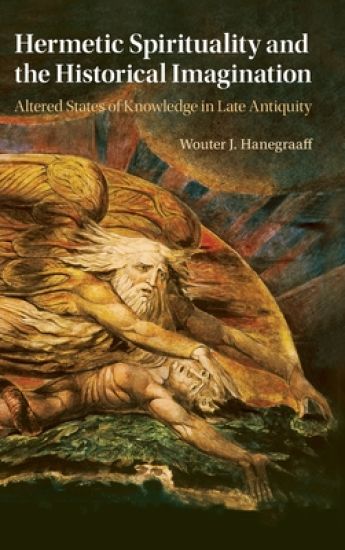
In Egypt during the first centuries CE, men and women would meet discreetly in their homes, in temple sanctuaries, or insolitary places to learn a powerful practice of spiritual liberation. They thought of themselves as followers of Hermes Trismegistus, the legendary master of ancient wisdom. While many of their writings are lost, those that survived have been interpreted primarily as philosophical treatises about theological topics. Wouter J. Hanegraaff challenges this dominant narrative by demonstrating that Hermetic literature was concerned with experiential practices intended for healing the soul from mental delusion. The Way of Hermes involved radical alterations of consciousness in which practitioners claimed to perceive the true nature of reality behind the hallucinatory veil of appearances. Hanegraaff explores how practitioners went through a training regime that involved luminous visions, exorcism, spiritual rebirth, cosmic consciousness, and union with the divine beauty of universal goodness and truth to attain the salvational knowledge known as gnôsis.
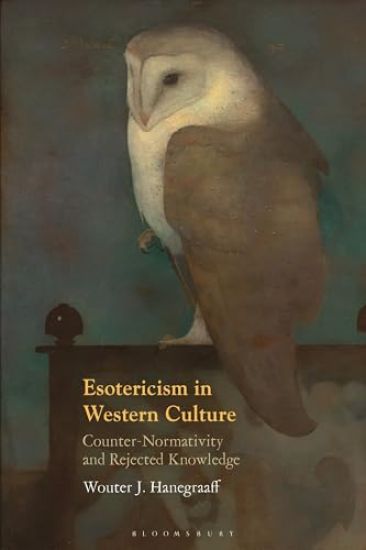
This accessible introduction by the world’s leading expert explains why the study of esotericism is not a marginal pursuit but belongs at the center of modern research in the humanities. Reflecting updates in the field since the foundational publication Western Esotericism: A Guide for the Perplexed (2013), Wouter J. Hanegraaff demonstrates that the exclusion of “rejected knowledge” from normative accounts of Western civilization is the reflection of a narrow Eurocentric ideology that became the template for discrediting and ultimately destroying so-called “primitive” cultures associated with “superstition” and “pagan idolatry” during the global colonial age. Rejecting this “rejection of rejected knowledge” means restoring the suppressed to its legitimate place in history and cultural analysis. Through this approach, Wouter J. Hanegraaff depicts a radically inclusive vision of the Greater West and its forgotten histories, from pagan antiquity through Jewish, Christian, and Islamic cultures up to secular modernity and beyond.
In Egypt during the first centuries CE, men and women would meet discreetly in their homes, in temple sanctuaries, or insolitary places to learn a powerful practice of spiritual liberation. They thought of themselves as followers of Hermes Trismegistus, the legendary master of ancient wisdom. While many of their writings are lost, those that survived have been interpreted primarily as philosophical treatises about theological topics. Wouter J. Hanegraaff challenges this dominant narrative by demonstrating that Hermetic literature was concerned with experiential practices intended for healing the soul from mental delusion. The Way of Hermes involved radical alterations of consciousness in which practitioners claimed to perceive the true nature of reality behind the hallucinatory veil of appearances. Hanegraaff explores how practitioners went through a training regime that involved luminous visions, exorcism, spiritual rebirth, cosmic consciousness, and union with the divine beauty of universal goodness and truth to attain the salvational knowledge known as gnôsis.
Kurt Almqvist; Daniel Birnbaum; Tessel M. Baudin; Briony Fer; Wouter J. Hanegraaff; Stephen Kern; Gary Lachman; Marco Pasi; Gertrud Sandqvist; Helmut Zander
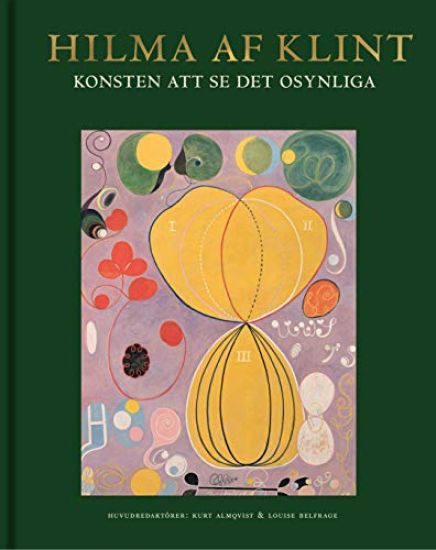
I den mest uttömmande boken om Hilma af Klint som hittills getts ut, skriver 20 specialister inom modern konst, konsthistoria, idéhistoria och religionshistoria utifrån sin unika utgångspunkt och ger sin syn på af Klints konstnärskap. Ämnena rör sig från tidig abstrakt konst och inflytandet av Darwin och Goethes färglära till betydelsen av ockulta religiösa rörelser som teosofi och antroposofi, som även influerade de tidiga modernisterna. Här finns också inslag från Hilma af Klints personliga anteckningar och efterforskningar. Boken baseras på det seminarium som hölls i samband med den häpnadsväckande framgångsrika utställningen Hilma af Klint A Pioneer of Abstraction på Moderna Museet i Stockholm 2013. Detta är en nyutgåva som innehåller ett nyskrivet bidrag av Kurt Almqvist, Hilma af Klints hemliga lära, budskap och livsåskådning, utifrån tidigare ej nyttjat källmaterial. Det bearbetar en del av historien som tidigare inte behandlats närmare: bakgrunden till Hilma af Klints lära och livsåskådning, samt utvecklingen efter hennes död 1944 och fram till bildandet av Stiftelsen Hilma af Klints verk 1972, och om den ende arvtagaren till Hilma af Klints verk, dess skapare och ende donator, antroposofen Viceamiral Erik af Klint (1901-1981). Boken har ett efterord av Daniel Birnbaum.
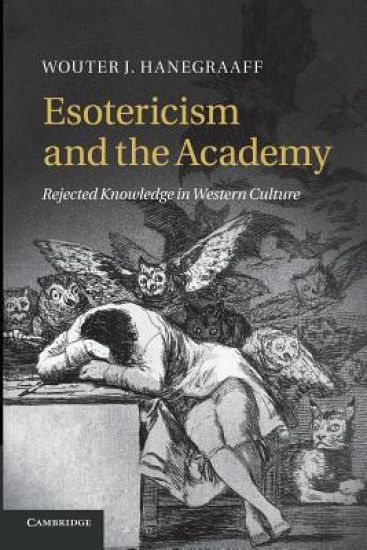
Academics tend to look on 'esoteric', 'occult' or 'magical' beliefs with contempt, but are usually ignorant about the religious and philosophical traditions to which these terms refer, or their relevance to intellectual history. Wouter Hanegraaff tells the neglected story of how intellectuals since the Renaissance have tried to come to terms with a cluster of 'pagan' ideas from late antiquity that challenged the foundations of biblical religion and Greek rationality. Expelled from the academy on the basis of Protestant and Enlightenment polemics, these traditions have come to be perceived as the Other by which academics define their identity to the present day. Hanegraaff grounds his discussion in a meticulous study of primary and secondary sources, taking the reader on an exciting intellectual voyage from the fifteenth century to the present day and asking what implications the forgotten history of exclusion has for established textbook narratives of religion, philosophy and science.
Western esotericism has been a pervasive presence in Western culture from late antiquity to the present day, but until recently it was largely ignored by scholars and surrounded by misconceptions and prejudice. This accessible guide provides readers with the basic knowledge and tools that will allow them to find their way in this bewildering but fascinating field. What is it that unites phenomena as diverse as ancient gnosticism and hermetism, the "occult sciences" of astrology, alchemy, and magic, rosicrucianism, as well as Christian theosophy, occultism, spiritualism, and the contemporary New Age spiritualities? What can the study of them teach us about our common cultural and intellectual heritage, and what is it that makes them relevant to contemporary concerns? How do we distinguish reliable historical knowledge from legends and fictions about esoteric traditions? These and many other questions are answered clearly and succinctly, so that the reader can find his way into the labyrinth of Western esotericism and out of it again.
Academics tend to look on 'esoteric', 'occult' or 'magical' beliefs with contempt, but are usually ignorant about the religious and philosophical traditions to which these terms refer, or their relevance to intellectual history. Wouter Hanegraaff tells the neglected story of how intellectuals since the Renaissance have tried to come to terms with a cluster of 'pagan' ideas from late antiquity that challenged the foundations of biblical religion and Greek rationality. Expelled from the academy on the basis of Protestant and Enlightenment polemics, these traditions have come to be perceived as the Other by which academics define their identity to the present day. Hanegraaff grounds his discussion in a meticulous study of primary and secondary sources, taking the reader on an exciting intellectual voyage from the fifteenth century to the present day and asking what implications the forgotten history of exclusion has for established textbook narratives of religion, philosophy and science.
From rumors about gnostic orgies in antiquity to the explicit erotic symbolism of alchemical texts, from the subtly coded eroticism of medieval kabbalah to the sexual magic practiced by contemporary occultists and countercultural translations of Asian Tantra, the history of Western esotericism is rich in references to the domains of eros and sexuality. This volume, which brings together an impressive array of top-level specialists, is the first to analyze the eroticism of the esoteric without sensationalism or cheap generalizations, but on the basis of expert scholarship and attention to textual and historical detail. While there are few domains where the imagination may so easily run wild, the various contributions seek to distinguish fact from fiction—only to find that historical realities are sometimes even stranger than the fantasies. In doing so, they reveal the outlines of a largely unknown history spanning more than twenty centuries.
In this meticulous study, Wouter Hanegraaff examines the structure, themes, and development of Emanuel Swedenborg's massive work Secrets of Heaven (Arcana Coelestia), published between 1749 and 1756. Written as a work of biblical exegesis (of Genesis and Exodus), Swedenborg also interpolated material on his visionary experiences, which have long fascinated readers. In the second part of the study, Dr. Hanegraaff examines the contemporary reception of the multi-volume work, particularly the critical reactions of Immanuel Kant and Friedrich Christoph Oetinger. He finds that Swedenborg's biblical exegesis, so important in his divine calling, was largely ignored in favor of the mystical experiences.
Recent years have seen a spectacular rise of the New Age movement and an ever-increasing interest in its beliefs and manifestations. This fascinating work presents the first-ever comprehensive analysis of New Age Religion and its historical backgrounds, thus providing the reader with a means of orientation in the bewildering variety of the movement. Making extensive use of primary sources, the author thematically analyses New Age beliefs from the perspective of the study of religions. While looking at the historical backgrounds of the movement, he convincingly argues that its foundations were laid by so-called western esoteric traditions during the Renaissance. Hanegraaff finally shows how the modern New Age movement emerged from the increasing secularization of those esoteric traditions during the 19th century. This ground-breaking publication is compulsive reading for all those involved or interested in the New Age movement.
Presents the first systematic analysis of the structure and beliefs of the New Age movement, and the historical emergence of "New Age" as a secularized version of Western esoteric traditions.Recent years have seen a spectacular rise of the New Age movement and an ever-increasing interest in its beliefs and manifestations. This fascinating work presents the first comprehensive analysis of New Age Religion and its historical backgrounds, thus providing a means of orientation in the bewildering variety of the movement. Making extensive use of primary sources, the author thematically analyses New Age beliefs from the perspective of the study of religions. While looking at the historical backgrounds of the movement, he convincingly argues that its foundations were laid by so-called western esoteric traditions during the Renaissance. Hanegraaff finally shows how the modern New Age movement emerged from the increasing secularization of those esoteric traditions during the nineteenth century.