Kirjojen hintavertailu. Mukana 12 390 323 kirjaa ja 12 kauppaa.
Kirjailija
Wyn Grant
Kirjat ja teokset yhdessä paikassa: 17 kirjaa, julkaisuja vuosilta 1997-2024, suosituimpien joukossa Pressure Groups and British Politics. Vertaile teosten hintoja ja tarkista saatavuus suomalaisista kirjakaupoista.
Various authors; Johnny Yeung; Yong Quan Tan; Siew Herng Chan; Kern Rei Chng; Calvin Yeo; Jer Lin Poh; Teng Yong Low; Joanne Sheot Harn Chan; Gregory Jaffe; Rüdiger Hauschild; Willem J. Ravensberg; Wyn Grant; Roma Gwynn; Manfred Lützow
This book features five peer-reviewed reviews on the development of regulatory frameworks for new agricultural products and technologies.The first chapter provides a detailed overview of the Singapore Food Agency’s regulatory framework for cultured meat, including considerations for safety assessment of cultured meat based on the concepts of Hazard Analysis Critical Control Points, Good Manufacturing Practices and Good Cell Culture Practices.The second chapter reviews the debate surrounding the regulation of genome-edited crops and considers how the Cartagena Biosafety Protocol could be applied to genome-edited products. The chapter also addresses the issues that can arise as a result of regulatory oversight.The third chapter highlights key issues in the regulation of microbial bioprotectants in the European Union (EU), focussing on the need for new products to pass risk assessments and comply with particular risk management procedures.The fourth chapter reviews the progress that has been made in adapting plant protection regulations to the specific needs of biopesticides in both a European and global context.The final chapter considers the key steps required to compile a product dossier which is needed to gain regulatory approval for new animal feed products. As an example, the chapter details the process of developing a feed additive dossier in the EU.

Football has been largely exempt from the development of the regulatory state and has been left to govern itself. However, new media have raised the profile of the game and globalization has created new pressures as football clubs become pawns in the ambitions of states, consortia and wealthy individuals. Clubs offer an important sense of identity for fans, but the impersonality and distance of ownership can set up new tensions. In addition, corruption in the international governing body has been a significant problem and the sport’s symbiotic relationship with gambling continues to be a concern. Wyn Grant examines the political economy of football and its uneasy relationship with the market. There are no off-the-shelf solutions for regulation, he argues, but the complexities of the game and its economic size demand more attention from government.
Is lobbying, particularly by ‘lobbyists for hire’, resulting in a distortion of the democratic process? Does business, with its highly sophisticated and well-resourced lobbying operations, have an undue influence on decisions by politicians? The book assess the impact of lobbying on the UK political system, the extent to which it shapes the political decision-making process and the extent to which this influence is beneficial or malign. The book outlines various lobbying groups and their methods of persuasion, plus the weakness of political action groups and social media when faced with the might of the lobbying industry. The book is ideal reading for anyone seeking an introduction to lobbying.
The Regulation of Animal Health and Welfare draws on the research of scientists, lawyers, economists and political scientists to address the current and future regulatory problems posed by the issues of animal health and disease. Recent events such as the outbreak of mad cow disease, concerns about bluetongue in sheep, and the entry into the food chain of the offspring of cloned cattle, have heightened awareness of the issues of animal disease and welfare. This book critically appraises the existing regulatory institutions and guiding principles of how best to maintain animal health in the context of social change and a developing global economy. Addressing considerations of sound science, the role of risk management, and the allocation of responsibilities, it also takes up the theoretical and practical challenges which here – and elsewhere – attend the co-operation of scientists, social scientists, lawyers and policy makers. Indeed, the collaboration of scientists and social scientists in determined and regulatory contexts such as that of animal disease is an issue of ever-increasing importance. And this book will be of considerable value to those with interests in this issue, as well as all those concerned with the law and policy relating to animal health and welfare
The Regulation of Animal Health and Welfare draws on the research of scientists, lawyers, economists and political scientists to address the current and future regulatory problems posed by the issues of animal health and disease. Recent events such as the outbreak of mad cow disease, epidemics of foot and mouth disease, concerns about bluetongue in sheep, and the entry into the food chain of the offspring of cloned cattle, have heightened awareness of the issues of regulation in animal disease and welfare. This book critically appraises the existing regulatory institutions and guiding principles of how best to maintain animal health in the context of social change and a developing global economy. Addressing considerations of sound science, the role of risk management, and the allocation of responsibilities, it also takes up the theoretical and practical challenges which here – and elsewhere – attend the co-operation of scientists, social scientists, lawyers and policy makers. Indeed, the collaboration of scientists and social scientists in determined and regulatory contexts such as that of animal disease is an issue of ever-increasing importance. This book will be of considerable value to those with interests in this issue, as well as those concerned with the law and policy relating to animal health and welfare.
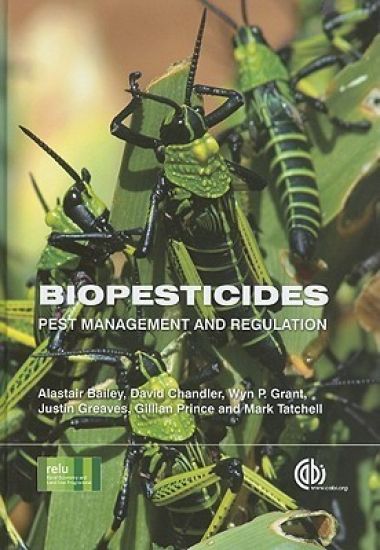
Biological controls that utilize natural predation, parasitism or other natural mechanisms, is an environmentally friendly alternative to chemical pesticides. Chemical pesticide methods are becoming less readily available due to increasing resistance problems and the prohibition of some substances. This book addresses the challenges of insufficient information and imperfectly understood regulatory processes in using biopesticides. It takes an interdisciplinary approach providing internationally comparative analyses on the registration of biopesticides and debates future biopesticide practices.
By tracing the history of the PSA, The Development of a Discipline: The History of the Political Studies Association reveals the changing nature of the study of politics in Britain and the development of British higher education. Shows how the PSA developed from a small elitist club to a highly professional disciplineOffers parallels to the development of the study of politics as a discipline in the UKAppeal extends to those who study higher education and political scientists
Greater use of biological control utilizing natural predation, parasitism or other natural mechanisms, is an environmentally friendly alternative to chemical pesticides, which are becoming less readily available due to increasing resistance problems and the prohibition of some substances. This book addresses the challenges of insufficient information and imperfectly understood regulatory processes involved in biological alternatives through an interdisciplinary approach providing an internationally comparative analysis on the registration of biopesticides and the best way forward. An essential read for researchers, students and professionals in political and biological sciences.
The second edition of this popular text provides a comprehensive introduction to the main research methods employed in the study of politics and assessment of their strengths and limitations and of ethical issues in research. It has been revised and updated throughout, and a new chapter considers the relationship between research and policy.
This book provides recent entrants to academic jobs in the humanities and social sciences with a guide to success in their chosen career. It covers how to get a job, time management, relations with colleagues, effective teaching, PhD supervision and examining, getting published and career development.
Agriculture in the New Global Economy examines the extent to which the political economy of agriculture and the food chain is being transformed by globalisation. This book highlights the important changes that have taken place in the agriculture and food system with the spread of globalisation to this traditionally local sector. Structural change and emerging technologies have contributed to this transformation, which has extended to the political environment in which agriculture operates. The authors identify four paradigms that have characterised the governance of agriculture: a traditional dependent-agriculture paradigm; a neo-liberal competitive paradigm; a multifunctional paradigm; and an emergent globalised-production paradigm. The tensions among these paradigms are developed with reference to evidence from the United States and Canada, the EU, Australia, Japan and the Global South. The book analyses the controversy over genetic modification of foodcrops, developments in agricultural trade policy at the multilateral and regional levels, changing national food policy systems, and emerging global governance arrangements for the sector. Illustrating contemporary policy debates using both theoretical perspectives and empirical evidence, this book will appeal to academics, researchers and students specialising in political science, environmental studies, agricultural economics, management and food policy. The book will also be of interest to government practitioners in agriculture and environment departments as well as international organisations such as the EU, FAO and WTO.
A comprehensive assessment of how economic policy is made in Britain at the start of the 21st century and of how the content of taxation, spending, monetary and regulatory policy has evolved since 1945. All of this is set in the context of the impact of globalization and the European Union on the autonomy of domestic policy and an assessment of the debates about British economic performance and British decline.
Written by one of Britain's leading analysts of pressure groups, this book provides comprehensive coverage of all aspects of pressure group politics in the UK and of the increasingly important EU dimension. The sleaze scandals surrounding the parliamentary lobby, grass roots direct action, the use of the media and courts and the particular importance of business, labour and consumer interests are also given full coverage.
This book offers a comprehensive analysis of the Common Agricultural Policy which imposes high costs on taxpayers and consumers yet has proved very difficult to reform. Particular emphasis is placed on new developments affecting the shape of the CAP, including the outcome of the GATT Uruguay Round negotiations, Eastern enlargement, and developments in environmental policy. A distinctive feature of the book is the attention given to situating European agriculture within its global context and in relation to the food processing and agricultural supply industries.