Kirjojen hintavertailu. Mukana 12 390 323 kirjaa ja 12 kauppaa.

Kirjailija

XI Zhu

Kirjat ja teokset yhdessä paikassa: 8 kirjaa, julkaisuja vuosilta 2017-2025, suosituimpien joukossa Confucian Cosmogony. Vertaile teosten hintoja ja tarkista saatavuus suomalaisista kirjakaupoista.

8 kirjaa

Kirjojen julkaisuhaarukka 2017-2025.

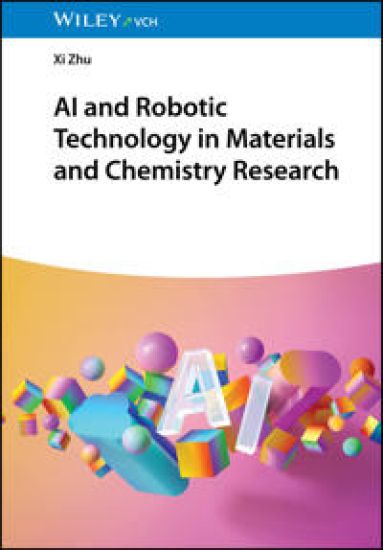
AI and Robotic Technology in Materials and Chemistry Research
A singular resource for researchers seeking to apply artificial intelligence and robotics to materials science In AI and Robotic Technology in Materials and Chemistry Research, distinguished researcher Dr. Xi Zhu delivers an incisive and practical guide to the use of artificial intelligence and robotics in materials science and chemistry. Dr. Zhu explains the principles of AI from the perspective of a scientific researcher, including the challenges of applying the technology to chemical and biomaterials design. He offers concise interviews and surveys of highly regarded industry professionals and highlights the interdisciplinary and broad applicability of widely available AI tools like ChatGPT. The book covers computational methods and approaches from algorithms, models, and experimental data systems, and includes case studies that showcase the real-world applications of artificial intelligence and lab automation in a variety of scientific research settings from around the world. You’ll also find: A thorough introduction to the challenges currently being faced by chemists and materials science researchersComprehensive explorations of autonomous laboratories powered by artificial intelligence and roboticsPractical discussions of a blockchain-powered anti-counterfeiting experimental data system in an autonomous laboratoryIn-depth treatments of large language models as applied to autonomous materials research Perfect for materials scientists, analytical chemists, and robotics engineers, AI and Robotic Technology in Materials and Chemistry Research will also benefit analytical and pharmaceutical chemists, computer analysts, and other professionals and researchers with an interest in artificial intelligence and robotics.
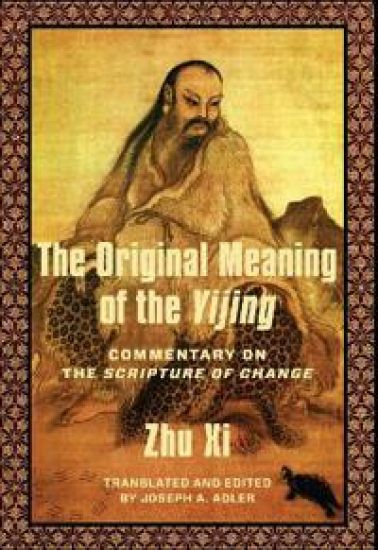
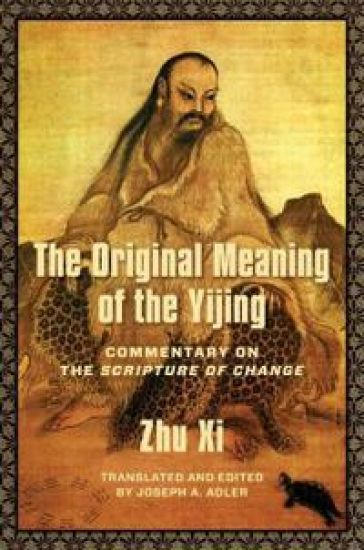
The Original Meaning of the Yijing

The Original Meaning of the Yijing

Xi Zhu

Columbia University Press
2024
pokkari
The Yijing (I Ching), or Scripture of Change, is traditionally considered the first and most profound of the Chinese classics. Originally a divination manual based on trigrams and hexagrams, by the beginning of the first millennium it had acquired written explanations and a series of appendices attributed to Confucius, which transformed it into a work of wisdom literature as well as divination. Over the centuries, hundreds of commentaries were written on it, but for the past thousand years, one of the most influential has been that of Zhu Xi (1130–1200), who synthesized the major interpretive approaches to the text and integrated it into his system of moral self-cultivation.Joseph A. Adler’s translation of the Yijing includes for the first time in English Zhu Xi’s commentary in full. Adler explores Zhu Xi’s interpretation of the text and situates it in the context of his overall theoretical system. Zhu Xi held that the Yijing was originally composed for the purpose of divination by the mythic sage Fuxi, who intended to create a system to aid decision making. The text’s meaning, therefore, could not be captured by a single commentator; it would emerge for each person through the process of divination. This translation makes available to the English-language audience a crucial text in the history of Chinese religion and philosophy, with an introduction and translator’s notes that explain its intellectual and historical context.
Zhu Xi

Zhu Xi

Xi Zhu

Columbia University Press
2022
sidottu
Zhu Xi (1130–1200) was the preeminent Confucian thinker of the Song dynasty (960–1279). His teachings profoundly influenced China, where for centuries after his death they formed the basis of the country’s educational system. In Korea, Japan, and Vietnam as well, elites embraced his inspired and authoritative synthesis of Confucian thought.In Zhu’s eyes, the great Way of China was in decline, with its very survival threatened by external enemies and internal moral weakness. In his writings and teaching, Zhu took as his mission the revival of the Confucian tradition, the source of China’s greatness, and its transmission to future generations. For him, restoring Confucianism to its rightful place required drawing on the tradition’s whole sweep, from the sacred texts of the sages and worthies of antiquity to the more recent writings of the great thinkers of the tenth and eleventh centuries.This book presents the essential teachings of the new Confucian (“Neo-Confucian”) philosophical system that Zhu Xi forged, providing a concise introduction to one of the most important figures in the history of Chinese thought. It offers selections from the Classified Conversations of Master Zhu (Zhuzi yulei), a lengthy collection of Zhu’s conversations with disciples. In these texts, Zhu Xi reflects on the Confucian teachings of the past, revising and refining his understanding of them and shaping that understanding into a cohesive system of thought. Daniel K. Gardner’s translation renders these discussions and sayings in a conversational style that is accessible to new and more advanced readers alike.
Zhu Xi

Zhu Xi

Xi Zhu

Columbia University Press
2022
pokkari
Zhu Xi (1130–1200) was the preeminent Confucian thinker of the Song dynasty (960–1279). His teachings profoundly influenced China, where for centuries after his death they formed the basis of the country’s educational system. In Korea, Japan, and Vietnam as well, elites embraced his inspired and authoritative synthesis of Confucian thought.In Zhu’s eyes, the great Way of China was in decline, with its very survival threatened by external enemies and internal moral weakness. In his writings and teaching, Zhu took as his mission the revival of the Confucian tradition, the source of China’s greatness, and its transmission to future generations. For him, restoring Confucianism to its rightful place required drawing on the tradition’s whole sweep, from the sacred texts of the sages and worthies of antiquity to the more recent writings of the great thinkers of the tenth and eleventh centuries.This book presents the essential teachings of the new Confucian (“Neo-Confucian”) philosophical system that Zhu Xi forged, providing a concise introduction to one of the most important figures in the history of Chinese thought. It offers selections from the Classified Conversations of Master Zhu (Zhuzi yulei), a lengthy collection of Zhu’s conversations with disciples. In these texts, Zhu Xi reflects on the Confucian teachings of the past, revising and refining his understanding of them and shaping that understanding into a cohesive system of thought. Daniel K. Gardner’s translation renders these discussions and sayings in a conversational style that is accessible to new and more advanced readers alike.
The Original Meaning of the Yijing

The Original Meaning of the Yijing

Xi Zhu

Columbia University Press
2019
sidottu
The Yijing (I Ching), or Scripture of Change, is traditionally considered the first and most profound of the Chinese classics. Originally a divination manual based on trigrams and hexagrams, by the beginning of the first millennium it had acquired written explanations and a series of appendices attributed to Confucius, which transformed it into a work of wisdom literature as well as divination. Over the centuries, hundreds of commentaries were written on it, but for the past thousand years, one of the most influential has been that of Zhu Xi (1130–1200), who synthesized the major interpretive approaches to the text and integrated it into his system of moral self-cultivation.Joseph A. Adler’s translation of the Yijing includes for the first time in English Zhu Xi’s commentary in full. Adler explores Zhu Xi’s interpretation of the text and situates it in the context of his overall theoretical system. Zhu Xi held that the Yijing was originally composed for the purpose of divination by the mythic sage Fuxi, who intended to create a system to aid decision making. The text’s meaning, therefore, could not be captured by a single commentator; it would emerge for each person through the process of divination. This translation makes available to the English-language audience a crucial text in the history of Chinese religion and philosophy, with an introduction and translator’s notes that explain its intellectual and historical context.
Confucian Cosmogony

Confucian Cosmogony

XI Zhu; Thomas R H Macclatchie

Hansebooks
2017
pokkari
Confucian Cosmogony - a translation of section forty-nine of the complete Works of the philosopher Choo-Foo-Tze is an unchanged, high-quality reprint of the original edition of 1874. Hansebooks is editor of the literature on different topic areas such as research and science, travel and expeditions, cooking and nutrition, medicine, and other genres. As a publisher we focus on the preservation of historical literature. Many works of historical writers and scientists are available today as antiques only. Hansebooks newly publishes these books and contributes to the preservation of literature which has become rare and historical knowledge for the future.