Kirjojen hintavertailu. Mukana 12 595 353 kirjaa ja 12 kauppaa.
Kirjailija
Xiang Xu
Kirjat ja teokset yhdessä paikassa: 10 kirjaa, julkaisuja vuosilta 2016-2025, suosituimpien joukossa Exploração do enfaixamento dos pés na dança clássica chinesa. Vertaile teosten hintoja ja tarkista saatavuus suomalaisista kirjakaupoista.
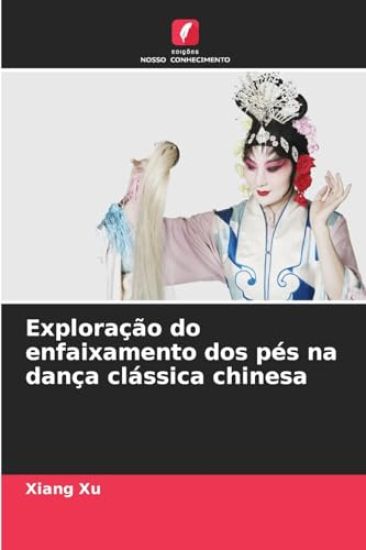
O principal objetivo deste livro explorar e analisar as emo es chinesas desconhecidas que se escondem por detr s do movimento "Yuanchangbu" e descobrir o significado que lhe est subjacente de um ponto de vista cultural e hist rico. Redescobriremos alguns dos sil ncios da hist ria e recuperaremos a psicologia, a emo o e o movimento da dan a cl ssica chinesa. Por conseguinte, este trabalho ir , em primeiro lugar, definir "Yuanchangbu" como uma pista para explorar a forma como o movimento da vida quotidiana se transformou no movimento da dan a cl ssica chinesa. Para al m disso, devido ao impacto da antiga cultura chinesa de enfaixar os p s na forma o de "Yuanchangbu", este livro, baseado na investiga o do movimento, ir tamb m explorar a era do enfaixar dos p s. Compreenderemos a evolu o do estilo de vida dos homens e das mulheres chineses desde a era do p natural at ao enfaixamento dos p s. E, neste momento, desencadear uma reflex o mais aprofundada sobre a cultura e o estilo da dan a tradicional chinesa atrav s da "cultura do enfaixamento dos p s".
Das Hauptziel dieses Buches ist es, die unbekannten chinesischen Emotionen, die sich hinter der Bewegung "Yuanchangbu" verbergen, zu erforschen und zu analysieren und die Bedeutung dahinter aus kultureller und historischer Sicht herauszufinden. Wir werden einige der stillen Stellen in der Geschichte wiederentdecken und die Psychologie, die Emotion und die Bewegung des klassischen chinesischen Tanzes wiederherstellen. In diesem Beitrag wird daher zun chst anhand von "Yuanchangbu" untersucht, wie sich die Bewegungen des t glichen Lebens zu den Bewegungen des klassischen chinesischen Tanzes entwickelt haben. Aufgrund des Einflusses der alten chinesischen Fu bindekultur auf die Entstehung des "Yuanchangbu" wird dieses Buch auf der Grundlage von Untersuchungen der Bewegung auch die ra der Fu bindung untersuchen. Wir werden den Wandel des Lebensstils chinesischer M nner und Frauen von der ra des nat rlichen Fu es bis zur Fu bindung verstehen. Und in diesem Moment wird die "Fu bindekultur" weitere Gedanken ber die Kultur und den Stil des traditionellen chinesischen Tanzes ausl sen.
Gl wnym celem tej książki jest zbadanie i przeanalizowanie nieznanych chińskich emocji ukrytych za ruchem "Yuanchangbu" oraz odkrycie jego znaczenia z kulturowego i historycznego punktu widzenia. Odkryjemy na nowo niekt re z przemilczeń w historii i przywr cimy psychologię, emocje i ruch chińskiego tańca klasycznego. W związku z tym w niniejszym artykule po pierwsze, "Yuanchangbu" posluży jako wskaz wka do zbadania, w jaki spos b ruch w życiu codziennym przeksztalcil się w ruch chińskiego tańca klasycznego. Ponadto, ze względu na wplyw starożytnej chińskiej kultury wiązania st p na ksztaltowanie się "Yuanchangbu", niniejsza książka, oparta na badaniach ruchu, będzie r wnież badac erę wiązania st p. Zrozumiemy zmieniający się styl życia chińskich mężczyzn i kobiet od ery naturalnej stopy do wiązania st p. W tym momencie wywolamy dalsze przemyślenia na temat kultury i stylu chińskiego tańca tradycyjnego poprzez "kulturę wiązania st p".
L'objectif principal de ce livre est d'explorer et d'analyser les motions chinoises inconnues cach es derri re le mouvement Yuanchangbu, et d'en d couvrir la signification d'un point de vue culturel et historique. Nous red couvrirons certains silences de l'histoire et restaurerons la psychologie, l' motion et le mouvement de la danse classique chinoise. C'est pourquoi cet article se propose tout d'abord d'utiliser le Yuanchangbu comme indice pour explorer la mani re dont le mouvement de la vie quotidienne s'est transform en mouvement de la danse classique chinoise. En outre, en raison de l'impact de l'ancienne culture chinoise des pieds band s sur la formation du Yuanchangbu, ce livre, bas sur la recherche du mouvement, explorera galement l' re des pieds band s. Nous comprendrons l' volution du mode de vie des Chinois et des Chinoises depuis l' re du pied naturel jusqu' celle du bandage des pieds. C'est ce moment-l qu'une r flexion plus approfondie sur la culture et le style de la danse traditionnelle chinoise sera lanc e gr ce la culture du pied band .
Lo scopo principale di questo libro quello di esplorare e analizzare le sconosciute emozioni cinesi nascoste dietro il movimento "Yuanchangbu" e di scoprirne il significato da un punto di vista storico e culturale. Riscopriremo alcuni dei silenzi della storia e ripristineremo la psicologia, l'emozione e il movimento della danza classica cinese. Per questo motivo, il presente lavoro intende innanzitutto definire "Yuanchangbu" come un indizio attraverso il quale esplorare come il movimento della vita quotidiana si sia sviluppato nel movimento della danza classica cinese. Inoltre, dato l'impatto dell'antica cultura cinese della legatura dei piedi sulla formazione dello "Yuanchangbu", questo libro, basandosi sulla ricerca del movimento, esplorer anche l'epoca della legatura dei piedi. Comprenderemo il cambiamento dello stile di vita degli uomini e delle donne cinesi dall'epoca del piede naturale a quella della legatura dei piedi. E in questo momento si aprir un'ulteriore riflessione sulla cultura e sullo stile della danza tradizionale cinese attraverso la "cultura della legatura dei piedi".
It is reasonable to combine them together to achieve impressive classification performance, as the combined feature takes the advantages of the two kinds of features in different aspects. Finally, the authors design a Co-occurrence Differential Texton (CoDT) feature to represent the local image patches of HEp-2 cells.
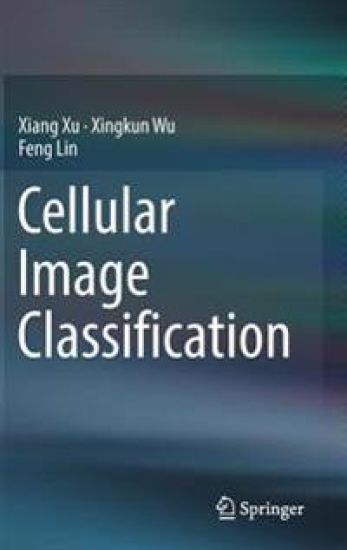
This book introduces new techniques for cellular image feature extraction, pattern recognition and classification. The authors use the antinuclear antibodies (ANAs) in patient serum as the subjects and the Indirect Immunofluorescence (IIF) technique as the imaging protocol to illustrate the applications of the described methods. Throughout the book, the authors provide evaluations for the proposed methods on two publicly available human epithelial (HEp-2) cell datasets: ICPR2012 dataset from the ICPR'12 HEp-2 cell classification contest and ICIP2013 training dataset from the ICIP'13 Competition on cells classification by fluorescent image analysis. First, the reading of imaging results is significantly influenced by one’s qualification and reading systems, causing high intra- and inter-laboratory variance. The authors present a low-order LP21 fiber mode for optical single cell manipulation and imaging staining patterns of HEp-2 cells. A focused four-lobed mode distribution is stable and effective in optical tweezer applications, including selective cell pick-up, pairing, grouping or separation, as well as rotation of cell dimers and clusters. Both translational dragging force and rotational torque in the experiments are in good accordance with the theoretical model. With a simple all-fiber configuration, and low peak irradiation to targeted cells, instrumentation of this optical chuck technology will provide a powerful tool in the ANA-IIF laboratories. Chapters focus on the optical, mechanical and computing systems for the clinical trials. Computer programs for GUI and control of the optical tweezers are also discussed. to more discriminative local distance vector by searching for local neighbors of the local feature in the class-specific manifolds. Encoding and pooling the local distance vectors leads to salient image representation. Combined with the traditional coding methods, this method achieves higherclassification accuracy. Then, a rotation invariant textural feature of Pairwise Local Ternary Patterns with Spatial Rotation Invariant (PLTP-SRI) is examined. It is invariant to image rotations, meanwhile it is robust to noise and weak illumination. By adding spatial pyramid structure, this method captures spatial layout information. While the proposed PLTP-SRI feature extracts local feature, the BoW framework builds a global image representation. It is reasonable to combine them together to achieve impressive classification performance, as the combined feature takes the advantages of the two kinds of features in different aspects. Finally, the authors design a Co-occurrence Differential Texton (CoDT) feature to represent the local image patches of HEp-2 cells. The CoDT feature reduces the information loss by ignoring the quantization while it utilizes the spatial relations among the differential micro-texton feature. Thus it can increase the discriminative power. A generative model adaptively characterizes the CoDT feature space of the training data. Furthermore, exploiting a discriminant representation allows for HEp-2 cell images based on the adaptive partitioned feature space. Therefore, the resulting representation is adapted to the classification task. By cooperating with linear Support Vector Machine (SVM) classifier, this framework can exploit the advantages of both generative and discriminative approaches for cellular image classification. The book is written for those researchers who would like to develop their own programs, and the working MatLab codes are included for all the important algorithms presented. It can also be used as a reference book for graduate students and senior undergraduates in the area of biomedical imaging, image feature extraction, pattern recognition and classification. Academics, researchers, and professional will find this to be an exceptional resource.