Kirjojen hintavertailu. Mukana 12 657 676 kirjaa ja 12 kauppaa.
Kirjailija
Xiangming Chen
Kirjat ja teokset yhdessä paikassa: 7 kirjaa, julkaisuja vuosilta 2002-2025, suosituimpien joukossa Introduction to Cities. Vertaile teosten hintoja ja tarkista saatavuus suomalaisista kirjakaupoista.
The revised and updated second edition of Introduction to Cities explores why cities are such a vital part of the human experience and how they shape our everyday lives. Written in engaging and accessible terms, Introduction to Cities examines the study of cities through two central concepts: that cities are places, where people live, form communities, and establish their own identities, and that they are spaces, such as the inner city and the suburb, that offer a way to configure and shape the material world and natural environment. Introduction to Cities covers the theory of cities from an historical perspective right through to the most recent theoretical developments. The authors offer a balanced account of life in cities and explore both positive and negative themes. In addition, the text takes a global approach, with examples ranging from Berlin and Chicago to Shanghai and Mumbai. The book is extensively illustrated with updated maps, charts, tables, and photographs. This new edition also includes a new section on urban planning as well as new chapters on cities as contested spaces, exploring power and politics in an urban context. It contains; information on the status of poor and marginalized groups and the impact of neoliberal policies; material on gender and sexuality; and presents a greater range of geographies with more attention to European, Latin American, and African cities. Revised and updated, Introduction to Cities provides a complete introduction to the history, evolution, and future of our modern cities.
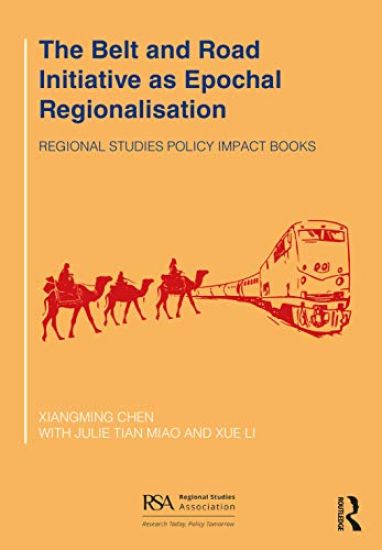
The Belt and Road Initiative (BRI), launched by China in 2013, carries and projects powerful regional dimensions and transformations, with short- and long-term global, national and local consequences. The BRI’s regional significance lies in its designation and creation of several cross-border corridors that originate from inside China and extend out into its neighbouring countries, and those farther afield in Asia, Africa and Europe. Through driving and facilitating new trade and infrastructure connections along and beyond these corridors, the BRI has begun to reshape the master processes of globalisation, urbanisation and development by affecting the economic, social and spatial fortunes of many countries and cities.This book serves two purposes. First, through a new framework and three case studies, it examines the BRI’s impacts on globalisation, urbanisation and development via the China-Europe Freight Train, the paired construction of a new city and railway across the China-Laos borderland and the port-park-city development corridor between Djibouti and Ethiopia. Second, the comparative analysis and evidence guide the book to advance policy recommendations for targeted stakeholders that can potentially turn the BRI into a global public good with greater benefits and fewer risks.
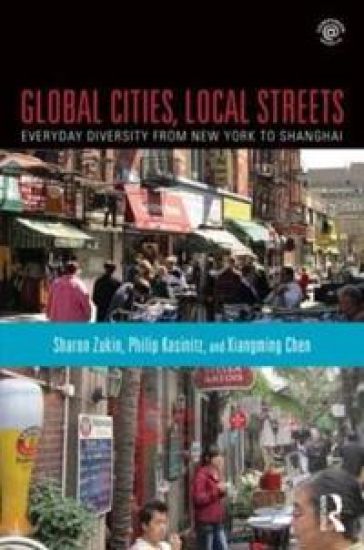
Global Cities, Local Streets: Everyday Diversity from New York to Shanghai, a cutting-edge text/ethnography, reports on the rapidly expanding field of global, urban studies through a unique pairing of six teams of urban researchers from around the world. The authors present shopping streets from each city – New York, Shanghai, Amsterdam, Berlin, Toronto, and Tokyo – how they have changed over the years, and how they illustrate globalization embedded in local communities. This is an ideal addition to courses in urbanization, consumption, and globalization.The book’s companion website, www.globalcitieslocalstreets.org, has additional videos, images, and maps, alongside a forum where students and instructors can post their own shopping street experiences.
Global Cities, Local Streets: Everyday Diversity from New York to Shanghai, a cutting-edge text/ethnography, reports on the rapidly expanding field of global, urban studies through a unique pairing of six teams of urban researchers from around the world. The authors present shopping streets from each city – New York, Shanghai, Amsterdam, Berlin, Toronto, and Tokyo – how they have changed over the years, and how they illustrate globalization embedded in local communities. This is an ideal addition to courses in urbanization, consumption, and globalization.The book’s companion website, www.globalcitieslocalstreets.org, has additional videos, images, and maps, alongside a forum where students and instructors can post their own shopping street experiences.
As do other mighty forces such as wars, nationalist aspirations, and the shifting courses of great rivers, globalization changes the world's borders by bending them out of shape and creating new transnational spaces. State political boundaries no longer draw the definitive line in people's lives they once did. Borders continue to contain self-described national populations and national activities, but the penetration of economic globalization via growing cross-border trade, investment, and resurgence of myriad regional ethnic groups is pushing and stretching the limits of borders into both interactive spaces and contested terrains. Indeed, new power centers with their own identities are springing out of once politically trivial and economically marginal landscapes. While the terrorist attacks of 2001 and the SARS outbreak of 2003 prompted states to tighten border controls, their efforts amount to only a temporary reversal of a powerful long-term trend toward more open borders and the interactive transnational spaces that openness fosters. This innovative book examines the complexities of de-bordering and re-bordering through a structured comparison of seven transborder subregions along the western Pacific Rim and an extended comparative analysis of the U.S.-Mexico border and several European border regions. Xiangming Chen offers a synthetic explanation for the complex and diverse processes and outcomes of economic growth, social transformation, infrastructure development, and urban landscapes in the new transnational spaces around the porous and mutated borders on the Pacific Rim and beyond.
The World of Cities is a concise theoretical and empirical introduction to urban sociology. In clear and engaging terms, the book surveys and critiques all the major theoretical perspectives in urban studies. Provides a concise introduction to urban sociology. Uses clear and engaging terms. Surveys the main theoretical models of urban studies. Includes empirical data on contemporary cities and neighborhoods, and the impact of the world economy on city life. Features a discussion of the current reconstructive efforts of educational, political, and business leaders to improve cities and maintain their civic culture.