Kirjojen hintavertailu. Mukana 12 595 353 kirjaa ja 12 kauppaa.

Kirjailija

Xiaofei Wang

Kirjat ja teokset yhdessä paikassa: 8 kirjaa, julkaisuja vuosilta 2018-2023, suosituimpien joukossa Integrating Edge Intelligence and Blockchain. Vertaile teosten hintoja ja tarkista saatavuus suomalaisista kirjakaupoista.

8 kirjaa

Kirjojen julkaisuhaarukka 2018-2023.

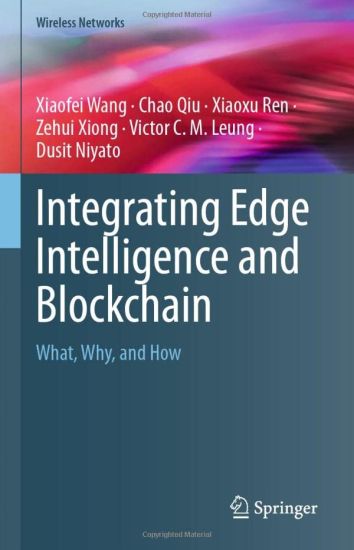
Integrating Edge Intelligence and Blockchain

Integrating Edge Intelligence and Blockchain

Xiaofei Wang; Chao Qiu; Xiaoxu Ren; Zehui Xiong; Victor C. M. Leung; Dusit Niyato

Springer International Publishing AG
2022
sidottu
This book examines whether the integration of edge intelligence (EI) and blockchain (BC) can open up new horizons for providing ubiquitous intelligent services. Accordingly, the authors conduct a summarization of the recent research efforts on the existing works for EI and BC, further painting a comprehensive picture of the limitation of EI and why BC could benefit EI. To examine how to integrate EI and BC, the authors discuss the BC-driven EI and tailoring BC to EI, including an overview, motivations, and integrated frameworks. Finally, some challenges and future directions are explored. The book explores the technologies associated with the integrated system between EI and BC, and further bridges the gap between immature BC and EI-amicable BC.Explores the integration of edge intelligence (EI) and blockchain (BC), including their integrated motivations, frameworks and challenges;Presents how BC-driven EI can realize computing-power management, data administration, and model optimization;Describes how to tailor BC to better support EI, including flexible consensus protocol, effective incentive mechanism, intellectuality smart contract, and scalable BC system tailoring;Presents some key research challenges and future directions for the integrated system.
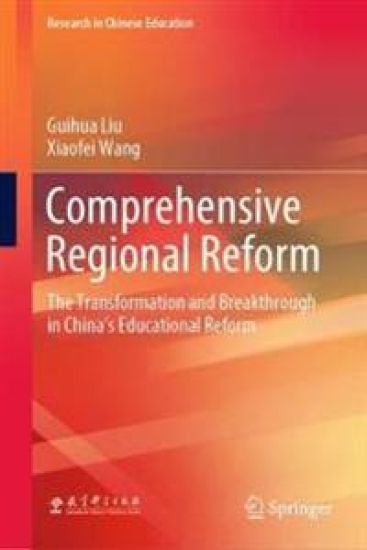
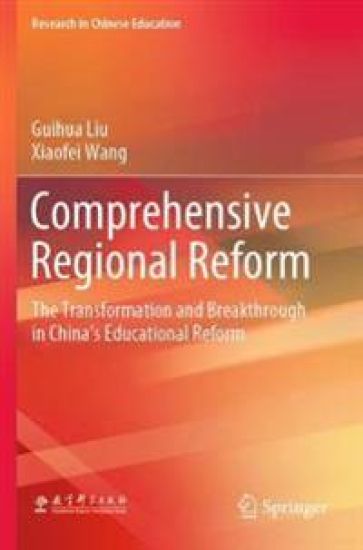
Comprehensive Regional Reform

Comprehensive Regional Reform

Guihua Liu; Xiaofei Wang

Springer Verlag, Singapore
2020
sidottu
This book ambitiously presents the current directions and goals of the Chinese idea of modernization in education. Searching for a neutral way to understand educational reform and policy-making in the midst of many different theories in the field, the authors combine the theories of ecology, regional studies, and educational philosophy to focus on the hot topics relating to the current problems in Chinese education. In addition to the theory of education, it offers an interdisciplinary approach to educational policy and administration, including perspectives from history, evaluation and (big) data processing, modernization, planning-making, curriculum and teaching, element analysis etc. within or beyond the limits of education.This book is a valuable resource for policy-makers and administrators as well as teachers and students majoring in education or related fields. It is also beneficial to those interested in interdisciplinary approaches to educational theory studies and regional studies in education, and practitioners in schools and higher education institutes as well as anyone wanting insights into Chinese education from the perspective of regional studies.
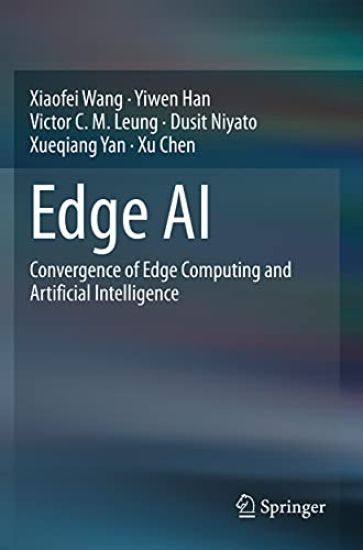
Edge AI

Edge AI

Xiaofei Wang; Yiwen Han; Victor C. M. Leung; Dusit Niyato; Xueqiang Yan; Xu Chen

Springer Verlag, Singapore
2020
sidottu
As an important enabler for changing people’s lives, advances in arti?cial intelligence (AI)-based applications and services are on the rise, despite being hindered by ef?ciency and latency issues. By focusing on deep learning as the most representative technique of AI, this book provides a comprehensive overview of how AI services are being applied to the network edge near the data sources, and demonstrates how AI and edge computing can be mutually beneficial. To do so, it introduces and discusses: 1) edge intelligence and intelligent edge; and 2) their implementation methods and enabling technologies, namely AI training and inference in the customized edge computing framework. Gathering essential information previously scattered across the communication, networking, and AI areas, the book can help readers to understand the connections between key enabling technologies, e.g. a) AI applications in edge; b) AI inference in edge; c) AI training for edge; d) edge computing for AI; and e)using AI to optimize edge. After identifying these five aspects, which are essential for the fusion of edge computing and AI, it discusses current challenges and outlines future trends in achieving more pervasive and fine-grained intelligence with the aid of edge computing.
Integrating Edge Intelligence and Blockchain

Integrating Edge Intelligence and Blockchain

Xiaofei Wang; Chao Qiu; Xiaoxu Ren; Zehui Xiong; Victor C. M. Leung; Dusit Niyato

Springer International Publishing AG
2023
nidottu
This book examines whether the integration of edge intelligence (EI) and blockchain (BC) can open up new horizons for providing ubiquitous intelligent services. Accordingly, the authors conduct a summarization of the recent research efforts on the existing works for EI and BC, further painting a comprehensive picture of the limitation of EI and why BC could benefit EI. To examine how to integrate EI and BC, the authors discuss the BC-driven EI and tailoring BC to EI, including an overview, motivations, and integrated frameworks. Finally, some challenges and future directions are explored. The book explores the technologies associated with the integrated system between EI and BC, and further bridges the gap between immature BC and EI-amicable BC.Explores the integration of edge intelligence (EI) and blockchain (BC), including their integrated motivations, frameworks and challenges;Presents how BC-driven EI can realize computing-power management, data administration, and model optimization;Describes how to tailor BC to better support EI, including flexible consensus protocol, effective incentive mechanism, intellectuality smart contract, and scalable BC system tailoring;Presents some key research challenges and future directions for the integrated system.
Comprehensive Regional Reform

Comprehensive Regional Reform

Guihua Liu; Xiaofei Wang

SPRINGER VERLAG, SINGAPORE
2021
nidottu
This book ambitiously presents the current directions and goals of the Chinese idea of modernization in education. Searching for a neutral way to understand educational reform and policy-making in the midst of many different theories in the field, the authors combine the theories of ecology, regional studies, and educational philosophy to focus on the hot topics relating to the current problems in Chinese education. In addition to the theory of education, it offers an interdisciplinary approach to educational policy and administration, including perspectives from history, evaluation and (big) data processing, modernization, planning-making, curriculum and teaching, element analysis etc. within or beyond the limits of education.This book is a valuable resource for policy-makers and administrators as well as teachers and students majoring in education or related fields. It is also beneficial to those interested in interdisciplinary approaches to educational theory studies and regional studies in education, and practitioners in schools and higher education institutes as well as anyone wanting insights into Chinese education from the perspective of regional studies.
Edge AI

Edge AI

Xiaofei Wang; Yiwen Han; Victor C. M. Leung; Dusit Niyato; Xueqiang Yan; Xu Chen

SPRINGER VERLAG, SINGAPORE
2021
nidottu
As an important enabler for changing people’s lives, advances in arti?cial intelligence (AI)-based applications and services are on the rise, despite being hindered by ef?ciency and latency issues. By focusing on deep learning as the most representative technique of AI, this book provides a comprehensive overview of how AI services are being applied to the network edge near the data sources, and demonstrates how AI and edge computing can be mutually beneficial. To do so, it introduces and discusses: 1) edge intelligence and intelligent edge; and 2) their implementation methods and enabling technologies, namely AI training and inference in the customized edge computing framework. Gathering essential information previously scattered across the communication, networking, and AI areas, the book can help readers to understand the connections between key enabling technologies, e.g. a) AI applications in edge; b) AI inference in edge; c) AI training for edge; d) edge computing for AI; and e)using AI to optimize edge. After identifying these five aspects, which are essential for the fusion of edge computing and AI, it discusses current challenges and outlines future trends in achieving more pervasive and fine-grained intelligence with the aid of edge computing.
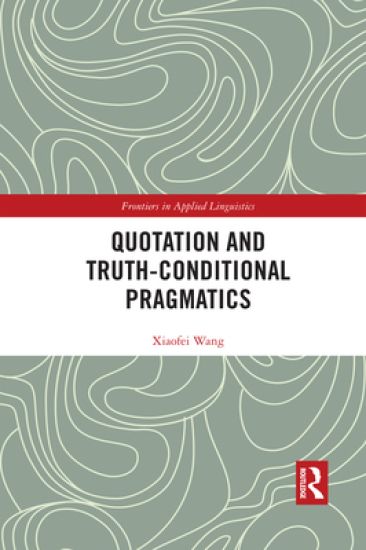
Quotation and Truth-Conditional Pragmatics
In the past decades, quotation theories have developed roughly along three lines—quotation types, meaning effects, and theoretical orientations toward the semantics/pragmatics distinction. Currently, whether the quoted expression is truth-conditionally relevant to the quotational sentence, and if there is a truth-conditional impact, whether it is generated via semantic or pragmatic processes, have become the central concerns of quotation studies.In this book, quotation is clearly defined for the first time as a constituent embedded within yet distinctive from the quotational sentence. Also, as the first monograph to address the semantics/pragmatics boundary dispute over quotation, it argues that the semantic content of quotation amounts to its contribution to the intuitive truth-conditional content of the quotational utterance via two modes of presentation, which are incarnated in the functioning of quotation marks and manifested as use and mention. The use/mention-based analysis in this book can shed light on the semantic theorizing of other metalinguistic phenomena, while the semantics/pragmatics perspective will provide methodological implications for other relevant studies.The new conception of quotation and thought-provoking analysis on use/mention, truth-conditional pragmatics, and the semantics/pragmatics boundary in this book will appeal to scholars and students in philosophy of language and linguistics. It will also serve as a clear guide to the current state of quotation studies and how to formulate a semantic theory of quotation.
Quotation and Truth-Conditional Pragmatics
In the past decades, quotation theories have developed roughly along three lines—quotation types, meaning effects, and theoretical orientations toward the semantics/pragmatics distinction. Currently, whether the quoted expression is truth-conditionally relevant to the quotational sentence, and if there is a truth-conditional impact, whether it is generated via semantic or pragmatic processes, have become the central concerns of quotation studies.In this book, quotation is clearly defined for the first time as a constituent embedded within yet distinctive from the quotational sentence. Also, as the first monograph to address the semantics/pragmatics boundary dispute over quotation, it argues that the semantic content of quotation amounts to its contribution to the intuitive truth-conditional content of the quotational utterance via two modes of presentation, which are incarnated in the functioning of quotation marks and manifested as use and mention. The use/mention-based analysis in this book can shed light on the semantic theorizing of other metalinguistic phenomena, while the semantics/pragmatics perspective will provide methodological implications for other relevant studies.The new conception of quotation and thought-provoking analysis on use/mention, truth-conditional pragmatics, and the semantics/pragmatics boundary in this book will appeal to scholars and students in philosophy of language and linguistics. It will also serve as a clear guide to the current state of quotation studies and how to formulate a semantic theory of quotation.