Kirjojen hintavertailu. Mukana 12 595 353 kirjaa ja 12 kauppaa.

Kirjailija

Xiaohui Huang

Kirjat ja teokset yhdessä paikassa: 3 kirjaa, julkaisuja vuosilta 2023-2025, suosituimpien joukossa Video Based Machine Learning for Traffic Intersections. Vertaile teosten hintoja ja tarkista saatavuus suomalaisista kirjakaupoista.

3 kirjaa

Kirjojen julkaisuhaarukka 2023-2025.

Video Based Machine Learning for Traffic Intersections

Video Based Machine Learning for Traffic Intersections

Tania Banerjee; Xiaohui Huang; Aotian Wu; Ke Chen; Anand Rangarajan; Sanjay Ranka

TAYLOR FRANCIS LTD
2025
nidottu
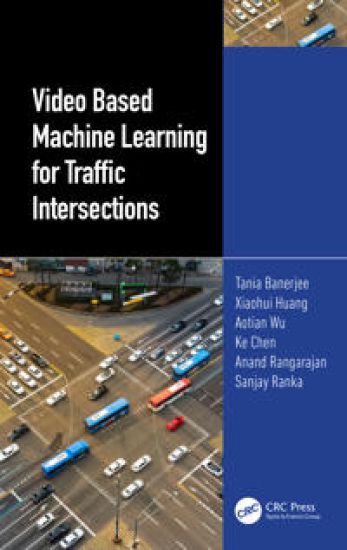
Video Based Machine Learning for Traffic Intersections describes the development of computer vision and machine learning-based applications for Intelligent Transportation Systems (ITS) and the challenges encountered during their deployment. This book presents several novel approaches, including a two-stream convolutional network architecture for vehicle detection, tracking, and near-miss detection; an unsupervised approach to detect near-misses in fisheye intersection videos using a deep learning model combined with a camera calibration and spline-based mapping method; and algorithms that utilize video analysis and signal timing data to accurately detect and categorize events based on the phase and type of conflict in pedestrian-vehicle and vehicle-vehicle interactions.The book makes use of a real-time trajectory prediction approach, combined with aligned Google Maps information, to estimate vehicle travel time across multiple intersections. Novel visualization software, designed by the authors to serve traffic practitioners, is used to analyze the efficiency and safety of intersections. The software offers two modes: a streaming mode and a historical mode, both of which are useful to traffic engineers who need to quickly analyze trajectories to better understand traffic behavior at an intersection.Overall, this book presents a comprehensive overview of the application of computer vision and machine learning to solve transportation-related problems. Video Based Machine Learning for Traffic Intersections demonstrates how these techniques can be used to improve safety, efficiency, and traffic flow, as well as identify potential conflicts and issues before they occur. The range of novel approaches and techniques presented offers a glimpse of the exciting possibilities that lie ahead for ITS research and development.Key Features:Describes the development and challenges associated with Intelligent Transportation Systems (ITS)Provides novel visualization software designed to serve traffic practitioners in analyzing the efficiency and safety of an intersectionHas the potential to proactively identify potential conflict situations and develop an early warning system for real-time vehicle-vehicle and pedestrian-vehicle conflicts
Predictive Global Sensitivity Analysis

Predictive Global Sensitivity Analysis

Charles L. Munson; Lan Luo; Xiaohui Huang

Now Publishers Inc
2024
nidottu
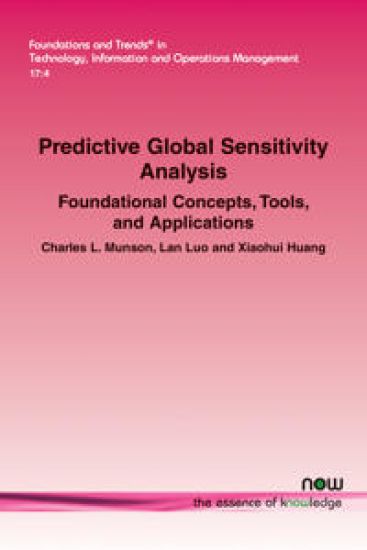
Predictive Global Sensitivity Analysis: Foundational Concepts, Tools, and Applications provides a detailed tutorial as a guide for both researchers and practitioners to understand how and when to implement PGSA. While the technique involves a fair amount of “number crunching,” it also requires a significant subjective cognitive component. The researcher must consider how to define potential summary variables and subsequently use judgement to determine which to keep and which interaction terms to include. If initial results underperform, the researcher must rethink initial approaches and try again. The tutorial section follows two examples through each step of the process. The monograph is organized as follows. Section 2 describes the PGSA applications that appear in the literature. Section 3 represents the tutorial section, which describes each step in the process and illustrates how each step is applied to two examples: (1) a safety stock model using the fill rate criterion, and (2) a classic linear programming transportation problem. Section 4 presents a full PGSA application for a model used by firms with multiple facilities purchasing many different component parts. The model determines which parts should be purchased locally, which should be purchased centrally, and which should be partially centralized. The PGSA predictive equations do an excellent job at placing parts into the three categories. Section 5 concludes by describing the challenges and limitations of PGSA, along with providing several recommendations for future research.
Video Based Machine Learning for Traffic Intersections

Video Based Machine Learning for Traffic Intersections

Tania Banerjee; Xiaohui Huang; Aotian Wu; Ke Chen; Anand Rangarajan; Sanjay Ranka

TAYLOR FRANCIS LTD
2023
sidottu
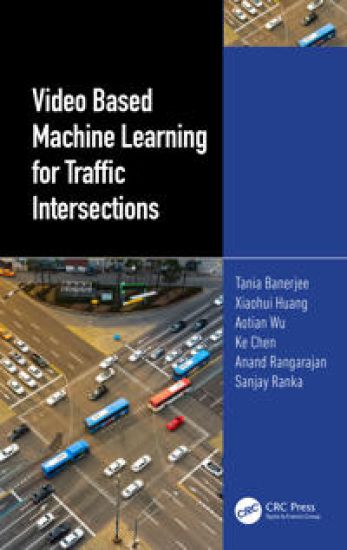
Video Based Machine Learning for Traffic Intersections describes the development of computer vision and machine learning-based applications for Intelligent Transportation Systems (ITS) and the challenges encountered during their deployment. This book presents several novel approaches, including a two-stream convolutional network architecture for vehicle detection, tracking, and near-miss detection; an unsupervised approach to detect near-misses in fisheye intersection videos using a deep learning model combined with a camera calibration and spline-based mapping method; and algorithms that utilize video analysis and signal timing data to accurately detect and categorize events based on the phase and type of conflict in pedestrian-vehicle and vehicle-vehicle interactions.The book makes use of a real-time trajectory prediction approach, combined with aligned Google Maps information, to estimate vehicle travel time across multiple intersections. Novel visualization software, designed by the authors to serve traffic practitioners, is used to analyze the efficiency and safety of intersections. The software offers two modes: a streaming mode and a historical mode, both of which are useful to traffic engineers who need to quickly analyze trajectories to better understand traffic behavior at an intersection.Overall, this book presents a comprehensive overview of the application of computer vision and machine learning to solve transportation-related problems. Video Based Machine Learning for Traffic Intersections demonstrates how these techniques can be used to improve safety, efficiency, and traffic flow, as well as identify potential conflicts and issues before they occur. The range of novel approaches and techniques presented offers a glimpse of the exciting possibilities that lie ahead for ITS research and development.Key Features:Describes the development and challenges associated with Intelligent Transportation Systems (ITS)Provides novel visualization software designed to serve traffic practitioners in analyzing the efficiency and safety of an intersectionHas the potential to proactively identify potential conflict situations and develop an early warning system for real-time vehicle-vehicle and pedestrian-vehicle conflicts