Kirjojen hintavertailu. Mukana 12 390 323 kirjaa ja 12 kauppaa.
Kirjailija
Xiaoming Chen
Kirjat ja teokset yhdessä paikassa: 13 kirjaa, julkaisuja vuosilta 2008-2026, suosituimpien joukossa Analytical Theory on Electromagnetic Metasurface. Vertaile teosten hintoja ja tarkista saatavuus suomalaisista kirjakaupoista.
Discover current design practices and performance metrics in this comprehensive guide to the latest methods of developing MIMO antenna systems Multiple-input multiple-output (MIMO) antenna systems use multiple sets of antennas to increase the capacity of a radio link, or to send and receive multiple simultaneous data signals over the same radio channel. It’s become an increasingly integral part of wireless and mobile data networks, from the earliest generations of wireless internet to cutting-edge 5G systems. The coming 6G networks will also rely on 6G antenna systems, making it all the more critical for the next generation of engineers and antenna designers to have a firm grasp of this foundational technology. MIMO Antenna Systems for 5G and Beyond offers a timely introduction to these systems and their design principles. Incorporating the latest designs and a comprehensive overview of current system configurations, it provides complete design procedures and performance metrics for MIMO systems. The result is a one-stop shop for all MIMO applications and wireless standards. MIMO Antenna Systems for 5G and Beyond readers will also find: The first book ever to cover MIMO design practices specific to 5G wireless communications—and beyondDetailed discussion of MIMO configurations including passive, reconfigurable, beamforming, and moreDetailed illustrations and design files MIMO Antenna Systems for 5G and Beyond is ideal for practicing engineers, as well as researchers in wireless and radio engineering sectors.
This book focuses on the convergence of energy, communication and computation in the beyond 5G (B5G) cellular Internet of Things (IoT). It addresses both theory and techniques, with more weight placed on the latter. This is achieved by providing in-depth studies on a number of major topics such as wireless power transfer, non-orthogonal multiple access, massive multiple-input multiple-output, and over-air computation. In turn, four typical convergence scenarios are studied in detail: the convergence of energy and communication, convergence of energy and computation, convergence of communication and computation, and convergence of energy, communication and computation. The comprehensive and systematic coverage of key techniques in the convergence of energy, communication and computation in the B5G cellular IoT is one of the book’s major features, making it particularly well suited for readers who are interested in learning about practical solutions in B5G wireless networks. Accordingly, the book offers a valuable resource for researchers, engineers, and graduate students in the fields of information engineering, telecommunications engineering, computer engineering, etc.
This book focuses on massive access to the cellular internet of things (IoT). Both theory and technique are addressed, with more weight placed on the latter. This is achieved by providing in-depth studies on a number of central topics such as channel state information acquisition, user clustering, superposition coding, and successive interference cancellation. Four typical application scenarios are examined in detail, namely the stationary IoT device scenario, frequency division duplex-based low-mobility IoT device scenario, time-division duplex-based IoT device scenario, and high-mobility IoT device scenario. The comprehensive and systematic treatment of key techniques in massive access to the cellular IoT is one of the major features of the book, which is particularly suited for readers who are interested in finding practical solutions for the cellular IoT. As such, it will benefit researchers, engineers, and graduate students in the fields of information engineering, telecommunications engineering, computer engineering, etc.
The title of the book, "Boundless Challenges," may be interesting while puzzling. Inthe late 1980s, it was actually a period of cultural devastation. The youngergeneration of writers (avant‐garde) faced the historical premise of the "new period"crisis and had to embark on the adventurous path of the formalist revolution. Forquite a few people, this is a mistake. My use of the word "challenge" seems to beoverly optimistic; people have reason to doubt whether the "challenge" seemsself‐righteous in an era when the institutionalization of literature is still tight.
5G Physical Layer: Principles, Models and Technology Components explains fundamental physical layer design principles, models and components for the 5G new radio access technology – 5G New Radio (NR). The physical layer models include radio wave propagation and hardware impairments for the full range of frequencies considered for the 5G NR (up to 100 GHz). The physical layer technologies include flexible multi-carrier waveforms, advanced multi-antenna solutions, and channel coding schemes for a wide range of services, deployments, and frequencies envisioned for 5G and beyond. A MATLAB-based link level simulator is included to explore various design options. 5G Physical Layer is very suitable for wireless system designers and researchers: basic understanding of communication theory and signal processing is assumed, but familiarity with 4G and 5G standards is not required. With this book the reader will learn: The fundamentals of the 5G NR physical layer (waveform, modulation, numerology, channel codes, and multi-antenna schemes). Why certain PHY technologies have been adopted for the 5G NR. The fundamental physical limitations imposed by radio wave propagation and hardware impairments. How the fundamental 5G NR physical layer functionalities (e.g., parameters/methods/schemes) should be realized. The content includes: A global view of 5G development – concept, standardization, spectrum allocation, use cases and requirements, trials, and future commercial deployments. The fundamentals behind the 5G NR physical layer specification in 3GPP. Radio wave propagation and channel modeling for 5G and beyond. Modeling of hardware impairments for future base stations and devices. Flexible multi-carrier waveforms, multi-antenna solutions, and channel coding schemes for 5G and beyond. A simulator including hardware impairments, radio propagation, and various waveforms. Ali Zaidi is a strategic product manager at Ericsson, Sweden. Fredrik Athley is a senior researcher at Ericsson, Sweden. Jonas Medbo and Ulf Gustavsson are senior specialists at Ericsson, Sweden. Xiaoming Chen is a professor at Xi’an Jiaotong University, China. Giuseppe Durisi is a professor at Chalmers University of Technology, Sweden, and a guest researcher at Ericsson, Sweden.
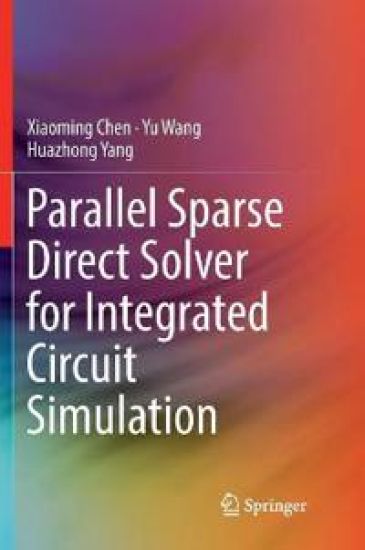
This book describes algorithmic methods and parallelization techniques to design a parallel sparse direct solver which is specifically targeted at integrated circuit simulation problems. The authors describe a complete flow and detailed parallel algorithms of the sparse direct solver. They also show how to improve the performance by simple but effective numerical techniques. The sparse direct solver techniques described can be applied to any SPICE-like integrated circuit simulator and have been proven to be high-performance in actual circuit simulation. Readers will benefit from the state-of-the-art parallel integrated circuit simulation techniques described in this book, especially the latest parallel sparse matrix solution techniques.
This thesis introduces novel and significant results regarding the analysis and synthesis of positive systems, especially under l1 and L1 performance. It describes stability analysis, controller synthesis, and bounding positivity-preserving observer and filtering design for a variety of both discrete and continuous positive systems.It subsequently derives computationally efficient solutions based on linear programming in terms of matrix inequalities, as well as a number of analytical solutions obtained for special cases. The thesis applies a range of novel approaches and fundamental techniques to the further study of positive systems, thus contributing significantly to the theory of positive systems, a “hot topic” in the field of control.
This book describes algorithmic methods and parallelization techniques to design a parallel sparse direct solver which is specifically targeted at integrated circuit simulation problems. The authors describe a complete flow and detailed parallel algorithms of the sparse direct solver. They also show how to improve the performance by simple but effective numerical techniques. The sparse direct solver techniques described can be applied to any SPICE-like integrated circuit simulator and have been proven to be high-performance in actual circuit simulation. Readers will benefit from the state-of-the-art parallel integrated circuit simulation techniques described in this book, especially the latest parallel sparse matrix solution techniques.
This thesis introduces novel and significant results regarding the analysis and synthesis of positive systems, especially under l1 and L1 performance. It describes stability analysis, controller synthesis, and bounding positivity-preserving observer and filtering design for a variety of both discrete and continuous positive systems.It subsequently derives computationally efficient solutions based on linear programming in terms of matrix inequalities, as well as a number of analytical solutions obtained for special cases. The thesis applies a range of novel approaches and fundamental techniques to the further study of positive systems, thus contributing significantly to the theory of positive systems, a “hot topic” in the field of control.
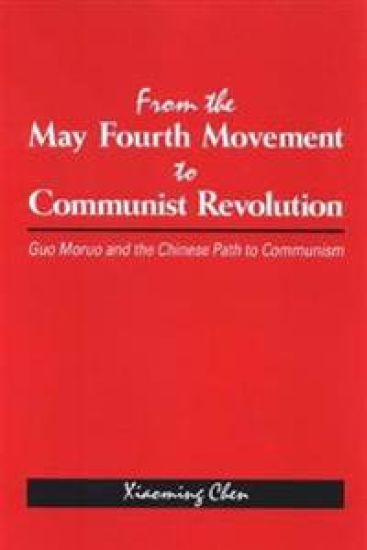
Using the life and work of influential Chinese writer Guo Moruo (1892–1978), reflects on China's encounters with modernity, Communism, and capitalism.Why did China's intellectuals turn to Communism? Reflecting on China's encounters with modernity, Communism, and capitalism, Xiaoming Chen offers an explanation by using as a case study the life and work of influential Chinese writer Guo Moruo (1892–1978). Guo was dedicated to the May Fourth Movement, which sought to bring reform, republicanism, and modern Western ideas to China, but abandoned these ideals for Communism in the mid-1920s. While the hope of national salvation was a major factor in Guo's conversion, Chen suggests other reasons, including a desire to save the whole world, a goal that was consistent with the traditional Confucian call to not only "manage the state" but also "harmonize the world." Chen also argues that despite the collectivist and totalitarian outcome of the Chinese Communist movement, Marx's initial promise of ultimate individual emancipation served as a major attraction to intellectuals like Guo, who came to view Marxist Communism as the most efficient and thorough way to fulfill their dream of individual freedom.The book covers Guo's intellectual and personal transitions, how the fight against the Confucian family system became the Marxist emancipation of the individual from capitalism, and how the Confucian struggle against sexual desire ceded to a struggle against material desires. The various combinations of Western and Confucian thought that Guo adopted ultimately led to a synthesis of Confucianism and Marxism-Leninism.