Kirjojen hintavertailu. Mukana 12 390 323 kirjaa ja 12 kauppaa.

Kirjailija

Xinyu Zhang

Kirjat ja teokset yhdessä paikassa: 5 kirjaa, julkaisuja vuosilta 2023-2026, suosituimpien joukossa Multi-sensor Fusion for Autonomous Driving. Vertaile teosten hintoja ja tarkista saatavuus suomalaisista kirjakaupoista.

5 kirjaa

Kirjojen julkaisuhaarukka 2023-2026.

Metamaterial-Based Optical and Radio Frequency Sensing

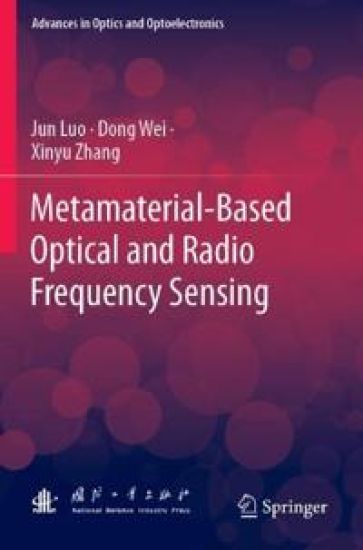
Metamaterial-Based Optical and Radio Frequency Sensing

Jun Luo; Dong Wei; Xinyu Zhang

SPRINGER VERLAG, SINGAPORE
2024
nidottu
This book highlights the fundamentals and practical methods of metamaterials-based optical and radio frequency sensing. Combined with engineering practices, the book illustrates in detail wide frequency electromagnetic signal cloaking and the detection behavior of metasurfaces, including the structure of metasurfaces, electric-controlled behaviors, layout design and fabrication methods, and related experiment results. This book is expected to inspire the research and development of new optical and radio frequency detectors. It is suitable for researchers and engineers working on semiconductor devices, applied optics, and wide frequency signal detection. It is also a good reference for students in these areas.
Multi-sensor Fusion for Autonomous Driving

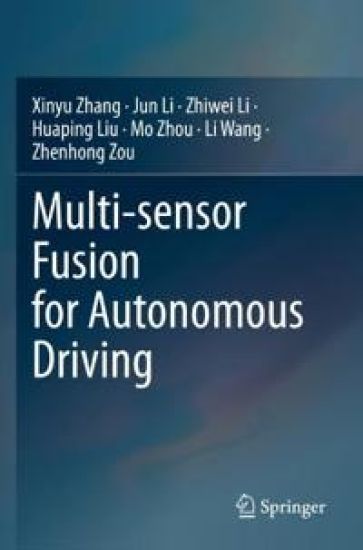
Multi-sensor Fusion for Autonomous Driving

Xinyu Zhang; Jun Li; Zhiwei Li; Huaping Liu; Mo Zhou; Li Wang; Zhenhong Zou

SPRINGER VERLAG, SINGAPORE
2023
sidottu
Although sensor fusion is an essential prerequisite for autonomous driving, it entails a number of challenges and potential risks. For example, the commonly used deep fusion networks are lacking in interpretability and robustness. To address these fundamental issues, this book introduces the mechanism of deep fusion models from the perspective of uncertainty and models the initial risks in order to create a robust fusion architecture. This book reviews the multi-sensor data fusion methods applied in autonomous driving, and the main body is divided into three parts: Basic, Method, and Advance. Starting from the mechanism of data fusion, it comprehensively reviews the development of automatic perception technology and data fusion technology, and gives a comprehensive overview of various perception tasks based on multimodal data fusion. The book then proposes a series of innovative algorithms for various autonomous driving perception tasks, to effectively improve the accuracy and robustness of autonomous driving-related tasks, and provide ideas for solving the challenges in multi-sensor fusion methods. Furthermore, to transition from technical research to intelligent connected collaboration applications, it proposes a series of exploratory contents such as practical fusion datasets, vehicle-road collaboration, and fusion mechanisms. In contrast to the existing literature on data fusion and autonomous driving, this book focuses more on the deep fusion method for perception-related tasks, emphasizes the theoretical explanation of the fusion method, and fully considers the relevant scenarios in engineering practice. Helping readers acquire an in-depth understanding of fusion methods and theories in autonomous driving, it can be used as a textbook for graduate students and scholars in related fields or as a reference guide for engineers who wish to apply deep fusion methods.
Metamaterial-Based Optical and Radio Frequency Sensing

Metamaterial-Based Optical and Radio Frequency Sensing

Jun Luo; Dong Wei; Xinyu Zhang

SPRINGER VERLAG, SINGAPORE
2023
sidottu
This book highlights the fundamentals and practical methods of metamaterials-based optical and radio frequency sensing. Combined with engineering practices, the book illustrates in detail wide frequency electromagnetic signal cloaking and the detection behavior of metasurfaces, including the structure of metasurfaces, electric-controlled behaviors, layout design and fabrication methods, and related experiment results. This book is expected to inspire the research and development of new optical and radio frequency detectors. It is suitable for researchers and engineers working on semiconductor devices, applied optics, and wide frequency signal detection. It is also a good reference for students in these areas.

Cooperative Decision-Making Modeling for Manned and Unmanned Aerial Vehicles
Focusing on “human-in-the-loop” and “human-on-the-loop” mechanisms, cognitive intelligent interaction, and the practical modeling, implementation, and application of limited human intervention in modern aerial systems, this book explores cooperative decision-making technologies between manned and unmanned aerial vehicles. It systematically discusses two primary approaches to cooperative decision-making mechanisms: limited human intervention and cognitive intelligent interaction. The authors introduce modeling methods for applying limited intervention in typical mission scenarios, such as obstacle avoidance, threat mitigation, and attack decision-making. They also explain how to assess human workload and cognitive load in manned-unmanned operations. Additionally, it outlines interactive cognitive models that support situational awareness, threat evaluation, task allocation, route planning, and decision simulation. These insights address the growing need for effective human-machine collaboration in complex operational environments driven by rapid advancements in information science, control science, cognitive science, and artificial intelligence. This title will appeal to researchers, engineers, and professionals specializing in command-and-control systems and intelligent decision-making systems. It will also serve as an essential reference for students and educators in information-related disciplines.
Multi-sensor Fusion for Autonomous Driving

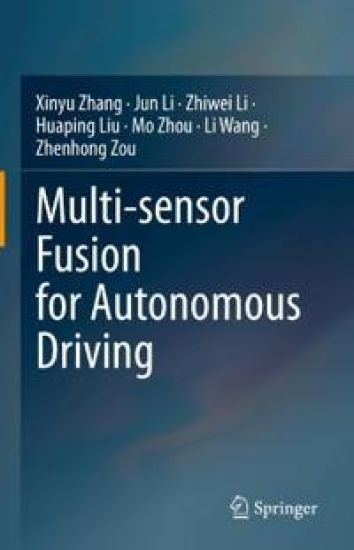
Multi-sensor Fusion for Autonomous Driving

Xinyu Zhang; Jun Li; Zhiwei Li; Huaping Liu; Mo Zhou; Li Wang; Zhenhong Zou

SPRINGER VERLAG, SINGAPORE
2024
nidottu
Although sensor fusion is an essential prerequisite for autonomous driving, it entails a number of challenges and potential risks. For example, the commonly used deep fusion networks are lacking in interpretability and robustness. To address these fundamental issues, this book introduces the mechanism of deep fusion models from the perspective of uncertainty and models the initial risks in order to create a robust fusion architecture. This book reviews the multi-sensor data fusion methods applied in autonomous driving, and the main body is divided into three parts: Basic, Method, and Advance. Starting from the mechanism of data fusion, it comprehensively reviews the development of automatic perception technology and data fusion technology, and gives a comprehensive overview of various perception tasks based on multimodal data fusion. The book then proposes a series of innovative algorithms for various autonomous driving perception tasks, to effectively improve the accuracy and robustness of autonomous driving-related tasks, and provide ideas for solving the challenges in multi-sensor fusion methods. Furthermore, to transition from technical research to intelligent connected collaboration applications, it proposes a series of exploratory contents such as practical fusion datasets, vehicle-road collaboration, and fusion mechanisms. In contrast to the existing literature on data fusion and autonomous driving, this book focuses more on the deep fusion method for perception-related tasks, emphasizes the theoretical explanation of the fusion method, and fully considers the relevant scenarios in engineering practice. Helping readers acquire an in-depth understanding of fusion methods and theories in autonomous driving, it can be used as a textbook for graduate students and scholars in related fields or as a reference guide for engineers who wish to apply deep fusion methods.