Kirjojen hintavertailu. Mukana 12 390 323 kirjaa ja 12 kauppaa.
Kirjailija
Xiufeng Liu
Kirjat ja teokset yhdessä paikassa: 11 kirjaa, julkaisuja vuosilta 2009-2026, suosituimpien joukossa Using and Developing Measurement Instruments in Science Education. Vertaile teosten hintoja ja tarkista saatavuus suomalaisista kirjakaupoista.
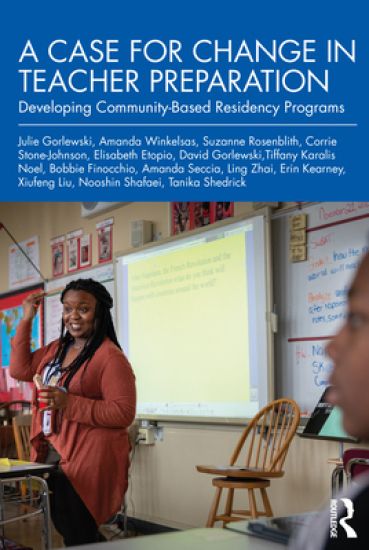
Why are preservice teachers often told by veteran teachers to "forget what you learned" in teacher preparation programs? Why is there a gap between pedagogical practices employed at schools and those taught at colleges and universities? And why, after evidence from countless studies, are there still so few teachers of color working in our rapidly diversifying schools?These questions are addressed in this book, which describes a reconceptualized teacher preparation program based on a teacher residency model. This model is grounded in three core beliefs: first, that teacher quality is a shared responsibility between universities and school districts; second, that all students have a right to high-quality teachers who are as racially, ethnically, and linguistically diverse as the students they teach; and third, that for education to be transformative, future educators must have the right balance of theoretical knowledge and practical experiences grounded in specific contexts.Through a combination of rich description and qualitative and quantitative program data, the authors make the case that university programs focused on the communities they serve can ensure more effective, learner-ready teachers who remain in the profession longer. By providing a detailed blueprint for program development, the contents of this book will be of value and interest to educational leaders, policy makers, and researchers.
This book meets a demand in the science education community for a comprehensive and introductory measurement book in science education. It describes measurement instruments reported in refereed science education research journals, and introduces the Rasch modeling approach to developing measurement instruments in common science assessment domains, i.e. conceptual understanding, affective variables, science inquiry, learning progression, and learning environments. This book can help readers develop a sound understanding of measurement theories and approaches, particularly Rasch modeling, to using and developing measurement instruments for science education research.This book is for anyone who is interested in knowing what measurement instruments are available and how to develop measurement instruments for science education research. For example, this book can be a textbook for a graduate course in science education research methods; it helps graduate students develop competence in using and developing standardized measurement instruments for science education research. Science education researchers, both beginning and experienced, may use this book as a reference for locating available and developing new measurement instruments when conducting a research study.
This book meets a demand in the science education community for a comprehensive and introductory measurement book in science education. It describes measurement instruments reported in refereed science education research journals, and introduces the Rasch modeling approach to developing measurement instruments in common science assessment domains, i.e. conceptual understanding, affective variables, science inquiry, learning progression, and learning environments. This book can help readers develop a sound understanding of measurement theories and approaches, particularly Rasch modeling, to using and developing measurement instruments for science education research.This book is for anyone who is interested in knowing what measurement instruments are available and how to develop measurement instruments for science education research. For example, this book can be a textbook for a graduate course in science education research methods; it helps graduate students develop competence in using and developing standardized measurement instruments for science education research. For use as a textbook there are summaries and exercises at the end of each chapter. Science education researchers, both beginning and experienced, may use this book as a reference for locating available and developing new measurement instruments when conducting a research study.
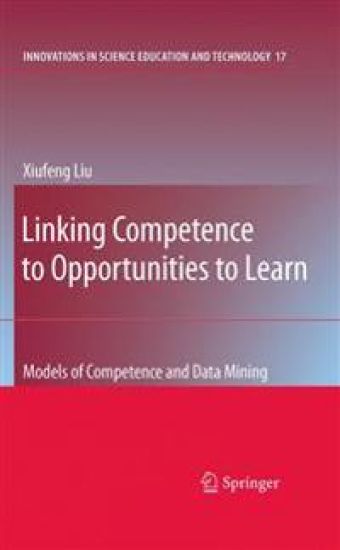
For many people, a high standard for student learning is desirable. This is what underlies current standard-based science education reforms around the world. As someone who was born and brought up in a less-privileged home and educated in a resource-limited school environment in a developing country, I always had to study hard to meet various standards from elementary to high school to univ- sity. My first book in English published over 10 years ago (Liu, X. [1996]. Mathematics and Science Curriculum Change in the People’s Republic of China. Lewiston, NY: The Edwin Mellen Press) provided me an opportunity to examine standards (i. e. , Chinese national science teaching syllabi) from a historical and political point of view. I argued that standards are developed for particular poli- cal agendas in order to maintain the privileged position of certain groups (i. e. , urban residents) in a society at expenses of others (i. e. , rural residents). Thus, underneath standards is systematic discrimination and injustice. Since then, I have had opportunities to study the issue of standards in much more breadth and depth. This book, Linking Competence to Opportunities to Learn: Models of Competence and data mining, provides me an opportunity to examine standards from a different perspective: opportunity to learn.
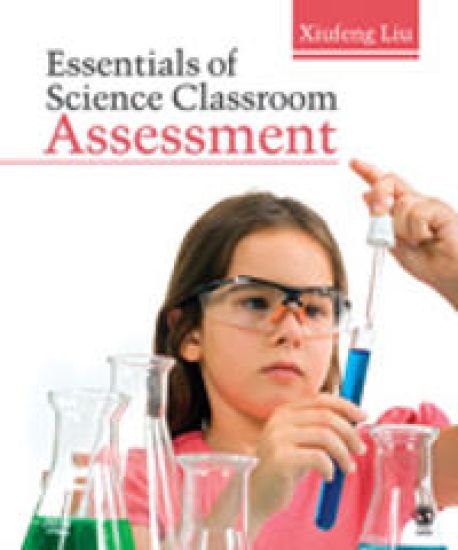
A concise science assessment text that helps K–12 teachers master the effective science assessment methods that lead to improved student learning Presenting both traditional and innovative assessment methods integral to science teaching and learning, Essentials of Science Classroom Assessment shows teachers the connection between effective science assessment and improved student learning. The text uses a competence-based approach consistent with the National Science Education Standards to help teachers master assessment skills, apply them to science classroom instruction, and evaluate their impact on student learning. Key Features and BenefitsProvides practical examples from both elementary and secondary science classrooms to demonstrate how to design a wide variety of traditional and innovative assessment methodsPresents case scenarios in each chapter that help teachers reflect on the assessment issues they will encounter in their own classrooms Includes end-of-chapter checklists and practice questions that allow readers to check their mastery of assessment skills before moving on, as well as annotated bibliographies that direct them to additional readings on topics of interest The Web-based Student study site provides electronic flashcards, practice quizzes, alternative assessment tasks, additional Web resources, and abstracts identifying more than forty common K–12 student preconceptions of science topics.
This book thoroughly explores the realm of data-driven blade-icing detection for wind turbines, focusing on multivariate time series classification to enhance the reliability and efficiency of wind energy utilization. The widespread prevalence of sensor technology in wind turbines, coupled with substantial data collection, has paved the way for advanced data-driven methodologies, which do not require extensive domain knowledge or additional mechanical tools. The interdisciplinary appeal of this study has drawn attention from experts in fields like computer science, mechanical engineering, and renewable energy systems. Adopting a comprehensive approach, the book lays down a foundational framework for blade-icing detection, stressing the critical role of sensor data integration and the profound impact of machine learning techniques in refining the detection processes. The book is designed for undergraduate and graduate students keen on renewable energy technologies, researchers delving into machine learning applications in energy systems, and engineers focusing on sustainable solutions for enhancing wind turbine performance.
For many people, a high standard for student learning is desirable. This is what underlies current standard-based science education reforms around the world. As someone who was born and brought up in a less-privileged home and educated in a resource-limited school environment in a developing country, I always had to study hard to meet various standards from elementary to high school to univ- sity. My first book in English published over 10 years ago (Liu, X. [1996]. Mathematics and Science Curriculum Change in the People’s Republic of China. Lewiston, NY: The Edwin Mellen Press) provided me an opportunity to examine standards (i. e. , Chinese national science teaching syllabi) from a historical and political point of view. I argued that standards are developed for particular poli- cal agendas in order to maintain the privileged position of certain groups (i. e. , urban residents) in a society at expenses of others (i. e. , rural residents). Thus, underneath standards is systematic discrimination and injustice. Since then, I have had opportunities to study the issue of standards in much more breadth and depth. This book, Linking Competence to Opportunities to Learn: Models of Competence and data mining, provides me an opportunity to examine standards from a different perspective: opportunity to learn.