Kirjojen hintavertailu. Mukana 12 321 651 kirjaa ja 12 kauppaa.

Kirjailija

YangQuan Chen

Kirjat ja teokset yhdessä paikassa: 33 kirjaa, julkaisuja vuosilta 1999-2026, suosituimpien joukossa Fractional-Order Singular Systems. Vertaile teosten hintoja ja tarkista saatavuus suomalaisista kirjakaupoista.

33 kirjaa

Kirjojen julkaisuhaarukka 1999-2026.

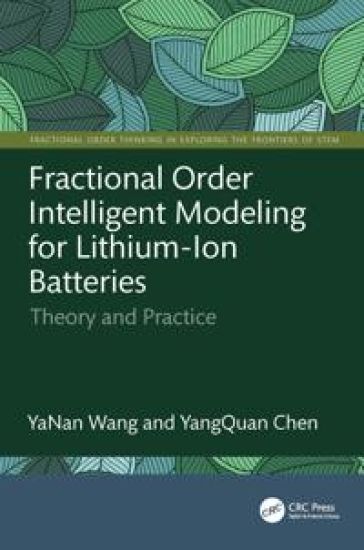
Fractional Order Intelligent Modeling for Lithium-Ion Batteries

Fractional Order Intelligent Modeling for Lithium-Ion Batteries

YaNan Wang; YangQuan Chen

TAYLOR FRANCIS LTD
2025
sidottu
This book focuses on fractional order (non-integer order) modeling (FOM) techniques coupled with deep neural network-based intelligent modeling methods for lithium-ion batteries (LIBs) and battery management systems (BMS) in general. It provides the first one-stop resource on FOM for LIBs with case studies using real operational data sets.With the rapid growth of electric vehicles and energy storage systems, battery technology has become critical to global energy solutions. This book aims to provide several accurate and effective intelligent modeling algorithms for the next generation of advanced BMS. Key topics include intelligent battery modeling, fractional-order modeling, physics-informed machine learning, state estimation, and degradation analysis. By integrating AI and physics-informed machine learning techniques with fractional-order modeling methods, this book presents several innovative solutions for next-generation battery management systems.This title will serve as an invaluable resource for researchers and advanced students in the fields of transportation, energy storage, and power systems, as well as those studying electric vehicles, control theory, machine learning, and fractional calculus-based modeling.
Fractional-Order Singular Systems

Fractional-Order Singular Systems

Qing-Hao Zhang; Jun-Guo Lu; YangQuan Chen

De Gruyter
2025
sidottu
This book explores robust control strategies to manage the inherent uncertainties and maintainthe admissibility and performance of fractional-order singular systems. It covers essential topics such assystem admissibility, robust stabilization, H8 control, positive real control, fault detection, delay systems, and provides a comprehensive framework for both the theoretical analysis and practical implementation of robust control methods.
Reading Randomness I

Reading Randomness I

Raoul R. Nigmatullin; YangQuan Chen

TAYLOR FRANCIS LTD
2026
sidottu
Reading Randomness I shows readers how to understand and analyze seemingly “noisy” and irregular data. It offers practical methods for comparing and labeling fluctuations, ensuring reproducible results across laboratories, industries, and research fields. The book begins with a narrative tour of how people have understood chance, from ancient divination and games to modern probability, information theory, and computing. In seven chapters, the authors provide step-by-step instructions for extracting reliable patterns from raw measurements. These instructions include removing trends, checking whether a signal has long-term memory, and identifying stable patterns hidden inside apparent randomness. The book also presents new tools for analyzing “trendless” sequences, extending Fourier-style analysis to complicated, multi-period data, and measuring correlations in a way that distinguishes between contributions from the system itself and the environment. Using a reader-friendly approach, the authors explain how “memory” kernels capture slow, history-dependent behavior. Throughout the book, the authors emphasize independent checks, surrogate tests, and instrument-path corrections to ensure that conclusions can be reliably and safely transferred across places and time. With case studies ranging from transcendental numbers and electrical circuits to earthquake records and precious metal price data, this valuable guidebook will appeal to students, researchers, and professionals working with complex data in science, engineering, and finance.
Robotic Swarming Control via Voronoi Tessellations

Robotic Swarming Control via Voronoi Tessellations

Kai Cao; ChaoBo Chen; Song Gao; YangQuan Chen

TAYLOR FRANCIS LTD
2026
sidottu
With the help of a Voronoi diagram, this book systematically discusses how to solve the core cooperative control problem in a multi-robot system. From basic theory to cutting-edge applications, the book provides a comprehensive overview of the subject matter, offering readers a rigorous and practical knowledge system. Central to this book's contribution is its transformation of centroidal Voronoi tessellations (CVT) theory into innovative multi-robot control algorithms. The effectiveness and superiority of these algorithms are verified through numerous simulations and real-environment experiments. The book demonstrates the deep integration of mathematical geometry and robotics, offering universal solutions for swarm intelligence in complex environments. It serves as an authoritative guide, bridging the gap between theoretical geometry and robotics engineering practice. This book will be invaluable to scholars and students of robotics, automation, control engineering, and computer science.
Fractional Calculus for Skeptics II

Fractional Calculus for Skeptics II

Bruce J. West; YangQuan Chen

TAYLOR FRANCIS LTD
2026
sidottu
This second volume of the multi-volume Fractional Calculus for Skeptics explores the concept of “roughness” and its applications in complex systems. It demonstrates how fractional calculus offers valuable insights into modeling real-world phenomena that traditional calculus struggles to address. Building on the first volume's foundational work advocating a fractal/fractional calculus paradigm shift, this volume offers an in-depth exploration of the concept of “roughness,” drawing parallels to what Benoît B. Mandelbrot originally intended to call the “Science of Roughness.” The book introduces the novel concept of “body roughness” and demonstrates its practical applications through two case studies of “roughness-informed rehabilitation therapy” with closed-loop control systems. One study involves non-invasive, 40-Hz gamma-frequency sensory stimulation for Alzheimer's disease, and the other involves biologically variable ventilation using roughness-informed, closed-loop control. The four chapters are complemented by valuable appendices and essential chapter-end references, as well as insightful “take-home messages.” This book will appeal to students, researchers, and professionals in STEM fields, including engineering, physics, biology, biomedicine, control engineering, rehabilitation, big data, and machine learning.
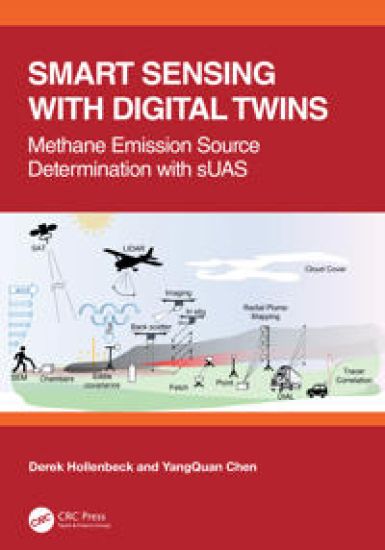
Smart Sensing with Digital Twins

Smart Sensing with Digital Twins

Derek Hollenbeck; YangQuan Chen

TAYLOR FRANCIS LTD
2025
sidottu
This book explores the innovative use of small unmanned aircraft systems (sUAS)—commonly known as drones—for methane emissions monitoring (i.e., detection, localization, and quantification) by introducing smart sensing frameworks and digital twin technology.Based on the concept of smart sensing, which combines mobile sensor data with physics-based models to provide actionable and timely insights, this book presents novel methods for monitoring and quantifying methane emissions, a potent greenhouse gas, using digital twins in single and multiple sUAS-based approaches. The first part of the book examines the methane sensing problem for detecting, locating, and quantifying emission sources, with case studies highlighting key observations and lessons learned from field experiments. The second part proposes what, why, and how digital twins should be used in environmental monitoring applications, covering both basic detection principles and advanced source localization and quantification techniques. This section shows how digital twins can enhance sUAS-based source detection and smart sensing methods.With practical tools and field-tested examples, this book serves as both an introductory guide and advanced reference to environmental monitoring, and is particularly valuable to researchers, students, engineers, and environmental professionals in engineering, environmental studies, and technology.
Smart Big Data in Digital Agriculture Applications

Smart Big Data in Digital Agriculture Applications

Haoyu Niu; YangQuan Chen

Springer International Publishing AG
2025
nidottu
In the dynamic realm of digital agriculture, the integration of big data acquisition platforms has sparked both curiosity and enthusiasm among researchers and agricultural practitioners. This book embarks on a journey to explore the intersection of artificial intelligence and agriculture, focusing on small-unmanned aerial vehicles (UAVs), unmanned ground vehicles (UGVs), edge-AI sensors and the profound impact they have on digital agriculture, particularly in the context of heterogeneous crops, such as walnuts, pomegranates, cotton, etc. For example, lightweight sensors mounted on UAVs, including multispectral and thermal infrared cameras, serve as invaluable tools for capturing high-resolution images. Their enhanced temporal and spatial resolutions, coupled with cost effectiveness and near-real-time data acquisition, position UAVs as an optimal platform for mapping and monitoring crop variability in vast expanses. This combination of data acquisition platforms and advanced analytics generates substantial datasets, necessitating a deep understanding of fractional-order thinking, which is imperative due to the inherent “complexity” and consequent variability within the agricultural process. Much optimism is vested in the field of artificial intelligence, such as machine learning (ML) and computer vision (CV), where the efficient utilization of big data to make it “smart” is of paramount importance in agricultural research. Central to this learning process lies the intricate relationship between plant physiology and optimization methods. The key to the learning process is the plant physiology and optimization method. Crafting an efficient optimization method raises three pivotal questions: 1.) What represents the best approach to optimization? 2.) How can we achieve a more optimal optimization? 3.) Is it possible to demand “more optimal machine learning,” exemplified by deep learning, while minimizing the need for extensive labeled data for digital agriculture? This book details the foundations of the plant physiology-informed machine learning (PPIML) and the principle of tail matching (POTM) framework. It is the 9th title of the "Agriculture Automation and Control" book series published by Springer.
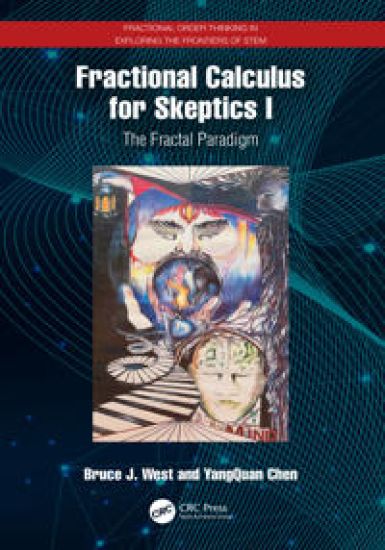
Fractional Calculus for Skeptics I

Fractional Calculus for Skeptics I

Bruce J. West; YangQuan Chen

TAYLOR FRANCIS LTD
2024
sidottu
This book is the first of its kind on fractional calculus (FC), dedicated to advocating for FC in STEM education and research.Fractional calculus is increasingly used today, but there remains a core population of skeptics regarding the utility of this "new" calculus. This book is intended for those who are skeptical about the need for fractional calculus to describe dynamic complex networks and must be convinced of its use on a case-by-case basis. It is a one-stop resource to rapidly read and replace the appropriate skepticism with new knowledge. It offers compelling reasons from the perspectives of the physical, social, and life sciences as to why fractional calculus is needed when addressing the complexity of an underlying STEM phenomenon. The six chapters are accompanied by useful and essential appendices and chapter-end references. Each includes new (fractional-order) ways of thinking about statistics, complexity dynamics, and what constitutes a solution to a complexity science problem.The book will appeal to students and researchers in all STEM-related fields, such as engineering, physics, biology and biomedicine, climate change, big data, and machine learning. It is also suitable for general readers interested in these fields.
Digital-Twin-Enabled Smart Control Engineering

Digital-Twin-Enabled Smart Control Engineering

Jairo Viola; YangQuan Chen

Springer International Publishing AG
2024
nidottu
This book presents a novel design framework for the development of Digital Twin (DT) models for process- and motion-control applications. It is based on system-data acquisition using cutting-edge computing technologies, modelling of physical-system behavior through detailed simultaneous simulation of different aspects of the system, and optimal dynamic behavior-matching of the process. The design framework is enhanced with real-time data analytics to improve the performance of the DT’s behavior-matching with the real system or physical twin.The methods of creating a DT detailed in Digital-Twin-Enabled Smart Control Engineering make possible the study of a system for real-time controller tuning and fault detection. They also facilitate life-cycle analysis for multiple critical and dangerous conditions that cannot be explored in the corresponding real system or physical twin. The authors show how a DT can be exploited to enable self-optimizing capabilitiesin feedback control systems.The DT framework and the control-performance assessment, fault diagnosis and prognosis, remaining-useful-life analysis, and self-optimizing control abilities it allows are validated with both process- and motion-control systems and their DTs. Supporting MATLAB-based material for a case study and an expanded introduction to the basic elements of DTs can be accessed on an associated website. This book helps university researchers from many areas of engineering to develop new tools for control design and reliability and life-cycle assessment and helps practicing engineers working with robotic, manufacturing and processing, and mechatronic systems to maintain and develop the mechanical tools they use.
Smart Big Data in Digital Agriculture Applications

Smart Big Data in Digital Agriculture Applications

Haoyu Niu; YangQuan Chen

Springer International Publishing AG
2024
sidottu
In the dynamic realm of digital agriculture, the integration of big data acquisition platforms has sparked both curiosity and enthusiasm among researchers and agricultural practitioners. This book embarks on a journey to explore the intersection of artificial intelligence and agriculture, focusing on small-unmanned aerial vehicles (UAVs), unmanned ground vehicles (UGVs), edge-AI sensors and the profound impact they have on digital agriculture, particularly in the context of heterogeneous crops, such as walnuts, pomegranates, cotton, etc. For example, lightweight sensors mounted on UAVs, including multispectral and thermal infrared cameras, serve as invaluable tools for capturing high-resolution images. Their enhanced temporal and spatial resolutions, coupled with cost effectiveness and near-real-time data acquisition, position UAVs as an optimal platform for mapping and monitoring crop variability in vast expanses. This combination of data acquisition platforms and advanced analytics generates substantial datasets, necessitating a deep understanding of fractional-order thinking, which is imperative due to the inherent “complexity” and consequent variability within the agricultural process. Much optimism is vested in the field of artificial intelligence, such as machine learning (ML) and computer vision (CV), where the efficient utilization of big data to make it “smart” is of paramount importance in agricultural research. Central to this learning process lies the intricate relationship between plant physiology and optimization methods. The key to the learning process is the plant physiology and optimization method. Crafting an efficient optimization method raises three pivotal questions: 1.) What represents the best approach to optimization? 2.) How can we achieve a more optimal optimization? 3.) Is it possible to demand “more optimal machine learning,” exemplified by deep learning, while minimizing the need for extensive labeled data for digital agriculture? This book details the foundations of the plant physiology-informed machine learning (PPIML) and the principle of tail matching (POTM) framework. It is the 9th title of the "Agriculture Automation and Control" book series published by Springer.
Towards Tree-level Evapotranspiration Estimation with Small UAVs in Precision Agriculture

Towards Tree-level Evapotranspiration Estimation with Small UAVs in Precision Agriculture

Haoyu Niu; YangQuan Chen

Springer International Publishing AG
2023
nidottu
Estimating evapotranspiration (ET) has been one of the most critical research areas in agriculture because of water scarcity, the growing population, and climate change. The accurate estimation and mapping of ET are necessary for crop water management. Traditionally, researchers use water balance, soil moisture, weighing lysimeters, or an energy balance approach, such as Bowen ratio or eddy covariance towers to estimate ET. However, these ET methods are point-specific or area-weighted measurements and cannot be extended to a large scale. On the other hand, while remote sensing is able to provide spatially distributed measurements, the spatial resolution of multispectral satellite images is often not enough for crops with clumped canopy structures, such as trees and vines. Unmanned aerial vehicles (UAVs) can mitigate these spatial and temporal limitations. Lightweight cameras and sensors can be mounted on the UAVs and take high-resolution images. Unlike satellite imagery, the spatial resolution of the UAV images can be at the centimeter-level. UAVs can also fly on-demand, which provides high temporal imagery. This book examines the different UAV-based approaches of ET estimation. Models and algorithms, such as mapping evapotranspiration at high resolution with internalized calibration (METRIC), the two-source energy balance (TSEB) model, and machine learning (ML) are discussed. It also covers the challenges and opportunities for UAVs in ET estimation, with the final chapters devoted to new ET estimation methods and their potential applications for future research.
Digital-Twin-Enabled Smart Control Engineering

Digital-Twin-Enabled Smart Control Engineering

Jairo Viola; YangQuan Chen

Springer International Publishing AG
2023
sidottu
This book presents a novel design framework for the development of Digital Twin (DT) models for process- and motion-control applications. It is based on system-data acquisition using cutting-edge computing technologies, modelling of physical-system behavior through detailed simultaneous simulation of different aspects of the system, and optimal dynamic behavior-matching of the process. The design framework is enhanced with real-time data analytics to improve the performance of the DT’s behavior-matching with the real system or physical twin.The methods of creating a DT detailed in Digital-Twin-Enabled Smart Control Engineering make possible the study of a system for real-time controller tuning and fault detection. They also facilitate life-cycle analysis for multiple critical and dangerous conditions that cannot be explored in the corresponding real system or physical twin. The authors show how a DT can be exploited to enable self-optimizing capabilitiesin feedback control systems.The DT framework and the control-performance assessment, fault diagnosis and prognosis, remaining-useful-life analysis, and self-optimizing control abilities it allows are validated with both process- and motion-control systems and their DTs. Supporting MATLAB-based material for a case study and an expanded introduction to the basic elements of DTs can be accessed on an associated website. This book helps university researchers from many areas of engineering to develop new tools for control design and reliability and life-cycle assessment and helps practicing engineers working with robotic, manufacturing and processing, and mechatronic systems to maintain and develop the mechanical tools they use.
Towards Tree-level Evapotranspiration Estimation with Small UAVs in Precision Agriculture

Towards Tree-level Evapotranspiration Estimation with Small UAVs in Precision Agriculture

Haoyu Niu; YangQuan Chen

Springer International Publishing AG
2022
sidottu
Estimating evapotranspiration (ET) has been one of the most critical research areas in agriculture because of water scarcity, the growing population, and climate change. The accurate estimation and mapping of ET are necessary for crop water management. Traditionally, researchers use water balance, soil moisture, weighing lysimeters, or an energy balance approach, such as Bowen ratio or eddy covariance towers to estimate ET. However, these ET methods are point-specific or area-weighted measurements and cannot be extended to a large scale. On the other hand, while remote sensing is able to provide spatially distributed measurements, the spatial resolution of multispectral satellite images is often not enough for crops with clumped canopy structures, such as trees and vines. Unmanned aerial vehicles (UAVs) can mitigate these spatial and temporal limitations. Lightweight cameras and sensors can be mounted on the UAVs and take high-resolution images. Unlike satellite imagery, the spatial resolution of the UAV images can be at the centimeter-level. UAVs can also fly on-demand, which provides high temporal imagery. This book examines the different UAV-based approaches of ET estimation. Models and algorithms, such as mapping evapotranspiration at high resolution with internalized calibration (METRIC), the two-source energy balance (TSEB) model, and machine learning (ML) are discussed. It also covers the challenges and opportunities for UAVs in ET estimation, with the final chapters devoted to new ET estimation methods and their potential applications for future research.
Towards Optimal Point Cloud Processing for 3D Reconstruction

Towards Optimal Point Cloud Processing for 3D Reconstruction

Guoxiang Zhang; YangQuan Chen

Springer Nature Switzerland AG
2022
nidottu
This SpringerBrief presents novel methods of approaching challenging problems in the reconstruction of accurate 3D models and serves as an introduction for further 3D reconstruction methods. It develops a 3D reconstruction system that produces accurate results by cascading multiple novel loop detection, sifting, and optimization methods.The authors offer a fast point cloud registration method that utilizes optimized randomness in random sample consensus for surface loop detection. The text also proposes two methods for surface-loop sifting. One is supported by a sparse-feature-based optimization graph. This graph is more robust to different scan patterns than earlier methods and can cope with tracking failure and recovery. The other is an offline algorithm that can sift loop detections based on their impact on loop optimization results and which is enabled by a dense map posterior metric for 3D reconstruction and mapping performance evaluation works without any costly ground-truth data. The methods presented in Towards Optimal Point Cloud Processing for 3D Reconstruction will be of assistance to researchers developing 3D modelling methods and to workers in the wide variety of fields that exploit such technology including metrology, geological animation and mass customization in smart manufacturing.
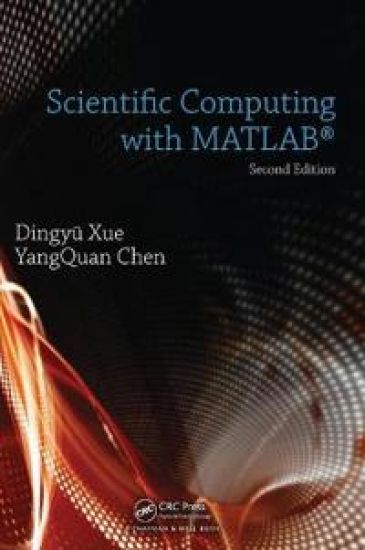
Scientific Computing with MATLAB

Scientific Computing with MATLAB

Dingyu Xue; YangQuan Chen

CRC Press
2021
nidottu
Scientific Computing with MATLAB®, Second Edition improves students’ ability to tackle mathematical problems. It helps students understand the mathematical background and find reliable and accurate solutions to mathematical problems with the use of MATLAB, avoiding the tedious and complex technical details of mathematics. This edition retains the structure of its predecessor while expanding and updating the content of each chapter.The book bridges the gap between problems and solutions through well-grouped topics and clear MATLAB example scripts and reproducible MATLAB-generated plots. Students can effortlessly experiment with the scripts for a deep, hands-on exploration. Each chapter also includes a set of problems to strengthen understanding of the material.
Regional Analysis of Time-Fractional Diffusion Processes

Regional Analysis of Time-Fractional Diffusion Processes

Fudong Ge; YangQuan Chen; Chunhai Kou

Springer International Publishing AG
2019
nidottu
This monograph provides an accessible introduction to the regional analysis of fractional diffusion processes. It begins with background coverage of fractional calculus, functional analysis, distributed parameter systems and relevant basic control theory. New research problems are then defined in terms of their actuation and sensing policies within the regional analysis framework. The results presented provide insight into the control-theoretic analysis of fractional-order systems for use in real-life applications such as hard-disk drives, sleep stage identification and classification, and unmanned aerial vehicle control. The results can also be extended to complex fractional-order distributed-parameter systems and various open questions with potential for further investigation are discussed. For instance, the problem of fractional order distributed-parameter systems with mobile actuators/sensors, optimal parameter identification, optimal locations/trajectory of actuators/sensors and regional actuation/sensing configurations are of great interest. The book’s use of illustrations and consistent examples throughout helps readers to understand the significance of the proposed fractional models and methodologies and to enhance their comprehension. The applications treated in the book run the gamut from environmental science to national security. Academics and graduate students working with cyber-physical and distributed systems or interested in the applications of fractional calculus will find this book to be an instructive source of state-of-the-art results and inspiration for further research.
Fractional Order Crowd Dynamics

Fractional Order Crowd Dynamics

Kecai Cao; YangQuan Chen

De Gruyter
2018
sidottu
This book illustrates the application of fractional calculus in crowd dynamics via modeling and control groups of pedestrians. Decision-making processes, conservation laws of mass/momentum, and micro-macro models are employed to describe system dynamics while cooperative movements in micro scale, and fractional diffusion in macro scale are studied to control the group of pedestrians. Obtained work is included in the Intelligent Evacuation Systems that is used for modeling and to control crowds of pedestrians. With practical issues considered, this book is of interests to mathematicians, physicists, and engineers.
Regional Analysis of Time-Fractional Diffusion Processes

Regional Analysis of Time-Fractional Diffusion Processes

Fudong Ge; YangQuan Chen; Chunhai Kou

Springer International Publishing AG
2018
sidottu
This monograph provides an accessible introduction to the regional analysis of fractional diffusion processes. It begins with background coverage of fractional calculus, functional analysis, distributed parameter systems and relevant basic control theory. New research problems are then defined in terms of their actuation and sensing policies within the regional analysis framework. The results presented provide insight into the control-theoretic analysis of fractional-order systems for use in real-life applications such as hard-disk drives, sleep stage identification and classification, and unmanned aerial vehicle control. The results can also be extended to complex fractional-order distributed-parameter systems and various open questions with potential for further investigation are discussed. For instance, the problem of fractional order distributed-parameter systems with mobile actuators/sensors, optimal parameter identification, optimal locations/trajectory of actuators/sensors and regional actuation/sensing configurations are of great interest. The book’s use of illustrations and consistent examples throughout helps readers to understand the significance of the proposed fractional models and methodologies and to enhance their comprehension. The applications treated in the book run the gamut from environmental science to national security. Academics and graduate students working with cyber-physical and distributed systems or interested in the applications of fractional calculus will find this book to be an instructive source of state-of-the-art results and inspiration for further research.
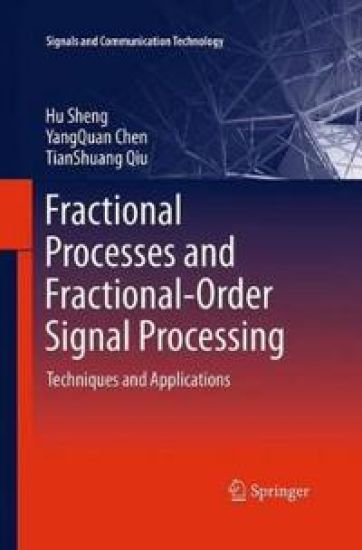
Fractional Processes and Fractional-Order Signal Processing

Fractional Processes and Fractional-Order Signal Processing

Hu Sheng; YangQuan Chen; TianShuang Qiu

Springer London Ltd
2016
nidottu
Fractional processes are widely found in science, technology and engineering systems. In Fractional Processes and Fractional-order Signal Processing, some complex random signals, characterized by the presence of a heavy-tailed distribution or non-negligible dependence between distant observations (local and long memory), are introduced and examined from the ‘fractional’ perspective using simulation, fractional-order modeling and filtering and realization of fractional-order systems. These fractional-order signal processing (FOSP) techniques are based on fractional calculus, the fractional Fourier transform and fractional lower-order moments. Fractional Processes and Fractional-order Signal Processing: presents fractional processes of fixed, variable and distributed order studied as the output of fractional-order differential systems; introduces FOSP techniques and the fractional signals and fractional systems point of view; details real-world-application examples of FOSP techniques to demonstrate their utility; and provides important background material on Mittag–Leffler functions, the use of numerical inverse Laplace transform algorithms and supporting MATLAB® codes together with a helpful survey of relevant webpages. Readers will be able to use the techniques presented to re-examine their signals and signal-processing methods. This text offers an extended toolbox for complex signals from diverse fields in science and engineering. It will give academic researchers and practitioners a novel insight into the complex random signals characterized by fractional properties, and some powerful tools to analyze those signals.
Scientific Computing with MATLAB

Scientific Computing with MATLAB

Dingyu Xue; YangQuan Chen

Productivity Press
2016
sidottu
Scientific Computing with MATLAB®, Second Edition improves students’ ability to tackle mathematical problems. It helps students understand the mathematical background and find reliable and accurate solutions to mathematical problems with the use of MATLAB, avoiding the tedious and complex technical details of mathematics. This edition retains the structure of its predecessor while expanding and updating the content of each chapter.The book bridges the gap between problems and solutions through well-grouped topics and clear MATLAB example scripts and reproducible MATLAB-generated plots. Students can effortlessly experiment with the scripts for a deep, hands-on exploration. Each chapter also includes a set of problems to strengthen understanding of the material.