Kirjojen hintavertailu. Mukana 12 595 353 kirjaa ja 12 kauppaa.

Kirjailija

Yefeng Zheng

Kirjat ja teokset yhdessä paikassa: 3 kirjaa, julkaisuja vuosilta 2008-2016, suosituimpien joukossa Marginal Space Learning for Medical Image Analysis. Vertaile teosten hintoja ja tarkista saatavuus suomalaisista kirjakaupoista.

3 kirjaa

Kirjojen julkaisuhaarukka 2008-2016.

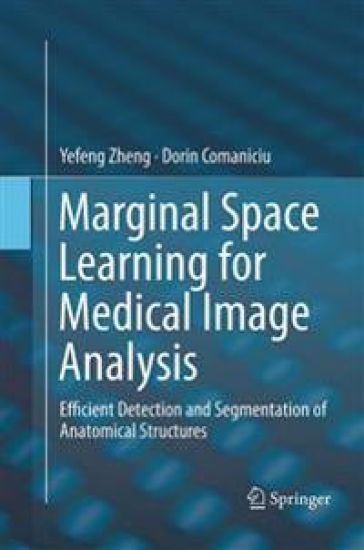
Marginal Space Learning for Medical Image Analysis

Marginal Space Learning for Medical Image Analysis

Yefeng Zheng; Dorin Comaniciu

Springer-Verlag New York Inc.
2016
nidottu
Automatic detection and segmentation of anatomical structures in medical images are prerequisites to subsequent image measurements and disease quantification, and therefore have multiple clinical applications. This book presents an efficient object detection and segmentation framework, called Marginal Space Learning, which runs at a sub-second speed on a current desktop computer, faster than the state-of-the-art. Trained with a sufficient number of data sets, Marginal Space Learning is also robust under imaging artifacts, noise and anatomical variations. The book showcases 35 clinical applications of Marginal Space Learning and its extensions to detecting and segmenting various anatomical structures, such as the heart, liver, lymph nodes and prostate in major medical imaging modalities (CT, MRI, X-Ray and Ultrasound), demonstrating its efficiency and robustness.
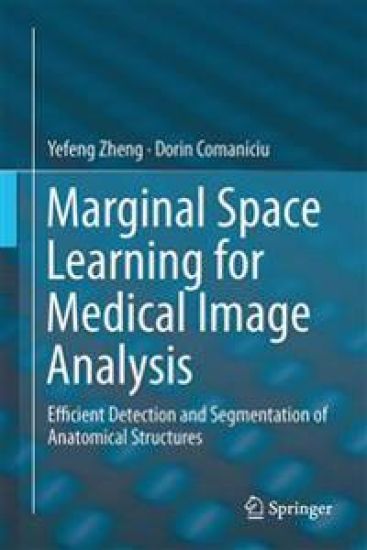
Marginal Space Learning for Medical Image Analysis

Marginal Space Learning for Medical Image Analysis

Yefeng Zheng; Dorin Comaniciu

Springer-Verlag New York Inc.
2014
sidottu
Automatic detection and segmentation of anatomical structures in medical images are prerequisites to subsequent image measurements and disease quantification, and therefore have multiple clinical applications. This book presents an efficient object detection and segmentation framework, called Marginal Space Learning, which runs at a sub-second speed on a current desktop computer, faster than the state-of-the-art. Trained with a sufficient number of data sets, Marginal Space Learning is also robust under imaging artifacts, noise and anatomical variations. The book showcases 35 clinical applications of Marginal Space Learning and its extensions to detecting and segmenting various anatomical structures, such as the heart, liver, lymph nodes and prostate in major medical imaging modalities (CT, MRI, X-Ray and Ultrasound), demonstrating its efficiency and robustness.