Kirjojen hintavertailu. Mukana 12 595 353 kirjaa ja 12 kauppaa.

Kirjailija

Yiagadeesen Samy

Kirjat ja teokset yhdessä paikassa: 8 kirjaa, julkaisuja vuosilta 2009-2023, suosituimpien joukossa Security, Development and the Fragile State. Vertaile teosten hintoja ja tarkista saatavuus suomalaisista kirjakaupoista.

8 kirjaa

Kirjojen julkaisuhaarukka 2009-2023.

Trade and Women’s Economic Empowerment

Trade and Women’s Economic Empowerment

Yiagadeesen Samy; Adeniran Adedeji; Augustine Iraoya; Madhurjya Kumar Dutta; Jasmine Lal Fakmawii; Wen Hao

Springer International Publishing AG
2023
nidottu
This open access book examines the relationship between trade and women’s economic empowerment by focusing on small and medium enterprises (SMEs) in six countries: Cambodia, Ghana, Madagascar, Nigeria, Senegal and Vietnam. The authors make use of both survey data and qualitative analysis to understand why and how trade can create more jobs for women, and how the jobs created are contributing to women’s empowerment. They propose strategies and policies for ensuring that women can benefit from trade. After providing the context for the research and reviewing the literature on trade and gender in the introductory chapter, the second chapter analyzes survey data collected for this project. This is followed by a qualitative analysis of the six country cases in the next two chapters: Cambodia and Vietnam (Chapter 3), followed by Ghana, Madagascar, Nigeria and Senegal (Chapter 4). The final chapter concludes with a summary of our findings and policy recommendations.
Trade and Women’s Economic Empowerment

Trade and Women’s Economic Empowerment

Yiagadeesen Samy; Adeniran Adedeji; Augustine Iraoya; Madhurjya Kumar Dutta; Jasmine Lal Fakmawii; Wen Hao

Springer International Publishing AG
2023
sidottu
This open access book examines the relationship between trade and women’s economic empowerment by focusing on small and medium enterprises (SMEs) in six countries: Cambodia, Ghana, Madagascar, Nigeria, Senegal and Vietnam. The authors make use of both survey data and qualitative analysis to understand why and how trade can create more jobs for women, and how the jobs created are contributing to women’s empowerment. They propose strategies and policies for ensuring that women can benefit from trade. After providing the context for the research and reviewing the literature on trade and gender in the introductory chapter, the second chapter analyzes survey data collected for this project. This is followed by a qualitative analysis of the six country cases in the next two chapters: Cambodia and Vietnam (Chapter 3), followed by Ghana, Madagascar, Nigeria and Senegal (Chapter 4). The final chapter concludes with a summary of our findings and policy recommendations.
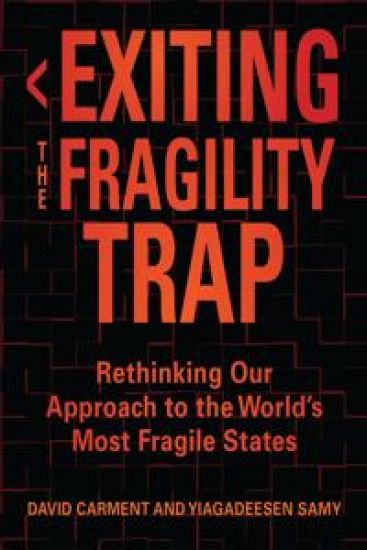
Exiting the Fragility Trap

Exiting the Fragility Trap

David Carment; Yiagadeesen Samy

Ohio University Press
2021
pokkari
State fragility is a much-debated yet underinvestigated concept in the development and international security worlds. Based on years of research as part of the Country Indicators for Foreign Policy project at Carleton University, Exiting the Fragility Trap marks a major step toward remedying the lack of research into the so-called fragility trap. In examining the nature and dynamics of state transitions in fragile contexts, with a special emphasis on states that are trapped in fragility, David Carment and Yiagadeesen Samy ask three questions: Why do some states remain stuck in a fragility trap? What lessons can we learn from those states that have successfully transitioned from fragility to stability and resilience? And how can third-party interventions support fragile state transitions toward resilience? Carment and Samy consider fragility's evolution in three state types: countries that are trapped, countries that move in and out of fragility, and countries that have exited fragility. Large-sample empirical analysis and six comparative case studies—Pakistan and Yemen (trapped countries), Mali and Laos (in-and-out countries), and Bangladesh and Mozambique (exited countries)—drive their investigation, which breaks ground toward a new understanding of why some countries fail to see sustained progress over time.
Exiting the Fragility Trap

Exiting the Fragility Trap

David Carment; Yiagadeesen Samy

Ohio University Press
2019
sidottu
State fragility is a much-debated yet underinvestigated concept in the development and international security worlds. Based on years of research as part of the Country Indicators for Foreign Policy project at Carleton University, Exiting the Fragility Trap marks a major step toward remedying the lack of research into the so-called fragility trap. In examining the nature and dynamics of state transitions in fragile contexts, with a special emphasis on states that are trapped in fragility, David Carment and Yiagadeesen Samy ask three questions: Why do some states remain stuck in a fragility trap? What lessons can we learn from those states that have successfully transitioned from fragility to stability and resilience? And how can third-party interventions support fragile state transitions toward resilience? Carment and Samy consider fragility's evolution in three state types: countries that are trapped, countries that move in and out of fragility, and countries that have exited fragility. Large-sample empirical analysis and six comparative case studies—Pakistan and Yemen (trapped countries), Mali and Laos (in-and-out countries), and Bangladesh and Mozambique (exited countries)—drive their investigation, which breaks ground toward a new understanding of why some countries fail to see sustained progress over time.
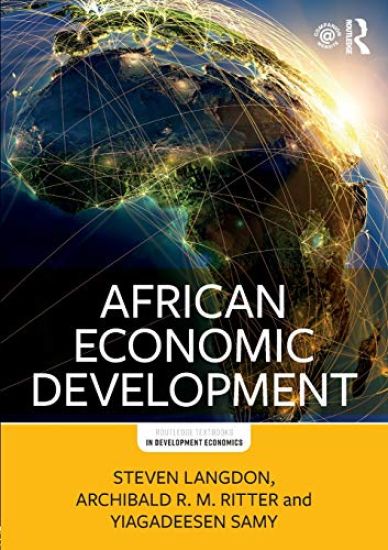
African Economic Development

African Economic Development

Steven Langdon; Archibald R.M. Ritter; Yiagadeesen Samy

Routledge
2018
sidottu
Sub-Saharan Africa is at a turning point. The barriers to economic growth seen in the 1980-2000 era are disappearing and new optimism is spreading. However, difficult goals of eliminating poverty, achieving equity and overcoming environmental threats continue. This much-needed and insightful textbook has been written to help us understand this combination of emerging improvements and significant challenges.Opening with an analysis of the main theories relating to development in Sub-Saharan Africa, the book explores all the key issues, including: Human development; Rapid urbanization; Structural and gender dimensions; Sustainable development and environmental issues; and Africa’s role in the world economy.The authors use economic tools and concepts throughout, in a way that makes them accessible to students without an economics background. Readers are also aided by a wide range of case studies, on-the-ground examples and statistical information, which provide a detailed analysis of each topic. This text is also accompanied by an e-resource, featuring additional sources for students and instructors. African Economic Development is a clear and comprehensive textbook suitable for courses on African economic development, development economics, African studies and development studies.
African Economic Development

African Economic Development

Steven Langdon; Archibald R.M. Ritter; Yiagadeesen Samy

Routledge
2018
nidottu
Sub-Saharan Africa is at a turning point. The barriers to economic growth seen in the 1980-2000 era are disappearing and new optimism is spreading. However, difficult goals of eliminating poverty, achieving equity and overcoming environmental threats continue. This much-needed and insightful textbook has been written to help us understand this combination of emerging improvements and significant challenges.Opening with an analysis of the main theories relating to development in Sub-Saharan Africa, the book explores all the key issues, including: Human development; Rapid urbanization; Structural and gender dimensions; Sustainable development and environmental issues; and Africa’s role in the world economy.The authors use economic tools and concepts throughout, in a way that makes them accessible to students without an economics background. Readers are also aided by a wide range of case studies, on-the-ground examples and statistical information, which provide a detailed analysis of each topic. This text is also accompanied by an e-resource, featuring additional sources for students and instructors. African Economic Development is a clear and comprehensive textbook suitable for courses on African economic development, development economics, African studies and development studies.
Security, Development and the Fragile State

Security, Development and the Fragile State

David Carment; Stewart Prest; Yiagadeesen Samy

Routledge
2011
nidottu
This book provides theoretical clarity about the concepts of failed and fragile states, which have emerged strongly since the 9/11 attacks. Recent contributions often see the fragile state as either a problem of development or of security. This volume argues that that neither perspective on its own is a sufficient basis for good policy. In a wide-ranging treatment, drawing on large samples as well as case studies, the authors create an alternative model of the fragile state emphasizing the multidimensional, multifaceted nature of the "fragile state problematique". On the basis of their model and empirical evidence, they then derive a number of policy-relevant insights regarding the need for contextualized and ongoing country analysis, the perils and pitfalls of unstructured development assistance, and the need to move whole-of-government approaches from the realm of rhetoric to reality. In offering both a synthesis of existing research and an innovative approach to understanding the fragile state, this volume will be of great interest to students of war and conflict studies, risk, conflict management, and international relations in general. It will also be of use to practitioners in policy circles and to NGOs.
Security, Development and the Fragile State

Security, Development and the Fragile State

David Carment; Stewart Prest; Yiagadeesen Samy

Routledge
2009
sidottu
This book provides theoretical clarity about the concepts of failed and fragile states, which have emerged strongly since the 9/11 attacks. Recent contributions often see the fragile state as either a problem of development or of security. This volume argues that that neither perspective on its own is a sufficient basis for good policy. In a wide-ranging treatment, drawing on large samples as well as case studies, the authors create an alternative model of the fragile state emphasizing the multidimensional, multifaceted nature of the "fragile state problematique". On the basis of their model and empirical evidence, they then derive a number of policy-relevant insights regarding the need for contextualized and ongoing country analysis, the perils and pitfalls of unstructured development assistance, and the need to move whole-of-government approaches from the realm of rhetoric to reality. In offering both a synthesis of existing research and an innovative approach to understanding the fragile state, this volume will be of great interest to students of war and conflict studies, risk, conflict management, and international relations in general. It will also be of use to practitioners in policy circles and to NGOs.