Kirjojen hintavertailu. Mukana 12 595 353 kirjaa ja 12 kauppaa.
Kirjailija
Yoel Hoffmann
Kirjat ja teokset yhdessä paikassa: 12 kirjaa, julkaisuja vuosilta 1998-2023, suosituimpien joukossa Bernhard. Vertaile teosten hintoja ja tarkista saatavuus suomalaisista kirjakaupoista.
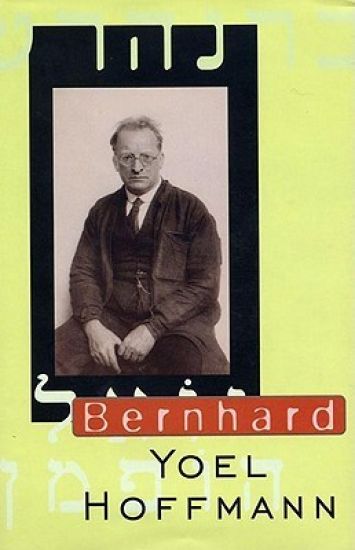
Devastated by the loss of his wife, Bernhard disconsolately walks the streets of Jerusalem, considering Gandhi, analysis, the beauty of his wife Paula's neck, his Arab neighbors, Kokoschka, the Messiah, and the inner life of his friend Gustav the plumber. As his hero tries to come to terms with his grief and the disasters of WWII, Hoffmann shows the slow remaking of an inner world.
Part novel and part memoir, Yoel Hoffmann’s Moods is flooded with feelings, evoked by his family, losses, loves, the soul’s hidden powers, old phone books, and life in the Galilee—with its every scent, breeze, notable dog, and odd neighbor. Carrying these shards is a general tenderness, accentuated by a new dimension brought along by “that great big pill of Prozac.” Beautifully translated by Peter Cole, Moods is fiction for lovers of poetry and poetry for lovers of fiction—a small marvel of a book, and with its pockets of joy, a curiously cheerful book by an author who once compared himself to “a praying mantis inclined to melancholy.”
Yoel Hoffmann (f. 1937) har kallats det hebreiska avantgardets främste författare och Israels svar på Borges. Nu introduceras han på svenska med Fiskarna Kristus där Hoffmann lägger en episk mosaik över sin faster Magdas liv, född i Wien och ännu tysktalande efter decennier i Israel.I Tel Aviv delar hon upp sitt liv i två, när hennes make var vid liv och nu. I Hoffmanns magiska berättelsepussel får vi ta del av bitar av dessa liv från Magdas barndom, två stulna handväskor, hennes drömmar, favoritkafé, poesi, äppelstrudel, hennes äktenskap, en manlig beundrare och bästa vän som till Tel Aviv i en hink tar med sig en karp från Jordanfloden.
Although the consciousness of death is, in most cultures, very much a part of life, this is perhaps nowhere more true than in Japan, where the approach of death has given rise to a centuries-old tradition of writing jisei, or the death poem. Such a poem is often written in the very last moments of the poet's life. Hundreds of Japanese death poems, many with a commentary describing the circumstances of the poet's death, have been translated into English here, the great majority of them for the first time. Yoel Hoffmann explores the attitudes and customs surrounding death in historical and present-day Japan, and gives examples of how these have been reflected in the nation's literature in general. The development of writing jisei is then examined from the poems of longing of the early nobility and the more masculine verses of the samurai to the satirical death poems of later centuries. Zen Buddhist ideas about death are also described as a preface to the collection of Chinese death poems by Zen monks that are also included. Finally, the last section contains three hundred twenty haiku, some of which have never been assembled before, in English translation and romanized in Japanese.
Set in today's Haifa and presented in 237 dream-like small chapters, it is a book in which shyness and stumbling tenderness emerge triumphant. Poet Peter Cole has made a beautiful translation, capturing Hoffmann's intense and unfathomably original style. A starred Kirkus Review acclaimed the novel "Beautiful, humane, priceless."
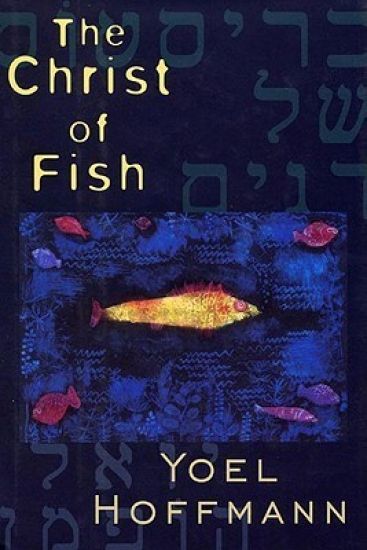
The Christ of Fish is a gorgeous novel conjured out of a mosaic of 233 pieces of Aunt Magda's life in Tel Aviv. Originally from Vienna, Hoffmann's heroine is a widow who still speaks German after decades in Israel: we see many views of Aunt Magdaher childhood, her marriage, her nephew, her best friend Frau Stier, Wildegans' poetry, apple strudel, visions and dreams, two stolen handbags, a favorite cafe, and a gentleman admirer.
Shunra is Aramaic for “cat.” Schmetterling is German for “butterfly.” In Yoel Hoffmann’s new book, these and numerous other creatures, cultures, and languages meet in a magical shimmering hymn to childhood. Hoffmann traces his hero’s developing consciousness of the ways-and-wonders of the world as though he were peering through a tremendous kaleidoscope: all that was perceived, all that is remembered, is rendered in fluid fragments of color and light. With remarkable delicacy and sweep, Hoffmann captures childhood from the amazed inside out, and without the backward-looking wash of grown-up sentiment. Instead, the boy’s deadpan registration of the human comedy around him is offered up as strangely magical fact. Beautifully translated by Peter Cole, The Shunra and the Schmetterling is fiction for lovers of poetry and poetry for lovers of fiction––a small marvel of a book, and one of the author’s finest to date.
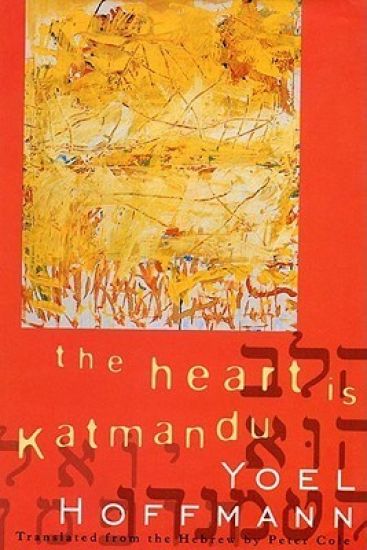
An entirely new direction in the work of "Israel's celebrated avant-garde genius" (Forward): Yoel Hoffmann now turns to the subject of love. HoffmannIsrael's most highly acclaimed avant-garde novelist (a "genius" in the words of Kirkus Reviews)has in his new novel launched off into fresh territories. His hero, whose wife has left him, floats aimlessly about Haifa. One day he meets Batya, and a raw, awkward love is born. The Heart Is Katmandu is a book in which shyness and stumbling tenderness emerge triumphant: a tale of paradise gained. Published to enormous acclaim in Israel this year ("In this book Yoel Hoffmann flies more beautifully than any other Israeli author I know," Ma'arive Magazine), The Heart Is Katmandu takes a very surprising leap away from the wrenching sadness of the Holocaust which informed the agonizing beauty of Bernhard as well as of Katschen & The Book of Joseph. No one writes like Yoel Hoffmann, and the special delight of The Heart Is Katmandu (stunningly translated by Peter Cole) lies in his majestic shift of registers from tragedy to real happiness, and within this new register his unchanging lyrical intensity and unfathomable originality.Author Biography: Yoel Hoffmann is Professor of Eastern Philosophy at the University of Haifa, and has had a lifelong scholarly engagement with Hebrew literature, Western philosophy, and Japanese Buddhism. Critically acclaimed in Israel, as well as in Germany and France, he has published several fiction books, including Bernhardt, Katschen & The Book of Joseph, and The Christ of Fish, available from New Directions.
Yoel Hoffmann's novel The Christ of Fish, revolving around its heroine Aunt Magda, offers a heart-stopping view into the soul of things. Hoffmann makes a beautiful, epiphanic mosaic out of 233 pieces of Aunt Magda's life in Tel Aviv. Originally from Vienna, still speaking German after decades in Israel, and a widow, Aunt Magda has "divided her life into two periods: 'When my husband was alive' and 'now.'" "Now," ever elusive and ever inclusive in Hoffmann's work, contains her childhood, her marriage, her nephew, her best friend Frau Stier, Wildegans' poetry, apple strudel, two stolen handbags, Bing Crosby, a favorite cafe, and a gentleman admirer. Spontaneous and dreamlike, Hoffmann's images of reality shift in currents of "realness,"creating moments of absolute clarity -- life, seized as it is and of itself-- from the "cotton reels of memory." One reel concerns the title fish: "At the beginning of the fifties (Food was scarce in those days. Once a month, in exchange for government stamps, we ate a yellow chicken.) on Passover Eve, Aunt Magda's friend Berthe came to visit her and brought her from the Jordan Valley a large carp in a metal bucket....Aunt Magda filled the bath with water and put the carp in it. Two whole days the carp swam up and down the length of the bath. On the third day, Aunt Magda declared that the carp 'thinks just like we do, ' and sent Uncle Herbert (an expert in Sanskrit) 'to put the fish back in the sea.'"
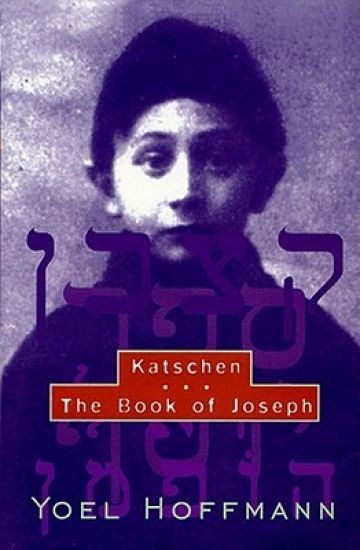
In kaleidoscopic fragments, Hoffmann refracts Jewish popular lore and folk wisdom through a postmodernist prism, brightening his prose with snatches of verse, songs, diary excerpts, letters, ominous dreams, lush erotic passages and Yiddish sayings. "The Book of Joseph" tells the tragic story of a widowed Jewish tailor and his son in 1930s Berlin. "Katschen" gives an astounding child's-eye view of a boy orphaned in the new state of Israel. The novellas radiate the original poetry of Hoffmann's atomized hypnotic language, which Rosmarie Waldrop has called "utterly enchanting—it's like nothing else."
Katschen & The Book of Joseph makes an amazing American debut for Israeli writer Yoel Hoffmann. Intensely moving, the two novellas display the entirely original poetry and hypnotic verve of Hoffmann's atomized language, which Rosmarie Waldrop has called "utterly enchanting--it is like nothing else." "The Book of Joseph" tells the tragic story of a widowed Jewish tailor and his son in 1930s Berlin. "Katschen" gives an astounding child's-eye view of a boy orphaned in Palestine. "When Yoel Hoffmann's books first appeared in the late 1980s," Professor Nili Gold has commented, "they seemed to have tunneled their way into Israel from afar....Technically of the same generation (the 'Generation of the State') as canonical realist writers like A.B. Yehoshua and Amos Oz, he didn't begin to publish fiction until his late forties, and in many ways he represents a generation of one, at the edge of the Israeli avant-garde."