Kirjojen hintavertailu. Mukana 12 595 353 kirjaa ja 12 kauppaa.

Kirjailija

Yong Xu

Kirjat ja teokset yhdessä paikassa: 5 kirjaa, julkaisuja vuosilta 2016-2025, suosituimpien joukossa Computer Models for Facial Beauty Analysis. Vertaile teosten hintoja ja tarkista saatavuus suomalaisista kirjakaupoista.

5 kirjaa

Kirjojen julkaisuhaarukka 2016-2025.

Posters of 798: The Heyday of Contemporary Chinese Art, 2002-2012

Posters of 798: The Heyday of Contemporary Chinese Art, 2002-2012

Yong Xu

Chinese University of Hong Kong Press
2025
nidottu
The 798 Art District, born out of the repurposing of abandoned factory buildings in northeastern Beijing, became a symbol of China's booming contemporary art scene in the early twenty-first century. Initiatives such as "Reconstruction 798" spurred the development of the art district, creating a public, market-driven hub of contemporary art that reached its zenith around the time of 2008 Beijing Olympics. This book documents 798's remarkable pioneering decade between 2002 and 2012, capturing the art district's heyday, as well as its subsequent decline following the global financial crisis and the resulting downturn in the Chinese art market. Presenting his personal collection of nearly one thousand event posters and firsthand interviews with sixteen eminent artists, curators, and gallery owners, Xu Yong provides an invaluable record of contemporary Chinese art during this transformative period.
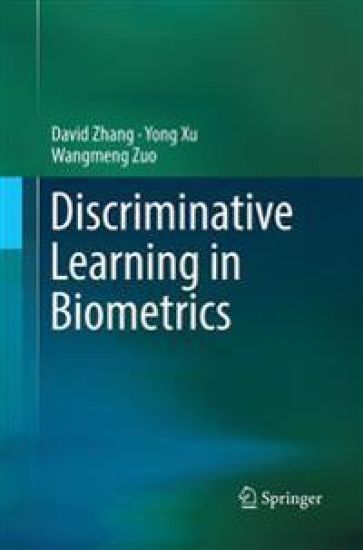
Discriminative Learning in Biometrics

Discriminative Learning in Biometrics

David Zhang; Yong Xu; Wangmeng Zuo

Springer Verlag, Singapore
2018
nidottu
This monograph describes the latest advances in discriminative learning methods for biometric recognition. Specifically, it focuses on three representative categories of methods: sparse representation-based classification, metric learning, and discriminative feature representation, together with their applications in palmprint authentication, face recognition and multi-biometrics. The ideas, algorithms, experimental evaluation and underlying rationales are also provided for a better understanding of these methods. Lastly, it discusses several promising research directions in the field of discriminative biometric recognition.
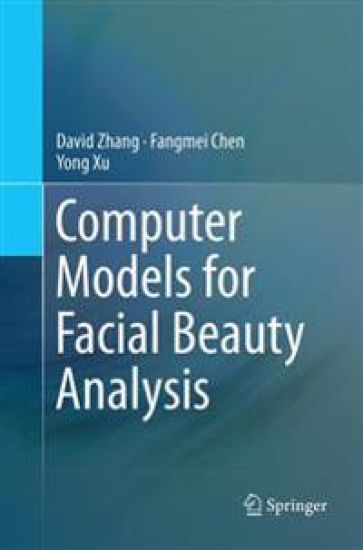
Computer Models for Facial Beauty Analysis

Computer Models for Facial Beauty Analysis

David Zhang; Fangmei Chen; Yong Xu

Springer International Publishing AG
2018
nidottu
This book covers the key advances in computerized facial beauty analysis, with an emphasis on data-driven research and the results of quantitative experiments. It takes a big step toward practical facial beauty analysis, proposes more reliable and stable facial features for beauty analysis and designs new models, methods, algorithms and schemes while implementing a facial beauty analysis and beautification system. This book also tests some previous putative rules and models for facial beauty analysis by using computationally efficient mathematical models and algorithms, especially large scale database-based and repeatable experiments.The first section of this book provides an overview of facial beauty analysis. The base of facial beauty analysis, i.e., facial beauty features, is presented in part two. Part three describes hypotheses on facial beauty, while part four defines data-driven facial beauty analysis models. This book concludes with the authors explaining how toimplement their new facial beauty analysis system.This book is designed for researchers, professionals and post graduate students working in the field of facial beauty analysis, computer vision, human-machine interface, pattern recognition and biometrics. Those involved in interdisciplinary fields with also find the contents useful. The ideas, means and conclusions for beauty analysis are valuable for researchers and the system design and implementation can be used as models for practitioners and engineers.
Discriminative Learning in Biometrics

Discriminative Learning in Biometrics

David Zhang; Yong Xu; Wangmeng Zuo

Springer Verlag, Singapore
2016
sidottu
This monograph describes the latest advances in discriminative learning methods for biometric recognition. Specifically, it focuses on three representative categories of methods: sparse representation-based classification, metric learning, and discriminative feature representation, together with their applications in palmprint authentication, face recognition and multi-biometrics. The ideas, algorithms, experimental evaluation and underlying rationales are also provided for a better understanding of these methods. Lastly, it discusses several promising research directions in the field of discriminative biometric recognition.
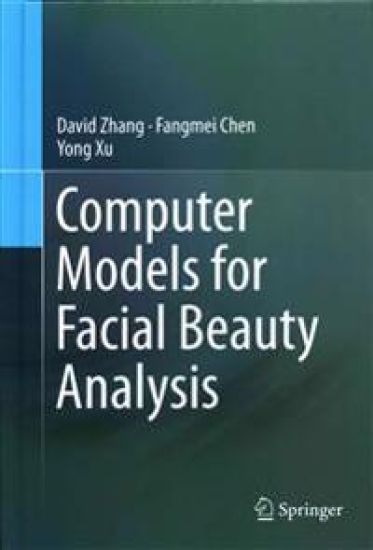
Computer Models for Facial Beauty Analysis

Computer Models for Facial Beauty Analysis

David Zhang; Fangmei Chen; Yong Xu

Springer International Publishing AG
2016
sidottu
This book covers the key advances in computerized facial beauty analysis, with an emphasis on data-driven research and the results of quantitative experiments. It takes a big step toward practical facial beauty analysis, proposes more reliable and stable facial features for beauty analysis and designs new models, methods, algorithms and schemes while implementing a facial beauty analysis and beautification system. This book also tests some previous putative rules and models for facial beauty analysis by using computationally efficient mathematical models and algorithms, especially large scale database-based and repeatable experiments.The first section of this book provides an overview of facial beauty analysis. The base of facial beauty analysis, i.e., facial beauty features, is presented in part two. Part three describes hypotheses on facial beauty, while part four defines data-driven facial beauty analysis models. This book concludes with the authors explaining how toimplement their new facial beauty analysis system.This book is designed for researchers, professionals and post graduate students working in the field of facial beauty analysis, computer vision, human-machine interface, pattern recognition and biometrics. Those involved in interdisciplinary fields with also find the contents useful. The ideas, means and conclusions for beauty analysis are valuable for researchers and the system design and implementation can be used as models for practitioners and engineers.