Kirjojen hintavertailu. Mukana 12 595 353 kirjaa ja 12 kauppaa.

Kirjailija

Yoram Lubling

Kirjat ja teokset yhdessä paikassa: 3 kirjaa, julkaisuja vuosilta 2007-2016, suosituimpien joukossa Twice-Dead. Vertaile teosten hintoja ja tarkista saatavuus suomalaisista kirjakaupoista.

3 kirjaa

Kirjojen julkaisuhaarukka 2007-2016.

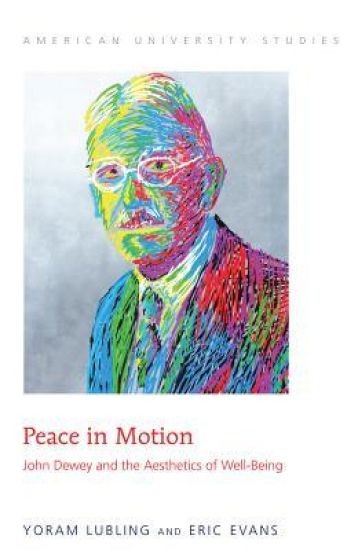
Peace in Motion

Peace in Motion

Yoram Lubling; Eric Evans

Peter Lang Publishing Inc
2016
sidottu
In this book Yoram Lubling and Eric Evans offer a Deweyan reconstruction of our philosophical understanding of well-being. They begin with Dewey’s critique of the «philosophical fallacy» to examine the legitimacy and value of theories of well-being offered by traditional philosophy. However, such theories fail to provide an authentic account of well-being due to a false understanding of experience as either epistemic or cognitive. Next, using Dewey’s theory of experience, they reconstruct «happiness» as the target for evaluation of well-being. This leads them to reject the traditional view of a private encapsulated self, and to offer in its place a transactionally situated self which is an embodied, enculturated agent. Through their emphasis on the importance of the qualitative aspects of Dewey’s understanding of a situation, the pervasive quality of the situation emerges as the most plausible criterion for the evaluation of well-being. The authors use Dewey’s theories of inquiry, ethics, value and art to establish the naturalistic conditions under which such pervasive quality enters into a situation as either settled or unsettled, in other words, as peace in motion. Consequently, a problematic situation becomes the primary condition under which all inquiry initiates whether it is in the context of science, ethics, values, art or ordinary living. Lubling and Evans conclude that a Deweyan account of well-being involves embodied knowing instead of the traditional view of cognitive knowledge. By using such an account, it is possible to explain the conditions and mechanisms under which well-being contributes to the enlargement and enrichment of individual and collective human experience.
The Person Vanishes

The Person Vanishes

Yoram Lubling

Peter Lang Publishing Inc
2011
sidottu
The Person Vanishes argues that despite John Dewey’s failure to articulate «an adequate theory of personality», his writings provide at least a theory-sketch of human personality consistent with the assumptions that framed his philosophical outlook. Recognizing the new developments in society, science, and the arts, Dewey argues for the necessity of a Copernican revolution in our understanding of the human self; from the monadic and minimalist self of the Cartesian-Newtonian modernist tradition to a relational and processual model of selfhood consonant with the press of post-modernist historical experience. As a field and activity conception, Dewey’s self emerges as a nexus of relational energizing, genuinely moored in a cultural surrounding in which ongoing creative reconstruction becomes the mark and criterion of the self’s health and growth. What vanishes in Dewey’s reconstruction is not the self as such, but only the entitative, substantive self of early modernism. Dewey’s understanding of the self is grounded in the conviction that philosophy must begin its inquiry from the ordinary experience of plain men and women. The Person Vanishes examines Dewey’s participatory notion of deliberation, what he calls «dramatic rehearsal», by using the Israeli-Palestinian conflict as a case study. The analysis attempts to cash out the personal and collective habits, as well as the different modalities of ends, facts, and values that diagram the existential dimensions of this problematic situation. Contrary to traditional dualistic and spectatorial accounts of deliberation, Dewey’s «dramatic rehearsal» shows the complexity of decision-making when the genuine limitations of daily life are taken seriously. The attempt to march to Dewey’s participatory philosophy reveals the escapist nature of all dualistic philosophical traditions and the reason for their continuous failure to resolve concrete social and personal conflicts.
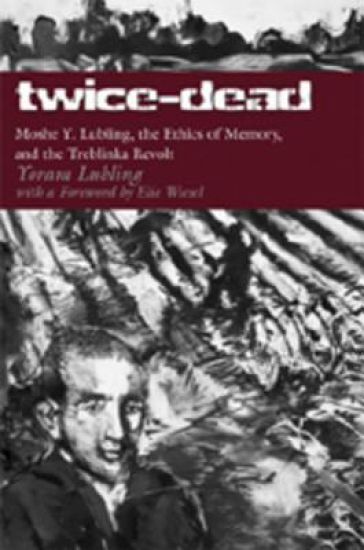
Twice-Dead

Twice-Dead

Yoram Lubling; Elie Wiesel

Peter Lang Publishing Inc
2007
nidottu
On August 2, 1943, a small group of Jewish prisoners at the Treblinka death-camp in Poland revolted against their Nazi and Ukrainian guards. The prisoners burned the camp down, facilitating the escape of 200-300 prisoners, of whom only 40-60 survived the war. Although not a single leader of the revolt survived, 27 survivors submitted eyewitness testimonies. Twice-Dead tells the story of Moshe Y. Lubling, the true leader of the Treblinka Revolt, a leader of the Labor Zionists, and the chairman of the legendary Workers' Council in the Czestochowa Ghetto. Twice-Dead corrects the accepted account of the revolt, ensuring that Moshe Y. Lubling's heroic life and death will not be forgotten.