Kirjojen hintavertailu. Mukana 12 390 323 kirjaa ja 12 kauppaa.

Kirjailija

Yoshiaki Kitaya

Kirjat ja teokset yhdessä paikassa: 3 kirjaa, julkaisuja vuosilta 2024-2025, suosituimpien joukossa Plant Production for Sustainable Society as a Semi-closed Ecosystem. Vertaile teosten hintoja ja tarkista saatavuus suomalaisista kirjakaupoista.

3 kirjaa

Kirjojen julkaisuhaarukka 2024-2025.

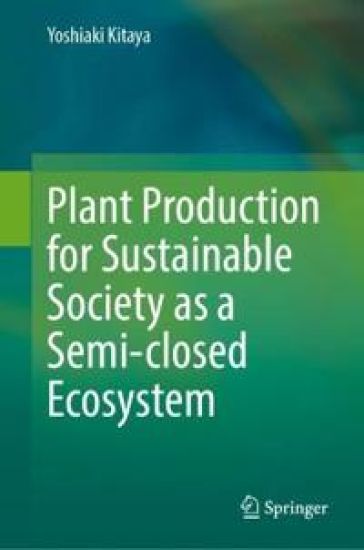
Plant Production for Sustainable Society as a Semi-closed Ecosystem
This book introduces the concept of a semi-closed ecosystem, which is necessary for the social implementation of plant production, such as agriculture, in harmony with the environment. While aiming at achieving a sustainable balance of human activities and environmental protection, this book focuses on the material cycle within each semi-closed system listed below. 1) Mangrove forests as semi-closed systems in coastal ecosystems 2) Environmental control in facility-based plant production systems as semi-closed systems 3) Control of the gaseous environment in the root zone as a semi-closed system 4) Controlled ecological life support system as a completely closed ecosystem in space 5) A sustainable balance of human activities and environmental conservation in urban ecosystems. Developing efficient food production with less environmental loads is an important issue. Plant production is vital to human health and welfare, especially in urban areas as semi-closed ecosystems. Producing food efficiently under consideration of environmental protection is necessary with material-cycling systems, especially in semi-closed ecosystems. Establishing a resource recycling production system with reduced waste emissions has also become important in agriculture. Plant production will play an important role not only in food production (Goal 2 in SDGs) but also in many other goals. This book explains how we must regard plant production as semi-closed ecosystems, reduce material and energy resource inputs, and recycle waste emissions generated during production and consumption processes to solve the various issues. Students and researchers studying Agricultural Environmental Engineering, Environmental and Ecological Engineering, Systems Design for Sustainable Society, Environmental Control in Agriculture, etc., will find this publication a helpful reference.
Instant Insights: Developing a Circular Economy

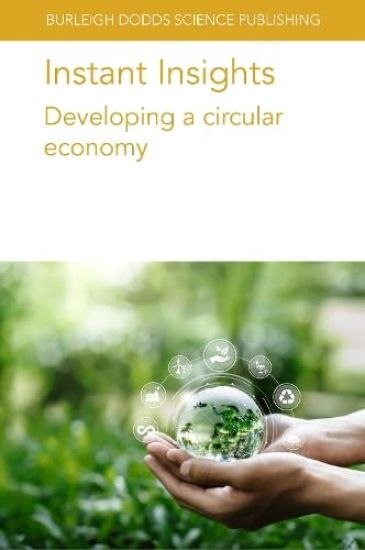
Instant Insights: Developing a Circular Economy

Various authors; Rolf Meyer; Rosanne Wielemaker; Jan Weijma; Angela Marchetti; Gaia Salvatori; Lionel Tayou Nguemna; Mattia Grumi; Ahmet Ozan Basar; María Pardo-Figuerez; Jose Maria Lagaron; Cristina Prieto; Chiara Marcoaldi; Marianna Villano; Mauro Majone; David Bolzonella; Yoshiaki Kitaya; Stefano Pascucci

Burleigh Dodds Science Publishing Limited
2025
pokkari
This book features five peer-reviewed reviews on developing a circular economy in agriculture.The first chapter discusses the relationship between a circular economy and bioeconomy as they relate to agriculture, as well as the key principles and challenges of circular, closed-loop agricultural systems.The second chapter introduces new approaches to food production and ‘waste’ management, including the opportunity to partially close nutrient cycles in urban agricultural settings and the wider food system.The third chapter provides a brief overview of the key principles of a circular economy and discusses how the advent of new alternatives to plastic food packaging can contribute to mitigating plastic waste and its environmental impact.The fourth chapter discusses facility-based plant production systems, such as plant factories, and the importance of the circulation of materials in achieving a sustainable balance between food production and environmental protection.The final chapter considers how regenerative urban agri-food systems can be built through a circular economy approach and provides examples of how this can be achieved, as well as how novel natural resource networks can be created in circular food economies in urban areas.
Plant Production for Sustainable Society as a Semi-closed Ecosystem
This book introduces the concept of a semi-closed ecosystem, which is necessary for the social implementation of plant production, such as agriculture, in harmony with the environment. While aiming at achieving a sustainable balance of human activities and environmental protection, this book focuses on the material cycle within each semi-closed system listed below. 1) Mangrove forests as semi-closed systems in coastal ecosystems 2) Environmental control in facility-based plant production systems as semi-closed systems 3) Control of the gaseous environment in the root zone as a semi-closed system 4) Controlled ecological life support system as a completely closed ecosystem in space 5) A sustainable balance of human activities and environmental conservation in urban ecosystems. Developing efficient food production with less environmental loads is an important issue. Plant production is vital to human health and welfare, especially in urban areas as semi-closed ecosystems. Producing food efficiently under consideration of environmental protection is necessary with material-cycling systems, especially in semi-closed ecosystems. Establishing a resource recycling production system with reduced waste emissions has also become important in agriculture. Plant production will play an important role not only in food production (Goal 2 in SDGs) but also in many other goals. This book explains how we must regard plant production as semi-closed ecosystems, reduce material and energy resource inputs, and recycle waste emissions generated during production and consumption processes to solve the various issues. Students and researchers studying Agricultural Environmental Engineering, Environmental and Ecological Engineering, Systems Design for Sustainable Society, Environmental Control in Agriculture, etc., will find this publication a helpful reference.