Kirjojen hintavertailu. Mukana 12 595 353 kirjaa ja 12 kauppaa.
Kirjailija
Yuanqing Xia
Kirjat ja teokset yhdessä paikassa: 32 kirjaa, julkaisuja vuosilta 2009-2026, suosituimpien joukossa Pneumatic Servo Systems Analysis. Vertaile teosten hintoja ja tarkista saatavuus suomalaisista kirjakaupoista.
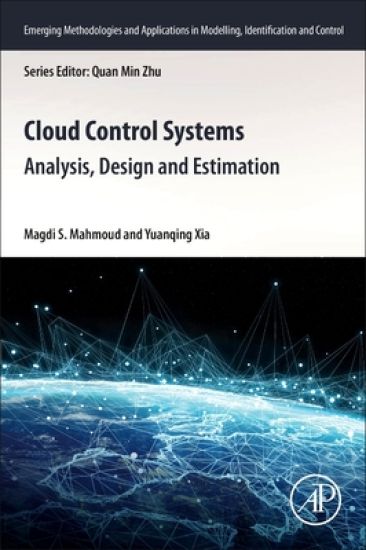
Cloud Control Systems: Analysis, Design and Estimation introduces readers to the basic definitions and various new developments in the growing field of cloud control systems (CCS). The book begins with an overview of cloud control systems (CCS) fundamentals, which will help beginners to better understand the depth and scope of the field. It then discusses current techniques and developments in CCS, including event-triggered cloud control, predictive cloud control, fault-tolerant and diagnosis cloud control, cloud estimation methods, and secure control/estimation under cyberattacks. This book benefits all researchers including professors, postgraduate students and engineers who are interested in modern control theory, robust control, multi-agents control.
This book addresses a key technology for digital information processing: Kalman filtering, which is generally considered to be one of the greatest discoveries of the 20th century. It introduces readers to issues concerning various uncertainties in a single plant, and to corresponding solutions based on adaptive estimation. Further, it discusses in detail the issues that arise when Kalman filtering technology is applied in multi-sensor systems and/or multi-agent systems, especially when various sensors are used in systems like intelligent robots, autonomous cars, smart homes, smart buildings, etc., requiring multi-sensor information fusion techniques. Furthermore, when multiple agents (subsystems) interact with one another, it produces coupling uncertainties, a challenging issue that is addressed here with the aid of novel decentralized adaptive filtering techniques.Overall, the book’s goal is to provide readers with a comprehensive investigation into the challenging problem of making Kalman filtering work well in the presence of various uncertainties and/or for multiple sensors/components. State-of-art techniques are introduced, together with a wealth of novel findings. As such, it can be a good reference book for researchers whose work involves filtering and applications; yet it can also serve as a postgraduate textbook for students in mathematics, engineering, automation, and related fields.To read this book, only a basic grasp of linear algebra and probability theory is needed, though experience with least squares, navigation, robotics, etc. would definitely be a plus.
This book presents basic research on delta operator systems (DOS) with actuator saturation. It proposes null controllable regions of delta operator systems, introduces the enlarging of the domain of attraction and analyzes the performance of DOSs subject to actuator saturation. It also discusses the domain of attraction on different systems in delta domain, and investigates the applications in complicated systems using delta operator approaches.
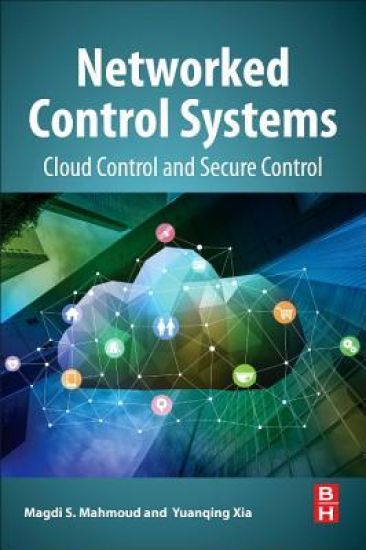
Networked Control Systems: Cloud Control and Secure Control explores new technological developments in networked control systems (NCS), including new techniques, such as event-triggered, secure and cloud control. It provides the fundamentals and underlying issues of networked control systems under normal operating environments and under cyberphysical attack. The book includes a critical examination of the principles of cloud computing, cloud control systems design, the available techniques of secure control design to NCS’s under cyberphysical attack, along with strategies for resilient and secure control of cyberphysical systems. Smart grid infrastructures are also discussed, providing diagnosis methods to analyze and counteract impacts. Finally, a series of practical case studies are provided to cover a range of NCS’s. This book is an essential resource for professionals and graduate students working in the fields of networked control systems, signal processing and distributed estimation.
By exploiting the synergies among available data, information fusion can reduce data traffic, filter noisy measurements, and make predictions and inferences about a monitored entity. Networked Filtering and Fusion in Wireless Sensor Networks introduces the subject of multi-sensor fusion as the method of choice for implementing distributed systems.The book examines the state of the art in information fusion. It presents the known methods, algorithms, architectures, and models of information fusion and discusses their applicability in the context of wireless sensor networks (WSNs). Paying particular attention to the wide range of topics that have been covered in recent literature, the text presents the results of a number of typical case studies.Complete with research supported elements and comprehensive references, this teaching-oriented volume uses standard scientific terminology, conventions, and notations throughout. It applies recently developed convex optimization theory and highly efficient algorithms in estimation fusion to open up discussion and provide researchers with an ideal starting point for further research on distributed estimation and fusion for WSNs.The book supplies a cohesive overview of the key results of theory and applications of information-fusion-related problems in networked systems in a unified framework. Providing advanced mathematical treatment of fundamental problems with information fusion, it will help you broaden your understanding of prospective applications and how to address such problems in practice.After reading the book, you will gain the understanding required to model parts of dynamic systems and use those models to develop distributed fusion control algorithms that are based on feedback control theory.
Applied Control System Design examines several methods for building up systems models based on real experimental data from typical industrial processes and incorporating system identification techniques. The text takes a comparative approach to the models derived in this way judging their suitability for use in different systems and under different operational circumstances. A broad spectrum of control methods including various forms of filtering, feedback and feedforward control is applied to the models and the guidelines derived from the closed-loop responses are then composed into a concrete self-tested recipe to serve as a check-list for industrial engineers or control designers. System identification and control design are given equal weight in model derivation and testing to reflect their equality of importance in the proper design and optimization of high-performance control systems. Readers’ assimilation of the material discussed is assisted by the provision of problems and examples. Most of these exercises use MATLAB® to make computation and visualization more straightforward. Applied Control System Design will be of interest to academic researchers for its comparison of different systems models and their response to different control methods and will assist graduate students in learning the practical necessities of advanced control system design. The consistent reference to real systems coupled with self-learning tools will assist control practitioners who wish to keep up to date with the latest control design ideas.
By exploiting the synergies among available data, information fusion can reduce data traffic, filter noisy measurements, and make predictions and inferences about a monitored entity. Networked Filtering and Fusion in Wireless Sensor Networks introduces the subject of multi-sensor fusion as the method of choice for implementing distributed systems.The book examines the state of the art in information fusion. It presents the known methods, algorithms, architectures, and models of information fusion and discusses their applicability in the context of wireless sensor networks (WSNs). Paying particular attention to the wide range of topics that have been covered in recent literature, the text presents the results of a number of typical case studies.Complete with research supported elements and comprehensive references, this teaching-oriented volume uses standard scientific terminology, conventions, and notations throughout. It applies recently developed convex optimization theory and highly efficient algorithms in estimation fusion to open up discussion and provide researchers with an ideal starting point for further research on distributed estimation and fusion for WSNs.The book supplies a cohesive overview of the key results of theory and applications of information-fusion-related problems in networked systems in a unified framework. Providing advanced mathematical treatment of fundamental problems with information fusion, it will help you broaden your understanding of prospective applications and how to address such problems in practice.After reading the book, you will gain the understanding required to model parts of dynamic systems and use those models to develop distributed fusion control algorithms that are based on feedback control theory.
In recent years, control systems have become more sophisticated in order to meet increased performance and safety requirements for modern technological systems. Engineers are becoming more aware that conventional feedback control design for a complex system may result in unsatisfactory performance, or even instability, in the event of malfunctions in actuators, sensors or other system components. In order to circumvent such weaknesses, new approaches to control system design have emerged which can tolerate component malfunctions while maintaining acceptable stability and performance. These types of control systems are often known as fault-tolerant control systems (FTCS). More precisely, FTCS are control systems which possess the ability to accommodate component failure automatically. Analysis and Synthesis of Fault-Tolerant Control Systems comprehensively covers the analysis and synthesis methods of fault tolerant control systems. It unifies the methods for developing controllers and filters for a wide class of dynamical systems and reports on the recent technical advances in design methodologies. MATLAB® is used throughout the book, to demonstrate methods of analysis and design. Key features: • Provides advanced theoretical methods and typical practical applications • Provides access to a spectrum of control design methods applied to industrial systems • Includes case studies and illustrative examples • Contains end-of-chapter problems Analysis and Synthesis of Fault-Tolerant Control Systems is a comprehensive reference for researchers and practitioners working in this area, and is also a valuable source of information for graduates and senior undergraduates in control, mechanical, aerospace, electrical and mechatronics engineering departments.
“Compound Control Methodology for Flight Vehicles” focuses on new control methods for flight vehicles. In this monograph, the concept of compound control is introduced. It is demonstrated that both Sliding Mode Control (SMC) and Active Disturbance Rejection Control (ADRC) have their own advantages and limitations, i.e., chattering of SMC and the observability of extended state observer (ESO), respectively. It is shown that compound control combines their advantages and improves the performance of the closed-loop systems. The book is self-contained, providing sufficient mathematical foundations for understanding the contents of each chapter. It will be of significant interest to scientists and engineers engaged in the field of flight vehicle control.
Applied Control System Design examines several methods for building up systems models based on real experimental data from typical industrial processes and incorporating system identification techniques. The text takes a comparative approach to the models derived in this way judging their suitability for use in different systems and under different operational circumstances. A broad spectrum of control methods including various forms of filtering, feedback and feedforward control is applied to the models and the guidelines derived from the closed-loop responses are then composed into a concrete self-tested recipe to serve as a check-list for industrial engineers or control designers. System identification and control design are given equal weight in model derivation and testing to reflect their equality of importance in the proper design and optimization of high-performance control systems. Readers’ assimilation of the material discussed is assisted by the provision of problems and examples. Most of these exercises use MATLAB® to make computation and visualization more straightforward. Applied Control System Design will be of interest to academic researchers for its comparison of different systems models and their response to different control methods and will assist graduate students in learning the practical necessities of advanced control system design. The consistent reference to real systems coupled with self-learning tools will assist control practitioners who wish to keep up to date with the latest control design ideas.
Analysis and Synthesis of Networked Control Systems focuses on essential aspects of this field, including quantization over networks, data fusion over networks, predictive control over networks and fault detection over networks. The networked control systems have led to a complete new range of real-world applications. In recent years, the techniques of Internet of Things are developed rapidly, the research of networked control systems plays a key role in Internet of Things. The book is self-contained, providing sufficient mathematical foundations for understanding the contents of each chapter. It will be of significant interest to scientists and engineers engaged in the field of Networked Control Systems. Dr. Yuanqing Xia, a professor at Beijing Institute of Technology, has been working on control theory and its applications for over ten years.
Time-delay occurs in many dynamical systems such as biological systems, chemical systems, metallurgical processing systems, nuclear reactor, long transmission lines in pneumatic, hydraulic systems and electrical networks. Especially, in recent years, time-delay which exists in networked control s- temshasbroughtmorecomplexproblemintoanewresearcharea.Frequently, itisasourceofthegenerationofoscillation,instabilityandpoorperformance. Considerable e?ort has been applied to di?erent aspects of linear time-delay systems during recent years. Because the introduction of the delay factor renders the system analysis more complicated, in addition to the di?culties caused by the perturbation or uncertainties, in the control of time-delay s- tems, the problems of robust stability and robust stabilization are of great importance. This book presents some basic theories of stability and stabilization of systems with time-delay, which are related to the main results in this book. More attention will be paid on synthesis of systems with time-delay. That is, sliding mode control of systems with time-delay; networked control systems with time-delay; networked data fusion with random delay.