Kirjojen hintavertailu. Mukana 12 602 359 kirjaa ja 12 kauppaa.

Kirjailija

Yuchen Wang

Kirjat ja teokset yhdessä paikassa: 4 kirjaa, julkaisuja vuosilta 2021-2023, suosituimpien joukossa Data-Driven Engineering Design. Vertaile teosten hintoja ja tarkista saatavuus suomalaisista kirjakaupoista.

4 kirjaa

Kirjojen julkaisuhaarukka 2021-2023.

Tsunami Data Assimilation for Early Warning

Tsunami Data Assimilation for Early Warning

Yuchen Wang

SPRINGER VERLAG, SINGAPORE
2023
nidottu
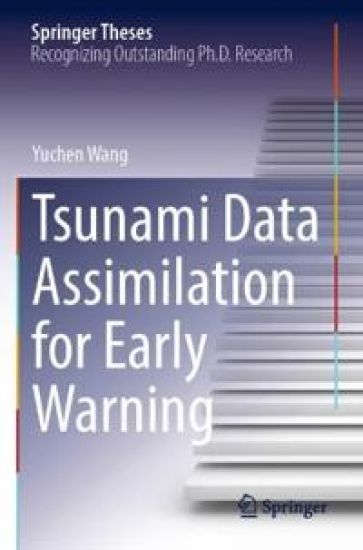
This book focuses on proposing a tsunami early warning system using data assimilation of offshore data. First, Green’s Function-based Tsunami Data Assimilation (GFTDA) is proposed to reduce the computation time for assimilation. It can forecast the waveform at Points of Interest (PoIs) by superposing Green’s functions between observational stations and PoIs. GFTDA achieves an equivalently high accuracy of tsunami forecasting to the previous approaches, while saving sufficient time to achieve an early warning. Second, a modified tsunami data assimilation method is explored for regions with a sparse observation network. The method uses interpolated waveforms at virtual stations to construct the complete wavefront for tsunami propagation. Its application to the 2009 Dusky Sound, New Zealand earthquake, and the 2015 Illapel earthquake revealed that adopting virtual stations greatly improved the tsunami forecasting accuracy for regions without a dense observation network. Finally, a real-time tsunami detection algorithm using Ensemble Empirical Mode Decomposition (EEMD) is presented. The tsunami signals of the offshore bottom pressure gauge can be automatically separated from the tidal components, seismic waves, and background noise. The algorithm could detect tsunami arrival with a short detection delay and accurately characterize the tsunami amplitude. Furthermore, the tsunami data assimilation approach is combined with the real-time tsunami detection algorithm, which is applied to the tsunami of the 2016 Fukushima earthquake. The proposed tsunami data assimilation approach can be put into practice with the help of the real-time tsunami detection algorithm.
Tsunami Data Assimilation for Early Warning

Tsunami Data Assimilation for Early Warning

Yuchen Wang

SPRINGER VERLAG, SINGAPORE
2022
sidottu
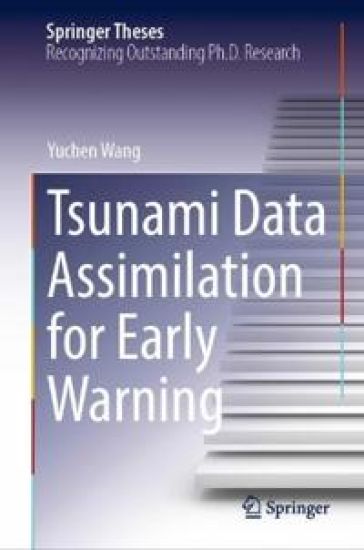
This book focuses on proposing a tsunami early warning system using data assimilation of offshore data. First, Green’s Function-based Tsunami Data Assimilation (GFTDA) is proposed to reduce the computation time for assimilation. It can forecast the waveform at Points of Interest (PoIs) by superposing Green’s functions between observational stations and PoIs. GFTDA achieves an equivalently high accuracy of tsunami forecasting to the previous approaches, while saving sufficient time to achieve an early warning. Second, a modified tsunami data assimilation method is explored for regions with a sparse observation network. The method uses interpolated waveforms at virtual stations to construct the complete wavefront for tsunami propagation. Its application to the 2009 Dusky Sound, New Zealand earthquake, and the 2015 Illapel earthquake revealed that adopting virtual stations greatly improved the tsunami forecasting accuracy for regions without a dense observation network. Finally, a real-time tsunami detection algorithm using Ensemble Empirical Mode Decomposition (EEMD) is presented. The tsunami signals of the offshore bottom pressure gauge can be automatically separated from the tidal components, seismic waves, and background noise. The algorithm could detect tsunami arrival with a short detection delay and accurately characterize the tsunami amplitude. Furthermore, the tsunami data assimilation approach is combined with the real-time tsunami detection algorithm, which is applied to the tsunami of the 2016 Fukushima earthquake. The proposed tsunami data assimilation approach can be put into practice with the help of the real-time tsunami detection algorithm.

Data-Driven Engineering Design

Data-Driven Engineering Design

Ang Liu; Yuchen Wang; Xingzhi Wang

Springer Nature Switzerland AG
2022
nidottu
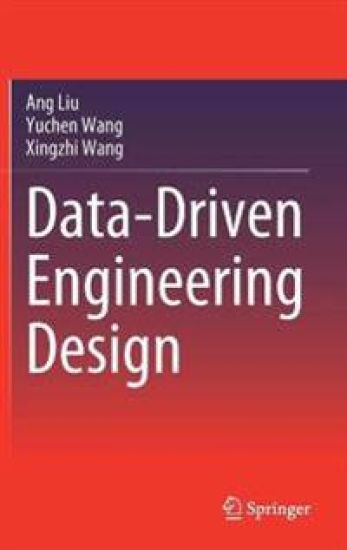
This book addresses the emerging paradigm of data-driven engineering design. In the big-data era, data is becoming a strategic asset for global manufacturers. This book shows how the power of data can be leveraged to drive the engineering design process, in particular, the early-stage design.Based on novel combinations of standing design methodology and the emerging data science, the book presents a collection of theoretically sound and practically viable design frameworks, which are intended to address a variety of critical design activities including conceptual design, complexity management, smart customization, smart product design, product service integration, and so forth. In addition, it includes a number of detailed case studies to showcase the application of data-driven engineering design. The book concludes with a set of promising research questions that warrant further investigation.Given its scope, the book will appeal to a broad readership, including postgraduate students, researchers, lecturers, and practitioners in the field of engineering design.
Data-Driven Engineering Design

Data-Driven Engineering Design

Ang Liu; Yuchen Wang; Xingzhi Wang

Springer Nature Switzerland AG
2021
sidottu
This book addresses the emerging paradigm of data-driven engineering design. In the big-data era, data is becoming a strategic asset for global manufacturers. This book shows how the power of data can be leveraged to drive the engineering design process, in particular, the early-stage design.Based on novel combinations of standing design methodology and the emerging data science, the book presents a collection of theoretically sound and practically viable design frameworks, which are intended to address a variety of critical design activities including conceptual design, complexity management, smart customization, smart product design, product service integration, and so forth. In addition, it includes a number of detailed case studies to showcase the application of data-driven engineering design. The book concludes with a set of promising research questions that warrant further investigation.Given its scope, the book will appeal to a broad readership, including postgraduate students, researchers, lecturers, and practitioners in the field of engineering design.