Kirjojen hintavertailu. Mukana 12 390 323 kirjaa ja 12 kauppaa.

Kirjailija

Yukio Mishima

Kirjat ja teokset yhdessä paikassa: 91 kirjaa, julkaisuja vuosilta 1958-2026, suosituimpien joukossa Elämä myytävänä. Vertaile teosten hintoja ja tarkista saatavuus suomalaisista kirjakaupoista.

91 kirjaa

Kirjojen julkaisuhaarukka 1958-2026.

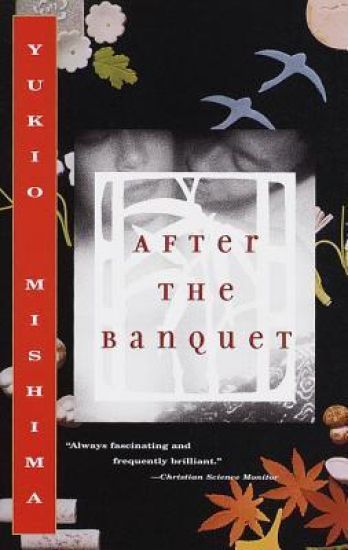
After the Banquet

After the Banquet

Yukio Mishima

VINTAGE
1999
nidottu
In After the Banquet, Mishima draws a portrait of a marriage in which lofty principles clash fatally with appetite and ambition. For years Kazu has run her fashionable restaurant with a combination of charm and shrewdness. But when the middle-aged entrepreneur falls in love with one of her clients, an aristocratic retired politician, she renounces her business in order to become his wife. In time, however, Kazu decides to resurrect her husband's political career. She embarks on a series of compromises and evasions that will force her to choose between her marriage and the demands of her irrepressible vitality. "Kazu is the biggest and the most profound thing Mishima has done so far in an already distinguished career."--The New Yorker
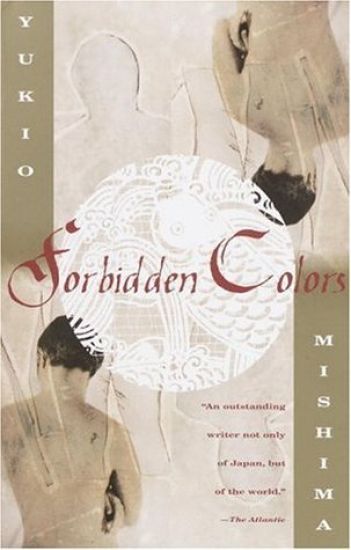
Forbidden Colors

Forbidden Colors

Yukio Mishima

Vintage Books
1999
pokkari
Seeking revenge on the women who betrayed him, Shunsuke, an aging misogynist, enlists the help of Yuichi, a young homosexual, whose experiences in the gay underworld vividly depict the corruption of postwar Tokyo. Reprint. 15,000 first printing.
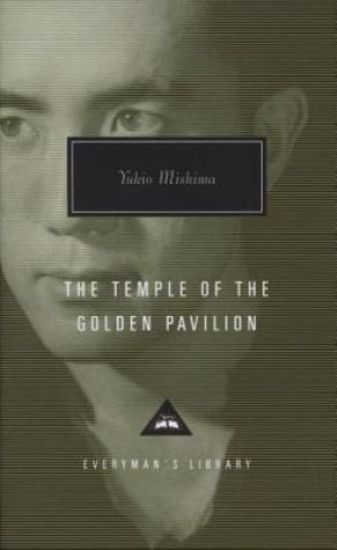
The Temple of the Golden Pavilion

The Temple of the Golden Pavilion

Yukio Mishima

Everyman's Library USA
1995
sidottu
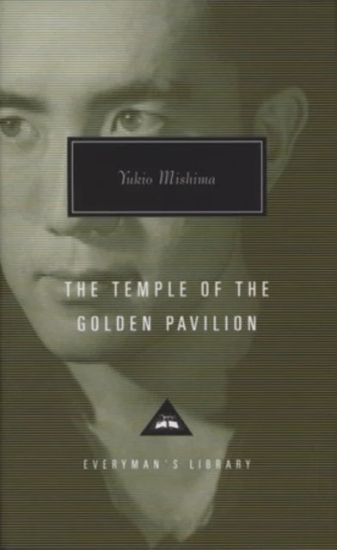
In The Temple of the Golden Pavilion, celebrated Japanese novelist Yukio Mishima creates a haunting portrait of a young man's obsession with idealized beauty and his destructive quest to possess it fully. Mizoguchi, an ostracized stutterer, develops a childhood fascination with Kyoto's famous Golden Temple. While an acolyte at the temple, he fixates on the structure's aesthetic perfection and it becomes his one and only object of desire. But as Mizoguchi begins to perceive flaws in the temple, he determines that the only true path to beauty lies in an act of horrific violence. Based on a real incident that occurred in 1950, The Temple of the Golden Pavilion brilliantly portrays the passions and agonies of a young man in postwar Japan, bringing to the subject the erotic imagination and instinct for the dramatic moment that marked Mishima as one of the towering makers of modern fiction. With an introduction by Donald Keene; Translated from the Japanese by Ivan Morris.
The Temple of the Golden Pavilion

The Temple of the Golden Pavilion

Yukio Mishima

Vintage Books
1994
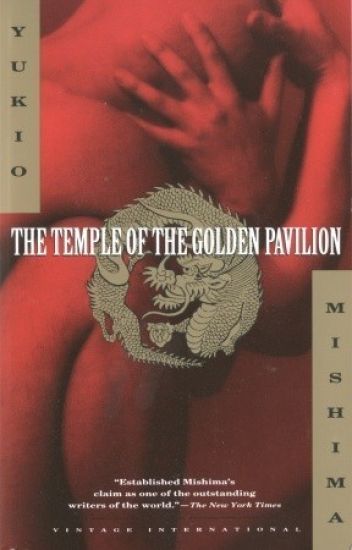
pokkari
Because of the boyhood trauma of seeing his mother make love to another man in the presence of his dying father, Mizoguchi becomes a hopeless stutterer. Taunted by his schoolmates, he feels utterly alone until he becomes an acolyte at a famous temple in Kyoto. He quickly becomes obsessed with the beauty of the temple. Even when tempted by a friend into exploring the geisha district, he cannot escape its image. In the novel's soaring climax, he tries desperately to free himself from his fixation. "Beautifully translated... Mishima re-erects Kyoto, plain and mountain, monastery, temple, town, as Victor Hugo made Paris out of Notre Dame."-- The Nation"An amazing literary feat in its minute delineation of a neurotic personality."-- Chicago TribuneTranslated from the Japanese by Ivan Morris
The Temple Of The Golden Pavilion

The Temple Of The Golden Pavilion

Yukio Mishima

Everyman's Library
1994
sidottu
Generally regarded both in Japan and in the West as his most successful novel, THE TEMPLE OF THE GOLDEN PAVILION brings together all Mishima's preoccupations with violence, desire, religious life and the history of his own nation. Based on actual incident, the burning of a celebrated temple, the novel is both a vivid narrative and a meditation on the state of Japan in the post-war period.
Spring Snow

Spring Snow

Yukio Mishima

Vintage Books
1990
nidottu
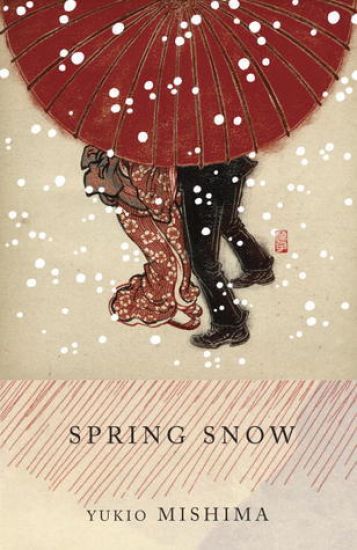
The first novel of Mishima's landmark tetralogy, The Sea of fertilitySpring Snow is set in Tokyo in 1912, when the hermetic world of the ancient aristocracy is being breached for the first time by outsiders -- rich provincial families unburdened by tradition, whose money and vitality make them formidable contenders for social and political power.Among this rising new elite are the ambitious Matsugae, whose son has been raised in a family of the waning aristocracy, the elegant and attenuated Ayakura. Coming of age, he is caught up in the tensions between old and new -- fiercely loving and hating the exquisite, spirited Ayakura Satoko. He suffers in psychic paralysis until the shock of her engagement to a royal prince shows him the magnitude of his passion, and leads to a love affair that is as doomed as it was inevitable. "Mishima is like Stendhal in his precise psychological analyses, like Dostoevsky in his explorations of darkly destructive personalities."-- Christian Science Monitor"[The Sea of Fertility] is a literary legacy on the scale of Proust's."-- National ReviewTranslated from the Japanese by Michael Gallagher
Sun and Steel

Sun and Steel

Yukio Mishima

Lyle Stuart
1970
nidottu
In this fascinating document, one of Japan's best known-and controversial-writers created what might be termed a new literary form. It is new because it combines elements of many existing types of writing, yet in the end fits into none of them.At one level, it may be read as an account of how a puny, bookish boy discovered the importance of his own physical being; the "sun and steel" of the title are themselves symbols respectively of the cult of the open air and the weights used in bodybuilding. At another level, it is a discussion by a major novelist of the relation between action and art, and his own highly polished art in particular. More personally, it is an account of one individual's search for identity and self-integration. Or again, the work could be seen as a demonstration of how an intensely individual preoccupation can be developed into a profound philosophy of life.All these elements are woven together by Mishima's complex yet polished and supple style. The confession and the self-analysis, the philosophy and the poetry combine in the end to create something that is in itself perfect and self-sufficient. It is a piece of literature that is as carefully fashioned as Mishima's novels, and at the same time provides an indispensable key to the understanding of them as art.The road Mishima took to salvation is a highly personal one. Yet here, ultimately, one detects the unmistakable tones of a self transcending the particular and attaining to a poetic vision of the universal. The book is therefore a moving document, and is highly significant as a pointer to the future development of one of the most interesting novelists of modern times.
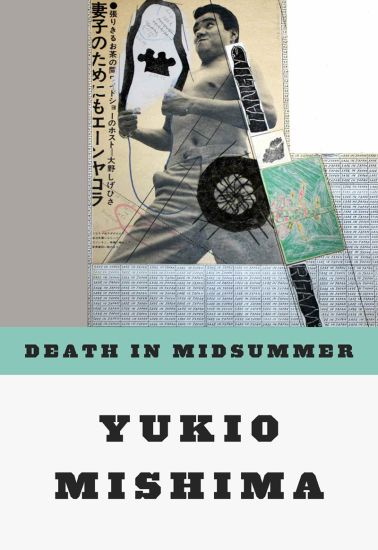
Death in Midsummer

Death in Midsummer

Yukio Mishima

New Directions Publishing Corporation
1966
nidottu
Nine of Yukio Mishima’s finest stories were selected by Mishima himself for translation in this book; they represent his extraordinary ability to depict a wide variety of human beings in moments of significance. Often his characters are sophisticated modern Japanese who turn out to be not so liberated from the past as they had thought.
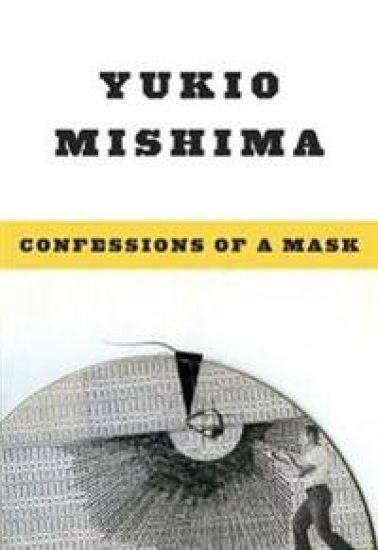
Confessions of a Mask

Confessions of a Mask

Yukio Mishima

NEW DIRECTIONS PUBLISHING CORPORATION
1958
nidottu
Confessions of a Mask tells the story of Kochan, an adolescent boy tormented by his burgeoning attraction to men: he wants to be "normal." Kochan is meek-bodied, and unable to participate in the more athletic activities of his classmates. He begins to notice his growing attraction to some of the boys in his class, particularly the pubescent body of his friend Omi. To hide his homosexuality, he courts a woman, Sonoko, but this exacerbates his feelings for men. As news of the War reaches Tokyo, Kochan considers the fate of Japan and his place within its deeply rooted propriety. Confessions of a Mask reflects Mishima's own coming of age in post-war Japan. Its publication in English--praised by Gore Vidal, James Baldwin, and Christopher Isherwood-- propelled the young Yukio Mishima to international fame.