Kirjojen hintavertailu. Mukana 12 657 676 kirjaa ja 12 kauppaa.

Kirjailija

Yunong Zhang

Kirjat ja teokset yhdessä paikassa: 17 kirjaa, julkaisuja vuosilta 2010-2026, suosituimpien joukossa Neurodynamic Methods for Continuum Robot Control. Vertaile teosten hintoja ja tarkista saatavuus suomalaisista kirjakaupoista.

17 kirjaa

Kirjojen julkaisuhaarukka 2010-2026.

Zhang Time Discretization (ZTD) Formulas and Applications

Zhang Time Discretization (ZTD) Formulas and Applications

Yunong Zhang; Jinjin Guo

TAYLOR FRANCIS LTD
2024
sidottu
This book aims to solve the discrete implementation problems of continuous-time neural network models while improving the performance of neural networks by using various Zhang Time Discretization (ZTD) formulas.The authors summarize and present the systematic derivations and complete research of ZTD formulas from special 3S-ZTD formulas to general NS-ZTD formulas. These finally lead to their proposed discrete-time Zhang neural network (DTZNN) algorithms, which are more efficient, accurate, and elegant. This book will open the door to scientific and engineering applications of ZTD formulas and neural networks, and will be a major inspiration for studies in neural network modeling, numerical algorithm design, prediction, and robot manipulator control.The book will benefit engineers, senior undergraduates, graduate students, and researchers in the fields of neural networks, computer mathematics, computer science, artificial intelligence, numerical algorithms, optimization, robotics, and simulation modeling.
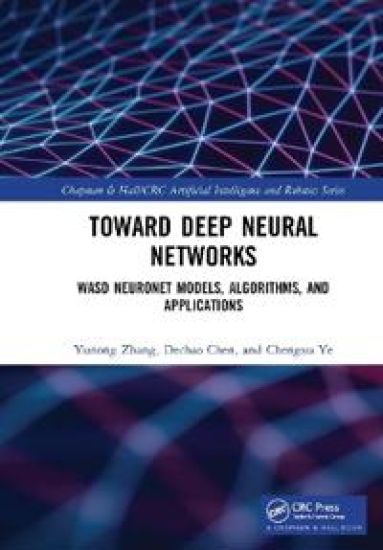
Toward Deep Neural Networks

Toward Deep Neural Networks

Yunong Zhang; Dechao Chen; Chengxu Ye

CRC Press
2020
nidottu
Toward Deep Neural Networks: WASD Neuronet Models, Algorithms, and Applications introduces the outlook and extension toward deep neural networks, with a focus on the weights-and-structure determination (WASD) algorithm. Based on the authors’ 20 years of research experience on neuronets, the book explores the models, algorithms, and applications of the WASD neuronet, and allows reader to extend the techniques in the book to solve scientific and engineering problems. The book will be of interest to engineers, senior undergraduates, postgraduates, and researchers in the fields of neuronets, computer mathematics, computer science, artificial intelligence, numerical algorithms, optimization, simulation and modeling, deep learning, and data mining. Features Focuses on neuronet models, algorithms, and applications Designs, constructs, develops, analyzes, simulates and compares various WASD neuronet models, such as single-input WASD neuronet models, two-input WASD neuronet models, three-input WASD neuronet models, and general multi-input WASD neuronet models for function data approximations Includes real-world applications, such as population prediction Provides complete mathematical foundations, such as Weierstrass approximation, Bernstein polynomial approximation, Taylor polynomial approximation, and multivariate function approximation, exploring the close integration of mathematics (i.e., function approximation theories) and computers (e.g., computer algorithms) Utilizes the authors' 20 years of research on neuronets
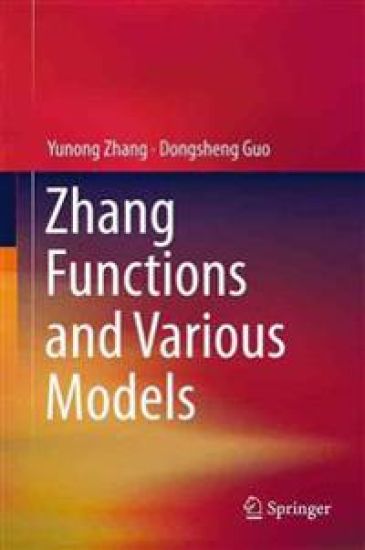
Zhang Functions and Various Models

Zhang Functions and Various Models

Yunong Zhang; Dongsheng Guo

Springer-Verlag Berlin and Heidelberg GmbH Co. K
2016
nidottu
This book focuses on solving different types of time-varying problems. It presents various Zhang dynamics (ZD) models by defining various Zhang functions (ZFs) in real and complex domains. It then provides theoretical analyses of such ZD models and illustrates their results. It also uses simulations to substantiate their efficacy and show the feasibility of the presented ZD approach (i.e., different ZFs leading to different ZD models), which is further applied to the repetitive motion planning (RMP) of redundant robots, showing its application potential.
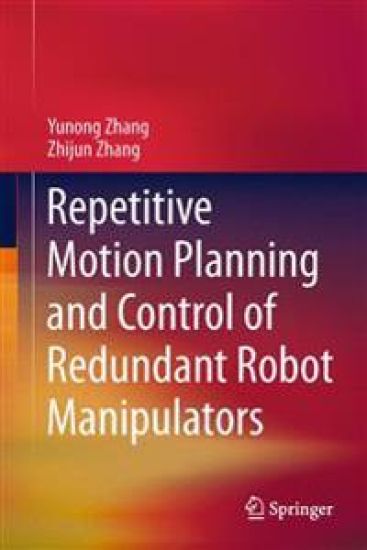
Repetitive Motion Planning and Control of Redundant Robot Manipulators

Repetitive Motion Planning and Control of Redundant Robot Manipulators

Yunong Zhang; Zhijun Zhang

Springer-Verlag Berlin and Heidelberg GmbH Co. K
2015
nidottu
Repetitive Motion Planning and Control of Redundant Robot Manipulators presents four typical motion planning schemes based on optimization techniques, including the fundamental RMP scheme and its extensions. These schemes are unified as quadratic programs (QPs), which are solved by neural networks or numerical algorithms. The RMP schemes are demonstrated effectively by the simulation results based on various robotic models; the experiments applying the fundamental RMP scheme to a physical robot manipulator are also presented. As the schemes and the corresponding solvers presented in the book have solved the non-repetitive motion problems existing in redundant robot manipulators, it is of particular use in applying theoretical research based on the quadratic program for redundant robot manipulators in industrial situations. This book will be a valuable reference work for engineers, researchers, advanced undergraduate and graduate students in robotics fields.Yunong Zhang is a professor at The School of Information Science and Technology, Sun Yat-sen University, Guangzhou, China; Zhijun Zhang is a research fellow working at the same institute.
Zhang Functions and Various Models

Zhang Functions and Various Models

Yunong Zhang; Dongsheng Guo

Springer-Verlag Berlin and Heidelberg GmbH Co. K
2015
sidottu
This book focuses on solving different types of time-varying problems. It presents various Zhang dynamics (ZD) models by defining various Zhang functions (ZFs) in real and complex domains. It then provides theoretical analyses of such ZD models and illustrates their results. It also uses simulations to substantiate their efficacy and show the feasibility of the presented ZD approach (i.e., different ZFs leading to different ZD models), which is further applied to the repetitive motion planning (RMP) of redundant robots, showing its application potential.
Repetitive Motion Planning and Control of Redundant Robot Manipulators

Repetitive Motion Planning and Control of Redundant Robot Manipulators

Yunong Zhang; Zhijun Zhang

Springer-Verlag Berlin and Heidelberg GmbH Co. K
2013
sidottu
Repetitive Motion Planning and Control of Redundant Robot Manipulators presents four typical motion planning schemes based on optimization techniques, including the fundamental RMP scheme and its extensions. These schemes are unified as quadratic programs (QPs), which are solved by neural networks or numerical algorithms. The RMP schemes are demonstrated effectively by the simulation results based on various robotic models; the experiments applying the fundamental RMP scheme to a physical robot manipulator are also presented. As the schemes and the corresponding solvers presented in the book have solved the non-repetitive motion problems existing in redundant robot manipulators, it is of particular use in applying theoretical research based on the quadratic program for redundant robot manipulators in industrial situations. This book will be a valuable reference work for engineers, researchers, advanced undergraduate and graduate students in robotics fields.Yunong Zhang is a professor at The School of Information Science and Technology, Sun Yat-sen University, Guangzhou, China; Zhijun Zhang is a research fellow working at the same institute.
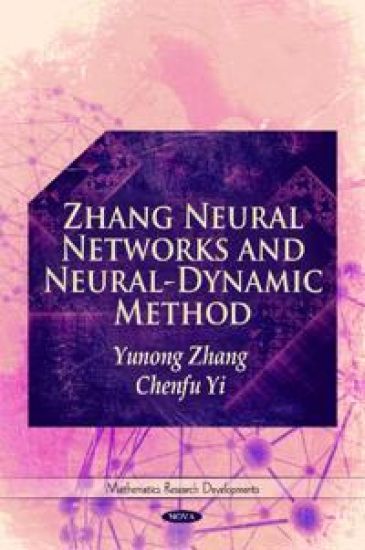
Zhang Neural Networks & Neural-Dynamic Method

Zhang Neural Networks & Neural-Dynamic Method

Yunong Zhang; Chenfu Yi

Nova Science Publishers Inc
2011
sidottu
The real-time solution to a mathematical problem arises in numerous fields of science, engineering, and business. It is usually an essential part of many solutions, e.g., matrix/vector computation, optimisation, control theory, kinematics, signal processing, and pattern recognition. In recent years, due to the in-depth research on neural networks, numerous recurrent neural networks (RNN) based on the gradient-based method have been developed and investigated. Particularly, some simple neural networks were proposed to solve linear programming problems in real time and implemented on analogue circuits. In this book, ZNN, ZD or ZND theory formalises these problems and solutions in the time-varying context and provides compact models that could solve those dynamic problems.
Zhang Time Discretization (ZTD) Formulas and Applications

Zhang Time Discretization (ZTD) Formulas and Applications

Yunong Zhang; Jinjin Guo

TAYLOR FRANCIS LTD
2026
nidottu
This book aims to solve the discrete implementation problems of continuous-time neural network models while improving the performance of neural networks by using various Zhang Time Discretization (ZTD) formulas. The authors summarize and present the systematic derivations and complete research of ZTD formulas from special 3S-ZTD formulas to general NS-ZTD formulas. These finally lead to their proposed discrete-time Zhang neural network (DTZNN) algorithms, which are more efficient, accurate, and elegant. This book will open the door to scientific and engineering applications of ZTD formulas and neural networks, and will be a major inspiration for studies in neural network modeling, numerical algorithm design, prediction, and robot manipulator control. The book will benefit engineers, senior undergraduates, graduate students, and researchers in the fields of neural networks, computer mathematics, computer science, artificial intelligence, numerical algorithms, optimization, robotics, and simulation modeling.
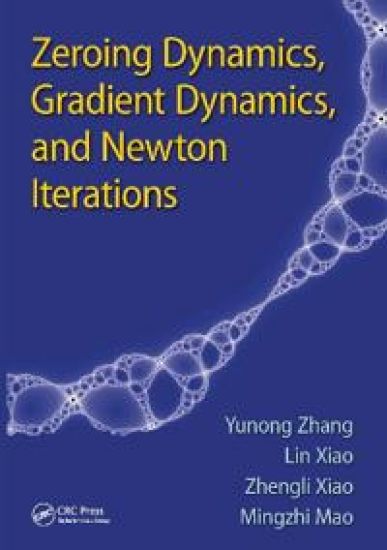
Zeroing Dynamics, Gradient Dynamics, and Newton Iterations

Zeroing Dynamics, Gradient Dynamics, and Newton Iterations

Yunong Zhang; Lin Xiao; Zhengli Xiao; Mingzhi Mao

CRC Press
2026
nidottu
Neural networks and neural dynamics are powerful approaches for the online solution of mathematical problems arising in many areas of science, engineering, and business. Compared with conventional gradient neural networks that only deal with static problems of constant coefficient matrices and vectors, the authors’ new method called zeroing dynamics solves time-varying problems. Zeroing Dynamics, Gradient Dynamics, and Newton Iterations is the first book that shows how to accurately and efficiently solve time-varying problems in real-time or online using continuous- or discrete-time zeroing dynamics. The book brings together research in the developing fields of neural networks, neural dynamics, computer mathematics, numerical algorithms, time-varying computation and optimization, simulation and modeling, analog and digital hardware, and fractals.The authors provide a comprehensive treatment of the theory of both static and dynamic neural networks. Readers will discover how novel theoretical results have been successfully applied to many practical problems. The authors develop, analyze, model, simulate, and compare zeroing dynamics models for the online solution of numerous time-varying problems, such as root finding, nonlinear equation solving, matrix inversion, matrix square root finding, quadratic optimization, and inequality solving.
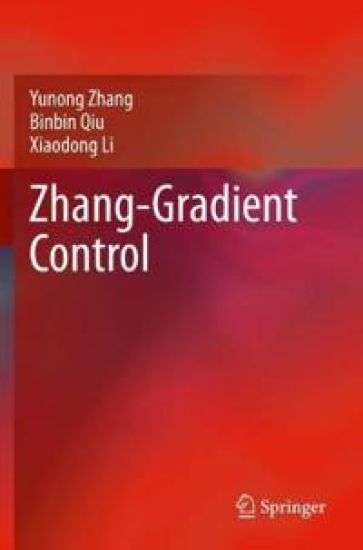
Zhang-Gradient Control

Zhang-Gradient Control

Yunong Zhang; Binbin Qiu; Xiaodong Li

SPRINGER VERLAG, SINGAPORE
2021
nidottu
This book introduces readers to using the simple but effective Zhang-gradient (ZG) method to solve tracking-control problems concerning various nonlinear systems, while also highlighting the applications of the ZG method to tracking control for practical systems, e.g. an inverted-pendulum-on-a-cart (IPC) system and a two-wheeled mobile robot (showing its potential applications). In addition to detailed theoretical analyses of ZG controllers, the book presents a wealth of computer simulations to demonstrate the feasibility and efficacy of the controllers discussed (as well as the method itself). More importantly, the superiority of ZG controllers in overcoming the division-by-zero (DBZ) problem is also illustrated. Given its scope and format, the book is well suited for undergraduate and graduate students, as well as academic and industrial researchers in the fields of neural dynamics/neural networks, nonlinear control, computer mathematics, time-varying problem solving, modeling and simulation, analog hardware, and robotics.
Zhang-Gradient Control

Zhang-Gradient Control

Yunong Zhang; Binbin Qiu; Xiaodong Li

Springer Verlag, Singapore
2020
sidottu
This book introduces readers to using the simple but effective Zhang-gradient (ZG) method to solve tracking-control problems concerning various nonlinear systems, while also highlighting the applications of the ZG method to tracking control for practical systems, e.g. an inverted-pendulum-on-a-cart (IPC) system and a two-wheeled mobile robot (showing its potential applications). In addition to detailed theoretical analyses of ZG controllers, the book presents a wealth of computer simulations to demonstrate the feasibility and efficacy of the controllers discussed (as well as the method itself). More importantly, the superiority of ZG controllers in overcoming the division-by-zero (DBZ) problem is also illustrated. Given its scope and format, the book is well suited for undergraduate and graduate students, as well as academic and industrial researchers in the fields of neural dynamics/neural networks, nonlinear control, computer mathematics, time-varying problem solving, modeling and simulation, analog hardware, and robotics.
Toward Deep Neural Networks

Toward Deep Neural Networks

Yunong Zhang; Dechao Chen; Chengxu Ye

CRC Press
2019
sidottu
Toward Deep Neural Networks: WASD Neuronet Models, Algorithms, and Applications introduces the outlook and extension toward deep neural networks, with a focus on the weights-and-structure determination (WASD) algorithm. Based on the authors’ 20 years of research experience on neuronets, the book explores the models, algorithms, and applications of the WASD neuronet, and allows reader to extend the techniques in the book to solve scientific and engineering problems. The book will be of interest to engineers, senior undergraduates, postgraduates, and researchers in the fields of neuronets, computer mathematics, computer science, artificial intelligence, numerical algorithms, optimization, simulation and modeling, deep learning, and data mining. Features Focuses on neuronet models, algorithms, and applications Designs, constructs, develops, analyzes, simulates and compares various WASD neuronet models, such as single-input WASD neuronet models, two-input WASD neuronet models, three-input WASD neuronet models, and general multi-input WASD neuronet models for function data approximations Includes real-world applications, such as population prediction Provides complete mathematical foundations, such as Weierstrass approximation, Bernstein polynomial approximation, Taylor polynomial approximation, and multivariate function approximation, exploring the close integration of mathematics (i.e., function approximation theories) and computers (e.g., computer algorithms) Utilizes the authors' 20 years of research on neuronets
Robot Manipulator Redundancy Resolution

Robot Manipulator Redundancy Resolution

Yunong Zhang; Long Jin

Wiley-Blackwell
2017
sidottu
Introduces a revolutionary, quadratic-programming based approach to solving long-standing problems in motion planning and control of redundant manipulators This book describes a novel quadratic programming approach to solving redundancy resolutions problems with redundant manipulators. Known as ``QP-unified motion planning and control of redundant manipulators'' theory, it systematically solves difficult optimization problems of inequality-constrained motion planning and control of redundant manipulators that have plagued robotics engineers and systems designers for more than a quarter century. An example of redundancy resolution could involve a robotic limb with six joints, or degrees of freedom (DOFs), with which to position an object. As only five numbers are required to specify the position and orientation of the object, the robot can move with one remaining DOF through practically infinite poses while performing a specified task. In this case redundancy resolution refers to the process of choosing an optimal pose from among that infinite set. A critical issue in robotic systems control, the redundancy resolution problem has been widely studied for decades, and numerous solutions have been proposed. This book investigates various approaches to motion planning and control of redundant robot manipulators and describes the most successful strategy thus far developed for resolving redundancy resolution problems. Provides a fully connected, systematic, methodological, consecutive, and easy approach to solving redundancy resolution problemsDescribes a new approach to the time-varying Jacobian matrix pseudoinversion, applied to the redundant-manipulator kinematic controlIntroduces The QP-based unification of robots' redundancy resolutionIllustrates the effectiveness of the methods presented using a large number of computer simulation results based on PUMA560, PA10, and planar robot manipulatorsProvides technical details for all schemes and solvers presented, for readers to adopt and customize them for specific industrial applications Robot Manipulator Redundancy Resolution is must-reading for advanced undergraduates and graduate students of robotics, mechatronics, mechanical engineering, tracking control, neural dynamics/neural networks, numerical algorithms, computation and optimization, simulation and modelling, analog, and digital circuits. It is also a valuable working resource for practicing robotics engineers and systems designers and industrial researchers.
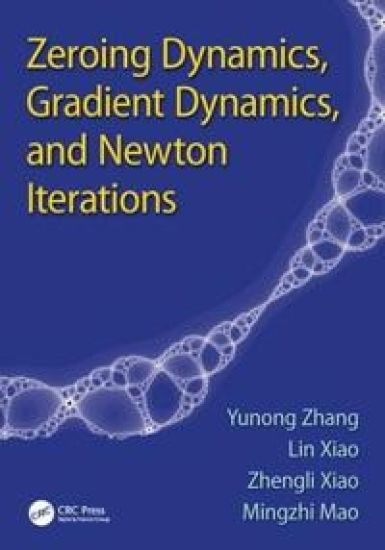
Zeroing Dynamics, Gradient Dynamics, and Newton Iterations

Zeroing Dynamics, Gradient Dynamics, and Newton Iterations

Yunong Zhang; Lin Xiao; Zhengli Xiao; Mingzhi Mao

Productivity Press
2015
sidottu
Neural networks and neural dynamics are powerful approaches for the online solution of mathematical problems arising in many areas of science, engineering, and business. Compared with conventional gradient neural networks that only deal with static problems of constant coefficient matrices and vectors, the authors’ new method called zeroing dynamics solves time-varying problems. Zeroing Dynamics, Gradient Dynamics, and Newton Iterations is the first book that shows how to accurately and efficiently solve time-varying problems in real-time or online using continuous- or discrete-time zeroing dynamics. The book brings together research in the developing fields of neural networks, neural dynamics, computer mathematics, numerical algorithms, time-varying computation and optimization, simulation and modeling, analog and digital hardware, and fractals.The authors provide a comprehensive treatment of the theory of both static and dynamic neural networks. Readers will discover how novel theoretical results have been successfully applied to many practical problems. The authors develop, analyze, model, simulate, and compare zeroing dynamics models for the online solution of numerous time-varying problems, such as root finding, nonlinear equation solving, matrix inversion, matrix square root finding, quadratic optimization, and inequality solving.
Higher Order Basis Based Integral Equation Solver (HOBBIES)

Higher Order Basis Based Integral Equation Solver (HOBBIES)

Yunong Zhang; Tapan K. Sarkar; Xunwang Zhao; Daniel Garcia-Donoro; Weixin Zhao; Magdalena Salazar Palma; Sioweng Ting

John Wiley Sons Inc
2012
sidottu
The latest in parallel EM solutions with both in-core and out-of-core solvers The solution of complex electromagnetic (EM) problems requires one to address the issues related with numerical accuracy and efficient distribution of the solution procedure over multiple computational nodes. With the advent of multicore processors and high performance computing (HPC) technology, the EM software designers need to know how to add new functionality to computational EM codes so that they can run efficiently on these new processors. Higher Order Basis Based Integral Equation Solver [HOBBIES] presents a road map for the analysis of complex material structures using the high-performance parallel simulation software known as HOBBIES. Focusing on the Method of Moments (MoM), the book features new parallel programming techniques and user-friendly code with superior capabilities for solving challenging EM radiation and scattering problems. It provides readers with complete guidance on how to extend the capability of MoM and achieve faster and more accurate EM analysis and utilize multicore CPUs on desktop computers. Complete with an academic version of the HOBBIES software, this book: Explains the unique features of the higher order basis functions in the solution of integral equations in a MoM contextShows how to generate a properly load balanced parallel computational procedure for MoM matrix filling and matrix equation solving in both in-core and out-of-core implementationPresents a professional graphical users interface (GUI) for generating the geometrical structure based on NURBS modelingIllustrates various automatic meshing procedures based on an a-priori defined error between the actual geometry and the meshed structureOutlines all the key features of the HOBBIES software, including multiple optimization procedures for EM synthesis The bottleneck of traditional MoM arises from the lack of memory in computers for solution of large problems. This is mitigated by using higher order basis functions and out-of-core solver in HOBBIES. HOBBIES has the capability to perform numerically accurate EM simulations using thousands of CPU cores in an HPC environment using a properly load balanced out-of-core solver. In this way, it provides a cost-effective choice for addressing modern engineering and scientific challenges that arise from the extremely complicated real-life applications.