Kirjailija
Yuval Noah Harari
Kirjat ja teokset yhdessä paikassa: 148 kirjaa, julkaisuja vuosilta 2004-2026, suosituimpien joukossa Sapiens. Vertaile teosten hintoja ja tarkista saatavuus suomalaisista kirjakaupoista.
148 kirjaa
Kirjojen julkaisuhaarukka 2004-2026.
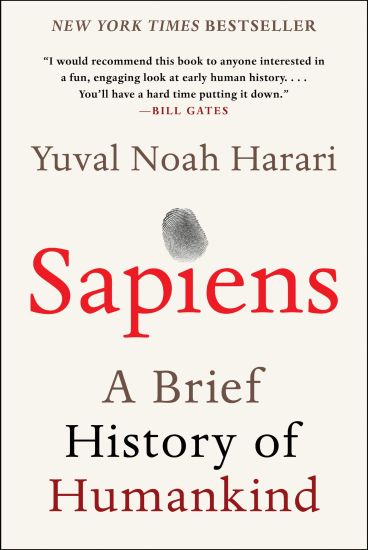
Kuinka ihmisestä tuli ihminen?Yuval Noah Harari käy kirjassaan Sapiens. Ihmisen lyhyt historia läpi koko ihmisen historian, aina ensimmäisistä maan kamaralla kulkeneista ihmisistä kohti nykypäivää.100 000 vuotta sitten maapallolla asui ainakin kuusi ihmislajia. Nykyään lajeja on vain yksi: Homo sapiens. Miten meidän lajimme onnistui päihittämään muut lajit? Miten metsästäjistä tuli kaupunkien ja kuningaskuntien rakentajia? Miten ryhdyimme uskomaan jumaliin, valtioihin ja ihmisoikeuksiin sekä luottamaan rahaan, kirjoihin ja lakeihin? Miksi alistuimme byrokratialle, aikatauluille ja kuluttamiselle? Ja millaiseksi maailma on muuttumassa?Kirjassaan Sapiens. Ihmisen lyhyt historia Yuval Noah Harari käy läpi koko ihmisen historian, aina ensimmäisistä maan kamaralla kulkeneista ihmisistä nykyhetkeen. Lajimme kehitykseen on vaikuttanut useita radikaaleja - ja joskus tuhoisiakin - läpimurtoja. Miten historian virrat ovat muovanneet ihmistä, yhteiskuntaa ja kaikkea ympärillämme?Rohkea, laaja-alainen ja provokatiivinen teos haastaa kaiken sen, minkä luulimme tietävämme ihmisyydestä.
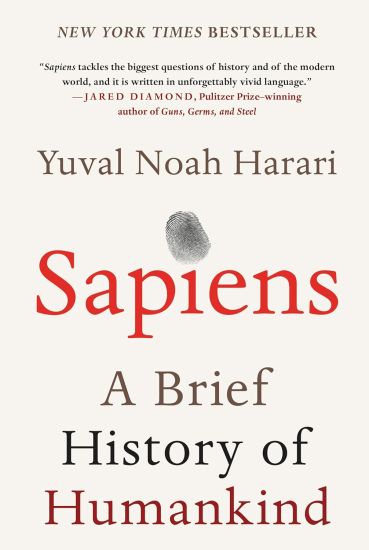
Official U.S. edition with full color illustrations throughout.#1 New York Times Bestseller The Summer Reading Pick for President Barack Obama, Bill Gates, and Mark Zuckerberg, now available as a beautifully packaged paperbackFrom a renowned historian comes a groundbreaking narrative of humanity's creation and evolution--a #1 international bestseller--that explores the ways in which biology and history have defined us and enhanced our understanding of what it means to be "human."One hundred thousand years ago, at least six different species of humans inhabited Earth. Yet today there is only one--homo sapiens. What happened to the others? And what may happen to us?Most books about the history of humanity pursue either a historical or a biological approach, but Dr. Yuval Noah Harari breaks the mold with this highly original book that begins about 70,000 years ago with the appearance of modern cognition. From examining the role evolving humans have played in the global ecosystem to charting the rise of empires, Sapiens integrates history and science to reconsider accepted narratives, connect past developments with contemporary concerns, and examine specific events within the context of larger ideas.Dr. Harari also compels us to look ahead, because over the last few decades humans have begun to bend laws of natural selection that have governed life for the past four billion years. We are acquiring the ability to design not only the world around us, but also ourselves. Where is this leading us, and what do we want to become?Featuring 27 photographs, 6 maps, and 25 illustrations/diagrams, this provocative and insightful work is sure to spark debate and is essential reading for aficionados of Jared Diamond, James Gleick, Matt Ridley, Robert Wright, and Sharon Moalem.
Sapiens: A Graphic History, Volume 2: The Pillars of Civilization
Yuval Noah Harari
Harper
2021
sidottu
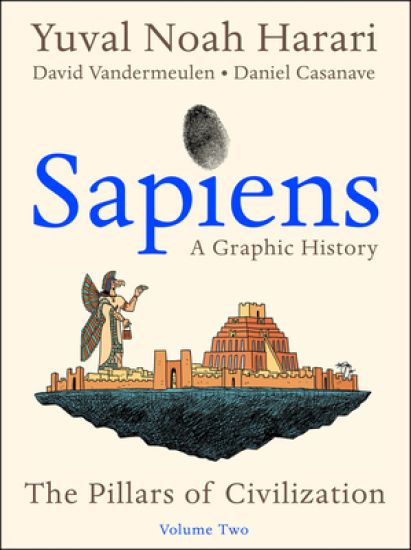
NATIONAL BESTSELLERThis second volume of Sapiens: A Graphic History, the full-color graphic adaptation of Yuval Noah Harari's #1 New York Times bestseller, focuses on the Agricultural Revolution--when humans fell into a trap we've yet to escape: working harder and harder with diminishing returns.What if humanity's major woes--war, plague, famine and inequality--originated 12,000 years ago, when Homo sapiens converted from nomads to settlers, in pursuit of the fantasy of productivity and efficiency? What if by seeking to control plants and animals, humans ended up being controlled by kings, priests, and Kafkaesque bureaucracy? Volume 2 of Sapiens: A Graphic History-The Pillars of Civilization explores a crucial chapter in human development: the Agricultural Revolution. This is the story of how wheat took over the world; how an unlikely marriage between a god and a bureaucrat created the first empires; and how war, plague, famine, and inequality became an intractable feature of the human condition.But it's not all doom and gloom with this book's cast of entertaining characters and colorful humorous scenes. Yuval, Zoe, Prof. Saraswati, Cindy and Bill (now farmers), Detective Lopez, and Dr. Fiction, all introduced in Volume 1, once again travel the length and breadth of human history, this time investigating the impact the Agricultural Revolution has had on our species. The cunning Mephisto shows them how to ensnare humans, King Hammurabi lays down the law, and Confucius explains harmonious society. The origins of modern farming are introduced through Elizabethan tragedy; the changing fortunes of domesticated plants and animals are tracked in the columns of the Daily Business News; the story of urbanization is portrayed as a travel brochure, offering discount journeys to ancient Babylon and China; and the history of inequality unfolds in a superhero detective story; with guest appearances by historical and cultural personalities throughout such as Thomas Jefferson, Scarlett O'Hara, Margaret Thatcher, and John Lennon.Sapiens: A Graphic History, Volume 2 is a radical, witty and colorful retelling of the story of humankind for adults and young adults, and can be read on its own or in sequence with Volume I.
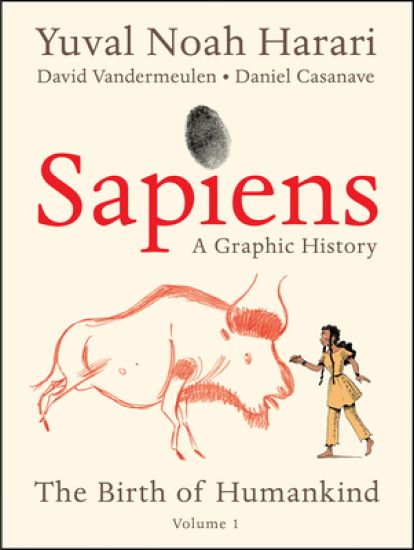
NEW YORK TIMES BESTSELLERA hardcover edition of the first volume of the graphic adaptation of Yuval Noah Harari's smash #1 New York Times and international bestseller recommended by President Barack Obama and Bill Gates, with gorgeous full-color illustrations and concise, easy to comprehend text for readers of all ages.One hundred thousand years ago, at least six different species of humans inhabited Earth. Yet today there is only one--homo sapiens. What happened to the others? And what may happen to us?In this first volume of the full-color illustrated adaptation of his groundbreaking book, renowned historian Yuval Harari tells the story of humankind's creation and evolution, exploring the ways in which biology and history have defined us and enhanced our understanding of what it means to be "human." From examining the role evolving humans have played in the global ecosystem to charting the rise of empires, Sapiens challenges us to reconsider accepted beliefs, connect past developments with contemporary concerns, and view specific events within the context of larger ideas. Featuring 256 pages of full-color illustrations and easy-to-understand text covering the first part of the full-length original edition, this adaptation of the mind-expanding book furthers the ongoing conversation as it introduces Harari's ideas to a wide new readership.
Arabic translation of Sapiens: A Brief History of Humankind is a book by Professor Yuval Noah Harari first published in Hebrew in Israel in 2011, and in English in 2014. Harari cites Jared Diamond's Guns, Germs, and Steel (1997) as one of the greatest inspirations for the book by showing that it was possible to "ask very big questions and answer them scientifically".
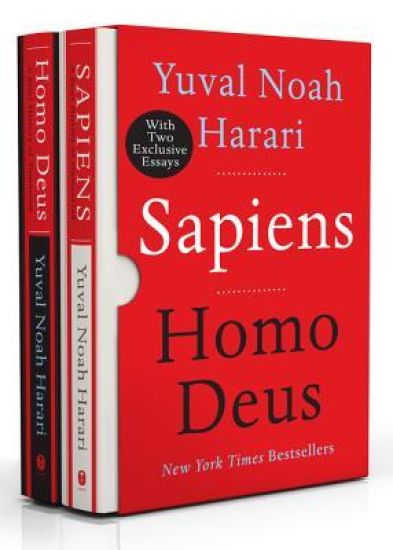
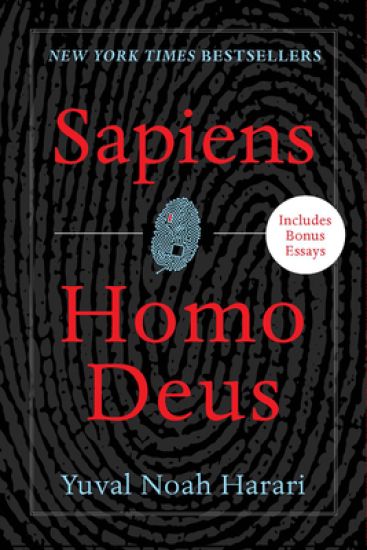
Discover humanity's past and its future in this special box set featuring the bestselling Sapiens--a reading pick of President Barack Obama, Bill Gates, and Mark Zuckerberg--and its acclaimed companion Homo Deus.Renowned historian Yuval Noah Harari became an instant international sensation with the publication of his worldwide bestselling book Sapiens, which has since been translated into over 65 languages and served as the blueprint for his provocative follow-up, Homo Deus.In Sapiens, Yuval Noah Harari spans the whole of human history, from the very first humans to walk the earth to the radical--and sometimes devastating--breakthroughs of the Cognitive, Agricultural, and Scientific Revolutions. Drawing on insights from biology, anthropology, paleontology, and economics, he explores how the currents of history have shaped our human societies, the animals and plants around us, and even our personalities. Bold and wide-ranging, Sapiens integrates history and science to challenge everything we thought we knew about being human: our thoughts, our actions, our heritage...and our future.In Homo Deus, Harari turns his focus toward our unknown future and our quest to upgrade humans into gods. While humankind has managed to do the impossible and rein in famine, plague, and war over the past century, these are still countless challenges ahead of us. What then will replace famine, plague, and war at the top of the human agenda? As the self-made gods of planet earth, what destinies will we set ourselves, and which quests will we undertake? Homo Deus explores the projects, dreams and nightmares that will shape the twenty-first century--from overcoming death to creating artificial life--and predicts the next stage of evolution.Strikingly insightful yet clear and accessible in tone, these two books are the foundations for understanding our pasts to predict our futures. Including full-color illustrations throughout, this box set is a great gift for existing fans of Yuval Noah Harari and anybody who is curious about what it means to be human.
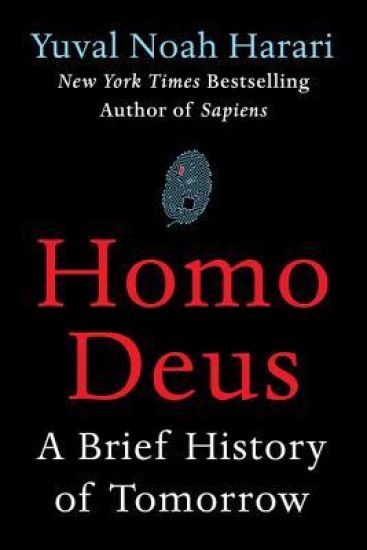
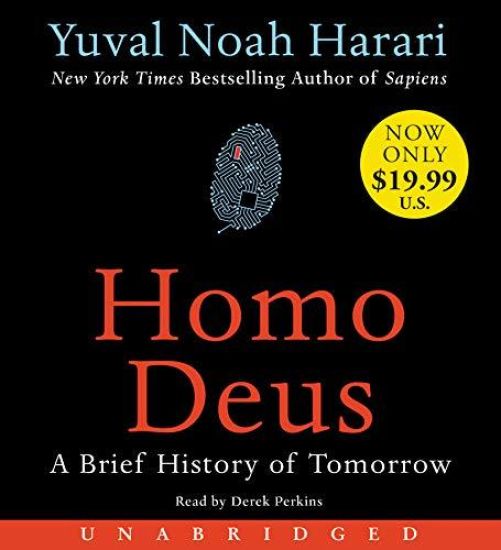
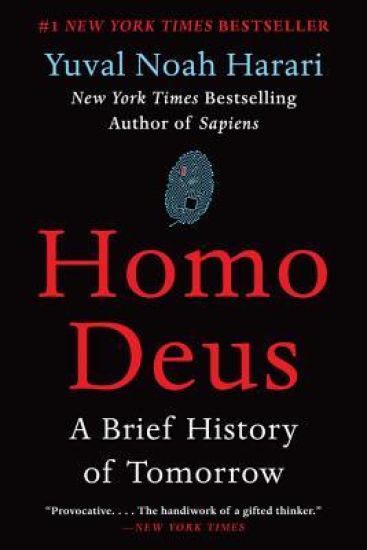
Official U.S. edition with full color illustrations throughout.NEW YORK TIMES BESTSELLER Yuval Noah Harari, author of the critically-acclaimed New York Times bestseller and international phenomenon Sapiens, returns with an equally original, compelling, and provocative book, turning his focus toward humanity's future, and our quest to upgrade humans into gods.Over the past century humankind has managed to do the impossible and rein in famine, plague, and war. This may seem hard to accept, but, as Harari explains in his trademark style--thorough, yet riveting--famine, plague and war have been transformed from incomprehensible and uncontrollable forces of nature into manageable challenges. For the first time ever, more people die from eating too much than from eating too little; more people die from old age than from infectious diseases; and more people commit suicide than are killed by soldiers, terrorists and criminals put together. The average American is a thousand times more likely to die from binging at McDonalds than from being blown up by Al Qaeda.What then will replace famine, plague, and war at the top of the human agenda? As the self-made gods of planet earth, what destinies will we set ourselves, and which quests will we undertake? Homo Deus explores the projects, dreams and nightmares that will shape the twenty-first century--from overcoming death to creating artificial life. It asks the fundamental questions: Where do we go from here? And how will we protect this fragile world from our own destructive powers? This is the next stage of evolution. This is Homo Deus.With the same insight and clarity that made Sapiens an international hit and a New York Times bestseller, Harari maps out our future.
#1 New York Times Bestseller - New York Times Readers' Pick: Top 100 Books of the 21st Century - The Summer Reading Pick for President Barack Obama and Bill GatesOfficial U.S. edition with full color illustrations throughout. From renowned historian Yuval Noah Harari comes a groundbreaking narrative of humanity's creation and evolution--a #1 international bestseller--that explores the ways in which biology and history have defined us and enhanced our understanding of what it means to be "human."One hundred thousand years ago, at least six different species of humans inhabited Earth. Yet today there is only one--homo sapiens. What happened to the others? And what may happen to us?Most books about the history of humanity pursue either a historical or a biological approach, but Dr. Yuval Noah Harari breaks the mold with this highly original book that begins about 70,000 years ago with the appearance of modern cognition. From examining the role evolving humans have played in the global ecosystem to charting the rise of empires, Sapiens integrates history and science to reconsider accepted narratives, connect past developments with contemporary concerns, and examine specific events within the context of larger ideas.Dr. Harari also compels us to look ahead, because over the last few decades humans have begun to bend laws of natural selection that have governed life for the past four billion years. We are acquiring the ability to design not only the world around us, but also ourselves. Where is this leading us, and what do we want to become?Featuring 27 photographs, 6 maps, and 25 illustrations/diagrams, this provocative and insightful work is sure to spark debate and is essential reading for aficionados of Jared Diamond, James Gleick, Matt Ridley, Robert Wright, and Sharon Moalem.
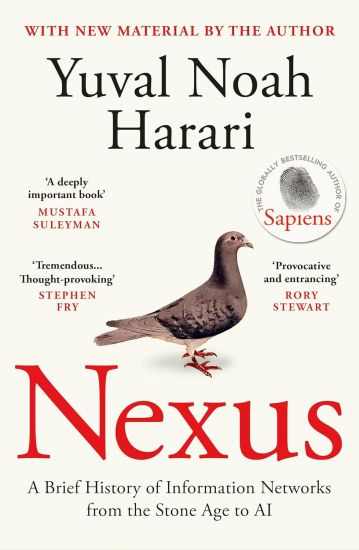
Kuinka tieto yhdisti ihmiset?Sapiens-kirjallaan tunnetuksi tullut Yuval Noah Harari tarkastelee uutuuskirjassaan Nexus - Tietoverkkojen lyhyt historia, miten informaation virta on rakentanut ja tuhonnut maailmaamme.Viime 100 000 vuoden ajan me sapiensit olemme koonneet itsellemme huikeasti vaikutusvaltaa. Mutta kaikista keksinnöistämme, löydöistämme ja valloituksistamme huolimatta meitä uhkaavat suuret vaarat: maailma on ekologisen romahduksen partaalla, poliittiset jännitteet kasvavat ja väärää tietoa on kaikkialla. Lisäksi syöksymme suin päin tekoälyn aikakauteen - tuntemattomaan tietoverkkoon, joka saattaa hävittää lajimme. Miksi olemme niin itsetuhoisia kaikista saavuttamistamme edistysaskelista huolimatta?Menestyskirjailija Yuval Noah Hararin Nexus tarkastelee ihmiskunnan pitkää historiaa ja pohtii, miten tiedon virta on tuonut meidät tähän pisteeseen. Teos vie meidät kivikaudelta Raamatun kanonisointiin, painotekniikan keksimiseen, joukkoviestinnän kehittymiseen ja populismin viimeaikaiseen nousuun. Se käsittelee myös pian kohtaamiamme ajankohtaisia valintoja, kun ei-inhimillinen äly uhkaa olemassaoloamme.Tieto ei ole totuuden raaka-ainetta eikä pelkkä ase. Nexus etsii toiveikasta keskitietä näiden ääripäiden välillä ja pyrkii samalla löytämään yhteisen ihmisyytemme uudelleen.Yuval Noah Harari (s. 1976) väitteli historian tohtoriksi Oxfordissa. Hän asuu aviomiehensä kanssa Tel Avivin lähistöllä, opettaa historiaa Jerusalemin heprealaisessa yliopistossa ja kiertää luennoimassa kaikkialla maailmassa. Aiemmat teokset Sapiens, Homo deus ja 21 oppituntia maailman tilasta ovat olleet kansainvälisiä menestyksiä, ja ne on julkaistu jo lähes 40 kielellä ympäri maailmaa.
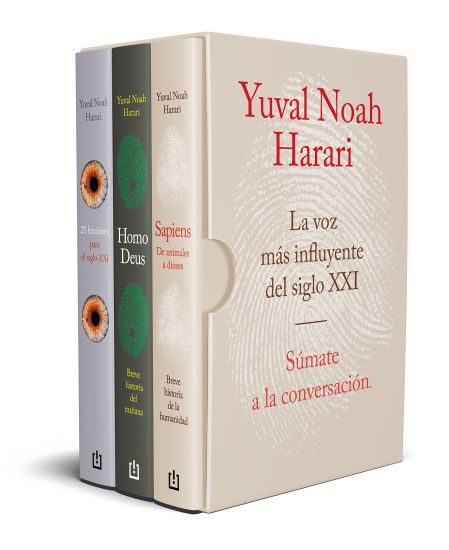
Estuche Harari (Contiene: Sapiens; Homo Deus; 21 Lecciones Para El Siglo XXI) / Yuval Noah Harari Books Set (Sapiens, Homo Deus, 21 Lessons for 21st C
Yuval Noah Harari
Debolsillo
2024
nidottu
Este estuche es una oportunidad nica para hacerse con la trilog a de Harari, el fen meno global que ha cautivado a millones de lectores. Sapiens es un recorrido por nuestro pasado, Homo Deus, una mirada a nuestro futuro, 21 lecciones para el siglo XXI es una exploraci n de nuestro presente. El abrumador xito de su trilog a ha convertido a Harari en la revelaci n incontestable de la literatura ensay stica. Este estuche condensa su colosal obra, que proyecta la historia de la humanidad desde los albores del hombre y se aventura en nuestros d as venideros, pasando por un l cido an lisis de nuestra actualidad. Un enfoque sin precedentes de la aventura humana. ENGLISH DESCRIPTION This box set is a unique opportunity to get your hands on the Harari trilogy, the global phenomenon that has captivated millions of readers. Sapiens is a tour of our past, Homo Deus, a look at our future, and 21 lessons for the 21st century, an examination of our present. The overwhelming success of his trilogy has made Harari the undisputable breakthrough discovery of essayistic literature. This case puts together his colossal work, which projects the history of humanity from the dawn of man, and ventures into our days to come, passing through a lucid analysis of our current situation. An unprecedented approach to the human adventure.
Yuval Noah Harari, author of the critically-acclaimed New York Times bestseller and international phenomenon Sapiens, returns with an equally original, compelling, and provocative book, turning his focus toward humanity's future, and our quest to upgrade humans into gods.Over the past century humankind has managed to do the impossible and rein in famine, plague, and war. This may seem hard to accept, but, as Harari explains in his trademark style--thorough, yet riveting--famine, plague and war have been transformed from incomprehensible and uncontrollable forces of nature into manageable challenges. For the first time ever, more people die from eating too much than from eating too little; more people die from old age than from infectious diseases; and more people commit suicide than are killed by soldiers, terrorists and criminals put together. The average American is a thousand times more likely to die from binging at McDonalds than from being blown up by Al Qaeda.What then will replace famine, plague, and war at the top of the human agenda? As the self-made gods of planet earth, what destinies will we set ourselves, and which quests will we undertake? Homo Deus explores the projects, dreams and nightmares that will shape the twenty-first century--from overcoming death to creating artificial life. It asks the fundamental questions: Where do we go from here? And how will we protect this fragile world from our own destructive powers? This is the next stage of evolution. This is Homo Deus.With the same insight and clarity that made Sapiens an international hit and a New York Times bestseller, Harari maps out our future.
Official U.S. edition with full color illustrations throughout.NEW YORK TIMES BESTSELLER Yuval Noah Harari, author of the critically-acclaimed New York Times bestseller and international phenomenon Sapiens, returns with an equally original, compelling, and provocative book, turning his focus toward humanity's future, and our quest to upgrade humans into gods.Over the past century humankind has managed to do the impossible and rein in famine, plague, and war. This may seem hard to accept, but, as Harari explains in his trademark style--thorough, yet riveting--famine, plague and war have been transformed from incomprehensible and uncontrollable forces of nature into manageable challenges. For the first time ever, more people die from eating too much than from eating too little; more people die from old age than from infectious diseases; and more people commit suicide than are killed by soldiers, terrorists and criminals put together. The average American is a thousand times more likely to die from binging at McDonalds than from being blown up by Al Qaeda.What then will replace famine, plague, and war at the top of the human agenda? As the self-made gods of planet earth, what destinies will we set ourselves, and which quests will we undertake? Homo Deus explores the projects, dreams and nightmares that will shape the twenty-first century--from overcoming death to creating artificial life. It asks the fundamental questions: Where do we go from here? And how will we protect this fragile world from our own destructive powers? This is the next stage of evolution. This is Homo Deus.With the same insight and clarity that made Sapiens an international hit and a New York Times bestseller, Harari maps out our future.
#1 New York Times Bestseller - New York Times Readers' Pick: Top 100 Books of the 21st Century - The Summer Reading Pick for President Barack Obama and Bill GatesOfficial U.S. edition with full color illustrations throughout. From renowned historian Yuval Noah Harari comes a groundbreaking narrative of humanity's creation and evolution--a #1 international bestseller--that explores the ways in which biology and history have defined us and enhanced our understanding of what it means to be "human."One hundred thousand years ago, at least six different species of humans inhabited Earth. Yet today there is only one--homo sapiens. What happened to the others? And what may happen to us?Most books about the history of humanity pursue either a historical or a biological approach, but Dr. Yuval Noah Harari breaks the mold with this highly original book that begins about 70,000 years ago with the appearance of modern cognition. From examining the role evolving humans have played in the global ecosystem to charting the rise of empires, Sapiens integrates history and science to reconsider accepted narratives, connect past developments with contemporary concerns, and examine specific events within the context of larger ideas.Dr. Harari also compels us to look ahead, because over the last few decades humans have begun to bend laws of natural selection that have governed life for the past four billion years. We are acquiring the ability to design not only the world around us, but also ourselves. Where is this leading us, and what do we want to become?Featuring 27 photographs, 6 maps, and 25 illustrations/diagrams, this provocative and insightful work is sure to spark debate and is essential reading for aficionados of Jared Diamond, James Gleick, Matt Ridley, Robert Wright, and Sharon Moalem.
Sapiensin tekijän sarja nuorille jatkuu!Pysäyttämätön ihminen, Yuval Noah Hararin nuorille kirjoittama sarja ihmiskunnan historiasta, kysyy kolmannessa osassaan, kuinka vihollisista tuli ystäviä.Vetävistä historiateoksistaan kuulu Yuval Noah Harari jatkaa ihmislajin vaiheiden avaamista varhaisnuorille. Pysättämätön ihminen -sarjan kolmas teos Kuinka vihollisista tuli ystäviä käsittelee yhteistyön merkitystä ihmisten menestykselle maapallon valtiaina. Hararin vauhdikasta tekstiä tukee Ricard Zaplana Ruizin runsas ja värikäs kuvitus.”Helppolukuinen ja kiinnostava tietokirja on tarkoitettu lapsille, ehkä noin 10-vuotiaasta alkaen, mutta se antaa paljon eväitä myös vähän vanhemmillekin.” Hannu Sinisalo, kirjavinkit.fi (sarjan 1. kirjasta).Yuval Noah Harari (s. 1976) on israelilainen historioitsija, jonka yleistajuisia teoksia ihmiskunnasta ja maailmasta on myyty lähes 40 miljoonaa kappaletta 65 kielellä. Ricard Zaplana Ruiz (s. 1973) on espanjalainen taiteilija, joka on kuvittanut myös Pysäyttämätön ihminen -sarjan aiemmat osat Kuinka valloitimme maailman ja Miksi maailma ei ole reilu.
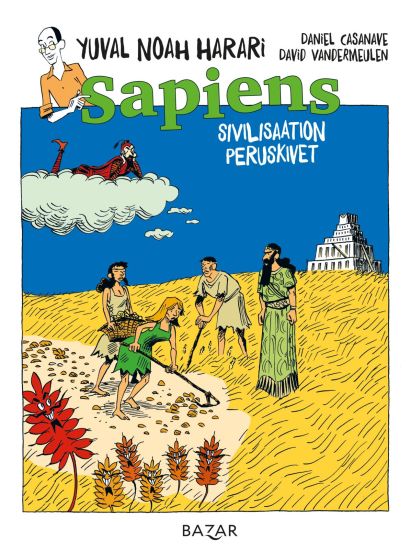
Sapiens. Sivilisaation peruskivet
Yuval Noah Harari; David Vandermeulen; Daniel Casanave
bazar
2022
sidottu
Yuval Noah Hararin suositun Sapiens-teokseen perustuvan sarjakuvan toinen osa Sivilisaation peruskivet Hararin, David Vandermeulenin ja Daniel Casanaven yhteistyön tulos, joka vie meidät jälleen esi-isiemme elämään maanviljelyn vallankumouksen aikaan. Mitä savannielämään tottuneille ihmisille tapahtui uuden elämäntyylin myötä? Sarjakuvan päähenkilöitä ovat ensimmäisen osan tapaan Yuval, Zoe, Tohtori Fiktio sekä professori Saraswati. Sapiens-menestysteoksen visualisointi jatkuu Yuval Noah Hararin, David Vandermeulenin ja Daniel Casanaven yhteistyö saa jatkoa Sapiens-sarjakuvan toisessa osassa Sivilisaation peruskivet. Kahden ja puolen miljoonan vuoden ajan esi-isämme elivät metsästäen ja keräillen luonnon antimia, kunnes noin kymmenentuhatta vuotta sitten heidän maailmansa muuttui: he alkoivat hyödyntää uudella tavalla tiettyjä eläin- ja kasvilajeja, jotta saisivat käyttöönsä enemmän saalista ja satoa. Tapahtui maanviljelyn vallankumous, joka mahdollisti suuremmat ravintoresurssit ja niiden myötä ensimmäiset korkeakulttuurit. Suosittuun Sapiens-menestysteokseen pohjautuvan sarjakuvan toisessa osassa valotetaan syitä, miksi Homo sapiens asettui aloilleen ja mitä seurauksia sillä oli. Uusi elämäntyyli aiheutti savanneilla kehittyneille esi-isillemme myös ongelmia: ravinto yksipuolistui, sairaudet levisivät ja muisti ylikuormittui, koska yhteiskunnassa oli valtava määrä tietoa, jota piti välittää ihmiseltä toiselle. Muistamisen avuksi ja hallinnoimisen tueksi syntyivätkin sitten sekä kirjoitustaito että matematiikka. Kuten sarjakuvan ensimmäisessä osassa Ihmiskunnan synty, tässäkin osassa seikkailevat Yuval, hänen veljentyttärensä Zoe, Tohtori Fiktio ja professori Saraswati.
Nexus : en kort historik över informationsnätverk från stenåldern till AI
Yuval Noah Harari
Natur Kultur Allmänlitteratur
2024
sidottu
”Harari sätter samman världen i en lysande form som väcker engagemang”Telegraph”En mästerlig berättare”Guardian”Fängslande… En diagnos och en uppmaning till handling… Om Nexus säljer i närheten av lika bra som Sapiens gjorde, kommer vi att vara något bättre rustade som art att hantera maskinernas uppgång"Observer”Hararis narrativ är engagerande, och hans inramning är slående originell” The Economist Ny bok av författaren till världssuccén Sapiens!De senaste 100 000 årens alla upptäckter, uppfinningar och erövringar har gjort människan enormt mäktig. Ändå befinner vi oss i en existentiell kris. Världen står inför en ekologisk kollaps, mängden desinformation ökar, och vi kastar oss huvudstupa in i AI-ålderns nya informationsnätverk som hotar att förinta oss.Om vi är så kloka – hur kan vi vara så självdestruktiva? I Nexus skildrar Yuval Noah Harari hur informationsflöden har skapat vår värld och oss själva. Han leder oss från stenåldern genom Bibeln, tidigmoderna häxjakter, stalinism och nazism till vår egen tids populism. Han får oss att begrunda skillnaderna mellan information och sanning, byråkrati och mytologi, vishet och makt. Han utforskar hur historiens samhällen och politiska system på gott och ont använt information för att nå sina mål.Och han ställer den angelägna frågan hur vi ska agera när icke-mänsklig intelligens hotar vår existens.Information är inte enbart sanningens råmaterial. Inte heller är det uteslutande ett vapen. Nexus utforskar den hoppingivande vägen mellan dessa ytterligheter, och hur den i sin tur kan leda mänskligheten till en ny sorts samhörighet.”Fantastisk, tankeväckande och så väldigt välargumenterad. Harari ger oss visionen av en snabbt annalkande framtid som är på samma gång spännande och skrämmande. Om det finns en bok jag skulle uppmana alla att läsa – särskilt våra ledare i politiken, företagsvärlden och kulturen – så är det Nexus” Stephen Fry”Harari bär på ett av vår tid mest anmärkningsvärda intellekt – djärv, originell, lärd, provokativ och förtrollande. Hans senaste bok omtolkar allt från läskunnighet till AI och – liksom alla hans böcker – förändrar i grunden ens syn på världen” Rory Stewart”Harari har en unik förmåga att förena både historiens mest finkorniga detaljer och dess största megatrender i en enda blick. Denna djupt viktiga bok kommer vid en kritisk tidpunkt då vi alla funderar över AI:s implikationer” Mustafa Suleyman
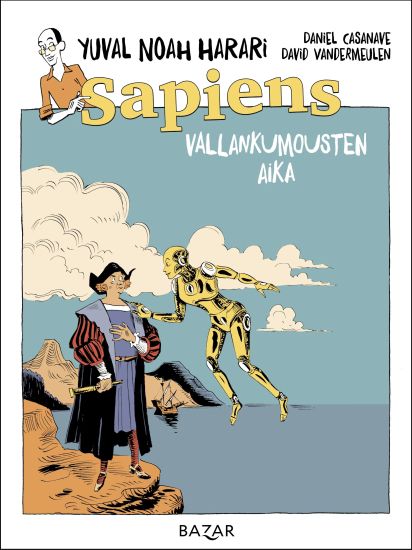
Sapiens. Vallankumousten aika
Daniel Casanave; David Vandermeulen; Yuval Noah Harari
bazar
2026
sidottu
Tieto teki ihmisestä maapallon valtiaan. Sapiens – Vallankumousten aika jatkaa Yuval Noah Hararin menestysteoksen sarjakuvasovitusta ja kuvaa ihmisen kehitystä tieteen vallankumouksesta nykyaikaan. Noin vuoden 1500 tienoilla Länsi-Euroopassa alkoi kehitys, joka eteni huimaavalla vauhdilla kohti nykyisen modernin maailmamme todellisuutta. Ihmisen uteliaisuus ja ahneus saivat aikaan ensin tieteellisen ja sitten teollisen vallankumouksen, ja vuosisatojen kuluessa ihmisen hyvinvoinnin taso nousi huomattavasti. Samalla ihminen kuitenkin aiheutti ennennäkemätöntä kärsimystä ja tuhoa itselleen ja muille lajeille. Yuval Noah Hararin suosittuun Sapiens-menestysteokseen perustuvan sarjakuvan neljäs osa käsittelee tieteen vallankumousta, joka johti suuriin yhteiskunnallisiin muutoksiin. Historian virrassa seikkailevat tuttuun tapaan Yuval, hänen veljentyttärensä Zoe, professori Saraswati ja monet muut kiehtovat henkilöhahmot. Teoksen toinen käsikirjoittaja on David Vandermeulen, ja sarjakuvan on luonut tunnettu ranskalaispiirtäjä Daniel Casanave. Yuval Noah Harari (s. 1976) toimii historian professorina Jerusalemin heprealaisessa yliopistossa ja tutkijana Cambridgen yliopiston Centre for the Study of Existential Risk -keskuksessa. Hän kiertää luennoimassa kaikkialla maailmassa. Hänen tietokirjansa Sapiens, Homo deus, 21 oppituntia maailman tilasta ja Nexus ovat kansainvälisiä menestysteoksia, jotka on julkaistu jo lähes 40 kielellä ympäri maailmaa. David Vandermeulen (s. 1968) on belgialainen käsikirjoittaja, kirjailija ja kustantaja. Daniel Casanave (s. 1963) on ranskalainen kuvittaja ja sarjakuvataiteilija.