Kirjojen hintavertailu. Mukana 12 316 903 kirjaa ja 12 kauppaa.

Kirjailija

Zachary Karabell

Kirjat ja teokset yhdessä paikassa: 13 kirjaa, julkaisuja vuosilta 1999-2022, suosituimpien joukossa Parting the Desert: The Creation of the Suez Canal. Vertaile teosten hintoja ja tarkista saatavuus suomalaisista kirjakaupoista.

13 kirjaa

Kirjojen julkaisuhaarukka 1999-2022.

Inside Money

Inside Money

Zachary Karabell

Penguin Putnam Inc
2022
nidottu
A sweeping history of the legendary private investment firm Brown Brothers Harriman, exploring its central role in the story of American wealth and its rise to global power Conspiracy theories have always swirled around Brown Brothers Harriman, and not without reason. Throughout the nineteenth century, when America was convulsed by a financial panic essentially every twenty years, Brown Brothers quietly went from strength to strength. By the turn of the twentieth century, Brown Brothers was unquestionably at the heart of the American Establishment. As America's reach extended, Brown Brothers worked hand in glove with the State Department, notably in Nicaragua in the early twentieth century, where the firm essentially took over the country's economy. To the Brown family, the virtue of their dealings was a given; their form of muscular Protestantism, forged on the playing fields of Groton and Yale, was the acme of civilization, and it was their duty to import that civilization to the world. When, during the Great Depression, Brown Brothers ensured their strength by merging with Averell Harriman's investment bank to form Brown Brothers Harriman, the die was cast for the role the firm would play on the global stage during World War II and thereafter, as its partners served at the highest levels of government to shape the international system that defines the world to this day. In Inside Money, acclaimed historian, commentator, and former financial executive Zachary Karabell offers the first full and frank look inside this institution against the backdrop of American history. Blessed with complete access to the company's archives, as well as a deep knowledge of the larger forces at play, Karabell has created an X-ray of American power--financial, political, cultural--as it has evolved from the early 1800s to the present. Today, Brown Brothers Harriman remains a private partnership and a beacon of sustainable capitalism, having forgone the heady speculative upsides of the past thirty years but also having avoided any role in the devastating downsides. The firm is no longer in the command capsule of the American economy, but, arguably, that is to its credit. If its partners cleaved to any one adage over the generations, it is that a relentless pursuit of more can destroy more than it creates.
Inside Money

Inside Money

Zachary Karabell

The Penguin Press
2021
sidottu
A sweeping history of the legendary private investment firm Brown Brothers Harriman, exploring its central role in the story of American wealth and its rise to global power Conspiracy theories have always swirled around Brown Brothers Harriman, and not without reason. Throughout the nineteenth century, when America was convulsed by a devastating financial panic essentially every twenty years, Brown Brothers quietly went from strength to strength, propping up the U.S. financial system at crucial moments and catalyzing successive booms, from the cotton trade and the steamship to the railroad, while largely managing to avoid the unwelcome attention that plagued some of its competitors. By the turn of the twentieth century, Brown Brothers was unquestionably at the heart of what was meant by an American Establishment. As America's reach extended beyond its shores, Brown Brothers worked hand in glove with the State Department, notably in Nicaragua in the early twentieth century, where the firm essentially took over the country's economy. To the Brown family, the virtue of their dealings was a given; their form of muscular Protestantism, forged on the playing fields of Groton and Yale, was the acme of civilization, and it was their duty to import that civilization to the world. When, during the Great Depression, Brown Brothers ensured their strength by merging with Averell Harriman's investment bank to form Brown Brothers Harriman, the die was cast for the role the firm would play on the global stage during World War II and thereafter, as its partners served at the highest levels of government to shape the international system that defines the world to this day. In Inside Money, acclaimed historian, commentator, and former financial executive Zachary Karabell offers the first full and frank look inside this institution against the backdrop of American history. Blessed with complete access to the company's archives, as well as a thrilling understanding of the larger forces at play, Karabell has created an X-ray of American power--financial, political, cultural--as it has evolved from the early 1800s to the present. Today, unlike many of its competitors, Brown Brothers Harriman remains a private partnership and a beacon of sustainable capitalism, having forgone the heady speculative upsides of the past thirty years but also having avoided any role in the devastating downsides. The firm is no longer in the command capsule of the American economy, but, arguably, that is to its credit. If its partners cleaved to any one adage over the generations, it is that a relentless pursuit of more can destroy more than it creates.
The Leading Indicators: A Short History of the Numbers That Rule Our World
The Leading Indicators was widely and well received as a much needed corrective to the outdated, outmoded economic figures we are accustomed. Every day, we are bombarded with numbers that tell us how we are doing, whether the economy is growing or shrinking, whether the future looks bright or dim. Gross national product, balance of trade, unemployment, inflation, and consumer confidence guide our actions, yet few of us know where they come from, what they mean, or why they rule our world. Zachary Karabell tells the fascinating history of these indicators, which were invented in the mid-twentieth century to address the urgent challenges of the Great Depression, World War II, and the Cold War. They were rough measures--designed to give clarity in a data-parched world that was made up of centralized, industrial nations--yet we still rely on them today. Today's world is shaped by information technology and the borderless flow of capital and goods. If we follow a 1950s road map for a twenty-first-century world, we will get lost. What is urgently needed is not to invent a new set of numbers but to tap into the data revolution that offers unparalleled access to the information we need. Companies should not base their business plans on GDP projections; individuals should not decide whether to buy a home or get a degree based on the national unemployment rate. If you want to buy a home, look for a job, start a company or run a business, you can readily find your own indicators. National housing figures don't matter; local ones do. You can find those at the click of button. Personal, made-to-order indicators will meet our needs today, and the revolution is well underway. We need only to join it.
Superfusion

Superfusion

Zachary Karabell

Simon Schuster
2010
pokkari
Zachary Karabell argues that the intertwined economic relationship between China and the United States will affect our long-term prosperity more than any other contemporary issue. As the world continues the slow work of repairing the damage of the fin
Peace Be Upon You: Fourteen Centuries of Muslim, Christian, and Jewish Conflict and Cooperation
In a narrative that is at once thoughtful and passionate, an award-winning historian reveals the history of peaceful coexistence between Muslims, Christians, and Jews over the course of fourteen centuries until the present day. The harsh reality of religious conflict is daily news, and the rising tensions between the West and Islam show no signs of abating. However, the relationship between Muslims, Christians, and Jews has not always been marked with animosity; there is also a deep and nuanced history of peace. From the court of caliphs in ancient Baghdad, where scholars engaged in spirited debate, to present-day Dubai, where members of each faith work side by side, Karabell traces the forgotten legacy of tolerance and cooperation these three monotheistic religions have enjoyed--a legacy that will be vital in any attempt to find common ground and reestablish peace.
People of the Book

People of the Book

Zachary Karabell

John Murray Publishers Ltd
2007
pokkari
We live in a world polarized by the ongoing conflict between Muslims, Christians and Jews, but - in an extraordinary narrative spanning fourteen centuries - Zachary Karabell argues that the relationship between Islam and the West has never been simply one of animosity and competition, but has also comprised long periods of cooperation and coexistence. Through a rich tapestry of stories and a compelling cast of characters, People of the Book uncovers known history, and forgotten history, as Karabell takes the reader on an extraordinary journey through the Arab and Ottoman empires, the Crusades and the Catholic Reconquista and into the modern era, as he examines the vibrant examples of discord and concord that have existed between these monotheistic faiths. By historical standards, today's fissure between Islam and the West is not exceptional, but because of weapons of mass destruction, that fissure has the potential to undo us more than ever before. This is reason enough to look back and remember that Christians, Jews and Muslims have lived constructively with one another. They have fought and taught each other, and they have learned from one another. Retrieving this forgotten history is a vital ingredient to a more stable, secure world.
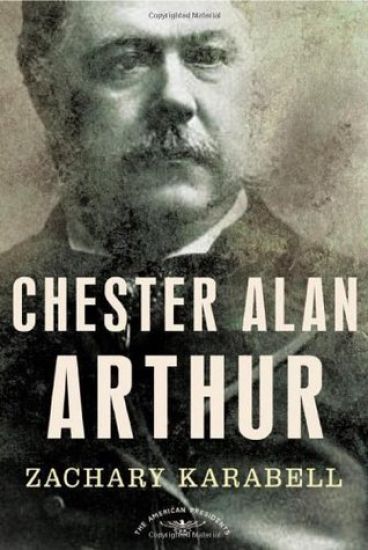
Chester Alan Arthur

Chester Alan Arthur

Zachary Karabell

Times Books
2004
sidottu
Describes the life and times of unlikely chief executive Chester Alan Arthur, nominated for vice president in 1880, despite never having run for office, his election alongside James Garfield, the assassination of Garfield that propelled him into America's highest office, and his efforts to make sweeping reforms in America's political system. 17,500 first printing.
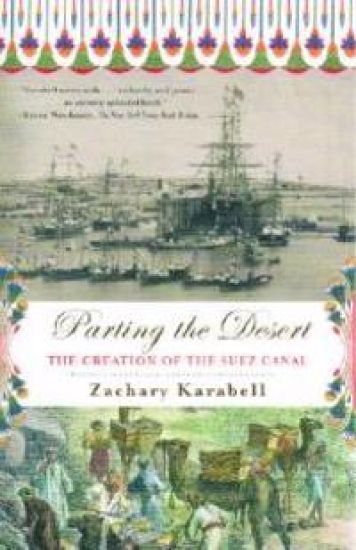
Parting the Desert: The Creation of the Suez Canal
Award-winning historian Zachary Karabell tells the epic story of the greatest engineering feat of the nineteenth century--the building of the Suez Canal-- and shows how it changed the world. The dream was a waterway that would unite the East and the West, and the ambitious, energetic French diplomat and entrepreneur Ferdinand de Lesseps was the mastermind behind the project. Lesseps saw the project through fifteen years of financial challenges, technical obstacles, and political intrigues. He convinced ordinary French citizens to invest their money, and he won the backing of Napoleon III and of Egypt's prince Muhammad Said. But the triumph was far from perfect: the construction relied heavily on forced labor and technical and diplomatic obstacles constantly threatened completion. The inauguration in 1869 captured the imagination of the world. The Suez Canal was heralded as a symbol of progress that would unite nations, but its legacy is mixed. Parting the Desert is both a transporting narrative and a meditation on the origins of the modern Middle East.
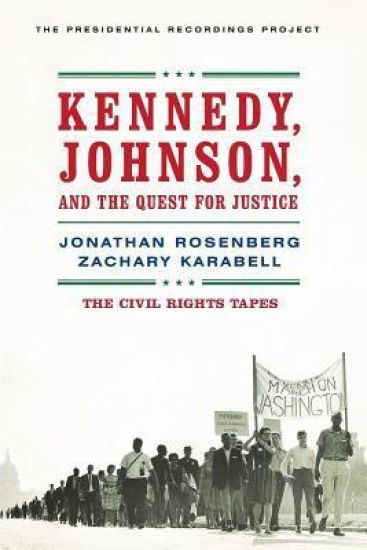
Kennedy, Johnson, and the Quest for Justice

Kennedy, Johnson, and the Quest for Justice

Jonathan Rosenberg; Zachary Karabell

WW Norton Co
2003
nidottu
This remarkable book is composed of actual transcripts—most never before published—from the secret recordings that Presidents Kennedy and Johnson made of White House meetings and telephone conversations between the violent crisis in 1962, when James Meredith attempted to enroll at the all-white University of Mississippi, and the groundbreaking passage of the Civil Rights Act in 1964. Setting these transcripts within an historical narrative, Jonathan Rosenberg and Zachary Karabell present the story of America's struggle for racial equality during two tumultuous years. Kennedy, Johnson, and the Quest for Justice brings the reader into the room as Kennedy argues with Mississippi governor Ross Barnett and the white business leaders of Birmingham, Alabama, and as Johnson makes late-night phone calls to Martin Luther King Jr., NAACP head Roy Wilkins, and Washington Post publisher Katherine Graham. As fly-on-the-wall history, this book gives us an unprecedented grasp of the way the White House affected civil rights history and consequently transformed America. Part of the Presidential Recordings Project, Miller Center of Public Affairs, University of Virginia, General Editors: Ernest May and Philip Zelikow.
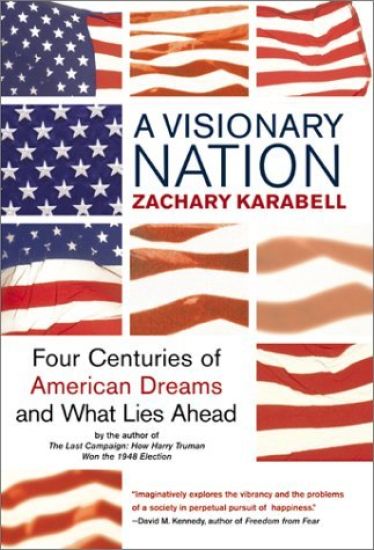
A Visionary Nation: Four Centuries of American Dreams and What Lies Ahead
In this penetrating volume, Zachary Karabell examines the continuous thread that runs through the tapestry of the American experience -- the belief that we can create a perfect society -- and envisions what the next great era will be. Just as the Puritan vision of a city on a hill was supplanted by the Founding Fathers' vision of individuality, just as the expansive vision of a government-led Great Society was eclipsed by the New Economy of the 1990s, so too is the New Economy being replaced by what Karabell contends will be a period when community and spirituality occupy center stage.
The Last Campaign: How Harry Truman Won the 1948 Election
In The Last Campaign, Zachary Karabell rescues the 1948 presidential campaign from the annals of political folklore ("Dewey Defeats Truman," the Chicago Tribune memorably and erroneously heralded), to give us a fresh look at perhaps the last time the American people could truly distinguish what the candidates stood for. In 1948, Harry Truman, the feisty working-class Democratic incumbent was one of the most unpopular presidents the country had ever known. His Republican rival, the aloof Thomas Dewey, was widely thought to be a shoe-in. These two major party candidates were flanked on the far left by the Progressive Henry Wallace, and on the far right by white supremacist Dixiecrat Strom Thurmond. The Last Campaign exposes the fascinating story behind Truman's legendary victory and turns a probing eye toward a by-gone era of political earnestness, when, for "the last time in this century, an entire spectrum of ideologies was represented," a time before television fundamentally altered the political landscape.
What's College For?

What's College For?

Zachary Karabell

Basic Books
1999
pokkari
President Clinton declares that a two-year education should be the right of all Americans. Congress passes a 40 billion package of tax breaks and scholarships aimed at making a degree accessible to everyone. Almost two--thirds of high school graduates now go on to some form of higher education, and yet at the same time, those colleges and universities, inundated with a new kind of student, have been slow to respond to this revolutionary change.Zachary Karabell spent over a year traveling the country interviewing students, graduate students, faculty, and adjunct teachers, and the result is a portrait of American higher education that is neither conservative nor liberal and that needs to be taken seriously. There is a quiet revolution occurring that will--that is--changing the nature of education in this country."Higher education is becoming mass education," writes Karabell. The crucial clash on today's campuses is not between traditionalists, multiculturalists, and tenured radicals, but between the competing needs and desires of students, professors, administrators, and the larger society.The overwhelming majority of today's students are working-class people seeking education to get a job; they are not seeking a liberal education, nor planning to go on to graduate school.Most faculty members, products of the elite graduate schools that have insulated them from the needs of real-world people, are often profoundly ill-equipped to handle this changing student body. By exploring the myriad perspectives of these conflicting expectations Karabell concludes that a radical democratization of higher education is not only inevitable, it is desirable, and it will require dramatic changes in the structure and presumptions about education beyond the high school level.Topping 175 billion a year, spending for American higher education will join health care and welfare as one of the top national issues, yet there is precious little real or broad-based understanding of the issues and social forces at work. Eschewing any political agenda, yet unafraid to ask as many questions as he answers, Zachary Karabell has provided the first reasoned examination of what has become a national concern. Sure to spark intense debate, What's College For? is a clarion call for reform.
Architects of Intervention

Architects of Intervention

Zachary Karabell

Louisiana State University Press
1999
nidottu
In telling the story of seven of the most significant U.S. interventions in the third world during the key cold-war years 1946-1962, Zachary Karabell reveals in Architects of Intervention a complex interplay between the American government and third-world actors in designing U.S. policy in their respective countries. Cold-war historians have tended to stress the decisions made in Washington (or alternately Moscow) and their effect on the third world, but Karabell, making use of recently declassified CIA documents, assigns a roughly equal role to third-world countries as architects both of their own histories and of the international system of the cold war. Looking at U.S. interventions in Greece, Italy, Iran, Guatemala, Lebanon, Cuba, and Laos, Karabell offers a major new understanding of U.S. foreign relations history that bears significant implications for present-day policymaking.