Kirjojen hintavertailu. Mukana 12 657 676 kirjaa ja 12 kauppaa.
Kirjailija
Zack Cooper
Kirjat ja teokset yhdessä paikassa: 7 kirjaa, julkaisuja vuosilta 2014-2025, suosituimpien joukossa Affording Defense. Vertaile teosten hintoja ja tarkista saatavuus suomalaisista kirjakaupoista.
Kyle Balzer; Dan Blumenthal; Hal Brands; James C Capretta; Zack Cooper; Giselle Donnelly; John G Ferrari; Rebecca Grant; Todd Harrison; Frederick W Kagan; James Mattis; Elaine McCusker; Kori Schake; Michael R Strain; Dustin Walker
In this edited volume, Mackenzie Eaglen brings together top foreign and defense policy voices in Washington to address the ever-growing resource-strategic mismatch evident in US defense policy. This project is designed to provide the administration with immediate and realistic solutions to bolster America's military and restore its flagging strategic and conventional deterrents.
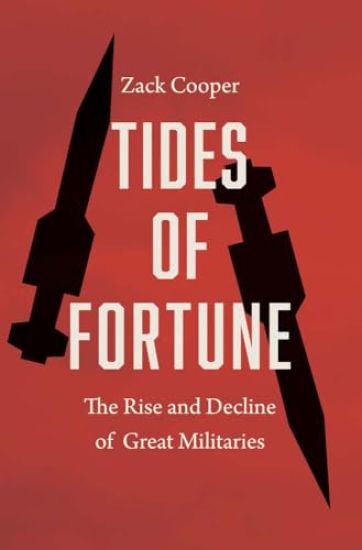
An ambitious look at how the twentieth century’s great powers devised their military strategies and what their implications mean for military competition between the United States and China How will the United States and China evolve militarily in the years ahead? Many experts believe the answer to this question is largely unknowable. But Zack Cooper argues that the American and Chinese militaries are following a well-trodden path. For centuries, the world’s most powerful militaries have adhered to a remarkably consistent pattern of behavior, determined largely by their leaders’ perceptions of relative power shifts. By uncovering these trends, this book places the evolving military competition between the United States and China in historical context. Drawing on a decade of research and on his experience at the White House and the Pentagon, Cooper outlines a novel explanation for how militaries change as they rise and decline. Tides of Fortune examines the paths of six great powers of the twentieth century, tracking how national leaders adjusted their defense objectives, strategies, and investments in response to perceived shifts in relative power. All these militaries followed a common pattern, and their experiences shed new light on both China’s recent military modernization and America’s potential responses.
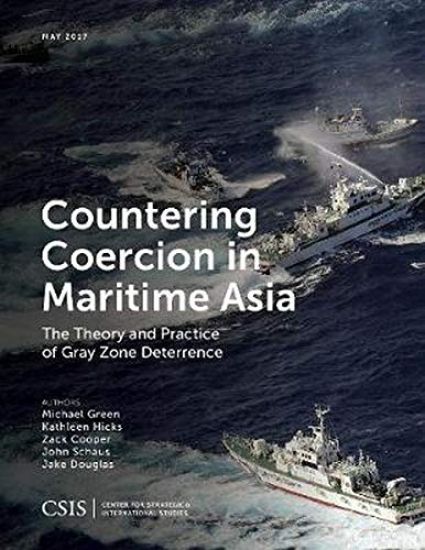
In the past decade, tensions in Asia have risen as Beijing has become more assertive in maritime disputes with its neighbors and the United States. Although taking place below the threshold of direct military confrontation, China’s assertiveness frequently involves coercive elements that put at risk existing rules and norms; physical control of disputed waters and territory; and the credibility of U.S. security commitments. Regional leaders have expressed increasing alarm that such “gray zone” coercion threatens to destabilize the region by increasing the risk of conflict and undermining the rules-based order. Yet, the United States and its allies and partners have struggled to develop effective counters to China’s maritime coercion. This study reviews deterrence literature and nine case studies of coercion to develop recommendations for how the United States and its allies and partners could counter gray zone activity.
This report seeks to clarify the stated objectives of the US rebalance strategy, reviewing regional responses, and assessing the status of the rebalance, which is critical to reinforcing regional stability by strengthening US relationships, presence, and capabilities. The authors evaluate both public statements and visible implementation of the rebalance strategy, as viewed not only from Washington but from regional capitals as well.
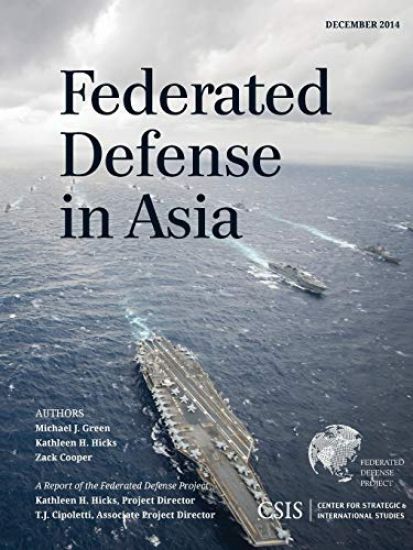
This report is the first regional study in the CSIS Federated Defense series. The Federated Defense Project aims to shift the paradigm with key allies and partners from capacity building to a federated approach that would expand regional security and prosperity by joining regional allies and partners together in the pursuit of shared security objectives across the conflict spectrum. Federated defense should include forward-thinking strategies for how to develop and share capabilities and capacity, thereby more deeply integrating the US military with its allies and partners. In this report, the CSIS project team highlights six potential federated initiatives in the areas of humanitarian assistance and disaster relief, information and intelligence sharing, maritime security, undersea warfare, missile defense, and cyber security. Federated approaches such as these are vital to developing and integrating Asian security capabilities to manage emerging security challenges.
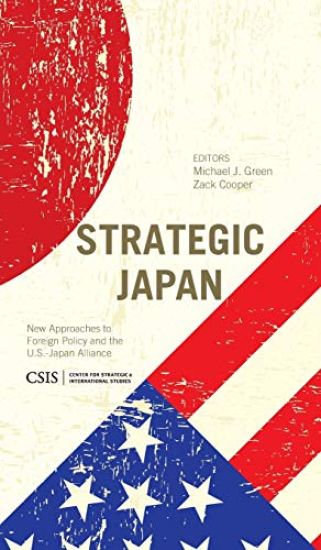
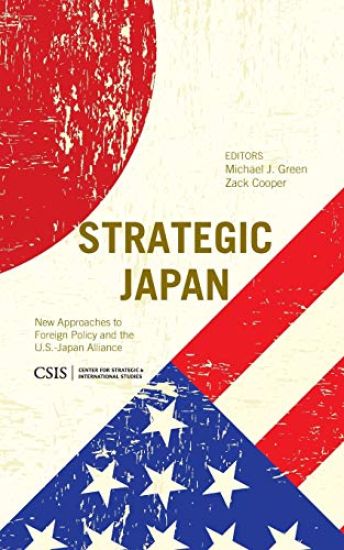
Is Japan capable of grand strategy when it comes to foreign policy? Modern Japan faces challenges on every front: from a rising China and constrained economic growth at home, to an ever-present threat posed by an increasingly unstable North Korea, to an evolving and complex relationship with the West that for so long has served as the bedrock of Japanese foreign policy. Prime Minister Shinzo Abe has garnered significant attention for his policies undergirding a path of “proactive pacifism” for Japan, but many questions remain unanswered with regard to what Japan’s global role ought to be, what it can be, and what that role’s development would mean for the greater stability of the region and the fate of broader geopolitical alliances across the world. While it is clear that both Japan and its allies would be best served by a clear, comprehensive, and forward-thinking Japanese foreign policy blueprint, but actually developing and implementing such a policy is understandably easier said than done. Fortunately, shaping this new strategy is a generation of Japanese foreign policy experts with eyes toward the future of Japanese power and diplomacy. In Strategic Japan: New Approaches to Foreign Policy and the U.S. Japan Alliance, five preeminent scholars: Yasuhiro Matsuda, Tetsuo Kotani, Hiroyasu Akutsu, Yoshikazu Kobayashi, and Nobuhiro Aizawa discuss Japan’s changing role in the world and the high stakes policy issues affecting Japan, Asia, and the world today. Taken together, these experts’ contributions highlight potential areas for enhanced cooperation between the United States and Japan at a time when the West desperately needs a confident and proactive Japan, and Japan needs sustained American engagement and deterrence in an Asia-Pacific region that will continue to be the site of economic growth and expansion for years to come.
Is Japan capable of grand strategy when it comes to foreign policy? Modern Japan faces challenges on every front: from a rising China and constrained economic growth at home, to an ever-present threat posed by an increasingly unstable North Korea, to an evolving and complex relationship with the West that for so long has served as the bedrock of Japanese foreign policy. Prime Minister Shinzo Abe has garnered significant attention for his policies undergirding a path of “proactive pacifism” for Japan, but many questions remain unanswered with regard to what Japan’s global role ought to be, what it can be, and what that role’s development would mean for the greater stability of the region and the fate of broader geopolitical alliances across the world. While it is clear that both Japan and its allies would be best served by a clear, comprehensive, and forward-thinking Japanese foreign policy blueprint, but actually developing and implementing such a policy is understandably easier said than done. Fortunately, shaping this new strategy is a generation of Japanese foreign policy experts with eyes toward the future of Japanese power and diplomacy. In Strategic Japan: New Approaches to Foreign Policy and the U.S. Japan Alliance, five preeminent scholars: Yasuhiro Matsuda, Tetsuo Kotani, Hiroyasu Akutsu, Yoshikazu Kobayashi, and Nobuhiro Aizawa discuss Japan’s changing role in the world and the high stakes policy issues affecting Japan, Asia, and the world today. Taken together, these experts’ contributions highlight potential areas for enhanced cooperation between the United States and Japan at a time when the West desperately needs a confident and proactive Japan, and Japan needs sustained American engagement and deterrence in an Asia-Pacific region that will continue to be the site of economic growth and expansion for years to come.