Kirjojen hintavertailu. Mukana 12 346 050 kirjaa ja 12 kauppaa.

Kirjailija

Zahi Zalloua

Kirjat ja teokset yhdessä paikassa: 17 kirjaa, julkaisuja vuosilta 2014-2026, suosituimpien joukossa To Exist as a Problem. Vertaile teosten hintoja ja tarkista saatavuus suomalaisista kirjakaupoista.

17 kirjaa

Kirjojen julkaisuhaarukka 2014-2026.

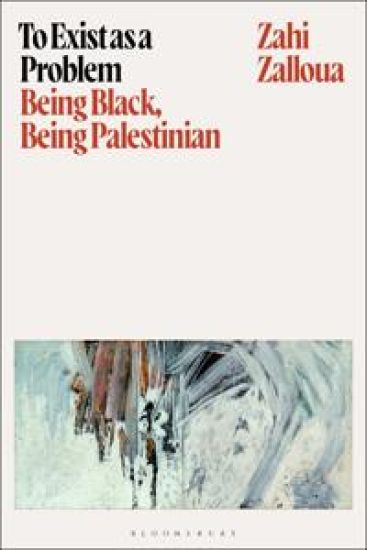
To Exist as a Problem

To Exist as a Problem

Zahi Zalloua

BLOOMSBURY PUBLISHING PLC
2026
nidottu
In the first pages of The Souls of Black Folk, W. E. B. Du Bois meditates on the question, “How does it feel to be a problem?” In this profound response to that question, Zahi Zalloua endeavours to think through the shared Black and Palestinian experience of being racialized as a problem. Zalloua argues that today’s anti-Blackness is not a lingering feature of a regrettable past that only occasionally manifests its ugly face. Rather, anti-Blackness permeates white civil society. Black being stands for the anti-human, its being is barred and degraded. And while Black being denotes criminality, Palestinian being denotes terrorism – a problematic being produced by Orientalism and used to legitimize oppression. Both the Black and Palestinian are framed as existential threats that undermine the very structures of white and Zionist dominance. To Exist as a Problem provides a searing critique of such assumptions, arguing that Blacks and Palestinians do exist as a problem, but a different problem than the one dictated by the petrifying white and settler gaze. They exist as a threat because the mechanisms of structural racism make them so. In order for racism to thrive, they must be othered in the profoundest sense. In asking how a politics can be constructed in the face of this hegemony, Zalloua constructs a model of solidarity that places Black lives and Palestinian liberation at the forefront of the anti-racist struggle.
To Exist as a Problem

To Exist as a Problem

Zahi Zalloua

BLOOMSBURY PUBLISHING PLC
2026
sidottu
In the first pages of The Souls of Black Folk, W. E. B. Du Bois meditates on the question, “How does it feel to be a problem?” In this profound response to that question, Zahi Zalloua endeavours to think through the shared Black and Palestinian experience of being racialized as a problem. Zalloua argues that today’s anti-Blackness is not a lingering feature of a regrettable past that only occasionally manifests its ugly face. Rather, anti-Blackness permeates white civil society. Black being stands for the anti-human, its being is barred and degraded. And while Black being denotes criminality, Palestinian being denotes terrorism – a problematic being produced by Orientalism and used to legitimize oppression. Both the Black and Palestinian are framed as existential threats that undermine the very structures of white and Zionist dominance. To Exist as a Problem provides a searing critique of such assumptions, arguing that Blacks and Palestinians do exist as a problem, but a different problem than the one dictated by the petrifying white and settler gaze. They exist as a threat because the mechanisms of structural racism make them so. In order for racism to thrive, they must be othered in the profoundest sense. In asking how a politics can be constructed in the face of this hegemony, Zalloua constructs a model of solidarity that places Black lives and Palestinian liberation at the forefront of the anti-racist struggle.
Fanon, Žižek, and the Violence of Resistance

Fanon, Žižek, and the Violence of Resistance

Zahi Zalloua

BLOOMSBURY PUBLISHING PLC
2025
sidottu
In a novel pairing of anti-colonial theorist Frantz Fanon with Marxist-Lacanian philosopher Slavoj Žižek, Zahi Zalloua explores the ways both thinkers expose the violence of political structures. This inventive exploration advances an anti-racist critique, describing how ontology operates in a racial matrix to produce some human bodies that count and others (deemed not-quite- or non-human) that do not. For Fanon and Žižek, the violence of ontology must be met with another form of violence, a revolutionary violence that delegitimizes the logic of the symbolic order and troubles its collective fantasies. Whereas Fanon begins his challenge to ontology by exposing its historical linkages to Europe’s destructive imperialist procedures before proceeding to “stretch” Marxism, along with psychoanalysis, to account for the crushing (neo)colonial situation, Žižek premises his work on the refusal to accept the totality of ontology. Because of these different points of intervention, Fanon and Žižek together offer a powerful and multifaceted assessment of the liberal anti-racist paradigm whose propensity for identity politics and aversion to class struggle silence the cry of the dispossessed and foreclose radical change. Avoiding contemporary separatist temptations (decoloniality and Afropessimism), and breaking with a non-violent, sentimentalist futurology that announces more of the same, Fanon and Žižek point in a different direction, one that eschews identitarian thought in favor of a collective struggle for freedom and equality.
Fanon, Žižek, and the Violence of Resistance

Fanon, Žižek, and the Violence of Resistance

Zahi Zalloua

BLOOMSBURY PUBLISHING PLC
2025
nidottu
In a novel pairing of anti-colonial theorist Frantz Fanon with Marxist-Lacanian philosopher Slavoj Žižek, Zahi Zalloua explores the ways both thinkers expose the violence of political structures. This inventive exploration advances an anti-racist critique, describing how ontology operates in a racial matrix to produce some human bodies that count and others (deemed not-quite- or non-human) that do not. For Fanon and Žižek, the violence of ontology must be met with another form of violence, a revolutionary violence that delegitimizes the logic of the symbolic order and troubles its collective fantasies. Whereas Fanon begins his challenge to ontology by exposing its historical linkages to Europe’s destructive imperialist procedures before proceeding to “stretch” Marxism, along with psychoanalysis, to account for the crushing (neo)colonial situation, Žižek premises his work on the refusal to accept the totality of ontology. Because of these different points of intervention, Fanon and Žižek together offer a powerful and multifaceted assessment of the liberal anti-racist paradigm whose propensity for identity politics and aversion to class struggle silence the cry of the dispossessed and foreclose radical change. Avoiding contemporary separatist temptations (decoloniality and Afropessimism), and breaking with a non-violent, sentimentalist futurology that announces more of the same, Fanon and Žižek point in a different direction, one that eschews identitarian thought in favor of a collective struggle for freedom and equality.
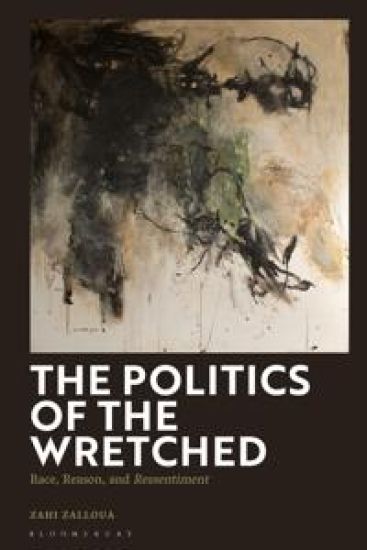
The Politics of the Wretched

The Politics of the Wretched

Zahi Zalloua

BLOOMSBURY PUBLISHING PLC
2024
sidottu
The Politics of the Wretched argues for ressentiment's generative negativity, prompting a shift from ressentiment as a personal expression of frustration to ressentiment as a collective “No”. Inspired by Kant and Nietzsche's philosophy, Zalloua identifies two modes of deploying ressentiment – private and public use – by substituting ressentiment for reason. This reinterpretation argues for a public use of ressentiment, for the wretched to universalize their grievances, to see their antagonism as cutting across societies, and to turn personal trauma into a common cause. A public use of ressentiment rails against the ideology of identity and victimhood and insists on ressentiment's generative negativity, its own rationality, prompting a shift from ressentiment as a personal expression of frustration to ressentiment as a collective “No”. Reframing ressentiment as a tool to oppose the evils of capitalism, anti-Blackness, and neocolonialism, it both alarms the liberal gatekeepers of the status quo and promises to energize the anti-racist Left in its ongoing struggles for universal justice and emancipation.
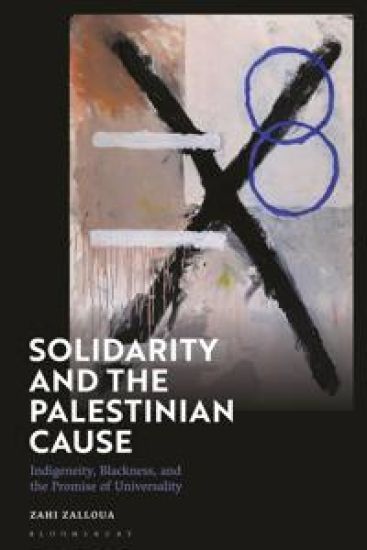
Solidarity and the Palestinian Cause

Solidarity and the Palestinian Cause

Zahi Zalloua

BLOOMSBURY PUBLISHING PLC
2024
nidottu
Zahi Zalloua provides the first examination of Palestinian identity from the perspective of Indigeneity and Critical Black Studies. Examining the Palestinian question through the lens of settler colonialism and Indigeneity, this timely book warns against the liberal approach to Palestinian Indigeneity, which reinforces cultural domination, and urgently argues for the universal nature of the Palestinian struggle. Foregrounding Palestinian Indigeneity reframes the Palestinian-Israeli conflict as a problem of wrongful dispossession, a historical harm that continues to be inflicted on the population under the brutal Occupation of the West Bank and Gaza. At the same time, in a global context marked by liberal democratic ideology, such an approach leads either to liberal tolerance – the minority is permitted to exist so long as their culture can be contained within the majority order – or racial separatism, that is, appeals for national independence typically embodied in the two-state solution. Solidarity and the Palestinian Cause not only insists that any analysis of Indigeneity’s purchase must keep this problem of translation in mind, but also that we must recast the Palestinian struggle as a universal one. As demonstrated by the Palestinian support for such movements as Black Lives Matter, and the reciprocal support Palestinians receive from BLM activists, the Palestinian cause fosters a solidarity of the excluded. This solidarity underscores the interlocking, global struggles for emancipation from racial domination and economic exploitation.Drawing on key Palestinian voices, including Edward Said and Larissa Sansour, as well as a wide range of influential philosophers such as Slavoj Žižek, Frantz Fanon and Achille Mbembe, Zalloua brings together the Palestinian question, Indigeneity and Critical Black Studies to develop a transformative, anti-racist vision of the world.
Solidarity and the Palestinian Cause

Solidarity and the Palestinian Cause

Zahi Zalloua

BLOOMSBURY PUBLISHING PLC
2023
sidottu
Zahi Zalloua provides the first examination of Palestinian identity from the perspective of Indigeneity and Critical Black Studies. Examining the Palestinian question through the lens of settler colonialism and Indigeneity, this timely book warns against the liberal approach to Palestinian Indigeneity, which reinforces cultural domination, and urgently argues for the universal nature of the Palestinian struggle. Foregrounding Palestinian Indigeneity reframes the Palestinian-Israeli conflict as a problem of wrongful dispossession, a historical harm that continues to be inflicted on the population under the brutal Occupation of the West Bank and Gaza. At the same time, in a global context marked by liberal democratic ideology, such an approach leads either to liberal tolerance – the minority is permitted to exist so long as their culture can be contained within the majority order – or racial separatism, that is, appeals for national independence typically embodied in the two-state solution. Solidarity and the Palestinian Cause not only insists that any analysis of Indigeneity’s purchase must keep this problem of translation in mind, but also that we must recast the Palestinian struggle as a universal one. As demonstrated by the Palestinian support for such movements as Black Lives Matter, and the reciprocal support Palestinians receive from BLM activists, the Palestinian cause fosters a solidarity of the excluded. This solidarity underscores the interlocking, global struggles for emancipation from racial domination and economic exploitation.Drawing on key Palestinian voices, including Edward Said and Larissa Sansour, as well as a wide range of influential philosophers such as Slavoj Žižek, Frantz Fanon and Achille Mbembe, Zalloua brings together the Palestinian question, Indigeneity and Critical Black Studies to develop a transformative, anti-racist vision of the world.
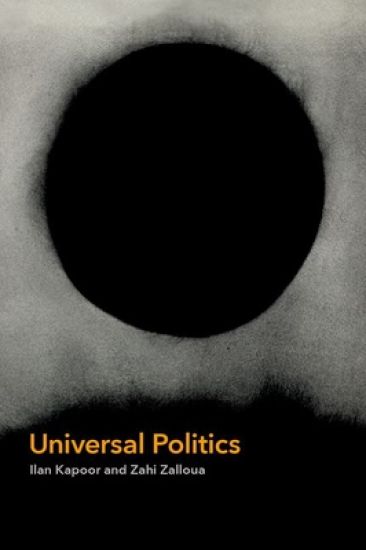
Universal Politics

Universal Politics

Ilan Kapoor; Zahi Zalloua

Oxford University Press Inc
2021
sidottu
In Universal Politics, Ilan Kapoor and Zahi Zalloua argue that, in the face of the relentless advance of global capitalism, a universal politics is needed today more than ever. But rather than appealing to the narrow particularism of identity politics, the authors argue for a negative universality rooted in social antagonism (i.e., shared experiences of exploitation and marginalization). This conception of shared struggle avoids the trap of a neocolonial universalism, while foregrounding the politics of the systematically dispossessed and excluded. The book examines what a universal politics might look like in the context of key current global sites of struggle, including climate change, workers' struggles, the Palestinian question, the refugee crisis, Black Lives Matter, #MeToo, Political Islam, the Bolivian state under Morales, the European Union, and COVID-19. It also discusses the main political ingredients, gaps, and limitations of a universal politics.
Being Posthuman

Being Posthuman

Zahi Zalloua

Bloomsbury Academic
2021
nidottu
Posthumanism is both a descriptive and a prescriptive term. Firstly, it registers a shift beginning in the late 1960s and epitomized by Foucault’s “the death of Man”. Secondly, it refers to the future and a new relationship with the non-human, along with a different understanding of human exceptionalism. In Being Posthuman: Ontologies of the Future, Zahi Zalloua interrogates this future and shows that “post-” does not necessarily mean ‘after’ or that what comes after is more advanced than what has gone before. He pursues this line of inquiry across four distinct, yet interrelated, figures: cyborgs, animals, objects, and racialized and excluded ‘others’. These figures disrupt the narrative of the ‘human’ and its singularity and by reading them together, Zalloua determines that it is only when posthumanist discourse is combined with psychoanalysis that subjectivity can be properly examined.
Being Posthuman

Being Posthuman

Zahi Zalloua

Bloomsbury Academic
2021
sidottu
Posthumanism is both a descriptive and a prescriptive term. Firstly, it registers a shift beginning in the late 1960s and epitomized by Foucault’s “the death of Man”. Secondly, it refers to the future and a new relationship with the non-human, along with a different understanding of human exceptionalism. In Being Posthuman: Ontologies of the Future, Zahi Zalloua interrogates this future and shows that “post-” does not necessarily mean ‘after’ or that what comes after is more advanced than what has gone before. He pursues this line of inquiry across four distinct, yet interrelated, figures: cyborgs, animals, objects, and racialized and excluded ‘others’. These figures disrupt the narrative of the ‘human’ and its singularity and by reading them together, Zalloua determines that it is only when posthumanist discourse is combined with psychoanalysis that subjectivity can be properly examined.
Žižek on Race

Žižek on Race

Zahi Zalloua; Slavoj Žižek

Bloomsbury Academic
2020
nidottu
Slavoj Žižek’s prolific comments on anti-Semitism, Islamophobia, scapegoating, popular nationalism, the refugee crisis, Eurocentrism, the War on Terror, neocolonialism, global justice, and rioting comprise a dizzying array of thinking. But what can we pull out of his various writings and commentaries on race in the contemporary world? Is there anything approaching a Žižekian philosophy of race?Zahi Zalloua argues here that there is and that the often polemical style of Žižek's pronouncements shouldn't undermine the importance and urgency of his work in this area. Zalloua not only examines Žižek's philosophy of race but addresses the misconceptions that have arisen and some of the perceived shortcomings in his work to date. Žižek on Race also puts Žižek in dialogue with critical race and anti-colonial studies, dwelling on the sparks struck up by this dialogue and the differences, gaps, and absences it points up. Engaging Žižek’s singular contribution to the analysis of race and racism, Žižek on Race both patiently interrogates and critically extends his direct comments on the topic, developing more fully the potential of his thought. In a response to the book, Žižek boldly reaffirms his theoretical stance, clarifying further his often difficult-to-work-out positions on some of his more controversial pronouncements.
Žižek on Race

Žižek on Race

Zahi Zalloua; Slavoj Žižek

Bloomsbury Academic
2020
sidottu
Slavoj Žižek’s prolific comments on anti-Semitism, Islamophobia, scapegoating, popular nationalism, the refugee crisis, Eurocentrism, the War on Terror, neocolonialism, global justice, and rioting comprise a dizzying array of thinking. But what can we pull out of his various writings and commentaries on race in the contemporary world? Is there anything approaching a Žižekian philosophy of race?Zahi Zalloua argues here that there is and that the often polemical style of Žižek's pronouncements shouldn't undermine the importance and urgency of his work in this area. Zalloua not only examines Žižek's philosophy of race but addresses the misconceptions that have arisen and some of the perceived shortcomings in his work to date. Žižek on Race also puts Žižek in dialogue with critical race and anti-colonial studies, dwelling on the sparks struck up by this dialogue and the differences, gaps, and absences it points up. Engaging Žižek’s singular contribution to the analysis of race and racism, Žižek on Race both patiently interrogates and critically extends his direct comments on the topic, developing more fully the potential of his thought. In a response to the book, Žižek boldly reaffirms his theoretical stance, clarifying further his often difficult-to-work-out positions on some of his more controversial pronouncements.
Theory's Autoimmunity

Theory's Autoimmunity

Zahi Zalloua

Northwestern University Press
2018
nidottu
Engaging scholars from across humanistic fields grappling with the role and value of theory in our times, Theory's Autoimmunity argues for reclaiming theory's skepticism as a value. To cultivate theory's skeptical impulses is to embrace what Jacques Derrida has termed autoimmunity: a condition of openness to the outside-openness of the self, the community, democracy, or other ideals-that allows for change.Openness to change comes with risks, and the self-protective temptation to immunize oneself or one's community against these risks is strong. Yet without such risks, without openness to otherness, no encounter with the new, with difference, can ever take place. Without autoimmunity, theory becomes stagnant and programmatic, unable to receive and respond to the other or the event, to address, revise, and produce new meanings. Taking up the challenge of thinking theory as skepticism, with and against philosophy, this study turns to literature as an interlocutor, investigating the ways theory, like the literary works of Montaigne, Baudelaire, Stendhal, Morrison, or Duras, declines to put on the interpretive brakes, to stop reading at a point of understanding. Undoing and remaking itself, theory—those critical interpretive practices that revel in the creation and proliferation of meaning—becomes autoimmune.
Continental Philosophy and the Palestinian Question
From Sartre to Levinas, continental philosophers have looked to the example of the Jew as the paradigmatic object of and model for ethical inquiry. Levinas, for example, powerfully dedicates his 1974 book Otherwise than Being to the victims of the Holocaust, and turns attention to the state of philosophy after Auschwitz. Such an ethics radically challenges prior notions of autonomy and comprehension—two key ideas for traditional ethical theory and, more generally, the Greek tradition. It seeks to respect the opacity of the other and avoid the dangers of hermeneutic violence. But how does such an ethics of the other translate into real, everyday life? What is at stake in thinking the other as Jew? Is the alterity of the Jew simply a counter to Greek universalism? Is a rhetoric of exceptionalism, with its unavoidable ontological residue, at odds with shifting political realities? Within this paradigm, what then becomes of the Arab or Muslim, the other of the Jew, the other of the other, so to speak? This line of ethical thought—in its desire to bear witness to past suffering and come to terms with subjectivity after Auschwitz—arguably brackets from analysis present operations of power. Would, then, a more sensitive historical approach expose the Palestinian as the other of the Israeli? Here, Zahi Zalloua offers a challenging intervention into how we configure the contemporary.
Continental Philosophy and the Palestinian Question
From Sartre to Levinas, continental philosophers have looked to the example of the Jew as the paradigmatic object of and model for ethical inquiry. Levinas, for example, powerfully dedicates his 1974 book Otherwise than Being to the victims of the Holocaust, and turns attention to the state of philosophy after Auschwitz. Such an ethics radically challenges prior notions of autonomy and comprehension—two key ideas for traditional ethical theory and, more generally, the Greek tradition. It seeks to respect the opacity of the other and avoid the dangers of hermeneutic violence. But how does such an ethics of the other translate into real, everyday life? What is at stake in thinking the other as Jew? Is the alterity of the Jew simply a counter to Greek universalism? Is a rhetoric of exceptionalism, with its unavoidable ontological residue, at odds with shifting political realities? Within this paradigm, what then becomes of the Arab or Muslim, the other of the Jew, the other of the other, so to speak? This line of ethical thought—in its desire to bear witness to past suffering and come to terms with subjectivity after Auschwitz—arguably brackets from analysis present operations of power. Would, then, a more sensitive historical approach expose the Palestinian as the other of the Israeli? Here, Zahi Zalloua offers a challenging intervention into how we configure the contemporary.
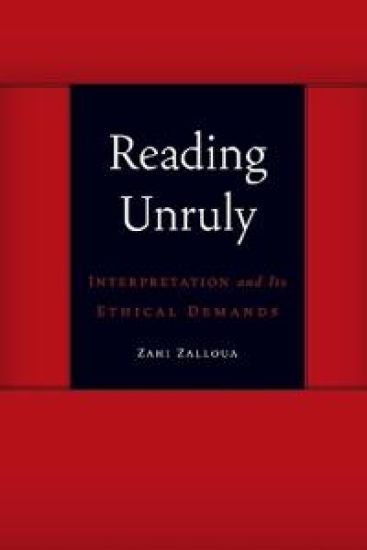
Reading Unruly

Reading Unruly

Zahi Zalloua

University of Nebraska Press
2014
pokkari
Drawing on literary theory and canonical French literature, Reading Unruly examines unruliness as both an aesthetic category and a mode of reading conceived as ethical response. Zahi Zalloua argues that when faced with an unruly work of art, readers confront an ethical double bind, hesitating then between the two conflicting injunctions of either thematizing (making sense) of the literary work, or attending to its aesthetic alterity or unreadability. Creatively hesitating between incommensurable demands (to interpret but not to translate back into familiar terms), ethical readers are invited to cultivate an appreciation for the unruly, to curb the desire for hermeneutic mastery without simultaneously renouncing meaning or the interpretive endeavor as such. Examining French texts from Montaigne's sixteenth-century Essays to Diderot's fictional dialogue Rameau's Nephew and Baudelaire's prose poems The Spleen of Paris, to the more recent works of Jean-Paul Sartre's Nausea, Alain Robbe-Grillet's Jealousy, and Marguerite Duras's The Ravishing of Lol Stein, Reading Unruly demonstrates that in such an approach to literature and theory, reading itself becomes a desire for more, an ethical and aesthetic desire to prolong rather than to arrest the act of interpretation.