Kirjojen hintavertailu. Mukana 12 595 353 kirjaa ja 12 kauppaa.
Kirjailija
Zahir Tari
Kirjat ja teokset yhdessä paikassa: 9 kirjaa, julkaisuja vuosilta 2011-2023, suosituimpien joukossa Network Classification for Traffic Management. Vertaile teosten hintoja ja tarkista saatavuus suomalaisista kirjakaupoista.
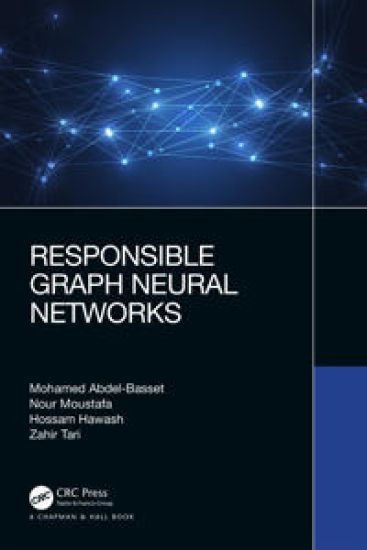
More frequent and complex cyber threats require robust, automated, and rapid responses from cyber-security specialists. This book offers a complete study in the area of graph learning in cyber, emphasizing graph neural networks (GNNs) and their cyber-security applications.Three parts examine the basics, methods and practices, and advanced topics. The first part presents a grounding in graph data structures and graph embedding and gives a taxonomic view of GNNs and cyber-security applications. The second part explains three different categories of graph learning, including deterministic, generative, and reinforcement learning and how they can be used for developing cyber defense models. The discussion of each category covers the applicability of simple and complex graphs, scalability, representative algorithms, and technical details.Undergraduate students, graduate students, researchers, cyber analysts, and AI engineers looking to understand practical deep learning methods will find this book an invaluable resource.
DATA EXFILTRATION THREATS AND PREVENTION TECHNIQUES Comprehensive resource covering threat prevention techniques for data exfiltration and applying machine learning applications to aid in identification and prevention Data Exfiltration Threats and Prevention Techniques provides readers the knowledge needed to prevent and protect from malware attacks by introducing existing and recently developed methods in malware protection using AI, memory forensic, and pattern matching, presenting various data exfiltration attack vectors and advanced memory-based data leakage detection, and discussing ways in which machine learning methods have a positive impact on malware detection. Providing detailed descriptions of the recent advances in data exfiltration detection methods and technologies, the authors also discuss details of data breach countermeasures and attack scenarios to show how the reader may identify a potential cyber attack in the real world. Composed of eight chapters, this book presents a better understanding of the core issues related to the cyber-attacks as well as the recent methods that have been developed in the field. In Data Exfiltration Threats and Prevention Techniques, readers can expect to find detailed information on: Sensitive data classification, covering text pre-processing, supervised text classification, automated text clustering, and other sensitive text detection approachesSupervised machine learning technologies for intrusion detection systems, covering taxonomy and benchmarking of supervised machine learning techniquesBehavior-based malware detection using API-call sequences, covering API-call extraction techniques and detecting data stealing behavior based on API-call sequencesMemory-based sensitive data monitoring for real-time data exfiltration detection and advanced time delay data exfiltration attack and detection Aimed at professionals and students alike, Data Exfiltration Threats and Prevention Techniques highlights a range of machine learning methods that can be used to detect potential data theft and identifies research gaps and the potential to make change in the future as technology continues to grow.
This monograph provides a comprehensive and rigorous exposition of the basic concepts and most important modern research results concerning blockchain and its applications. The book includes the required cryptographic fundamentals underpinning the blockchain technology, since understanding of the concepts of cryptography involved in the design of blockchain is necessary for mastering the security guarantees furnished by blockchain. It also contains an introduction to cryptographic primitives, and separate chapters on bitcoin, ethereum and smart contracts, public blockchain, private blockchain, cryptocurrencies, and blockchain applications.This volume is of great interest to active researchers who are keen to develop novel applications of blockchain in the field of their investigatio. Further, it is also beneficial for industry practitioners as well as undergraduate students in computing and information technology.
Examines the design and use of Intrusion Detection Systems (IDS) to secure Supervisory Control and Data Acquisition (SCADA) systems Cyber-attacks on SCADA systems?the control system architecture that uses computers, networked data communications, and graphical user interfaces for high-level process supervisory management?can lead to costly financial consequences or even result in loss of life. Minimizing potential risks and responding to malicious actions requires innovative approaches for monitoring SCADA systems and protecting them from targeted attacks. SCADA Security: Machine Learning Concepts for Intrusion Detection and Prevention is designed to help security and networking professionals develop and deploy accurate and effective Intrusion Detection Systems (IDS) for SCADA systems that leverage autonomous machine learning. Providing expert insights, practical advice, and up-to-date coverage of developments in SCADA security, this authoritative guide presents a new approach for efficient unsupervised IDS driven by SCADA-specific data. Organized into eight in-depth chapters, the text first discusses how traditional IT attacks can also be possible against SCADA, and describes essential SCADA concepts, systems, architectures, and main components. Following chapters introduce various SCADA security frameworks and approaches, including evaluating security with virtualization-based SCADAVT, using SDAD to extract proximity-based detection, finding a global and efficient anomaly threshold with GATUD, and more. This important book: Provides diverse perspectives on establishing an efficient IDS approach that can be implemented in SCADA systemsDescribes the relationship between main components and three generations of SCADA systemsExplains the classification of a SCADA IDS based on its architecture and implementationSurveys the current literature in the field and suggests possible directions for future research SCADA Security: Machine Learning Concepts for Intrusion Detection and Prevention is a must-read for all SCADA security and networking researchers, engineers, system architects, developers, managers, lecturers, and other SCADA security industry practitioners.
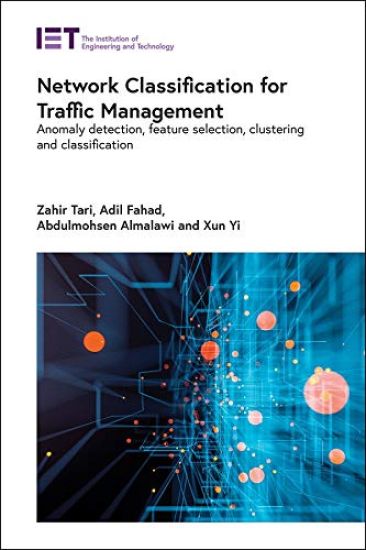
With the massive increase of data and traffic on the Internet within the 5G, IoT and smart cities frameworks, current network classification and analysis techniques are falling short. Novel approaches using machine learning algorithms are needed to cope with and manage real-world network traffic, including supervised, semi-supervised, and unsupervised classification techniques. Accurate and effective classification of network traffic will lead to better quality of service and more secure and manageable networks. This authored book investigates network traffic classification solutions by proposing transport-layer methods to achieve better run and operated enterprise-scale networks. The authors explore novel methods for enhancing network statistics at the transport layer, helping to identify optimal feature selection through a global optimization approach and providing automatic labelling for raw traffic through a SemTra framework to maintain provable privacy on information disclosure properties.
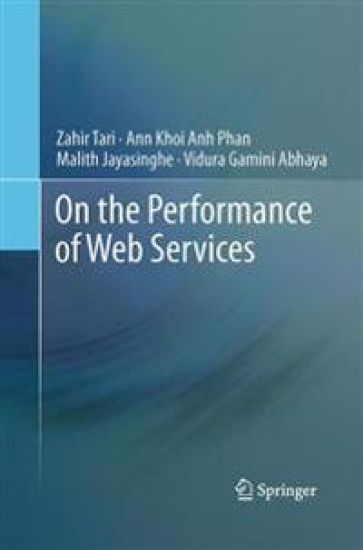
Performance of Web Services provides innovative techniques to improve the performance of Web Services, as well as QoS (Quality of Service) requirements. This includes Qos performance, reliability and security. The author presents two levels of Web Services: the “kernel” (ithe SOAP engine which delivers messages from one point to another through various networks), and the “server side” (which processes heavy load / requests). The primary objective of this book is execution of applications delivered in a timely fashion. Case studies and examples are provided throughout this book.
In the near future, wireless sensor networks will become an integral part of our day-to-day life. To solve different sensor networking related issues, researchers have been putting various efforts and coming up with innovative ideas. Within the last few years, we have seen a steep growth of research works particularly on various sensor node organization issues. The objective of this book is to gather recent advancements in the fields of self-organizing wireless sensor networks as well as to provide the readers with the essential information about sensor networking.
Performance of Web Services provides innovative techniques to improve the performance of Web Services, as well as QoS (Quality of Service) requirements. This includes Qos performance, reliability and security. The author presents two levels of Web Services: the “kernel” (ithe SOAP engine which delivers messages from one point to another through various networks), and the “server side” (which processes heavy load / requests). The primary objective of this book is execution of applications delivered in a timely fashion. Case studies and examples are provided throughout this book.