Kirjojen hintavertailu. Mukana 12 602 347 kirjaa ja 12 kauppaa.

Kirjailija

Zeev Maoz

Kirjat ja teokset yhdessä paikassa: 12 kirjaa, julkaisuja vuosilta 1990-2022, suosituimpien joukossa Paradoxes of War. Vertaile teosten hintoja ja tarkista saatavuus suomalaisista kirjakaupoista.

12 kirjaa

Kirjojen julkaisuhaarukka 1990-2022.

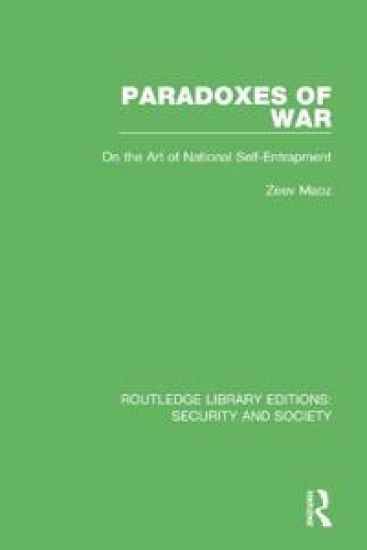
Paradoxes of War

Paradoxes of War

Zeev Maoz

TAYLOR FRANCIS LTD
2022
nidottu
Why do reasonable people lead their nations into the tremendously destructive traps of international conflict? Why do nations then deepen their involvement and make it harder to escape from these traps? In Paradoxes of War, originally published in 1990, Zeev Maoz addresses these and other paradoxical questions about the war process. Using a unique approach to the study of war, he demonstrates that wars may often break out because states wish to prevent them, and continue despite the desperate efforts of the combatants to end them.Paradoxes of War is organized around the various stages of war. The first part discusses the causes of war, the second the management of war, and the third the short- and long-term implications of war. In each chapter Maoz explores a different paradox as a contradiction between reasonable expectations and the outcomes of motivated behaviour based on those expectations. He documents these paradoxes in twentieth century wars, including the Korean War, the Six Day War, and the Vietnam War. Maoz then invokes cognitive and rational choice theories to explain why these paradoxes arise. Paradoxes of War is essential reading for students and scholars of international politics, war and peace studies, international relations theory, and political science in general.
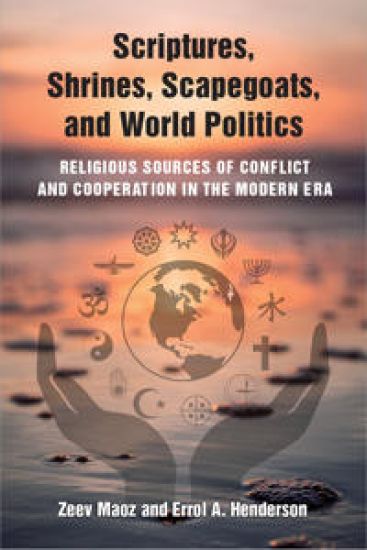
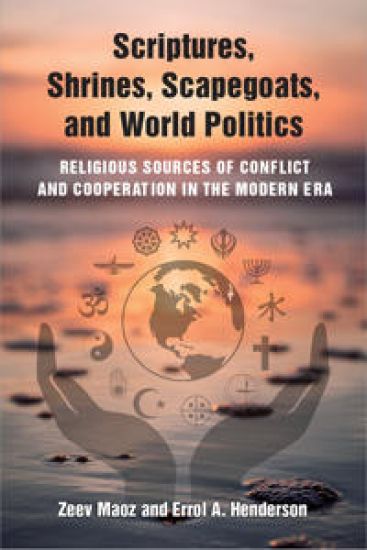
Scriptures, Shrines, Scapegoats, and World Politics

Scriptures, Shrines, Scapegoats, and World Politics

Zeev Maoz; Errol A Henderson

The University of Michigan Press
2021
nidottu
The effect of religious factors on politics has been a key issue since the end of the Cold War and the subsequent rise of religious terrorism. However, the systematic investigations of these topics have focused primarily on the effects of religion on domestic and international conflict. Scriptures, Shrines, Scapegoats, and World Politics offers a comprehensive evaluation of the role of religion in international relations, broadening the scope of investigation to such topics as the relationship between religion and cooperation, religion and conflict, and the relationship between religion and the quality of life. Religion is often manipulated by political elites to advance their principal goal of political survival. Zeev Maoz and Errol A. Henderson find that no specific religion is either consistently more bellicose or consistently more cooperative than other religions. However, religious similarity between states tends to reduce the propensity of conflict and increase the opportunity for security cooperation. The authors find a significant relationship between secularism and human security.
Paradoxes of War

Paradoxes of War

Zeev Maoz

Routledge
2020
sidottu
Why do reasonable people lead their nations into the tremendously destructive traps of international conflict? Why do nations then deepen their involvement and make it harder to escape from these traps? In Paradoxes of War, originally published in 1990, Zeev Maoz addresses these and other paradoxical questions about the war process. Using a unique approach to the study of war, he demonstrates that wars may often break out because states wish to prevent them, and continue despite the desperate efforts of the combatants to end them.Paradoxes of War is organized around the various stages of war. The first part discusses the causes of war, the second the management of war, and the third the short- and long-term implications of war. In each chapter Maoz explores a different paradox as a contradiction between reasonable expectations and the outcomes of motivated behaviour based on those expectations. He documents these paradoxes in twentieth century wars, including the Korean War, the Six Day War, and the Vietnam War. Maoz then invokes cognitive and rational choice theories to explain why these paradoxes arise. Paradoxes of War is essential reading for students and scholars of international politics, war and peace studies, international relations theory, and political science in general.
Scriptures, Shrines, Scapegoats, and World Politics

Scriptures, Shrines, Scapegoats, and World Politics

Zeev Maoz; Errol A Henderson

The University of Michigan Press
2020
sidottu
The effect of religious factors on politics has been a key issue since the end of the Cold War and the subsequent rise of religious terrorism. However, the systematic investigations of these topics have focused primarily on the effects of religion on domestic and international conflict. Scriptures, Shrines, Scapegoats, and World Politics offers a comprehensive evaluation of the role of religion in international relations, broadening the scope of investigation to such topics as the relationship between religion and cooperation, religion and conflict, and the relationship between religion and the quality of life. Religion is often manipulated by political elites to advance their principal goal of political survival. Zeev Maoz and Errol A. Henderson find that no specific religion is either consistently more bellicose or consistently more cooperative than other religions. However, religious similarity between states tends to reduce the propensity of conflict and increase the opportunity for security cooperation. The authors find a significant relationship between secularism and human security.
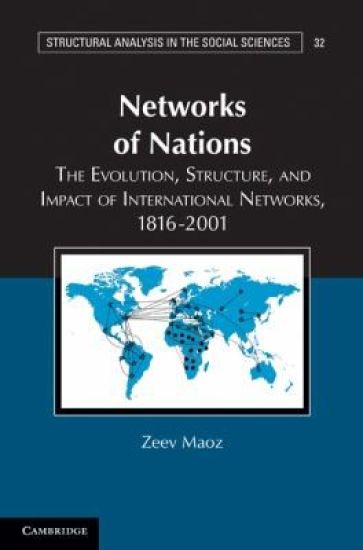
Networks of Nations

Networks of Nations

Zeev Maoz

Cambridge University Press
2010
sidottu
Maoz views the evolution of international relations over the last two centuries as a set of interacting, cooperative and conflicting networks of states. The networks that emerged are the result of national choice processes about forming or breaking ties with other states. States are constantly concerned with their security and survival in an anarchic world. Their security concerns stem from their external environment and their past conflicts. Because many of them cannot ensure their security by their own power, they need allies to balance against a hostile international environment. The alliance choices made by states define the structure of security cooperation networks and spill over into other cooperative networks, including trade and institutions. Maoz tests his theory by applying social networks analysis (SNA) methods to international relations. He offers a novel perspective as a system of interrelated networks that co-evolve and interact with one another.
Networks of Nations

Networks of Nations

Zeev Maoz

Cambridge University Press
2010
pokkari
Maoz views the evolution of international relations over the last two centuries as a set of interacting, cooperative and conflicting networks of states. The networks that emerged are the result of national choice processes about forming or breaking ties with other states. States are constantly concerned with their security and survival in an anarchic world. Their security concerns stem from their external environment and their past conflicts. Because many of them cannot ensure their security by their own power, they need allies to balance against a hostile international environment. The alliance choices made by states define the structure of security cooperation networks and spill over into other cooperative networks, including trade and institutions. Maoz tests his theory by applying social networks analysis (SNA) methods to international relations. He offers a novel perspective as a system of interrelated networks that co-evolve and interact with one another.
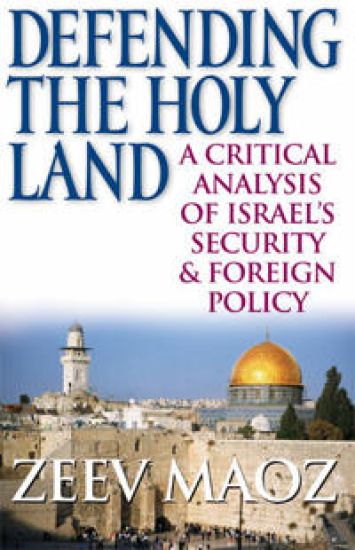
Defending the Holy Land

Defending the Holy Land

Zeev Maoz

The University of Michigan Press
2008
nidottu
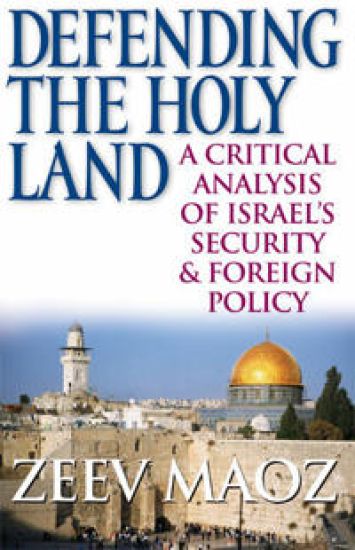
Defending the Holy Land is the most comprehensive analysis to date of Israel's national security and foreign policy, from the inception of the State of Israel to the present. Author Zeev Maoz's unique double perspective, as both an expert on the Israeli security establishment and esteemed scholar of Mideast politics, enables him to describe in harrowing detail the tragic recklessness and self-made traps that pervade the history of Israeli security operations and foreign policy.Most of the wars in which Israel was involved, Maoz shows, were entirely avoidable, the result of deliberate Israeli aggression, flawed decision-making, and misguided conflict management strategies. None, with the possible exception of the 1948 War of Independence, were what Israelis call "wars of necessity." They were all wars of choice-or, worse, folly.Demonstrating that Israel's national security policy rested on the shaky pairing of a trigger-happy approach to the use of force with a hesitant and reactive peace diplomacy, Defending the Holy Land recounts in minute-by-minute detail how the ascendancy of Israel's security establishment over its foreign policy apparatus led to unnecessary wars and missed opportunites for peace.A scathing and brilliant revisionist history, Defending the Holy Land calls for sweeping reform of Israel's foreign policy and national security establishments. This book will fundamentally transform the way readers think about Israel's troubled history. Zeev Maoz is Professor of Political Science at the University of California, Davis. He is the former head of the Graduate School of Government and Policy and of the Jaffee Center for Strategic Studies at Tel Aviv University, as well as the former academic director of the M.A. Program at the Israeli Defense Forces' National Defense College. Cover photograph: Israel, Jerusalem, Western Wall and The Dome of The Rock. Courtesy of Corbis.
National Choices and International Processes

National Choices and International Processes

Zeev Maoz

Cambridge University Press
2008
pokkari
National Choices and International Processes brings together the various conflicting approaches to the study of foreign policy decision-making under a single theoretical framework. Initially examining decision processes within states, Zeev Maoz continues by exploring the relationship between the creation of national choices and their outcomes, the interactions between states and the manner in which international processes evolve over time. This he calls the 'bottom up' approach which is contrasted in his last chapter with the 'top down' approach of systems analysis. Although the focus of this study is on theoretical construction, Maoz provides a thorough analysis of the literature on foreign policy decision-making and international bargaining. His arguments are supported both by separate chapters of mathematical analysis and by numerous historical examples, often from the Middle East - an area where the author has particular expertise. National Choices and International Processes is the culmination of many years work. It will be of interest to students and specialists in foreign policy and international relations theory.
Defending the Holy Land

Defending the Holy Land

Zeev Maoz

The University of Michigan Press
2006
sidottu
Defending the Holy Land is the most comprehensive analysis to date of Israel's national security and foreign policy, from the inception of the State of Israel to the present. Author Zeev Maoz's unique double perspective, as both an expert on the Israeli security establishment and esteemed scholar of Mideast politics, enables him to describe in harrowing detail the tragic recklessness and self-made traps that pervade the history of Israeli security operations and foreign policy.Most of the wars in which Israel was involved, Maoz shows, were entirely avoidable, the result of deliberate Israeli aggression, flawed decision-making, and misguided conflict management strategies. None, with the possible exception of the 1948 War of Independence, were what Israelis call "wars of necessity." They were all wars of choice-or, worse, folly.Demonstrating that Israel's national security policy rested on the shaky pairing of a trigger-happy approach to the use of force with a hesitant and reactive peace diplomacy, Defending the Holy Land recounts in minute-by-minute detail how the ascendancy of Israel's security establishment over its foreign policy apparatus led to unnecessary wars and missed opportunites for peace.A scathing and brilliant revisionist history, Defending the Holy Land calls for sweeping reform of Israel's foreign policy and national security establishments. This book will fundamentally transform the way readers think about Israel's troubled history. Zeev Maoz is Professor of Political Science at the University of California, Davis. He is the former head of the Graduate School of Government and Policy and of the Jaffee Center for Strategic Studies at Tel Aviv University, as well as the former academic director of the M.A. Program at the Israeli Defense Forces' National Defense College. Cover photograph: Israel, Jerusalem, Western Wall and The Dome of The Rock. Courtesy of Corbis.
National Choices and International Processes

National Choices and International Processes

Zeev Maoz

Cambridge University Press
1990
sidottu
National Choices and International Processes brings together the various conflicting approaches to the study of foreign policy decision-making under a single theoretical framework. Initially examining decision processes within states, Zeev Maoz continues by exploring the relationship between the creation of national choices and their outcomes, the interactions between states and the manner in which international processes evolve over time. This he calls the 'bottom up' approach which is contrasted in his last chapter with the 'top down' approach of systems analysis. Although the focus of this study is on theoretical construction, Maoz provides a thorough analysis of the literature on foreign policy decision-making and international bargaining. His arguments are supported both by separate chapters of mathematical analysis and by numerous historical examples, often from the Middle East - an area where the author has particular expertise. National Choices and International Processes is the culmination of many years work. It will be of interest to students and specialists in foreign policy and international relations theory.