Kirjojen hintavertailu. Mukana 12 390 323 kirjaa ja 12 kauppaa.

Kirjailija

Zenon W. Pylyshyn

Kirjat ja teokset yhdessä paikassa: 2 kirjaa, julkaisuja vuosilta 1986-2016, suosituimpien joukossa Computation and Cognition. Vertaile teosten hintoja ja tarkista saatavuus suomalaisista kirjakaupoista.

2 kirjaa

Kirjojen julkaisuhaarukka 1986-2016.

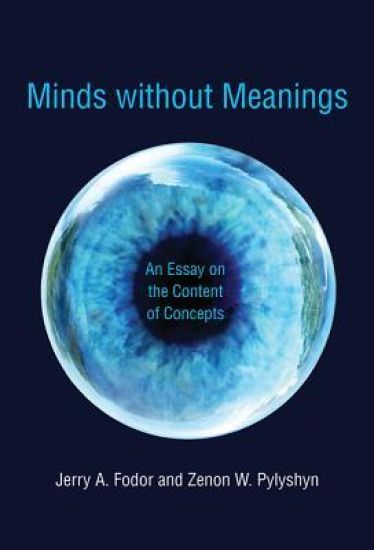
Minds without Meanings

Minds without Meanings

Jerry A. Fodor; Zenon W. Pylyshyn

MIT Press
2016
pokkari
Two prominent thinkers argue for the possibility of a theory of concepts that takes reference to be concepts' sole semantic property.In cognitive science, conceptual content is frequently understood as the "meaning" of a mental representation. This position raises largely empirical questions about what concepts are, what form they take in mental processes, and how they connect to the world they are about. In Minds without Meaning, Jerry Fodor and Zenon Pylyshyn review some of the proposals put forward to answer these questions and find that none of them is remotely defensible.Fodor and Pylyshyn determine that all of these proposals share a commitment to a two-factor theory of conceptual content, which holds that the content of a concept consists of its sense together with its reference. Fodor and Pylyshyn argue instead that there is no conclusive case against the possibility of a theory of concepts that takes reference as their sole semantic property. Such a theory, if correct, would provide for the naturalistic account of content that cognitive science lacks-and badly needs. Fodor and Pylyshyn offer a sketch of how this theory might be developed into an account of perceptual reference that is broadly compatible with empirical findings and with the view that the mental processes effecting perceptual reference are largely preconceptual, modular, and encapsulated.
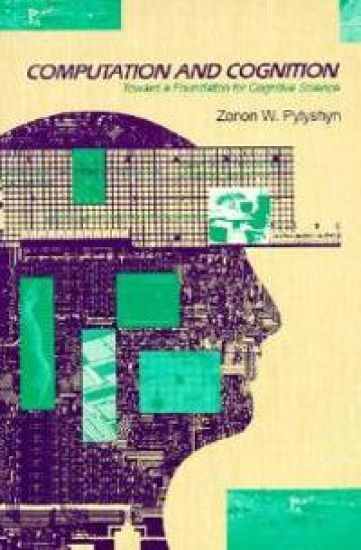
Computation and Cognition

Computation and Cognition

Zenon W. Pylyshyn

Bradford Books
1986
pokkari
The question, "What is Cognitive Science?" is often asked but seldom answered to anyone's satisfaction. Until now, most of the answers have come from the new breed of philosophers of mind. This book, however, is written by a distinguished psychologist and computer scientist who is well-known for his work on the conceptual foundations of cognitive science, and especially for his research on mental imagery, representation, and perception.In Computation and Cognition, Pylyshyn argues that computation must not be viewed as just a convenient metaphor for mental activity, but as a literal empirical hypothesis. Such a view must face a number of serious challenges. For example, it must address the question of "strong equivalents" of processes, and must empirically distinguish between phenomena which reveal what knowledge the organism has, phenomena which reveal properties of the biologically determined "functional architecture" of the mind. The principles and ideas Pylyshyn develops are applied to a number of contentious areas of cognitive science, including theories of vision and mental imagery. In illuminating such timely theoretical problems, he draws on insights from psychology, theoretical computer science, artificial intelligence, and psychology of mind.A Bradford Book