Kirjojen hintavertailu. Mukana 12 395 006 kirjaa ja 12 kauppaa.

Kirjailija

Zoltán Dörnyei

Kirjat ja teokset yhdessä paikassa: 34 kirjaa, julkaisuja vuosilta 1998-2022, suosituimpien joukossa Lessons from Exceptional Language Learners Who Have Achieved Nativelike Proficiency. Vertaile teosten hintoja ja tarkista saatavuus suomalaisista kirjakaupoista.

Mukana myös kirjoitusasut: Zoltan Dornyei

34 kirjaa

Kirjojen julkaisuhaarukka 1998-2022.

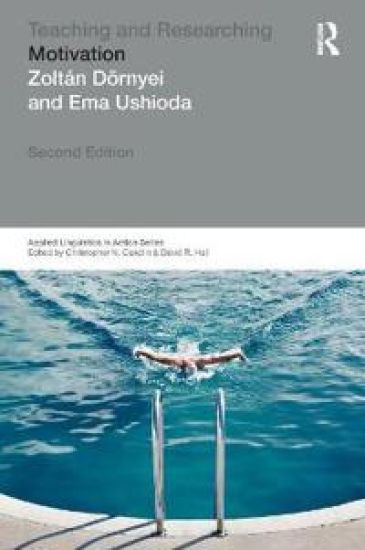
Teaching and Researching: Motivation

Teaching and Researching: Motivation

Zoltán Dörnyei; Ema Ushioda

Routledge
2015
sidottu
Cultivating motivation is crucial to a language learner's success - and therefore crucial for the language teacher and researcher to understand. This fully revised edition of a groundbreaking work reflects the dramatic changes the field of motivation research has undergone in recent years, including the impact of language globalisation and various dynamic and relational research methodologies, and offers ways in which this research can be put to practical use in the classroom and in research. Key new features and material:· A brand new chapter on current socio-dynamic and complex systems perspectives · New approaches to motivating students based on the L2 Motivational Self System· Illustrative summaries of qualitative and mixed methods studies· Samples of new self-related motivation measuresProviding a clear and comprehensive theory-driven account of motivation, Teaching and Researching Motivation examines how theoretical insights can be used in everyday teaching practice, and offers practical tips. The final section provides a range of useful resources, including relevant websites, key reference works and tried and tested example questionnaires. Written in an accessible style and illustrated with concrete examples, it is an invaluable resource for teachers and researchers alike.

Motivating Learners, Motivating Teachers

Motivating Learners, Motivating Teachers

Zoltán Dörnyei; Magdalena Kubanyiova

Cambridge University Press
2013
pokkari
Provides tools to enable teachers to improve their own motivation, and thereby that of their students. A new approach to motivation, focusing on the concept of 'vision'. Drawing on visualisation research in sports, psychology and education, the authors describe powerful ways by which imagining future scenarios can promote motivation to learn a language. The book offers a rich selection of motivational strategies to help students 'see' themselves as competent language users, to experience the value of knowing a foreign language and, ultimately, to invest effort into learning it. It also explores how to re-ignite language teacher enthusiasm, how to re-kindle it when it may be waning and how to guard it when it is under threat.
Motivating Learning

Motivating Learning

Zoltán Dörnyei; Hadfield Jill

Routledge
2013
nidottu
Motivation is a vital element in learning, and the most commonly cited explanation for success or failure in language learning. Jill Hadfield and Zoltán Dörnyei present a new theory of motivation centred around the notion of the "˜Ideal Future Language Self", arguing that if students have a rich and inspiring vision of themselves as successful future language learners and users, they will be motivated to work hard to actualise the vision and become that learner. This book: integrates the latest research in language teaching with innovative classroom practiceoffers suggestions on how the various components of the theory could be structured into a teaching sequenceincludes a variety of imaginative classroom activities designed to aid both student and teacher in creating and actualising the Ideal Self through visualisation, goal setting, task identification and planning, and a selection of appropriate learning strategiesshows how teachers can undertake motivation-related research in their own classrooms This is an ideal guide to and activity book for the theory and practice of motivation in language learning for students and teachers alike.
Teaching and Researching: Motivation

Teaching and Researching: Motivation

Zoltán Dörnyei; Ushioda Ema

Routledge
2010
nidottu
Cultivating motivation is crucial to a language learner's success - and therefore crucial for the language teacher and researcher to understand. This fully revised edition of a groundbreaking work reflects the dramatic changes the field of motivation research has undergone in recent years, including the impact of language globalisation and various dynamic and relational research methodologies, and offers ways in which this research can be put to practical use in the classroom and in research. Key new features and material: A brand new chapter on current socio-dynamic and complex systems perspectives New approaches to motivating students based on the L2 Motivational Self SystemIllustrative summaries of qualitative and mixed methods studiesSamples of new self-related motivation measures Providing a clear and comprehensive theory-driven account of motivation, Teaching and Researching Motivation examines how theoretical insights can be used in everyday teaching practice, and offers practical tips. The final section provides a range of useful resources, including relevant websites, key reference works and tried and tested example questionnaires. Written in an accessible style and illustrated with concrete examples, it is an invaluable resource for teachers and researchers alike.

The Psychology of Second Language Acquisition

The Psychology of Second Language Acquisition

Zoltan Dornyei

Oxford University Press
2009
nidottu
The Psychology of Second Language Acquisition offers a systematic and accessible overview of the main psychological areas and theories in order to keep abreast of the ongoing paradigm shift. Readers will find succinct and up-to-date descriptions of a wide range of psycholinguistic and neuropsychological topics such as language and the brain; neuroimaging and other research methods in psycholinguistics and brain research; non-nativist approaches to language acquisition; explicit/implicit learning and memory, procedural/declarative knowledge, and the automatization of language skills; learner characteristics, age effects, and the critical period hypothesis; and the psychological basis of language learning in educational contexts.
Research Methods in Applied Linguistics

Research Methods in Applied Linguistics

Zoltan Dornyei

Oxford University Press
2007
nidottu
The series attracts single or co-authored volumes from authors researching at the cutting edge of this dynamic field of interdisciplinary enquiry. The titles range from books that make such developments accessible to the non-specialist reader to those which explore in depth their relevance for the way language is to be conceived as a subject, and how courses and classroom activities are to be designed. As such, these books not only extend the field of applied linguistics itself and lend an additional significance to its enquiries, but also provide an indispensable professional foundation for language pedagogy and its practice. The scope of the series includes: second language acquisitionbilingualism and multi/plurilingualismlanguage pedagogy and teacher educationtesting and assessmentlanguage planning and policylanguage internationalization technology-mediated communicationdiscourse-, conversation-, and contrastive-analysispragmaticsstylisticslexicographytranslation
Motivation, Language Attitudes and Globalisation

Motivation, Language Attitudes and Globalisation

Zoltán Dörnyei; Kata Csizér; Nóra Németh

Multilingual Matters
2006
nidottu
This volume presents the results of the largest ever language attitude/motivation survey in second language studies. The research team gathered data from over 13,000 Hungarian language learners on three successive occasions: in 1993, 1999 and 2004. The examined period covers a particularly prominent time in Hungary’s history, the transition from a closed, Communist society to a western-style democracy that became a member of the European Union in 2004. Thus, the book provides an ‘attitudinal/motivational flow-chart’ describing how significant sociopolitical changes affect the language disposition of a nation. The investigation focused on the appraisal of five target languages – English, German, French, Italian and Russian – and this multi-language design made it also possible to observe the changing status of the different languages in relation to each other over the examined 12-year period. Thus, the authors were in an ideal position to investigate the ongoing impact of language globalisation in a context where for various political/historical reasons certain transformation processes took place with unusual intensity and speed. The result is a unique blueprint of how and why language globalisation takes place in an actual language learning environment.
The Psychology of the Language Learner

The Psychology of the Language Learner

Zoltán Dörnyei

Routledge Member of the Taylor and Francis Group
2005
nidottu
Research results over the past decades have consistently demonstrated that a key reason why many second language learners fail--while some learners do better with less effort--lies in various learner attributes such as personality traits, motivation, or language aptitude. In psychology, these attributes have traditionally been called "individual differences." The scope of individual learner differences is broad--ranging from creativity to learner styles and anxiety--yet there is no current, comprehensive, and unified volume that provides an overview of the considerable amount of research conducted on various language learner differences, until now.Each chapter in this new volume focuses on a different individual difference variable. Besides a review of the relevant second language literature, Zoltán Dörnyei presents a concise overview of the psychological research involving each topic. A key concern for the author has been to define the various learner factors as measurable constructs and therefore the discussion includes a summary of the most famous tests and questionnaires in each domain.A wide range of readers will benefit from this book--students in linguistics, applied linguistics, modern languages, and psychology programs; second language teachers participating in in-service training courses; and researchers in second language acquisition and psychology.
The Psychology of the Language Learner

The Psychology of the Language Learner

Zoltán Dörnyei

Routledge Member of the Taylor and Francis Group
2005
sidottu
Research results over the past decades have consistently demonstrated that a key reason why many second language learners fail--while some learners do better with less effort--lies in various learner attributes such as personality traits, motivation, or language aptitude. In psychology, these attributes have traditionally been called "individual differences." The scope of individual learner differences is broad--ranging from creativity to learner styles and anxiety--yet there is no current, comprehensive, and unified volume that provides an overview of the considerable amount of research conducted on various language learner differences, until now.Each chapter in this new volume focuses on a different individual difference variable. Besides a review of the relevant second language literature, Zoltán Dörnyei presents a concise overview of the psychological research involving each topic. A key concern for the author has been to define the various learner factors as measurable constructs and therefore the discussion includes a summary of the most famous tests and questionnaires in each domain.A wide range of readers will benefit from this book--students in linguistics, applied linguistics, modern languages, and psychology programs; second language teachers participating in in-service training courses; and researchers in second language acquisition and psychology.
Group Dynamics in the Language Classroom

Group Dynamics in the Language Classroom

Zoltán Dörnyei; Tim Murphey

Cambridge University Press
2003
pokkari
Working, learning and living in groups is a central feature of humans, and therefore the study of groups – called group dynamics – is a vibrant academic field, overlapping diverse areas such as psychology, sociology, business studies and political science. It is also highly relevant to language education because the success of classroom learning is very much dependent on how students relate to each other, what the classroom climate is like, what roles the teacher and the learners play and, more generally, how well students can cooperate and communicate with each other. This innovative book addresses these issues and offers practical advice on how to manage language learner groups in a way that they develop into cohesive and productive teams. Educators interested in communicative language teaching will particularly welcome this book as a useful guide in their day-to-day teaching practice.
Group Dynamics in the Language Classroom

Group Dynamics in the Language Classroom

Zoltán Dörnyei; Murphey Tim

Cambridge University Press
2003
sidottu
Working, learning and living in groups is a central feature of humans, and therefore the study of groups – called group dynamics – is a vibrant academic field, overlapping diverse areas such as psychology, sociology, business studies and political science. It is also highly relevant to language education because the success of classroom learning is very much dependent on how students relate to each other, what the classroom climate is like, what roles the teacher and the learners play and, more generally, how well students can cooperate and communicate with each other. This innovative book addresses these issues and offers practical advice on how to manage language learner groups in a way that they develop into cohesive and productive teams. Educators interested in communicative language teaching will particularly welcome this book as a useful guide in their day-to-day teaching practice.
Interpersonal Dynamics in Second Language Education

Interpersonal Dynamics in Second Language Education

Madeline E. Ehrman; Zoltan Dornyei

SAGE Publications Inc
1998
sidottu
Until now, relatively little research on interpersonal processes and group dynamics addressed the educational domain, particularly second language education. This book fills the gap by synthesizing diverse aspects of interpersonal and group psychology and exploring conscious and unconscious processes that affect learning and teaching. Drawing on humanistic, social, and clinical psychology, it addresses unconscious communication among people, group development, class climate, psychological characteristics of effective classroom groups, leadership roles, interpersonal attraction and conflicts, and the relationship of these to learner autonomy and collaborative learning. The authors examine the contributions of the mental health branches of counseling and clinical psychology to our understanding of how teachers, learners and a variety of figures who many never enter the classroom interact with each other to make second language learning more or less effective. In particular, the authors show how the unconscious ôscriptsö can cause unproductive conflict demotivation and eventual aversion to language learning. Moreover, the text shows how learning can be facilitated by appropriate use of interpersonal dynamics. Due to its interdisciplinary nature, this book will be of interest to teacher educators and practicing teachers, researchers, undergraduate and graduate students, school administrators and supervisors of educational programs, and many learners themselves. In addition, since the main focus of the book is the affective foundation of the teaching/learning process, this material will be relevant to non-language teachers and clinical practitioners interested in educational issues, as well as graduate students in training for those professions.
Interpersonal Dynamics in Second Language Education

Interpersonal Dynamics in Second Language Education

Madeline E. Ehrman; Zoltan Dornyei

SAGE Publications Inc
1998
nidottu
Until now, relatively little research on interpersonal processes and group dynamics addressed the educational domain, particularly second language education. This book fills the gap by synthesizing diverse aspects of interpersonal and group psychology and exploring conscious and unconscious processes that affect learning and teaching. Drawing on humanistic, social, and clinical psychology, it addresses unconscious communication among people, group development, class climate, psychological characteristics of effective classroom groups, leadership roles, interpersonal attraction and conflicts, and the relationship of these to learner autonomy and collaborative learning. The authors examine the contributions of the mental health branches of counseling and clinical psychology to our understanding of how teachers, learners and a variety of figures who many never enter the classroom interact with each other to make second language learning more or less effective. In particular, the authors show how the unconscious ôscriptsö can cause unproductive conflict demotivation and eventual aversion to language learning. Moreover, the text shows how learning can be facilitated by appropriate use of interpersonal dynamics. Due to its interdisciplinary nature, this book will be of interest to teacher educators and practicing teachers, researchers, undergraduate and graduate students, school administrators and supervisors of educational programs, and many learners themselves. In addition, since the main focus of the book is the affective foundation of the teaching/learning process, this material will be relevant to non-language teachers and clinical practitioners interested in educational issues, as well as graduate students in training for those professions.