Kirjojen hintavertailu. Mukana 12 657 676 kirjaa ja 12 kauppaa.

Kirjailija

Zsuzsa Gille

Kirjat ja teokset yhdessä paikassa: 4 kirjaa, julkaisuja vuosilta 2000-2016, suosituimpien joukossa Global Ethnography. Vertaile teosten hintoja ja tarkista saatavuus suomalaisista kirjakaupoista.

4 kirjaa

Kirjojen julkaisuhaarukka 2000-2016.

Global Ethnography

Global Ethnography

Michael Burawoy; Joseph A. Blum; Sheba George; Zsuzsa Gille; Millie Thayer; Teresa Gowan; Lynne Haney; Maren Klawiter; Steve Lopez; Sean O'Riain

University of California Press
2000
pokkari
In this follow-up to the highly successful "Ethnography Unbound", Michael Burawoy and nine colleagues break the bounds of conventional sociology, to explore the mutual shaping of local struggles and global forces. In contrast to the lofty debates between radical theorists, these nine studies excavate the dynamics and histories of globalization by extending out from the concrete, everyday world. The authors were participant observers in diverse struggles over extending citizenship, medicalizing breast cancer, dumping toxic waste, privatizing nursing homes, the degradation of work, the withdrawal of welfare rights, and the elaboration of body politics. From their insider vantage points, they show how groups negotiate, circumvent, challenge, and even re-create the complex global web that entangles them. Traversing continents and extending over three years, this collaborative research developed its own distinctive method of 'grounded globalization' to grasp the evaporation of traditional workplaces, the dissolution of enclaved communities, and the fluidity of identities. Forged between the local and global, these compelling essays make a powerful case for ethnography's insight into global dynamics.

Paprika, Foie Gras, and Red Mud

Paprika, Foie Gras, and Red Mud

Zsuzsa Gille

Indiana University Press
2016
sidottu
In this original and provocative study, Zsuzsa Gille examines three scandals that have shaken Hungary since it joined the European Union: the 2004 ban on paprika due to contamination, the 2008 boycott of Hungarian foie gras by Austrian animal rights activists, and the "red mud" spill of 2010, Hungary's worst environmental disaster. In each case, Gille analyzes how practices of production and consumption were affected by the proliferation of new standards and regulations that came with entry into the EU. She identifies a new modality of power—the materialization of politics, or achieving political goals with the seemingly apolitical tools of tinkering with technology and infrastructure—and elucidates a new approach to understanding globalization, materiality, and transnational politics.
Paprika, Foie Gras, and Red Mud

Paprika, Foie Gras, and Red Mud

Zsuzsa Gille

Indiana University Press
2016
pokkari
In this original and provocative study, Zsuzsa Gille examines three scandals that have shaken Hungary since it joined the European Union: the 2004 ban on paprika due to contamination, the 2008 boycott of Hungarian foie gras by Austrian animal rights activists, and the "red mud" spill of 2010, Hungary's worst environmental disaster. In each case, Gille analyzes how practices of production and consumption were affected by the proliferation of new standards and regulations that came with entry into the EU. She identifies a new modality of power—the materialization of politics, or achieving political goals with the seemingly apolitical tools of tinkering with technology and infrastructure—and elucidates a new approach to understanding globalization, materiality, and transnational politics.
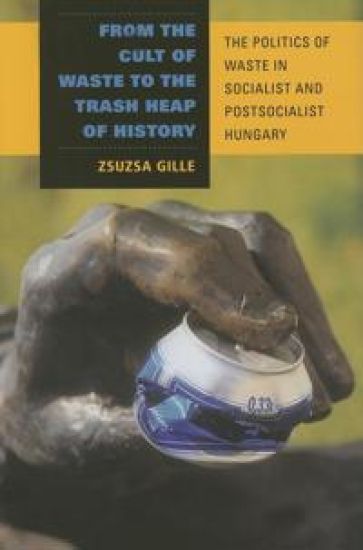
From the Cult of Waste to the Trash Heap of History

From the Cult of Waste to the Trash Heap of History

Zsuzsa Gille

Indiana University Press
2007
sidottu
Zsuzsa Gille combines social history, cultural analysis, and environmental sociology to advance a long overdue social theory of waste in this study of waste management, Hungarian state socialism, and post–Cold War capitalism. From 1948 to the end of the Soviet period, Hungary developed a cult of waste that valued reuse and recycling. With privatization the old environmentally beneficial, though not flawless, waste regime was eliminated, and dumping and waste incineration were again promoted. Gille's analysis focuses on the struggle between a Budapest-based chemical company and the small rural village that became its toxic dump site.