

Kirjailija
Zygmunt Bauman
Kirjat ja teokset yhdessä paikassa: 158 kirjaa, julkaisuja vuosilta 1989-2026, suosituimpien joukossa Forspildte liv. Vertaile teosten hintoja ja tarkista saatavuus suomalaisista kirjakaupoista.
158 kirjaa
Kirjojen julkaisuhaarukka 1989-2026.

The breadth and depth of Zygmunt Bauman’s engagement with social theory and the history of social thought has perhaps been underestimated, in part because many of his early writings were in Polish and never translated into English, and in part because many important pieces appeared in edited volumes and journals that are not readily available. This volume brings together hitherto unknown or rare pieces by Bauman on the theme of theory and society and also makes available previously unpublished material from the Bauman Archive at the University of Leeds. A consistent theme of Bauman’s work was his sustained engagement with humanism, and this provides a unifying thread in the pieces brought together in this volume. Here Bauman reflects on some of the core concepts of sociology, examines the work of a wide range of social theorists, from Durkheim and Gramsci to Agnes Heller and C. Wright Mills, and addresses an array of key ideas and issues including inequality, identity and social change. A substantial introduction by the editors provides readers with a lucid guide through this material and develops connections to Bauman’s other works. This is the third and final volume in a series of books that make available the lesser-known writings of one of the most influential social thinkers of our time. It will be of interest to students and scholars across the arts, humanities and social sciences, and to a wider readership.
The breadth and depth of Zygmunt Bauman’s engagement with social theory and the history of social thought has perhaps been underestimated, in part because many of his early writings were in Polish and never translated into English, and in part because many important pieces appeared in edited volumes and journals that are not readily available. This volume brings together hitherto unknown or rare pieces by Bauman on the theme of theory and society and also makes available previously unpublished material from the Bauman Archive at the University of Leeds. A consistent theme of Bauman’s work was his sustained engagement with humanism, and this provides a unifying thread in the pieces brought together in this volume. Here Bauman reflects on some of the core concepts of sociology, examines the work of a wide range of social theorists, from Durkheim and Gramsci to Agnes Heller and C. Wright Mills, and addresses an array of key ideas and issues including inequality, identity and social change. A substantial introduction by the editors provides readers with a lucid guide through this material and develops connections to Bauman’s other works. This is the third and final volume in a series of books that make available the lesser-known writings of one of the most influential social thinkers of our time. It will be of interest to students and scholars across the arts, humanities and social sciences, and to a wider readership.

Zygmunt Bauman was one of the great social thinkers of our time: inventor of the idea of liquid modernity, he transformed our way of thinking about the social conditions shaping our lives today. His own life was shaped by the great social forces that scarred the second half of the twentieth century – war, communism, antisemitism, forced migration. His work bears the traces of an outsider who knew all too well the enormous impact that social and political forces can have on personal lives. Bauman never wrote a full biography, but he wrote extended letters to his daughters in which he recounted the details of his life – his childhood and schooling; his experiences during the war and its aftermath; his forced emigration from Poland in 1968 and his subsequent life in exile, first in Israel and then in the UK, where he eventually settled at the University of Leeds. This book makes available for the first time these fragments of a life recounted, woven into a compelling autobiographical narrative that is laced with the broader reflections of a master thinker on some of the great issues of our time: identity, antisemitism and totalitarianism.
A victim of the Nazis, then the communists. Twice a refugee, yet always remaining a committed socialist. In countless ways, Zygmunt Bauman lived the political upheavals of the twentieth and twenty-first centuries. He was an actor within them. Bauman’s own lived history informed his politics, which found expression in varying degrees in his sociology, as he wrote extensively on socialism, democracy, bureaucracy, morality, Europe and the Jewish experience. This volume brings together hitherto unknown or rare pieces by Bauman on the themes of history and politics by drawing upon previously unpublished material from the Bauman Archive at the University of Leeds. A substantial introduction by the editors provides readers with a lucid guide through this material and develops connections to Bauman’s other works. The second volume in a series of books that will make available the lesser-known writings of one of the most influential social thinkers of our time, History and Politics will be of interest to students and scholars across the arts, humanities and social sciences, and to a wider readership.
A victim of the Nazis, then the communists. Twice a refugee, yet always remaining a committed socialist. In countless ways, Zygmunt Bauman lived the political upheavals of the twentieth and twenty-first centuries. He was an actor within them. Bauman’s own lived history informed his politics, which found expression in varying degrees in his sociology, as he wrote extensively on socialism, democracy, bureaucracy, morality, Europe and the Jewish experience. This volume brings together hitherto unknown or rare pieces by Bauman on the themes of history and politics by drawing upon previously unpublished material from the Bauman Archive at the University of Leeds. A substantial introduction by the editors provides readers with a lucid guide through this material and develops connections to Bauman’s other works. The second volume in a series of books that will make available the lesser-known writings of one of the most influential social thinkers of our time, History and Politics will be of interest to students and scholars across the arts, humanities and social sciences, and to a wider readership.

Education and Intercultural Identity
Zygmunt Bauman; Agostino Portera
TAYLOR FRANCIS LTD
2022
nidottu
Education and Intercultural Identity offers a dialogue between influential authors Zygmunt Bauman and Agostino Portera that reflects on and discusses contemporary events and issues relating to the crisis of global normativity, education and intercultural identity. Centered around a previously unpublished dialogue between Bauman and Portera, the book contains an extended introduction by Riccardo Mazzeo that traces key themes in the dialogue and highlights the importance of education in our globalized world. The book highlights that intercultural and multicultural education is the best developed model to meet modern day challenges that include religious pluralism, pollution, and conflict. It also contains timely material relating to significant issues affecting society today; including the refugee crisis, rising authoritarian nationalism, and the risks and challenges of globalisation and sustainability. This book will be of great interest for academics, scholars and students in the fields of intercultural education, sociology and the sociology of education.

Ved at knytte sig til et andet menneske vinder man noget og afgiver noget andet. Det moderne menneske er selektivt og vil opnå alle goderne både ved monogamiets sikre og solide verden, og polygamiets pirrende, men usikre livsform. Som små Pinocchioer, der ikke vil lade sig binde af nogen bånd, dyrker vi kvantitet frem for kvalitet, øjeblikkets forløsning snarere end det livslange forhold, egne fornøjelser frem for næstens. Forpligtelser, bindinger, troskab og tillid er afløst af særordninger, opsigelseskontrakter og klausuler. Men prisen for friheden er stigende angst og ensomhed. Den polsk-britiske sociolog og samfundsrevser Zygmunt Baumans seneste bog handler om kærlighed, forelskelse, seksualitet og parforholdets vilkår i den flydende modernitet. Bogen analyserer både den nære, intime kærlighed og den fjerne, globale menneskekærlighed i form af solidaritet med fattige, flygtninge og verdens svage. De skrøbelige menneskelige bånd, følelsen af usikkerhed som skrøbeligheden fører med sig, og konflikten mellem på en gang at binde sig og bevare den moderne, flydende frihed er bogens centrale temaer. Zygmunt Bauman (1925 -2017) var professor i sociologi, University of Leeds og kendt som en af de skarpeste analytikere af begreberne modernitet og postmodernitet i en global, samfundsmæssig sammenhæng. Flydende kærlighed er oversat fra engelsk efter Liquid Love af Tom Havemann.

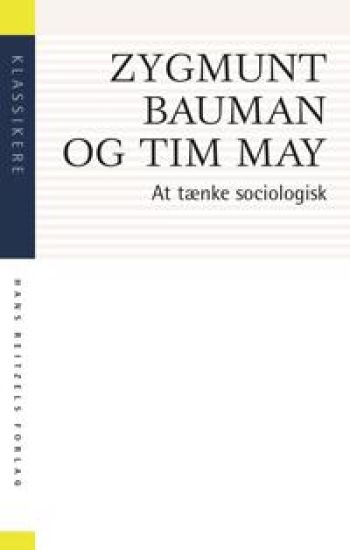
Sociologiens særlige måde at tænke på kan komme os til hjælp i forbindelse med overvejelser om hvordan vores individuelle livshistorier hænger sammen med den historie, vi har til fælles med andre mennesker. Den overvejelse er grundlæggende i sociologien og derfor også et hovedanliggende i denne grundbog i faget. Bauman & Mays (og andres) definition af fagdisciplinen sociologi går ud på, at den skal betragte menneskelige handlinger som elementer i en mere omfattende formation (dvs. samfundet). Samfundet forstås her som en samling af aktører, der er bundet sammen i et net af gensidig afhængighed. Afhængighed forklares som en tilstand, hvor alle handlinger og gøremål er afhængige af, hvem de øvrige aktører er, hvad de gør eller måske vil gøre. At tænke sociologisk er altså det at være i stand til at analysere dialektikken (vekselvirkningen) mellem individ og samfund. En sådan analyse kan øge forståelse for den menneskelige forskellighed og dermed blandt andet være med til at fremme følelsen af solidaritet mellem mennesker. I bogens 10 kapitler diskuteres en række sociologiske nøglebegreber som fx identitet, forbrugerisme, krop og seksualitet, teknologi og kultur. Bauman & May drøfter desuden mere værdiorienterede begreber som assimilation, moral, ulighed, eksklusion og fattigdom. Der trækkes jævnligt på indsigter fra andre hovedskikkelser inden for sociologien (Bourdieu, Mead, Schutz, Elias, Foucault, Castells, Giddens m.fl.) På den måde bliver læseren præsenteret for andre ”store” sociologers begreber og deres teorier om samfundet. ZYGMUNT BAUMAN (1925-2017) var professor i sociologi ved universitetet i Leeds og er en af vor tids skarpeste analytikere af begreberne modernitet og postmodernitet i en samfundsmæssig sammenhæng. Blandt Baumans mange bøger kan nævnes Freedom (1988, da. udg. 2003), Modernity and Holocaust (1989, da. udg. 1994), Modernity and Ambivalence (1991) og Society Under Siege (2002, da. udg. 2003). TIM MAY (f. 1957) er professor i sociologi ved The University of Sheffield. Han har udgivet adskillige bøger bl.a. Probation: Politics, Policy and Practice (1991), Introduction to the Philosophy of Social Research (1996) og Social Research (2001, 3. udg.). Bogen udkom første gang på dansk i 2003 og genudgives nu i Hans Reitzels Forlags serie Klassikere. At tænke sociologisk er oversat fra engelsk efter Thinking Sociologically (2. rev. udg.) af Tom Bøgeskov.
The sociological imagination and the artistic imagination have been historically intertwined, at once reciprocal and conflicting, complementary and tensional. This connection is nowhere more apparent than in the work of Zygmunt Bauman. His conception and practice of sociology were always infused with a literary and artistic sensibility. He wrote extensively on the relationship between sociology and the arts, and especially on sociology and literature; he frequently drew on literary writers in his exploration and elucidation of sociological problems; and he was an avid and passionate consumer and practitioner of art, especially film and photography. This volume brings together hitherto unknown or rare pieces by Bauman on the themes of culture and art, including previously unpublished material from the Bauman Archive at the University of Leeds. A substantial introduction by the editors provides readers with a lucid guide through this material and develops connections to Bauman’s other works. The first volume in a series of books that will make available the lesser-known writings of one of the most influential social thinkers of our time, Culture and Art will be of interest to students and scholars across the arts, humanities and social sciences, and to a wider readership.
The sociological imagination and the artistic imagination have been historically intertwined, at once reciprocal and conflicting, complementary and tensional. This connection is nowhere more apparent than in the work of Zygmunt Bauman. His conception and practice of sociology were always infused with a literary and artistic sensibility. He wrote extensively on the relationship between sociology and the arts, and especially on sociology and literature; he frequently drew on literary writers in his exploration and elucidation of sociological problems; and he was an avid and passionate consumer and practitioner of art, especially film and photography. This volume brings together hitherto unknown or rare pieces by Bauman on the themes of culture and art, including previously unpublished material from the Bauman Archive at the University of Leeds. A substantial introduction by the editors provides readers with a lucid guide through this material and develops connections to Bauman’s other works. The first volume in a series of books that will make available the lesser-known writings of one of the most influential social thinkers of our time, Culture and Art will be of interest to students and scholars across the arts, humanities and social sciences, and to a wider readership.
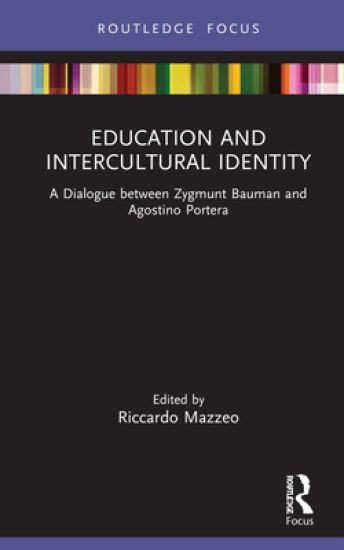
Education and Intercultural Identity offers a dialogue between influential authors Zygmunt Bauman and Agostino Portera that reflects on and discusses contemporary events and issues relating to the crisis of global normativity, education and intercultural identity. Centered around a previously unpublished dialogue between Bauman and Portera, the book contains an extended introduction by Riccardo Mazzeo that traces key themes in the dialogue and highlights the importance of education in our globalized world. The book highlights that intercultural and multicultural education is the best developed model to meet modern day challenges that include religious pluralism, pollution, and conflict. It also contains timely material relating to significant issues affecting society today; including the refugee crisis, rising authoritarian nationalism, and the risks and challenges of globalisation and sustainability. This book will be of great interest for academics, scholars and students in the fields of intercultural education, sociology and the sociology of education.
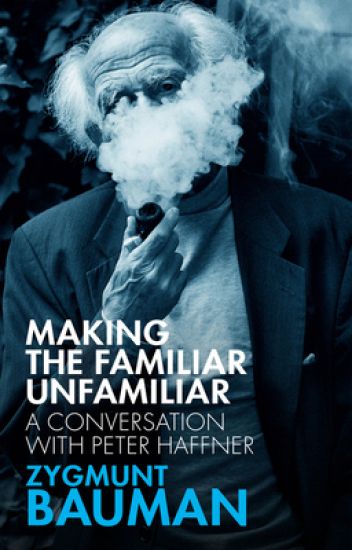
Shortly before his death, Zygmunt Bauman spent several days in conversation with the Swiss journalist Peter Haffner. Out of these conversations emerged this book in which Bauman shows himself to be the pre-eminent social thinker for which he became world renowned, a thinker who never shied away from addressing the great issues of our time and always strove to interrogate received wisdom and common sense, to make the familiar unfamiliar. As in Bauman’s work more generally, the personal and the political are interwoven in this book. Bauman’s life, which followed the same trajectory as the social and political upheavals of the 20th century, left its trace on his thought. Bauman describes his upbringing in Poland, military service in the Red Army, working for the Polish Secret Service after the war and expulsion from Poland in 1968, providing personal accounts of the historical events on which he brings his social and political insights to bear. His reflections on history, identity, Jewishness, morality, happiness and love are rooted in his own personal journey through the turbulent events of the 20th century to which he bore witness. These last conversations shed new light on one of the greatest social thinkers of our time, offering a more personal perspective on a man who changed our way of thinking about the modern world.
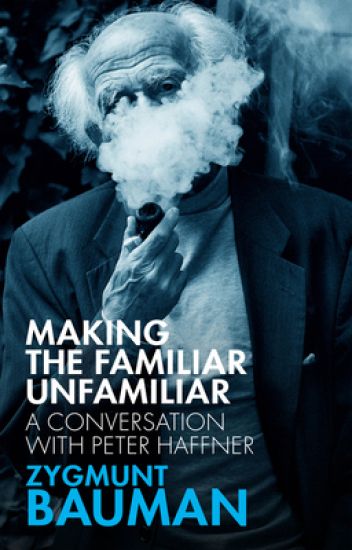
Shortly before his death, Zygmunt Bauman spent several days in conversation with the Swiss journalist Peter Haffner. Out of these conversations emerged this book in which Bauman shows himself to be the pre-eminent social thinker for which he became world renowned, a thinker who never shied away from addressing the great issues of our time and always strove to interrogate received wisdom and common sense, to make the familiar unfamiliar. As in Bauman’s work more generally, the personal and the political are interwoven in this book. Bauman’s life, which followed the same trajectory as the social and political upheavals of the 20th century, left its trace on his thought. Bauman describes his upbringing in Poland, military service in the Red Army, working for the Polish Secret Service after the war and expulsion from Poland in 1968, providing personal accounts of the historical events on which he brings his social and political insights to bear. His reflections on history, identity, Jewishness, morality, happiness and love are rooted in his own personal journey through the turbulent events of the 20th century to which he bore witness. These last conversations shed new light on one of the greatest social thinkers of our time, offering a more personal perspective on a man who changed our way of thinking about the modern world.
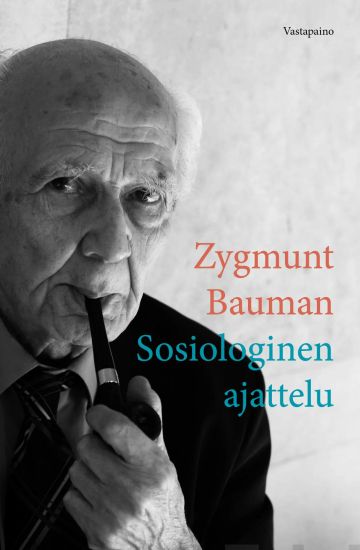
Bauman johdattaa lukijansa sosiologisen ajattelun lähteille. Arkielämästä ottamiensa esimerkkien avulla hän auttaa luotaamaan tuntemattomia kokemuksia ja näyttää, kuinka ne voidaan tulkita uudella tavalla ja nähdä uudessa valossa. Bauman pohtii maailmaamme järjestäviä vastakohtapareja kuten vapaus/riippuvuus, me/he, luonto/kulttuuri ja järjestys/kaaos. Hän osoittaa, ettei maailman hahmottaminen mustavalkoisesti vastakohtaparien avulla riitä, vaan meidän on oltava valmiit astumaan niiden välille jäävälle ”harmaalle” vyöhykkeelle, ei-kenenkään-malle. Silloin sosiologinen ajattelu osoittautuu itsestäänselvyyksiä purkavaksi kriittiseksi voimaksi, joka paljastaa toimintaamme ohjaavia julkilausumattomia oletuksia. Sosiologinen ajattelu sopii kaikille, jotka haluavat ymmärtää arkisten sattumusten syvempiä merkityksiä. Selkeän ja havainnollisen esitystapansa ansiosta se sopii erinomaisesti oppikirjaksi.
Widely acclaimed insight on the human condition, updated to view modern issues through a sociological lens Now in its third edition, Thinking Sociologically continues to offer a stimulating exploration of the underlying assumptions and tacit expectations which structure our view of the world. This best-seller has been translated into 12 languages to bring key sociological concepts to students and general readers around the globe. The authors review recent developments in society and examine the applicability of sociology to everyday life. The world has changed a great deal since the second edition’s publication. Issues of climate change, sustainability, inequality, social justice, inclusion and the role of social media have risen to prominence, and we are collectively challenging our ways of thinking about intimacy, community, consumption, ethics, social identity, and more. This new third edition has been revised to reflect these and other transformations in our lives, helping us to think sociologically about the consequences of these burgeoning issues, how we organize our societies, understand ourselves and lead our lives. This dynamic book: Applies sociology to everyday life in the context of current issuesContains contributions from major theorists that introduce central sociological concepts with modern relevanceFeatures a highly engaging and stimulating style that promotes critical thought and independent study Written for undergraduates, postgraduates, practicing sociologists and social scientists, this book also holds a broad appeal to a general audience. The third edition of Thinking Sociologically offers a compelling survey of sociological issues, recent changes in society and their influence on our day-to-day lives and identities. Learn more about Thinking Sociologically in co-author Tim May's recent piece for the British Sociological Association.
Vi lever i en tid som tycks vara förälskad i det förflutna, påpekar Zygmunt Bauman i denna sin sista, postumt publicerade bok, ett förflutet där tillvaron var enklare, rollerna tydligare och världen homogen. Haken är bara, menar han, att detta förflutna aldrig har existerat, det är en dagdröm, men inte precis någon oskyldig sådan. Retrotopia som Bauman kallar denna dagdröm, en utopi förlagd till det förflutna, fungerar som ett skydd mot ett svårhanterligt nu och en skrämmande framtid och bygger på en tydlig åtskillnad mellan ett idealiserat ”vi” och ett demoniserat ”dom”. Bauman tar hjälp av en rad teoretiker från Hobbes, Hegel, Marx och framåt för att förstå de retrotopiska fantasierna och sätta in dem i ett politiskt och historiskt sammanhang där inte minst nationalstatens bräcklighet och maktens och politikens allt tydligare separation har en stor betydelse. Han diskuterar i samband med detta också fenomen som konspirationsteorier, självmordsterrorism och copycat-beteende. "Retrotopia" knyter an till de många böcker Bauman tidigare har skrivit om vår flytande modernitet. Men den är också ett försök att skönja någon sorts hopp om en bättre framtid trots allt. En bättre framtid, inte ett bättre förflutet.Zygmunt Bauman (1925–2017) var ursprungligen verksam i Polen, men från 1972 professor i sociologi vid University of Leeds. Daidalos har givit ut en lång rad av hans böcker.