Kirjojen hintavertailu. Mukana 12 016 292 kirjaa ja 12 kauppaa.

Kirjahaku

Etsi kirjoja tekijän nimen, kirjan nimen tai ISBN:n perusteella.

25 kirjaa tekijältä Kate Zambreno

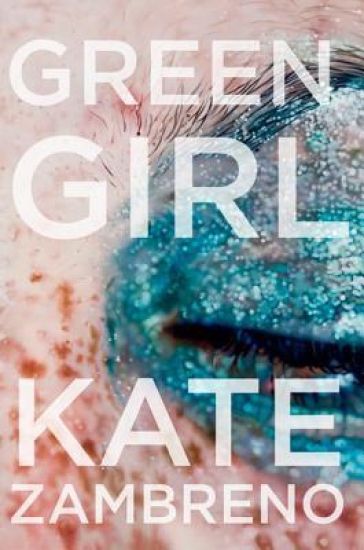
Green Girl

Green Girl

Kate Zambreno

HarperPerennial
2014
nidottu
With the fierce emotional and intellectual power of such classics as Jean Rhys's Good Morning, Midnight, Sylvia Plath's The Bell Jar, and Clarice Lispector's The Hour of the Star, Kate Zambreno's novel Green Girl is a provocative, sharply etched portrait of a young woman navigating the spectrum between anomie and epiphany. First published in 2011 in a small press edition, Green Girl was named one of the best books of the year by critics including Dennis Cooper and Roxane Gay. In Bookforum, James Greer called it "ambitious in a way few works of fiction are." This summer it is being republished in an all-new Harper Perennial trade paperback, significantly revised by the author, and including an extensive P.S. section including never before published outtakes, an interview with the author, and a new essay by Zambreno. Zambreno's heroine, Ruth, is a young American in London, kin to Jean Seberg gamines and contemporary celebutantes, by day spritzing perfume at the department store she calls Horrids, by night trying desperately to navigate a world colored by the unwanted gaze of others and the uncertainty of her own self-regard. Ruth, the green girl, joins the canon of young people existing in that important, frightening, and exhilarating period of drift and anxiety between youth and adulthood, and her story is told through the eyes of one of the most surprising and unforgettable narrators in recent fiction-a voice at once distanced and maternal, indulgent yet blackly funny. And the result is a piercing yet humane meditation on alienation, consumerism, the city, self-awareness, and desire, by a novelist who has been compared with Jean Rhys, Virginia Woolf, and Elfriede Jelinek.
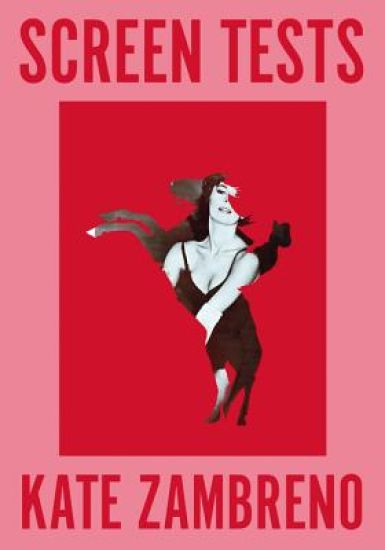
Screen Tests: Stories and Other Writing

Screen Tests: Stories and Other Writing

Kate Zambreno

HARPER PERENNIAL
2019
nidottu
"Zambreno's books have a way of getting under your skin. . . . in an era in which it feels as though we all constantly need to market ourselves, it's refreshing to read a book that explicitly champions art that is raw, art that is messy, art that cannot be contained." --The Paris Review"There is no other writer on the planet like Kate Zambreno."-- Lidia YuknavitchA Best Book of 2019: Nylon, Domino, Bustle, Book Riot, Buzzfeed, Vol. 1 BrooklynFrom the acclaimed author of Heroines, Green Girl, and O Fallen Angel, a new work equal parts observational micro-fiction and cultural criticism reflecting on the dailiness of life as a woman and writer, on fame and failure, and aging and art.In the first half of Kate Zambreno's astoundingly original collection Screen Tests, the narrator regales us with incisive and witty swatches from a life lived inside a brilliant mind, meditating on aging and vanity, fame and failure, writing and writers, along with portraits of everyone from Susan Sontag to Amal Clooney, Maurice Blanchot to Louise Brooks. The series of essays that follow, on figures central to Zambreno's thinking, including Kathy Acker, David Wojnarowicz, and Barbara Loden, are manifestos about art, that ingeniously intersect and chime with the stories that came before them.
O Fallen Angel

O Fallen Angel

Kate Zambreno

HARPER PERENNIAL
2017
nidottu
"Delirious, uncanny, the tragedy is ecstatic, each sentence pushes you to the next, each chapter to the following. This is the page-turner of experimental work." --The Paris Review"A brilliant, hilarious debut." --Chris Kraus, author of I Love DickThe haunting debut novel that put Kate Zambreno on the map, O Fallen Angel, is a provocative, voice-driven story of a family in crisis--and, more broadly, the crisis of the American family--now repackaged and with a new introduction by Lidia Yuknavitch.Inspired by Francis Bacon's Three Studies for Figures at the Base of a Crucifixion, Kate Zambreno's brilliant novel is a triptych of modern-day America set in a banal Midwestern landscape, told from three distinct, unforgettable points of view.There is "Mommy," a portrait of housewife psychosis, fenced in by her own small mind. There is "Maggie," Mommy's unfortunate daughter whom she infects with fairytales. Then there is the mysterious martyr-figure Malachi, a Cassandra in army fatigues, the Septimus Smith to Mommy's Mrs. Dalloway, who stands at the foot of the highway holding signs of fervent prophecy, gaping at the bottomless abyss of the human condition, while SUVs scream past.Deeply poignant, sometimes hilarious, and other times horrifying, O Fallen Angel is satire at its best.
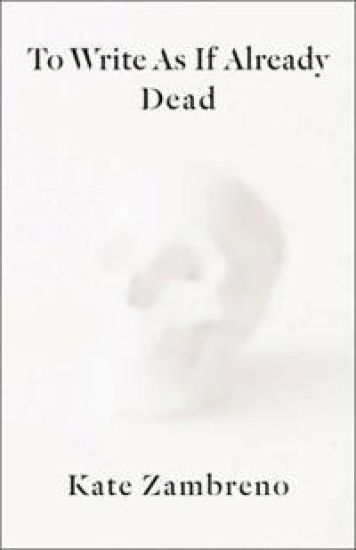
To Write as if Already Dead

To Write as if Already Dead

Kate Zambreno

Columbia University Press
2021
sidottu
To Write As If Already Dead circles around Kate Zambreno’s failed attempts to write a study of Hervé Guibert’s To the Friend Who Did Not Save My Life. In this diaristic, transgressive work, the first in a cycle written in the years preceding his death, Guibert documents with speed and intensity his diagnosis and disintegration from AIDS and elegizes a character based on Michel Foucault.The first half of To Write As If Already Dead is a novella in the mode of a detective story, searching after the mysterious disappearance of an online friendship after an intense dialogue on anonymity, names, language, and connection. The second half, a notebook documenting the doubled history of two bodies amid another historical plague, continues the meditation on friendship, solitude, time, mortality, precarity, art, and literature.Throughout this rigorous, mischievous, thrilling not-quite study, Guibert lingers as a ghost companion. Zambreno, who has been pushing the boundaries of literary form for a decade, investigates his methods by adopting them, offering a keen sense of the energy and confessional force of Guibert’s work, an ode to his slippery, scarcely classifiable genre. The book asks, as Foucault once did, “What is an author?” Zambreno infuses this question with new urgency, exploring it through the anxieties of the internet age, the ethics of friendship, and “the facts of the body”: illness, pregnancy, and death.
To Write as if Already Dead

To Write as if Already Dead

Kate Zambreno

Columbia University Press
2021
pokkari
To Write As If Already Dead circles around Kate Zambreno’s failed attempts to write a study of Hervé Guibert’s To the Friend Who Did Not Save My Life. In this diaristic, transgressive work, the first in a cycle written in the years preceding his death, Guibert documents with speed and intensity his diagnosis and disintegration from AIDS and elegizes a character based on Michel Foucault.The first half of To Write As If Already Dead is a novella in the mode of a detective story, searching after the mysterious disappearance of an online friendship after an intense dialogue on anonymity, names, language, and connection. The second half, a notebook documenting the doubled history of two bodies amid another historical plague, continues the meditation on friendship, solitude, time, mortality, precarity, art, and literature.Throughout this rigorous, mischievous, thrilling not-quite study, Guibert lingers as a ghost companion. Zambreno, who has been pushing the boundaries of literary form for a decade, investigates his methods by adopting them, offering a keen sense of the energy and confessional force of Guibert’s work, an ode to his slippery, scarcely classifiable genre. The book asks, as Foucault once did, “What is an author?” Zambreno infuses this question with new urgency, exploring it through the anxieties of the internet age, the ethics of friendship, and “the facts of the body”: illness, pregnancy, and death.
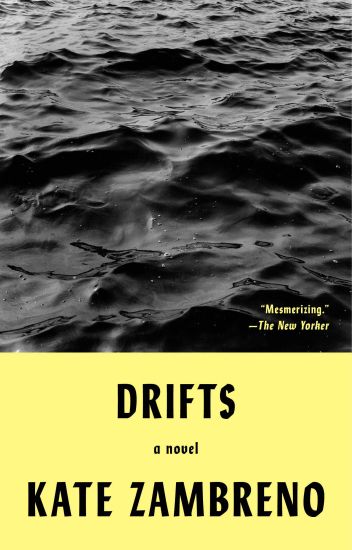
Drifts

Drifts

Kate Zambreno

Penguin Putnam Inc
2021
nidottu
"Drifts is a dazzling and enjoyable book. Kate Zambreno has invented a new form. It is a kind of absolute present, real life captured in closeup. I've never read truer pages on the subject of pregnancy. No writer has come so close to achieving a total grasp of life: the entanglement of everyday things, a writing project, and a pregnant body, in a single work." --Annie Ernaux, winner of the Nobel Prize in Literature Named a Best Book of the Year by The Paris Review, Elle, Harper's Bazaar, Esquire, Vulture, and Refinery29"Reading all Zambreno feels like the jolt one gets from a surprise cut or burn in the kitchen, that sudden recognition that you're in a body and the body can be hurt." --Alicia Kennedy, Refinery29 Haunting and compulsively readable, Drifts is an intimate portrait of reading, writing, and creative obsession. At work on a novel that is overdue, spending long days walking neighborhood streets with her restless terrier, corresponding ardently with fellow writers, the narrator grows obsessed with the challenge of writing the present tense, of capturing time itself. Entranced by the work of Rainer Maria Rilke, Albrecht D rer, Chantal Akerman, and others, she photographs the residents and strays of her neighborhood, haunts bookstores and galleries, and records her thoughts in a yellow notebook that soon subsumes her work on the novel. As winter closes in, a series of disturbances--the appearances and disappearances of enigmatic figures, the burglary of her apartment--leaves her distracted and uncertain . . . until an intense and tender disruption changes everything. A story of artistic ambition, personal crisis, and the possibilities and failures of literature, Drifts is the work of an exhilarating and vital writer.
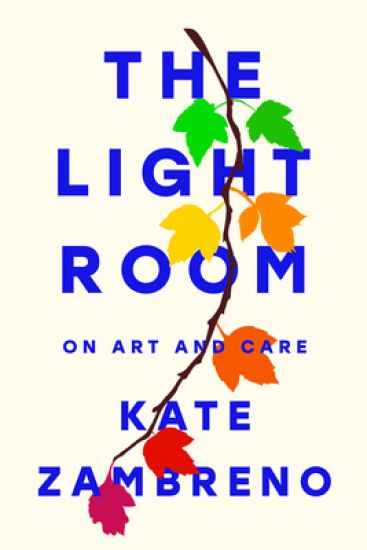
The Light Room

The Light Room

Kate Zambreno

Penguin Putnam Inc
2023
sidottu
"Kate Zambreno has invented a new form. It is a kind of absolute present, real life captured in closeup." --Annie Ernaux, winner of the Nobel Prize in Literature From "one of our most formally ambitious writers" (Esquire), a moving account of caretaking in a time of uncertainty and loss In The Light Room, Zambreno offers her most profound and affecting work yet: a candid chronicle of life as a mother of two young daughters in a moment of profound uncertainty about public health, climate change, and the future we can expect for our children. Moving through the seasons, returning often to parks and green spaces, Zambreno captures the isolation and exhaustion of being home with a baby and a small child, but also small and transcendent moments of beauty and joy. Inspired by writers and artists ranging from Natalia Ginzburg to Joseph Cornell, Yūko Tsushima to Bernadette Mayer, Etel Adnan to David Wojnarowicz, The Light Room represents an impassioned appreciation of community and the commons, and an ecstatic engagement with the living world. How will our memories, and our children's, be affected by this time of profound disconnection? What does it mean to bring new life, and new work, into this moment of precarity and crisis? In The Light Room, Kate Zambreno offers a vision of how to live in ways that move away from disenchantment, and toward light and possibility.
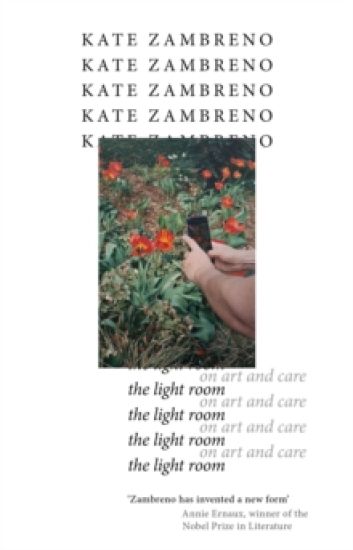
The Light Room

The Light Room

Kate Zambreno

Little, Brown Book Group
2024
sidottu
'Kate Zambreno has invented a new form. It is a kind of absolute present, real life captured in closeup' Annie Ernaux, winner of the Nobel Prize in Literature 'The Light Room is both a gift and a beacon' Sinéad Gleeson, author of Constellations'Kate Zambreno has performed a miracle, capturing real, lived time from within the exhaustion of pandemic-era parenthood. The Light Room reminded me of that fundamental magic of writing - that the details of another person's life, so precisely and honestly rendered, can instantly loosen the edges of your own life and make you feel less alone' Jenny Odell, bestselling author of How to Do NothingIn The Light Room, Zambreno offers her most profound and affecting work yet: a candid chronicle of life as a mother of two young daughters in a moment of profound uncertainty about public health, climate change, and the future we can expect for our children. Moving through the seasons, returning often to parks and green spaces, Zambreno captures the isolation and exhaustion of being home with a baby and a small child, but also small and transcendent moments of beauty and joy. Inspired by writers and artists ranging from Natalia Ginzburg to Joseph Cornell, Yuko Tsushima to Bernadette Mayer, Etel Adnan to David Wojnarowicz, The Light Room represents an impassioned appreciation of community and the commons, and an ecstatic engagement with the living world.How will our memories, and our children's, be affected by this time of profound disconnection? What does it mean to bring new life, and new work, into this moment of precarity and crisis? In The Light Room, Kate Zambreno offers a vision of how to live in ways that move away from disenchantment, and toward light and possibility.
Heroines

Heroines

Kate Zambreno

Little, Brown Book Group
2024
nidottu
'I am beginning to realize that taking the self out of our essays is a form of repression. Taking the self out feels like obeying a gag order - pretending an objectivity where there is nothing objective about the experience of confronting and engaging with and swooning over literature'On the last day of December 2009 Kate Zambreno, then an unpublished writer, began a blog arising from her obsession with literary modernism. Widely shared on social media, Zambreno's blog became an outlet for her highly informed and passionate rants and melancholy portraits of the fates of the modernist 'wives and mistresses,' reclaiming the traditionally pathologized biographies of Vivienne Eliot, Jane Bowles, Jean Rhys, and Zelda Fitzgerald: writers and artists themselves who served as male writers' muses only to end their lives silenced, erased, and institutionalized. Over the course of two years, her blog helped create a community of writers and devised a new feminist discourse of writing in the margins and developing an alternative canon.In Heroines, Zambreno extends the polemic she began online into a dazzling, original work of literary scholarship. Combing theories that have dictated what literature should be and who is allowed to write it - she traces the genesis of a cultural template that consistently exiles feminine experience to the realm of the 'minor,' and diagnoses women for transgressing social bounds. 'ANXIETY: When she experiences it, it's pathological,' writes Zambreno. 'When he does, it's existential.'With Heroines, Zambreno provided a model for a newly subjectivized criticism, prefiguring many group biographies and forms of autotheory and hybrid memoirs that were to come in the years to follow.
Heroines

Heroines

Kate Zambreno

Semiotext (E)
2012
pokkari
A manifesto for "toxic girls" that reclaims the wives and mistresses of modernism for literature and feminism.I am beginning to realize that taking the self out of our essays is a form of repression. Taking the self out feels like obeying a gag order-pretending an objectivity where there is nothing objective about the experience of confronting and engaging with and swooning over literature."-from HeroinesOn the last day of December, 2009 Kate Zambreno began a blog called Frances Farmer Is My Sister, arising from her obsession with the female modernists and her recent transplantation to Akron, Ohio, where her husband held a university job. Widely reposted, Zambreno's blog became an outlet for her highly informed and passionate rants about the fates of the modernist "wives and mistresses." In her blog entries, Zambreno reclaimed the traditionally pathologized biographies of Vivienne Eliot, Jane Bowles, Jean Rhys, and Zelda Fitzgerald: writers and artists themselves who served as male writers' muses only to end their lives silenced, erased, and institutionalized. Over the course of two years, Frances Farmer Is My Sister helped create a community where today's "toxic girls" could devise a new feminist discourse, writing in the margins and developing an alternative canon.In Heroines, Zambreno extends the polemic begun on her blog into a dazzling, original work of literary scholarship. Combing theories that have dictated what literature should be and who is allowed to write it-from T. S. Eliot's New Criticism to the writings of such mid-century intellectuals as Elizabeth Hardwick and Mary McCarthy to the occasional "girl-on-girl crime" of the Second Wave of feminism-she traces the genesis of a cultural template that consistently exiles female experience to the realm of the "minor," and diagnoses women for transgressing social bounds. "ANXIETY: When she experiences it, it's pathological," writes Zambreno. "When he does, it's existential." By advancing the Girl-As-Philosopher, Zambreno reinvents feminism for her generation while providing a model for a newly subjectivized criticism.
Book of Mutter

Book of Mutter

Kate Zambreno

Semiotext (E)
2017
sidottu
A fragmented, lyrical essay on memory, identity, mourning, and the mother.Writing is how I attempt to repair myself, stitching back former selves, sentences. When I am brave enough I am never brave enough I unravel the tapestry of my life, my childhood.-from Book of MutterComposed over thirteen years, Kate Zambreno's Book of Mutter is a tender and disquieting meditation on the ability of writing, photography, and memory to embrace shadows while in the throes-and dead calm-of grief. Book of Mutter is both primal and sculpted, shaped by the author's searching, indexical impulse to inventory family apocrypha in the wake of her mother's death. The text spirals out into a fractured anatomy of melancholy that includes critical reflections on the likes of Roland Barthes, Louise Bourgeois, Henry Darger, Theresa Hak Kyung Cha, Peter Handke, and others. Zambreno has modeled the book's formless form on Bourgeois's Cells sculptures-at once channeling the volatility of autobiography, pain, and childhood, yet hemmed by a solemn sense of entering ritualistic or sacred space.Neither memoir, essay, nor poetry, Book of Mutter is an uncategorizable text that draws upon a repertoire of genres to write into and against silence. It is a haunted text, an accumulative archive of myth and memory that seeks its own undoing, driven by crossed desires to resurrect and exorcise the past. Zambreno weaves a complex web of associations, relics, and references, elevating the prosaic scrapbook into a strange and intimate postmortem/postmodern theater.
Appendix Project

Appendix Project

Kate Zambreno

Semiotext (E)
2019
pokkari
On the ongoing project of writing about grief; Zambreno's addendum to Book of Mutter."I came up with the idea of writing these notes, or talks, out of a primary desire to not read from Book of Mutter, and instead to keep gesturing to its incompleteness and ongoingness, which connects, for me, to the fragmentary project of literature, and what I long for in writing."-from Appendix ProjectInspired by the lectures of Roland Barthes, Anne Carson, and Jorge Luis Borges, Kate Zambreno's Appendix Project collects eleven talks and essays written in the course of the year following the publication of Book of Mutter, Zambreno's book on her mother that took her over a decade to write. These surprising and moving performances, underscored by the sleeplessness of the first year of her child's life, contain Zambreno's most original and dazzling thinking and writing to date. In Appendix Project Zambreno thinks through the work of On Kawara, Roland Barthes, W.G. Sebald, Bhanu Kapil, Walter Benjamin, Theresa Hak Kyung Cha, Marguerite Duras, Marlene Dumas, Louise Bourgeois, Doris Salcedo, Jenny Holzer, and more.
Book of Mutter

Book of Mutter

Kate Zambreno

Prototype Publishing Ltd.
2025
pokkari
'Kate Zambreno’s Appendix Project and Book of Mutter are meditations on grief, motherhood, and memory alongside and through Roland Barthes’s Camera Lucida and Mourning Diary. These are also books about reading and seeing. To enter them is to be in the company of a writer with a tremendous capacity and gift for questioning, thinking, and feeling. These are extraordinary works.' – Christina SharpeBook of Mutter is a tender and disquieting meditation on the ability of writing, photography, and memory to embrace shadows while in the throes—and dead calm—of grief. Neither memoir, essay, nor poetry, it is an uncategorisable text that draws upon a repertoire of genres to write into and against silence. Zambreno weaves a complex web of associations, relics, and references, elevating the prosaic scrapbook into a strange and intimate postmortem/postmodern theatre.
Appendix Project

Appendix Project

Kate Zambreno

Prototype Publishing Ltd.
2025
pokkari
'Kate Zambreno’s Appendix Project and Book of Mutter are meditations on grief, motherhood, and memory alongside and through Roland Barthes’s Camera Lucida and Mourning Diary. These are also books about reading and seeing. To enter them is to be in the company of a writer with a tremendous capacity and gift for questioning, thinking, and feeling. These are extraordinary works.' – Christina SharpeInspired by the lectures of Roland Barthes, Anne Carson, and Jorge Luis Borges, Kate Zambreno’s Appendix Project collects eleven talks and essays written in the course of the year following the publication of Book of Mutter, Zambreno’s book on her mother that took her over a decade to write. These surprising and moving performances, underscored by the sleeplessness of the first year of her child’s life, contain Zambreno’s most original and dazzling thinking and writing to date. In *Appendix Project *Zambreno thinks through the work of On Kawara, Roland Barthes, W.G. Sebald, Bhanu Kapil, Walter Benjamin, Theresa Hak Kyung Cha, Marguerite Duras, Marlene Dumas, Louise Bourgeois, Doris Salcedo, Jenny Holzer, and more.
Drift

Drift

Kate Zambreno

Ellerströms Förlag
2022
nidottu
Berättarjaget i Drift har svårt att fokusera. Deadline för romanen som hon redan fått pengar för har passerat, men skrivandet går trögt. Istället ägnar hon alltmer tid åt att promenera i grannskapet tillsammans med sin nervösa terrier. Hon fotograferar människor och djur, skriver till vänner och författarkollegor, antecknar och tänker. Hon försjunker i en dialog med poeten Rainer Maria Rilke och läser biografi efter biografi över honom och andra författare och konstnärer. En idé om att skriva i radikalt presens, att fånga själva tiden medan den pågår, gör henne besatt. Så sker någonting som kommer att förändra allt. Drift är en berättelse om konstnärliga ambitioner, personlig kris och litteraturens möjligheter och misslyckanden. Om tid, skisser och drifter.
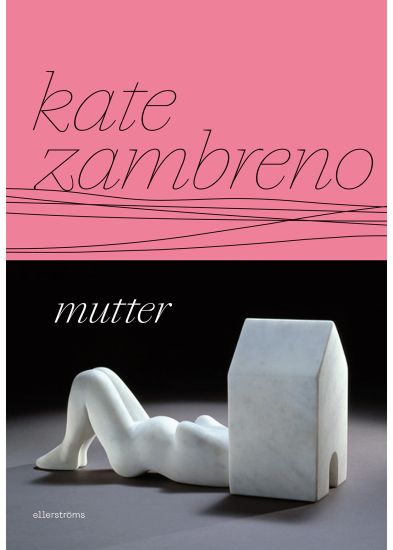
Mutter

Mutter

Kate Zambreno

Ellerströms Förlag
2025
nidottu
Kate Zambrenos Mutter kan sägas vara kongenial med den långa period den tog att skriva: under tretton års tid arbetade Zambreno med denna text, en långsam meditation över och ett grävande i arv, moderskap, minne och förlust. Runt dessa smärtpunkter kretsar texten, som blandar ett lyriskt tilltal med essä och prosa. Samtidigt är Mutter ett verk där skrivandets förutsättningar prövas: vad språket förmår att fånga av bleknade minnen och om det kan vara en metod för att komma fram till något slags försoning med sig själv och sin uppväxt. Mutter är ett försök att skriva mot tystnaden, för att på så sätt få den att tala, i ett bearbetande av sorgen som härrör från att aldrig riktigt ha vetat vem ens mamma egentligen var. Med en lätthet tar Zambreno läsaren genom detta sökande i mörkret, efter en identitet att hålla fast vid.
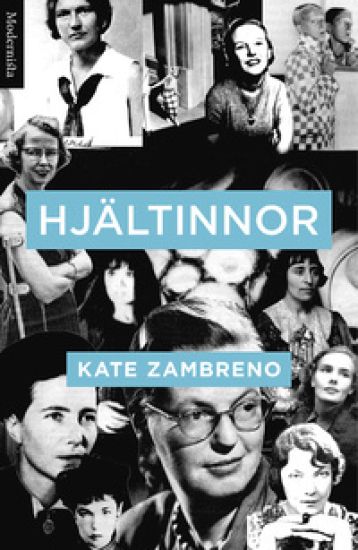
Hjältinnor

Hjältinnor

Kate Zambreno

Modernista
2016
sidottu
Vald till en av 2016 års bästa böcker i DN!»Ett musikaliskt flyt, en förförisk språklig rytm som får en att sukta efter mer. Längre penseldrag av berättande kombineras med korta, intensiva stötar. Det är både intellektuellt och punkigt, avancerat och naivt.« |SvD »Kate Zambreno skär som med machete in i den blodiga historia som blev många kvinnliga modernistiska författares öde Zelda Fitzgerald, Jane Bowles, Vivien(ne) Haigh-Wood Eliot, Sylvia Plath alla dränkta i äktenskap med erkända manliga författare.« |UNTHjältinnor är New York-författaren och feministen Kate Zambrenos hyllade »kritiska memoar«. En bok i vilken hon virtuost rör sig mellan genrer som självbiografi, dagbok, roman och essä. I grunden ligger hennes bländande feministiska forskning om modernismens myter, om till exempel Zelda Fitzgerald, Jean Rhys, Jane Bowles, Anaïs Nin och Vivienne Haigh-Wood Eliot. Dessa delar alla erfarenheten av att vara skrivande kvinnor på1900-talet, samt av att ha stämplats som mindre viktiga författare, blivit reducerade till musor åt kulturskapande män eller till och med utan grund sjukdomsförklarats.Hjältinnor [Heroines, 2012] har tagit den amerikanska kritiken med storm och har blivit något så sällsynt som en bästsäljande litteraturessä, i vilken Zambreno omformulerar feminismen för sig själv och sin generation, samt ger läsaren välbehövliga verktyg för en ny sorts kritisk diskussion om litteratur och historia.I översättning av Helena Fagertun.KATE ZAMBRENO [född 1977] är en amerikansk författare och litteraturforskare. Hon har skrivit två romaner: den rosade debuten O Fallen Angel [2009], som jämförts med såväl Kathy Acker som med Elfriede Jelinek och Virginia Woolf, samt Green Girl [2014]. Zambreno undervisar i skrivande på Columbia University, Sarah Lawrence College och Wesleyan University.»Stringensen i Hjältinnor bländar en till tårar. Shout out till översättaren Helena Fagertun.« 2016 års bästa läsning | ELIS BURRAU, NÖJESGUIDEN»Kate Zambreno är en överbegåvad rebell. En poesimelerad korsning mellan Karin Johannisson och Kathy Acker, tänker jag när jag läser Hjältinnor, hennes gravt genreblandade eruption av vad som känns som marginalanteckningar svällda till litteratur.« | EXPRESSEN»Zambreno vill inte skilja på liv och litteratur. Och samtidigt som hon vänder på det litteraturhistoriska perspektivet genom att skriva en de galna fruarnas litteraturhistoria gör hon också upp med den litteraturvetenskapliga metoden att bryta ut texten ur sitt historiska sammanhang för att läsa den som en egen värld med egna betydelser.« | LISBETH LARSSON, GP»En av årets bästa böcker. En mäktig, poetisk feministisk memoar - lika rigorös som självsäker.« | THE NEW STATESMAN»Zambreno skriver skarpt och intensivt intuitivt, hon skriver med tredje vågens socialkonstruvistiska teoribildning i ryggmärgen. Rakt och frankt dekonstruerar hon både myten om den modernistiska musan och det egna berättarjagets, mentala, fysiska och relationella sönderfall och återuppståndelse.« | FLORET »Det stora i Zambrenos projekt är en perspektivförflyttning. Från Hamlet till Ofelia. Från den galne författaren till den galna bisittaren, hon som mer eller mindre raderats ur (litteratur)historien.« | BERNUR»Det finns ett raseri i Hjältinnor som behöver kanaliseras. För många kvinnor har kastat saker till ingen nytta. Stenar i fickorna. Huvudet i ugnen. Transporterade in i självmord och galenskap. Nu räcker det.« | KULTURNYTT, P1»Lika delar oförskräckt patos och exceptionell intelligens. Ett imponerande och originellt verk som undersöker undertryckandet av en rad kvinnliga modernister, i relation till Zambrenos eget komplicerade förhållande som författare och hustru.« | THE PARIS REVIEW»Med smittsam kunnighet övertygar Kate Zambreno oss om att Jean Rhys är en lika viktig författare som Ernest Hemingway. Med obändig övertygelse visar hon varför vi lika gärna ska läsa Zelda Fitzgerald som hennes man Scott.« | ÖSTGÖTA-CORRESPONDENTEN