Kirjojen hintavertailu. Mukana 11 627 624 kirjaa ja 12 kauppaa.

Kirjahaku

Etsi kirjoja tekijän nimen, kirjan nimen tai ISBN:n perusteella.

3 kirjaa tekijältä Pascal Vander Straeten

An Overture to Geofinance: Global Finance, Geopolitics, and the Wielding of Power: Theory and Praxis
Geofinance is about a way of seeing the world. As a true introduction, this work aims at commencing a journey that very few have undertaken, namely witnessing the pioneering of a brand new theory that has an interdisciplinary aspect. Indeed, the world of today can no longer be analysed and understood solely from the perspective of finance, economics, political sciences, or geography. This silo mentality is no longer compatible with the complex world in which we are living. We need a holistic approach that builds bridges between various research fields thereby helping understanding the complex nature of a phenomenon. That phenomenon is geofinance. Intuitively, many among you already perceive how geopolitics affect the world of global finance, but also how the realm of international finance is impacting on world events, and their stakeholders, be it governments, businesses, or individuals. This articulate and incisive introductory textbook shepherds practitioners, cognoscenti, scholars, and students through their first encounter with geofinance. It offers a clear bodywork for exploring contemporary power conflicts by illustrating how the world of geopolitics and the realm of global finance are mutually shaping and interacting with each other. The overarching theme of geofinancial structures (contexts) and geofinancial agents (institutions, markets, individuals wielding financial power, etc.) is accessible and necessitates no previous understanding of theory or current financial affairs.Throughout the book, case studies including the influence of financial markets on geopolitics, the contagion effects between sovereign and banking risks, the influence of geopolitical black swans on the world of international finance, the impact of geofinance on business, etc. emphasize the multi-faceted nature of the complex relationship between global finance and geopolitics in its broadest sense. Reading this book will provide a deeper and critical understanding of current world of global finance and facilitate access to higher level course work and essays on geofinance. Both students of finance, geography, international relations, and mainstream readers alike will find this book an essential stepping-stone to a fuller understanding of contemporary financially driven conflicts.
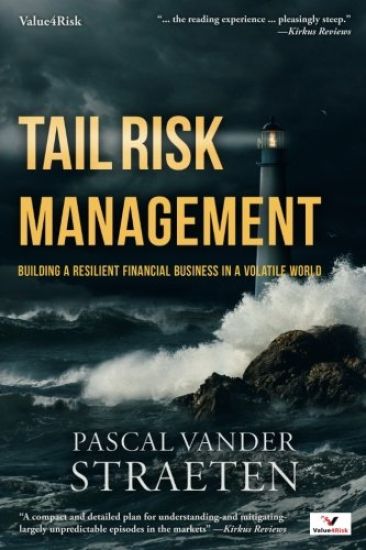
Tail Risk Management: Building a Resilient Financial Business in a Volatile World
(This is the Black & White version of the book.)Ever since the collapse of the Bretton Woods system and the deregulation of markets in the 1970-1980s, financial markets have exploded in terms of size, volatility, complexity, and interconnectedness (through globalization and technology). Concomitantly, the frequency and severity of banking crises have equally increased over the last decades.Additionally, the banking regulations of the last decades have focussed a lot on quantitative risk models and probability theories claiming that uncertainty could be measured. However, the severity of the previous banking crisis (2007-2008) proves that disruptions are hard to quantify, and these quantitative risk tools were inadequate in achieving a better resilience of the banks.In other words, large and well-respected financial institutions have experienced failure in the face of tail risks, revealing the inadequate protection provided by current practice. More than just capital management, tail risk management takes a qualitative approach that involves business strategy.As such, although quantitative methods are used most often in risk assessment, their usefulness wanes in the realm of tail risk management. To effectively mitigate extreme risks and preserve a firm's survivability, the focus must be on building a resilient business model. Therefore, this book studies the possibility to enhance the existing risk management framework pertaining to business resilience within the banking industry. Indeed, the dynamic, complex nature of the banking environment necessitates ongoing vigilance to anticipate vulnerabilities, as well as organizational flexibility and agility when disruptions occur.The objective of this book is to borrow risk management concepts from corporate industries that equally operate in extreme environments and transpose them to the banking industry, and see whether they could make the business models of banks more resilient.In Tail Risk Management, author Pascal M. vander Straeten, a twenty-five-year financial services veteran and founder of consulting firm Value4Risk, pulls best practices from across industries to provide a new risk management framework. These principles will guide a business toward necessary changes in modern management practices, regulations, and cultures that can be applied on an enterprise-wide basis, addressing extreme risks at any stage in their development.In the face of a systemic crisis, a resilient business model will provide strong lines of defense against failure. Resilience nowadays is a crucial concern as, notwithstanding the vast array of banking regulations, market participants, as well as other stakeholders, remain wary about the stability of banking organizations. Unquantifiable uncertainties will always exist, and traditional risk management approaches are not adequate. Using this extensive guide, learn what needs to change and why-and how to implement a potentially business-saving strategy.
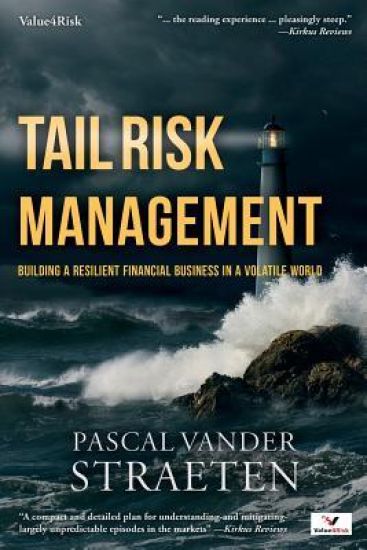
Tail Risk Management: Building a Resilient Financial Business in a Volatile World
This the COLORED version of the book. Although quantitative methods are used most often in risk assessment, their usefulness wanes in the realm of tail risk management. To effectively mitigate extreme risks and preserve a firm's survivability, the focus must be on building a resilient business model.Over the last ten years, large and well-respected financial institutions have experienced failure in the face of tail risks, revealing the inadequate protection provided by current practice. More than just capital management, tail risk management takes a qualitative approach that involves business strategy.In Tail Risk Management, author Pascal M. vander Straeten, a twenty-five-year financial services veteran and founder of consulting firm Value4Risk, pulls best practices from across industries to provide a new risk management framework. These principles will guide a business toward necessary changes in modern management practices, regulations, and cultures that can be applied on an enterprise-wide basis, addressing extreme risks at any stage in their development.In the face of a systemic crisis, a resilient business model will provide strong lines of defense against failure. Unquantifiable uncertainties will always exist, and traditional risk management approaches are not adequate. Using this extensive guide, learn what needs to change and why-and how to implement a potentially business-saving strategy.