Kirjojen hintavertailu. Mukana 11 699 587 kirjaa ja 12 kauppaa.

Kirjahaku

Etsi kirjoja tekijän nimen, kirjan nimen tai ISBN:n perusteella.

1000 tulosta hakusanalla Deborah Springer

Scotland: The Art of Deborah Phillips 2027 Wall Calendar

Scotland: The Art of Deborah Phillips 2027 Wall Calendar

Phillips; Deborah

POMEGRANATE EU CALENDARS 2027
2026
muu
Bask in the radiance of an amber sunset, and wonder at the beauty of misty mountains 'neath a heavy sky. In Deborah Phillips's radiant Scottish landscapes, the meadows, farms, and seaside scenes are aglow with color and texture barely contained on the canvas. Following in the footsteps of her father, revered artist Douglas Phillips, Deborah was only 14 when her art was first exhibited at the Royal Scottish Academy and the Royal Glasgow Institute of the Fine Arts. Now her works are featured in galleries throughout Scotland, England, and Ireland.
The Secret Soldier: The Story of Deborah Sampson

The Secret Soldier: The Story of Deborah Sampson

Ann McGovern

Scholastic Paperbacks
1990
pokkari
When "Robert Shurtliff" enlists as a common soldier in the Continental army, no one suspects there is anything unusual about him. The new soldier serves bravely for a year and a half. It is not until he is hospitalized with fever that his secret is discovered. Private Shurtliff is really a woman - 23 year-old Deborah Sampson! Because her mother was too poor to take care of her, Deborah had been sent away from home at an early age. For ten years, she was a servant for the Deacon Thomas family in the Massachusetts Bay Colony town of Middle borough, looking after four growing c hildren and doing chores. Deborah was too busy even to go to school. Besides, in the late 1700's people didn't think schooling was important for girls - girls couldn't even learn a trade as men could. Deborah longs for a life of her own. When she leaves the Thomas family at the age of eighteen, she is not ready to settle down and get married. She wants to see a bit of the wold first - to travel to big cities like Boston, Philadelphia, and New York. If she were a man, she could find adventure by joining the army... How Deborah keeps her identity a secret during long, exhausting marches and bloody raids against the Tories, and how her bravery brings the admiration of her fellow soldiers, her commanding general, and finally her county, makes exciting, suspenseful reading.
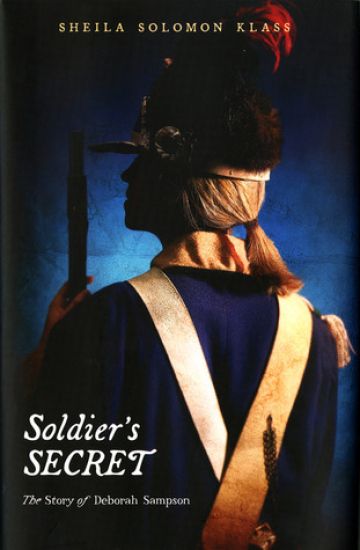
Soldier's Secret: The Story of Deborah Sampson

Soldier's Secret: The Story of Deborah Sampson

Sheila Solomon Klass

Henry Holt Company
2009
nidottu
In the 1700s, women's responsibilities were primarily child rearing and household duties. But Deborah Sampson wanted more from life. She wanted to read, to travel--and to fight for her country's independence. When the colonies went to war with the British in 1775, Deborah was intent on being part of the action. Seeing no other option, she disguised herself in a man's uniform and served in the Continental army for more than a year, her identity hidden from her fellow soldiers. Accomplished writer Sheila Solomon Klass creates a gripping firstperson account of an extraordinary woman who lived a life full of danger, adventure, and intrigue.
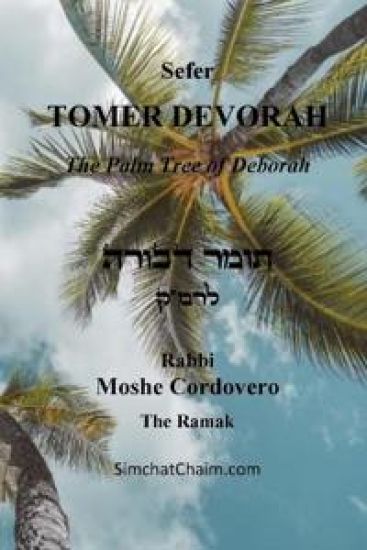
TOMER DEVORAH - The Palm Tree of Deborah

TOMER DEVORAH - The Palm Tree of Deborah

Kabbalist Rabbi Moshe Cordovero

Judaism
2023
pokkari
SeferTOMER DEVORAHThe Palm Tree of DeborahTomer Devorah was written in Hebrew in the middle of the 16th century by Rabbi Moses Cordovero, a Jewish kabbalist in Safed, Israel. This short text deals mostly with the Imitation of God through the acquisition of divine traits, especially those of the sephirot. The first edition was published in Venice in 1588 Tomer Devorah (Hebrew: תומר דבורה, English: The Palm Tree of Deborah) was written in Hebrew in the middle of the 16th century by Moses Cordovero, a Jewish kabbalist in Safed, Israel. This short text deals mostly with the Imitation of God through the acquisition of divine traits, especially those of the sephirot. The first edition was published in Venice in 1588. Although not widely read among Jews today, it is popular in the mussar tradition, which focuses on the individual cultivation of the middot, or qualities of God.Rabbi Moshe Cordovero Kabbalist Rabbi Moshe Cordovero, also referred to as Ra'MaK, was a leading kabbalist who lived and taught in Tsfat. His best-known work, Pardes Rimmonim, is a systematization of various school of kabbalistic thought. He authored many highly influential works, included a defense of kabbalah, a highly-regarded ethical work based on kabbalistic thought, and a comprehsive commentary on the Zohar. He had many disciples and was considered the premier kabbalistic authority until superceded by Rabbi Yitzchak Luria (AR"I Z"L) shortly after his death.Rabbi Moses ben Jacob Cordovero was a central figure in the historical development of Kabbalah, leader of a mystical school in 16th-century Safed, Ottoman Syria. He is known by the acronym the Rama"k.After the Medieval flourishing of Kabbalah, centered on the Zohar, attempts were made to give a complete intellectual system to its theology, such as by Meir ibn Gabbai. Influenced by the earlier success of Jewish philosophy in articulating a rational study of Jewish thought, Moshe Cordovero produced the first full integration of the previous differing schools in Kabbalistic interpretation. While he was a mystic inspired by the opaque imagery of the Zohar, Cordoverian Kabbalah utilised the conceptual framework of evolving cause and effect from the Infinite to the Finite in systemising Kabbalah, the method of philosophical style discourse he held most effective in describing a process that reflects sequential logic and coherence. His encyclopedic works became a central stage in the development of Kabbalah.Immediately after him in Safed, Isaac Luria articulated a subsequent system of Kabbalistic theology, with new supra-rational doctrines recasting previous Kabbalistic thought. While Lurianism displaced the Cordoverian scheme and became predominant in Judaism, its followers read Cordoverian works in harmony with their teachings. Where to them, Lurianism described the "World" of Rectification, Cordovero described the pre-Rectification World. 3] Both articulations of the 16th century mystical Renaissance in Safed gave Kabbalah an intellectual prominence to rival Medieval Rationalism, whose social influence on Judaism had waned after the Expulsion from Spain.
TOMER DEVORAH - The Palm Tree of Deborah

TOMER DEVORAH - The Palm Tree of Deborah

Kabbalist Rabbi Moshe Cordovero

Judaism
2023
sidottu
SeferTOMER DEVORAHThe Palm Tree of DeborahTomer Devorah was written in Hebrew in the middle of the 16th century by Rabbi Moses Cordovero, a Jewish kabbalist in Safed, Israel. This short text deals mostly with the Imitation of God through the acquisition of divine traits, especially those of the sephirot. The first edition was published in Venice in 1588 Tomer Devorah (Hebrew: תומר דבורה, English: The Palm Tree of Deborah) was written in Hebrew in the middle of the 16th century by Moses Cordovero, a Jewish kabbalist in Safed, Israel. This short text deals mostly with the Imitation of God through the acquisition of divine traits, especially those of the sephirot. The first edition was published in Venice in 1588. Although not widely read among Jews today, it is popular in the mussar tradition, which focuses on the individual cultivation of the middot, or qualities of God.Rabbi Moshe Cordovero Kabbalist Rabbi Moshe Cordovero, also referred to as Ra'MaK, was a leading kabbalist who lived and taught in Tsfat. His best-known work, Pardes Rimmonim, is a systematization of various school of kabbalistic thought. He authored many highly influential works, included a defense of kabbalah, a highly-regarded ethical work based on kabbalistic thought, and a comprehsive commentary on the Zohar. He had many disciples and was considered the premier kabbalistic authority until superceded by Rabbi Yitzchak Luria (AR"I Z"L) shortly after his death.Rabbi Moses ben Jacob Cordovero was a central figure in the historical development of Kabbalah, leader of a mystical school in 16th-century Safed, Ottoman Syria. He is known by the acronym the Rama"k.After the Medieval flourishing of Kabbalah, centered on the Zohar, attempts were made to give a complete intellectual system to its theology, such as by Meir ibn Gabbai. Influenced by the earlier success of Jewish philosophy in articulating a rational study of Jewish thought, Moshe Cordovero produced the first full integration of the previous differing schools in Kabbalistic interpretation. While he was a mystic inspired by the opaque imagery of the Zohar, Cordoverian Kabbalah utilised the conceptual framework of evolving cause and effect from the Infinite to the Finite in systemising Kabbalah, the method of philosophical style discourse he held most effective in describing a process that reflects sequential logic and coherence. His encyclopedic works became a central stage in the development of Kabbalah.Immediately after him in Safed, Isaac Luria articulated a subsequent system of Kabbalistic theology, with new supra-rational doctrines recasting previous Kabbalistic thought. While Lurianism displaced the Cordoverian scheme and became predominant in Judaism, its followers read Cordoverian works in harmony with their teachings. Where to them, Lurianism described the "World" of Rectification, Cordovero described the pre-Rectification World. 3] Both articulations of the 16th century mystical Renaissance in Safed gave Kabbalah an intellectual prominence to rival Medieval Rationalism, whose social influence on Judaism had waned after the Expulsion from Spain.
TOMER DEVORAH - The Palm Tree of Deborah [Hebrew with English translation]
SeferTOMER DEVORAHThe Palm Tree of DeborahTomer Devorah was written in Hebrew in the middle of the 16th century by Rabbi Moses Cordovero, a Jewish kabbalist in Safed, Israel. This short text deals mostly with the Imitation of God through the acquisition of divine traits, especially those of the sephirot. The first edition was published in Venice in 1588 Tomer Devorah (Hebrew: תומר דבורה, English: The Palm Tree of Deborah) was written in Hebrew in the middle of the 16th century by Moses Cordovero, a Jewish kabbalist in Safed, Israel. This short text deals mostly with the Imitation of God through the acquisition of divine traits, especially those of the sephirot. The first edition was published in Venice in 1588. Although not widely read among Jews today, it is popular in the mussar tradition, which focuses on the individual cultivation of the middot, or qualities of God.Rabbi Moshe Cordovero Kabbalist Rabbi Moshe Cordovero, also referred to as Ra'MaK, was a leading kabbalist who lived and taught in Tsfat. His best-known work, Pardes Rimmonim, is a systematization of various school of kabbalistic thought. He authored many highly influential works, included a defense of kabbalah, a highly-regarded ethical work based on kabbalistic thought, and a comprehsive commentary on the Zohar. He had many disciples and was considered the premier kabbalistic authority until superceded by Rabbi Yitzchak Luria (AR"I Z"L) shortly after his death.Rabbi Moses ben Jacob Cordovero was a central figure in the historical development of Kabbalah, leader of a mystical school in 16th-century Safed, Ottoman Syria. He is known by the acronym the Rama"k.After the Medieval flourishing of Kabbalah, centered on the Zohar, attempts were made to give a complete intellectual system to its theology, such as by Meir ibn Gabbai. Influenced by the earlier success of Jewish philosophy in articulating a rational study of Jewish thought, Moshe Cordovero produced the first full integration of the previous differing schools in Kabbalistic interpretation. While he was a mystic inspired by the opaque imagery of the Zohar, Cordoverian Kabbalah utilised the conceptual framework of evolving cause and effect from the Infinite to the Finite in systemising Kabbalah, the method of philosophical style discourse he held most effective in describing a process that reflects sequential logic and coherence. His encyclopedic works became a central stage in the development of Kabbalah.Immediately after him in Safed, Isaac Luria articulated a subsequent system of Kabbalistic theology, with new supra-rational doctrines recasting previous Kabbalistic thought. While Lurianism displaced the Cordoverian scheme and became predominant in Judaism, its followers read Cordoverian works in harmony with their teachings. Where to them, Lurianism described the "World" of Rectification, Cordovero described the pre-Rectification World. 3] Both articulations of the 16th century mystical Renaissance in Safed gave Kabbalah an intellectual prominence to rival Medieval Rationalism, whose social influence on Judaism had waned after the Expulsion from Spain.תומר דבורהמנוקדסֵפֶר תּוֹמֶר דְּבוֹרָה הוּא סֵפֶר מוּסָר עַל פִּי תּוֹרַת הַקַּבָּלָה
Tomer Devorah - Die Palme von Deborah

Tomer Devorah - Die Palme von Deborah

Rabbi Moshe Cordovero Akronym

Judaism
2023
pokkari
Moshe ben Yaakov Cordovero hebr isch: משה קורדובירו Moshe Kordovero; 1522-1570] war eine zentrale Figur in der historischen Entwicklung der Kabbala und Leiter einer mystischen Schule in Safed im osmanischen Syrien im 16. Er ist unter dem Akronym "Ramak" hebr isch: רמ״ק] bekannt. Nach der mittelalterlichen Bl tezeit der Kabbala, in deren Mittelpunkt der Zohar stand, wurden Versuche unternommen, ihrer Theologie ein vollst ndiges intellektuelles System zu geben, wie etwa von Meir ibn Gabbai. Beeinflusst durch den fr heren Erfolg der j dischen Philosophie bei der Formulierung eines rationalen Studiums des j dischen Denkens, schuf Moshe Cordovero die erste vollst ndige Integration der fr heren unterschiedlichen Schulen in der kabbalistischen Interpretation. Obwohl er ein Mystiker war, der sich von der undurchsichtigen Bildersprache des Zohar inspirieren lie , nutzte die Cordoversche Kabbala bei der Systematisierung der Kabbala den konzeptionellen Rahmen der Entwicklung von Ursache und Wirkung vom Unendlichen zum Endlichen, die Methode des philosophischen Diskursstils, die er f r die Beschreibung eines Prozesses, der sequentielle Logik und Koh renz widerspiegelt, f r am effektivsten hielt. Seine enzyklop dischen Werke wurden zu einer zentralen Etappe in der Entwicklung der Kabbala. Unmittelbar nach ihm formulierte AR"I in Safed ein neues System der kabbalistischen Theologie mit neuen supra-rationalen Lehren, die das fr here kabbalistische Denken umgestalteten. W hrend der Lurianismus das kordoverianische Schema verdr ngte und im Judentum vorherrschend wurde, lasen seine Anh nger die kordoverianischen Werke in bereinstimmung mit ihren Lehren. W hrend der Lurianismus f r sie die Welt der Rektifikation beschrieb, beschrieb Cordovero die Welt vor der Rektifikation. Beide Auspr gungen der mystischen Renaissance des 16. Jahrhunderts in Safed verliehen der Kabbala eine intellektuelle Bedeutung, die mit dem mittelalterlichen Rationalismus konkurrierte, dessen gesellschaftlicher Einfluss auf das Judentum nach der Vertreibung aus Spanien nachgelassen hatte. Der Name Cordovero deutet darauf hin, dass seine Familie aus C rdoba, Spanien, stammt und vielleicht w hrend der Vertreibung durch die spanische Inquisition im Jahr 1492 von dort geflohen ist. Seine hebr ische Unterschrift Cordoeiro] deutet jedoch stark auf einen langj hrigen Aufenthalt in Portugal hin. Nach seiner eigenen Aussage in der Einleitung zu Pardes Rimonim h rte Ramak 1542, im Alter von zwanzig Jahren, eine "himmlische Stimme", die ihn aufforderte, bei seinem Schwager, Rabbi Shlomo Alkabetz, dem Komponisten des mystischen Liedes Lecha Dodi, Kabbala zu studieren. So wurde er in die Geheimnisse des Zohar eingeweiht. Der junge Ramak beherrschte nicht nur den Text, sondern beschloss, die kabbalistischen Themen seiner Zeit zu ordnen und in geordneter Form zu pr sentieren. Dies f hrte zur Abfassung seines ersten Buches, Pardes Rimonim "Granatapfelgarten"], das 1548 fertiggestellt wurde und Ramaks Ruf als brillanter Kabbalist und klarer Denker festigte. Der Pardes, wie er genannt wird, war eine Systematisierung des gesamten kabbalistischen Denkens bis zu dieser Zeit und stellte den Versuch des Autors dar, verschiedene fr he Schulen mit den konzeptionellen Lehren des Zohar zu vers hnen, um eine wesentliche Einheit und eine in sich konsistente philosophische Grundlage der Kabbala aufzuzeigen.
Tomer Devorah - Die Palme von Deborah

Tomer Devorah - Die Palme von Deborah

Rabbi Moshe Cordovero Akronym

Judaism
2023
sidottu
Moshe ben Yaakov Cordovero hebr isch: משה קורדובירו Moshe Kordovero; 1522-1570] war eine zentrale Figur in der historischen Entwicklung der Kabbala und Leiter einer mystischen Schule in Safed im osmanischen Syrien im 16. Er ist unter dem Akronym "Ramak" hebr isch: רמ״ק] bekannt. Nach der mittelalterlichen Bl tezeit der Kabbala, in deren Mittelpunkt der Zohar stand, wurden Versuche unternommen, ihrer Theologie ein vollst ndiges intellektuelles System zu geben, wie etwa von Meir ibn Gabbai. Beeinflusst durch den fr heren Erfolg der j dischen Philosophie bei der Formulierung eines rationalen Studiums des j dischen Denkens, schuf Moshe Cordovero die erste vollst ndige Integration der fr heren unterschiedlichen Schulen in der kabbalistischen Interpretation. Obwohl er ein Mystiker war, der sich von der undurchsichtigen Bildersprache des Zohar inspirieren lie , nutzte die Cordoversche Kabbala bei der Systematisierung der Kabbala den konzeptionellen Rahmen der Entwicklung von Ursache und Wirkung vom Unendlichen zum Endlichen, die Methode des philosophischen Diskursstils, die er f r die Beschreibung eines Prozesses, der sequentielle Logik und Koh renz widerspiegelt, f r am effektivsten hielt. Seine enzyklop dischen Werke wurden zu einer zentralen Etappe in der Entwicklung der Kabbala. Unmittelbar nach ihm formulierte AR"I in Safed ein neues System der kabbalistischen Theologie mit neuen supra-rationalen Lehren, die das fr here kabbalistische Denken umgestalteten. W hrend der Lurianismus das kordoverianische Schema verdr ngte und im Judentum vorherrschend wurde, lasen seine Anh nger die kordoverianischen Werke in bereinstimmung mit ihren Lehren. W hrend der Lurianismus f r sie die Welt der Rektifikation beschrieb, beschrieb Cordovero die Welt vor der Rektifikation. Beide Auspr gungen der mystischen Renaissance des 16. Jahrhunderts in Safed verliehen der Kabbala eine intellektuelle Bedeutung, die mit dem mittelalterlichen Rationalismus konkurrierte, dessen gesellschaftlicher Einfluss auf das Judentum nach der Vertreibung aus Spanien nachgelassen hatte. Der Name Cordovero deutet darauf hin, dass seine Familie aus C rdoba, Spanien, stammt und vielleicht w hrend der Vertreibung durch die spanische Inquisition im Jahr 1492 von dort geflohen ist. Seine hebr ische Unterschrift Cordoeiro] deutet jedoch stark auf einen langj hrigen Aufenthalt in Portugal hin. Nach seiner eigenen Aussage in der Einleitung zu Pardes Rimonim h rte Ramak 1542, im Alter von zwanzig Jahren, eine "himmlische Stimme", die ihn aufforderte, bei seinem Schwager, Rabbi Shlomo Alkabetz, dem Komponisten des mystischen Liedes Lecha Dodi, Kabbala zu studieren. So wurde er in die Geheimnisse des Zohar eingeweiht. Der junge Ramak beherrschte nicht nur den Text, sondern beschloss, die kabbalistischen Themen seiner Zeit zu ordnen und in geordneter Form zu pr sentieren. Dies f hrte zur Abfassung seines ersten Buches, Pardes Rimonim "Granatapfelgarten"], das 1548 fertiggestellt wurde und Ramaks Ruf als brillanter Kabbalist und klarer Denker festigte. Der Pardes, wie er genannt wird, war eine Systematisierung des gesamten kabbalistischen Denkens bis zu dieser Zeit und stellte den Versuch des Autors dar, verschiedene fr he Schulen mit den konzeptionellen Lehren des Zohar zu vers hnen, um eine wesentliche Einheit und eine in sich konsistente philosophische Grundlage der Kabbala aufzuzeigen.

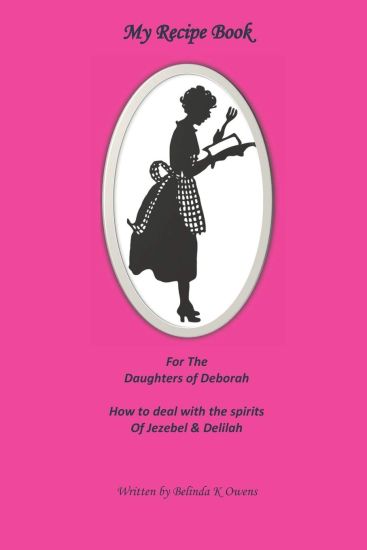
My Recipe Book for the Daughters of Deborah: How to Deal with the Spirits of Jezebel & Delilah
"My Recipe Book for the Daughters of Deborah" is a book for those who function in Kingdom principals. When we function in the Kingdom as a daughter of Deborah we take our rightful position along the side of men in the Kingdom. Spirits such as Jezebel & Delilah will be brought down and removed when we step forward in the power of Jesus name. This book came about after being in a traditional church where the pastor asked me if I write "Recipe books". When I told him I write "Godbooks" that teach even children to function in the Kingdom. This book was written because of that encounter.
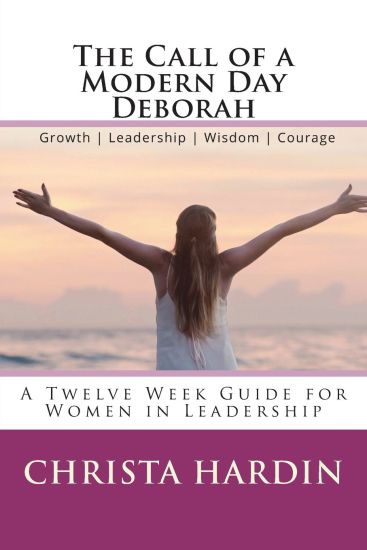
The Call of a Modern Day Deborah: A 12 Week Guide for Women in Leadership

The Call of a Modern Day Deborah: A 12 Week Guide for Women in Leadership

Christa M. Hardin

Createspace Independent Publishing Platform
2018
nidottu
Modern female leaders are feeling desperate. It's hard to create a healthy balance of family and leadership roles in their lives. It's hard to face the almost insurmountable task of doing everything needed for their families to thrive while trying to be part of a meaningful ministry or job, especially without a roadmap. Deborah, one of the most notable and inspiring judges of Israel, is a beautiful model of leadership for women to glean from in all seasons. Deborah balances everything today's modern woman deals with and more as a rare female leader in ancient Israel. Join author and coach Christa Hardin, MA, on an unforgettable twelve-module journey toward living out your own godly calling as a woman of God with Deborah, a wonderful wife, a fair leader, a talented artist and singer, and a fierce warrior and judge as your inspirational Biblical role model. Complete with homework and life-changing and practical steps.
The POWER of MENTAL WEALTH Featuring Deborah McAlexander: Success Begins From Within
The Power of Mental Wealth is a cutting-edge book to help you thrive in times of chaos and change. More than twenty immensely talented contributors share their definitions of this term and their mental gifts with you in The Power of Mental Wealth. Their chapters include stories of perseverance, overcoming adversities, building self-confidence, increasing their joy, and training themselves to see the brilliance and success of their futures. In every single case, they worked hard to perfect themselves and improve their minds. They worked on this intensely, investing a good chunk of their time, for years. They all succeeded, and so can you.