Kirjojen hintavertailu. Mukana 12 016 292 kirjaa ja 12 kauppaa.

Kirjahaku

Etsi kirjoja tekijän nimen, kirjan nimen tai ISBN:n perusteella.

1000 tulosta hakusanalla Herbert Strang

Herbert Aptheker: Studies in Willful Blindness

Herbert Aptheker: Studies in Willful Blindness

Anthony Flood

Independently Published
2019
nidottu
Herbert Aptheker (1915-2003), a pioneering researcher in African-American slave revolts, was also an American Communist theoretician. Anthony Flood, who attended Aptheker's lectures a half-century ago, became his research assistant, friend and comrade. Decades after Flood repudiated the comradeship, it dawned on him that Aptheker's politics had blocked his research in his area of specialization: he failed to recognize The Black Jacobins, the work of C. L. R. James (1901-1989) that chronicled the only successful slave revolt in modern times. The failure was ideological. In the course of investigating this silence, Flood discovered scholars who admired both writers, but never at the same time. Doing so would have forced them to address the uncomfortable truth that one of their heroes ignored the other. That is, the white radical scholar ignored the black radical scholar who was 14 years his senior. The only explanation, Flood contends, is that Aptheker, the Stalinist, could not bring himself to acknowledge the work of James, the Trotskyist. There are other problems with Aptheker's legacy, of course, such as his uncovering the truth about slavery in the Americas while covering it up in the Soviet Union and its satellites. The "dissing" of James, however, undermines his "anti-racism" reputation as well as his argument that "partisanship with the oppressed" makes objectivity in history writing possible. He was a partisan of too many oppressors. He eventually admitted his own "willful blindness" (his words), yet that didn't stop him from defending, as late as 2000, The Truth about Hungary, his book-length apologia for the Soviet Union's crushing of the 1956 Hungarian revolution.Herbert Aptheker: Studies in Willful Blindness includes not only Flood's essay on Aptheker and James, but also vignettes of his coming into Aptheker's life as a high school student and that of Sidney Hook (Aptheker's nemesis and Flood's philosophy professor). Also included are a review of the first biography of Aptheker and an inquiry into Aptheker's status as an historian. Appendices include Aptheker's first essay (in The American Hebrew) and Flood's first letter on Aptheker (in The Journal of American History).Herbert Aptheker expressed the ethos of the American Communist Party in its heyday, an atmosphere that pervades "progressive" American politics today. If you want to look at his role in that "progression," this monograph is a good place to start.
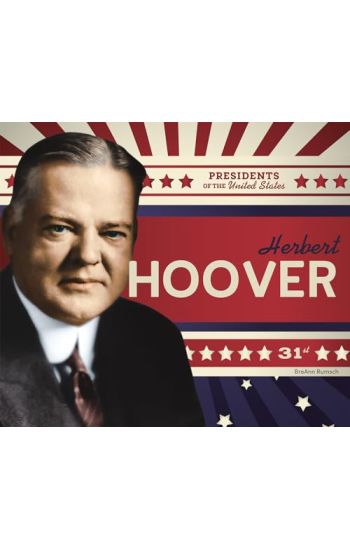
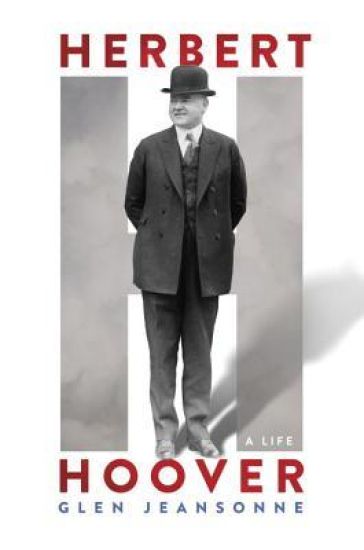
Herbert Hoover: A Life

Herbert Hoover: A Life

Glen Jeansonne

BERKLEY BOOKS
2016
sidottu
"At last, a biography of Herbert Hoover that captures the man in full... Jeansonne] has splendidly illuminated the arc of one of the most extraordinary lives of the twentieth century."--David M. Kennedy, Pulitzer Prize-winning Author of Freedom from Fear Prizewinning historian Glen Jeansonne delves into the life of our most misunderstood president, offering up a surprising new portrait of Herbert Hoover--dismissing previous assumptions and revealing a political Progressive in the mold of Theodore Roosevelt, and the most resourceful American since Benjamin Franklin. Orphaned at an early age and raised with strict Quaker values, Hoover earned his way through Stanford University. His hardworking ethic drove him to a successful career as an engineer and multinational businessman. After the Great War, he led a humanitarian effort that fed millions of Europeans left destitute, arguably saving more lives than any man in history. As commerce secretary under President Coolidge, Hoover helped modernize and galvanize American industry, and orchestrated the rehabilitation of the Mississippi Valley after the Great Flood of 1927. As president, Herbert Hoover became the first chief executive to harness federal power to combat a crippling global recession. Though Hoover is often remembered as a "do-nothing" president, Jeansonne convincingly portrays a steadfast leader who challenged congress on an array of legislation that laid the groundwork for the New Deal. In addition, Hoover reformed America's prisons, improved worker safety, and fought for better health and welfare for children. Unfairly attacked by Franklin D. Roosevelt and blamed for the Depression, Hoover was swept out of office in a landslide. Yet as FDR's government grew into a bureaucratic behemoth, Hoover became the moral voice of the GOP and a champion of Republican principles--a legacy re-ignited by Ronald Reagan and which still endures today. A compelling and rich examination of his character, accomplishments and failings, this is the magnificent biography of Herbert Hoover we have long waited for. INCLUDES PHOTOS
Herbert Puchta's 101 Tips for Teaching Teenagers Pocket Editions
Practical and easy-to-use tips to help you address the challenges of the teenage classroom. This compact, user-friendly book draws on Herbert Puchta's rich knowledge and experience to help you address the challenges of the teenage classroom. It references recent research and developments in understanding teenagers and offers practical tips for creating positive classroom dynamics and guiding teenagers towards becoming mature and responsible adults.
Herbert Eimert and the Darmstadt School

Herbert Eimert and the Darmstadt School

Max Erwin

Cambridge University Press
2020
pokkari
After 1951, the discourse surrounding both the Darmstadt courses in particular and European New Music more broadly shifted away from a dodecaphonic vocabulary in favour of concepts such as 'punctual music', 'post-Webern music', and 'static music', all collected under the newly-christened unity of the Darmstadt School. This study proposes a genealogy of the Darmstadt School through the institutional influence and writings of Herbert Eimert. It demonstrates that Eimert's understanding of music history - whereby technical procedures are universalised as the acme of historical progress - was adopted as the institutional discourse of New Music in Europe, and remains central to both textbook and critical scholarly accounts which attempt to make sense of the avant-garde after World War II.
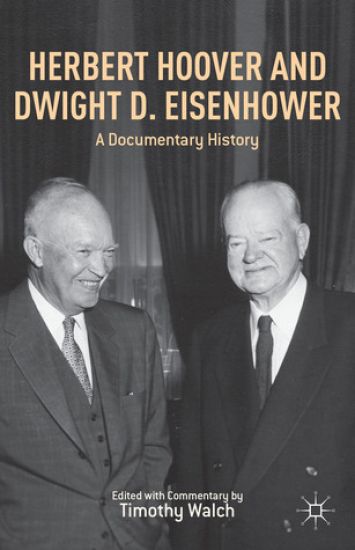
Herbert Hoover and Dwight D. Eisenhower

Herbert Hoover and Dwight D. Eisenhower

T. Walch

Palgrave Macmillan
2013
sidottu
Bringing together core selections from and analysis of material documenting the uneasy collaboration between Herbert and Eisenhower, this collection incisively uses primary sources to illuminate the 1952 Republican nomination fight, the second Hoover Commission, and other key episodes during the Eisenhower presidency.
Herbert Spencer

Herbert Spencer

Robert G. Perrin

Routledge
2017
nidottu
First published in 1993. Including a primary and secondary bibliography which consists of indexes, book catalogues, articles, reviews and Ph.D dissertations. With annotated notes form the author to convey the items’ main idea, argument, purpose or general substance and cross-references where relevant.
Herbert Spencer's Sociology

Herbert Spencer's Sociology

Jay Rumney

Routledge
2017
sidottu
The republication of this book is eminently fitting at this time. Jay Rumney's Herbert Spencer's Sociology first appeared in 1937. In that year Talcott Parsons, citing Crane Brinton, declared: "Spencer is dead. But who killed him and how?" It was the thesis of Parsons' famous The Structure of Social Action that the evolution of scientific theory had put an end to Spencer. For more than a generation the man whose name had been synonymous with sociology was, or so it seemed, repressed and forgotten.
Herbert Read and Selected Works (Routledge Revivals)
Herbert Read and Selected Works includes four of Herbert Read’s most seminal works; A Coat of Many Colours: Occasional Essays, The English Vision: An Anthology, The Tenth Muse: Essays in Criticism and The Politics of the Unpolitical. This collection also includes the title Herbert Read: A Memorial Symposium - a collection of essays that illustrates the many different aspects and achievements of Read’s career.
Herbert Read

Herbert Read

Routledge
2015
sidottu
As a poet and critic of art and literature, and as a social and political philosopher, Sir Herbert Read exerted an important influence on the culture of his time. Not only did he assist and inspire many writers and artists, but through his work for the idea of ‘education through art’, he greatly influenced education, in particular the teaching of art and literature in schools. For this symposium, first issued in 1969 as the ninth number of The Malahat Review, Professor Skelton has gathered together original essays, poems and drawings which illustrate many aspects of Sir Herbert Read’s life and work.
Herbert Read

Herbert Read

Routledge
2016
nidottu
As a poet and critic of art and literature, and as a social and political philosopher, Sir Herbert Read exerted an important influence on the culture of his time. Not only did he assist and inspire many writers and artists, but through his work for the idea of ‘education through art’, he greatly influenced education, in particular the teaching of art and literature in schools. For this symposium, first issued in 1969 as the ninth number of The Malahat Review, Professor Skelton has gathered together original essays, poems and drawings which illustrate many aspects of Sir Herbert Read’s life and work.