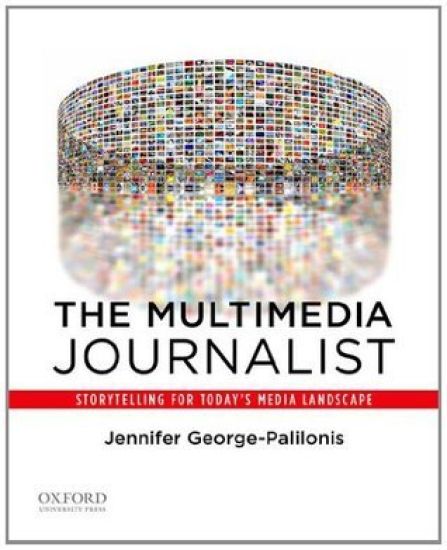
Outlining the issues and techniques that are fundamental to journalism in today's multimedia world, The Multimedia Journalist: Storytelling for Today's Media Landscape teaches students how to become visual storytellers--a necessity in new media. Author Jennifer George-Palilonis expertly balances theoretical concepts and practical skills for becoming a journalist in our shifting multimedia landscape. With an interactive companion website and "Professional Perspective" boxes that include points of view from professionals in the field, The Multimedia Journalist is a versatile text for students pursuing storytelling in the multimedia age.
Worshipped by her fans, denounced by her enemies, and forever shadowed by controversy and scandal, the novelist and philosopher Ayn Rand was a powerful thinker whose views on government and markets shaped the conservative movement from its earliest days. Drawing on unprecedented access to Rand's private papers and the original, unedited versions of Rand's journals, Jennifer Burns offers a groundbreaking reassessment of this key cultural figure, examining her life, her ideas, and her impact on conservative political thought. Goddess of the Market follows Rand from her childhood in Russia through her meteoric rise from struggling Hollywood screenwriter to bestselling novelist, including the writing of her wildly successful The Fountainhead and Atlas Shrugged. Burns highlights the two facets of Rand's work that make her a perennial draw for those on the right: her promotion of capitalism, and her defense of limited government. Both sprang from her early, bitter experience of life under Communism, and became among the most deeply enduring of her messages, attracting a diverse audience of college students and intellectuals, business people and Republican Party activists, libertarians and conservatives. The book also traces the development of Rand's Objectivist philosophy and her relationship with Nathaniel Branden, her closest intellectual partner, with whom she had an explosive falling out in 1968. One of the Denver Post's Great Reads of 2009 One of Bloomberg News's Top Nonfiction Books of 2009 "Excellent." --Time magazine "A terrific book--a serious consideration of Rand's ideas, and her role in the conservative movement of the past three quarters of a century." --The American Thinker "A wonderful book: beautifully written, completely balanced, extensively researched. The match between author and subject is so perfect that one might believe that the author was chosen by the gods to write this book. She has sympathy and affection for her subject but treats her as a human being, with no attempt to cover up the foibles." --Mises Economics Blog
In Humanitarian Law in Action within Africa, Jennifer Moore studies the role and application of humanitarian law by focusing on African countries that are emerging from civil wars. Moore offers an overview of international law, including its essential vocabulary, and describes four particular subfields of international law: international humanitarian law, international human rights law, international criminal law, and international refugee law. After setting forth this overview, Moore considers practical mechanisms to implement international humanitarian law, focusing specifically on the experiences of Uganda, Sierra Leone, and Burundi. Through the case studies of these countries, Moore describes transitional justice's fundamental components: criminal, social, and historical. Although the African continent has gone through some of the world's greatest humanitarian emergencies, issues such as violence against women, child soldiers, and genocide are not unique to Africa, and as such, the study of humanitarian law by examining Africa's experience is important to conflict resolution and reconstruction throughout the world.
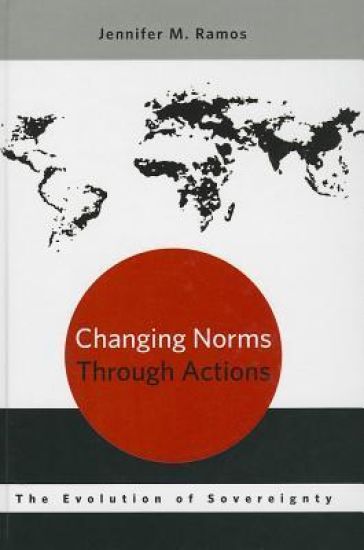
How do international norms evolve? This book examines the manner in which sovereignty, a bedrock norm of international relations since the seventeenth century, has evolved in response to changing conceptions of the responsibilities of government. Whereas most previous studies of international norms have examined how norms influence policy decisions, this book asks, instead, how state policies actively shape international norms. Changing Norms through Actions contends that the concept of sovereignty is moving towards one in which states that are unable or unwilling to fulfill their domestic and international obligations are forced to relinquish certain sovereign responsibilities to the international community. As issues such as genocide, weapons of mass destruction, and terrorism have forced states to reassess their understandings of sovereignty, Ramos is interested in how understandings of norms - particularly long-held norms such as absolute sovereignty - change. If action taken by states reinforces an existing norm or alters current understandings of the norm, states must consider how their actions may change the "rules of the game" for the future. Even when a major power acts primarily out of its own self-interest, without any concern to international norms, the action may have the unintended consequence of modifying the normative environment within which other minor powers act. Shifting understandings of sovereignty (and how states relate to one another) can also have profound implications for the workings of the international system. Ramos looks specifically at what happens to sovereignty when states choose to bypass traditional norms of non-intervention on behalf of other competing norms, such as those regarding counterterrorism, human rights, or weapons of mass destruction.
How do international norms evolve? This book examines the manner in which sovereignty, a bedrock norm of international relations since the seventeenth century, has evolved in response to changing conceptions of the responsibilities of government. Whereas most previous studies of international norms have examined how norms influence policy decisions, this book asks, instead, how state policies actively shape international norms. Changing Norms through Actions contends that the concept of sovereignty is moving towards one in which states that are unable or unwilling to fulfill their domestic and international obligations are forced to relinquish certain sovereign responsibilities to the international community. As issues such as genocide, weapons of mass destruction, and terrorism have forced states to reassess their understandings of sovereignty, Ramos is interested in how understandings of norms - particularly long-held norms such as absolute sovereignty - change. If action taken by states reinforces an existing norm or alters current understandings of the norm, states must consider how their actions may change the "rules of the game" for the future. Even when a major power acts primarily out of its own self-interest, without any concern to international norms, the action may have the unintended consequence of modifying the normative environment within which other minor powers act. Shifting understandings of sovereignty (and how states relate to one another) can also have profound implications for the workings of the international system. Ramos looks specifically at what happens to sovereignty when states choose to bypass traditional norms of non-intervention on behalf of other competing norms, such as those regarding counterterrorism, human rights, or weapons of mass destruction.
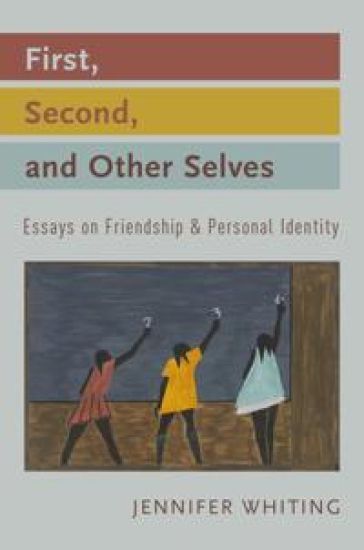
In her essay collection First, Second, and Other Selves: Essays on Friendship and Personal Identity, well-known scholar of ancient philosophy Jennifer Whiting gathers her previously published essays taking Aristotle's theories on friendship as a springboard to engage with contemporary philosophical work on personal identity and moral psychology. Whiting examines three themes throughout the collection, the first being psychic contingency, or the belief that the psychological structures characteristic of human beings may in fact vary, not just from one cultural (or socio-historical) context to another, but also from one individual to another. The second theme is the belief that friendship informs an understanding of the nature of the self, an idea that springs from Whiting's uncommon reading of Aristotle's writings on friendship. Specifically, Whiting explains a scenario in which a "virtuous agent" adopts a kind of impersonal attitude both towards herself and towards her "character" friends, loving both because they are virtuous; this scenario ties in with an examination of the Aristotelian concept of the ideal friend as an "other self," or a friendship that evolves from character rather than ego, as well as Whiting's meditation on whether or not a virtuous individual should have a "special" sort of concern for her own future self, distinct in kind from the concern that she has for others. The third theme is that of rational egoism, a concept that Whiting critiques, especially in the context of Aristotle's eudaimonism. The central tenet of the collection is the message that taking "ethocentric" (or character-based) attitudes both towards ourselves and towards our friends sheds light on the nature of personal identity and helps to combat ethnocentric and other objectionable forms of bias, a message that is becoming increasingly urgent in light of the recent deaths of Trayvon Martin and Michael Brown.
Living Together: Essays on Aristotle's Ethics is one of three volumes collecting previously published essays by Jennifer Whiting. This volume explores Aristotle's conception of eudaimonia, especially the roles played in it by the theoretical and practical activities central to human lives and by the quality of our relationships with one another. Whiting explores Aristotle's struggle to reconcile the desirability of living in accordance with justice and other distinctively human virtues with the ideal of pursuing the “divine” life of contemplation. She focuses on Aristotle's attempts to reconcile his conception of eudaimonia as the ultimate end of human action with the parallel requirements that virtuous agents choose to engage in virtuous action “for itself” and that friends love their friends “for themselves”. Drawing on her original reading of Aristotle's conception of the ideal friend as an “other self”, Whiting challenges common readings of Aristotle's eudaimonism as a form of rational egoism. She stresses appreciation of the friend's character “for itself”, and apart from any relationships in which it happens to stand to the agent's own needs and/or tastes, but calls attention to the important and often neglected role that Aristotle assigns to pleasure in this relationship. The ideal friend recognizes the value her friend's activity has for her friend and so takes pleasure in the friend's activity as such. This explains why the maximally self-sufficient (and so most godlike) agent, who needs nothing from a friend, will nevertheless choose to have at least one or two: she enjoys their company.
The life-and-death struggle between Athens and Sparta that embroiled all of the Greek world for an entire generation was a war that almost did not happen. Both sides entered it with hesitation, and the fortunes of war swung back and forth so wildly that at many junctures either side could have won. The plague that visited Athens in the war's early years was entirely unforeseen, as was the death in 429 of their leading statesman Pericles, who was expected to guide Athens through the war until the Spartans acquiesced. The war could have concluded many times before the conventional ending of open hostilities in 404 BCE, even as early as 425 when a team of crack Spartan troops, marooned on an island off the coast of the Peloponnesus, laid down their arms and surrendered, something that had never happened before. Sparta sought peace to regain its men, but the Athenians thought they could get better terms and kept fighting. After 27 years of butchery on land and at sea previously unparalleled in Greece, nothing had really been gained by either side, not even by the Spartan "victors," who seemed to be as capable of winning a war as of losing a peace. War without Victory provides a superlative narrative of this famous conflict, authoritatively examining its origins and its impact on the culture and social structure of the participants. Jennifer Roberts' history will be distinguished for placing the war in a wider historical context, continuing the story down to the outbreak of the so-called Corinthian War in 395, when gold from the Persian king made it possible for Sparta's former allies to join Athens in making war on them. It will therefore include one of the most infamous episodes in Greek history, which was partly a direct consequence of the war: the trial and execution of Socrates. Finally, it will treat the events leading up to the stunning defeat of Sparta by its former ally Thebes at the battle of Leuctra in 371, a defeat which effectively ended Sparta's martial dominance forever. Including a discussion of Greece's rich cultural life of the period, this book promises to be just as masterful an account as Donald Kagan's condensed one-volume history.
This work is a wide-ranging and sensitive examination of the lived experience of intimate stalking victimization. It explores how it feels and what it means to be stalked by a former intimate and how this situation creates dilemmas for victims and their advocates. What is it like to try to become a "victim" in the eyes of the law and then to remain one, when almost anything a woman does to manage the violent emotions of an ex-husband or ex-boyfriend can backfire and discredit her claims? The author draws upon a broad array of rich data, including a survey of college women, courtroom testimony, prosecutors' case files, interviews with victims and observations in a prosecutor's office and a stalking survivor's support group to illustrate the difficulties women face as they work to cope with danger - and to negotiate the hazardous terrain of legal systems - simultaneously. For some victims, Dunn shows, prosecution processes are more traumatic than the events that brought them to seek legal help and her analysis of the historical, cultural and gendered frameworks in which stalking victimization and prosecution takes place accounts for the additional trauma. Definitions of situations and identities are contested rather than given in these arenas where lives and self-concepts rest in the balance. The ways in which we socially construct and confer meaning upon intimate violence and its victims profoundly shape what happens to ordinary women facing extraordinary circumstances. "Courting Disaster" illuminates what we can learn from their experience, whether we are working in these arenas or theorizing about how they do, and sometimes do not, work.
This book is about women who are coerced, intimidated, and stalked by former intimates. It is about the things these women do to manage this situation, and what happens to them as a consequence. Stalking is a behavior that has relatively recently been defined as problematic, and as criminal when violence or the threat of violence occurs. This new category of crime has created a new type of victim. How such victims come into being, interact with their former partners, and seek help, is the subject of this book. It is also about living through what some women consider a form of secondary victimization by the criminal justice system.The definition of someone as a victim is not self-evident, but is contingent upon interpretation. Thus this book is also an account of how women come to decide they are victims of stalking and seek to convince others of this. It uses a variety of data and methods to examine this phenomenon from the perspectives of both victims and law enforcement agents, and adds to our understanding of responsibility and blame when violence occurs between intimates. By examining social constructions of this particular type of victimization and the choices stalking victims make, the readers learn more about the forces constraining human decisions. Stalking victimization is complicated because it is an ongoing process. It often does not stop once the criminal justice system is involved. Women who are being stalked by their former partners face a profound dilemma in their efforts to manage their pursuers and to pursue their cases through the criminal justice system. Dunn offers a wide-ranging, thought-provoking, and sensitive examination of the lived experience of intimate stalking victimization. In exploring the ways in which we socially construct and confer meaning upon intimate violence, the author draws upon interviews with stalkers and victims, courtroom testimony, analyses of case reports, and an independent survey instrument that reveals ambivalence of the prevailing culture to the problem. Courting Disaster will be valuable in women's studies and counseling courses and a useful text in sociology and criminology.
Explicit Instruction: Strategies for Meaningful Direct Teaching provides pre-service and in-service teachers with much needed answers to questions such as, “What do we do for students who need more? How do I actually stand up and teach a lesson? What happens to students who aren’t "getting it?” Explicit Instruction is a challenge to the view of explicit instruction as an outdated, mechanistic instructional strategy and presents it as timely, proven, and accessible. The explicit instruction framework is flexible and holds wide applicability for teachers across grade levels (elementary, middle, and secondary), settings (whole group, small group, general education, special education), and content areas. It provides a contemporary middle ground for teachers who may avoid traditional direct instruction approaches, but who acknowledge that many students — particularly in today’s inclusive classrooms — need instruction that is explicit, meaningful, and effective. Although the theoretical underpinnings of explicit instruction are presented, the primary focus is on the “how” of becoming an effective instructor. Readers will be able to gain expertise a by mastering small chunks of the explicit instruction framework at a time – mirroring the process of teaching young students how to master new skills and strategies. HIGHLIGHTS OF THIS FIRST EDITION: Graphic organizers for each element of the explicit instruction model provide readers easy to reference, at-a-glance information for lesson planning and implementation (Chapters 5, 6, 7) Examples of scripted explicit instruction lessons in each of the major content areas help readers visualize precisely what explicit instruction looks like in practice for different content areas and grade levels. (Chapter 8 & 9) Review questions and practice activities for each element of the explicit instruction model help readers gain competence at each discrete element of the explicit instruction model. (Chapters 5, 6, 7 )
If you were looking for a philosopher likely to appeal to Americans, Friedrich Nietzsche would be far from your first choice. After all, in his blazing career, Nietzsche took aim at nearly all the foundations of modern American life: Christian morality, the Enlightenment faith in reason, and the idea of human equality. Despite that, for more than a century Nietzsche has been a hugely popular - and influential - figure in American thought and culture. In "American Nietzsche", Jennifer Ratner-Rosenhagen delves deeply into Nietzsche's philosophy, and America's reception of it, to tell the story of his curious appeal. Beginning her account with Ralph Waldo Emerson, whom the seventeen-year-old Nietzsche read fervently, she shows how Nietzsche's ideas first burst on American shores at the turn of the twentieth century, and how they continued alternately to invigorate and to shock Americans for the century to come. She also delineates the broader intellectual and cultural contexts within which a wide array of commentators - academic and armchair philosophers, theologians and atheists, romantic poets and hard-nosed empiricists, and political ideologues and apostates from the Left and the Right - drew insight and inspiration from Nietzsche's claims for the death of God, his challenge to universal truth, and his insistence on the interpretive nature of all human thought and beliefs. At the same time, she explores how his image as an iconoclastic immoralist was put to work in American popular culture, making Nietzsche an unlikely posthumous celebrity capable of inspiring teenagers and scholars alike. A penetrating examination of a powerful but little-explored undercurrent of twentieth-century American thought and culture, "American Nietzsche" dramatically recasts our understanding of American intellectual life - and puts Nietzsche squarely at its heart.
Because it laid the foundation for nearly all subsequent epistemologies, Immanuel Kant's "Critique of Pure Reason" has overshadowed his other interests in natural history and the life sciences, which scholars have long considered as separate from his rigorous theoretical philosophy - until now. In "Kant's Organicism", Jennifer Mensch draws a crucial link between these spheres by showing how the concept of epigenesis - a radical theory of biological formation - lies at the heart of Kant's conception of reason. As Mensch argues, epigenesis was not simply a metaphor for Kant but centrally guided his critical philosophy, especially the relationship between reason and the categories of the understanding. Offsetting a study of Kant's highly technical theory of cognition with a mixture of intellectual history and biography, she situates the epigenesis of reason within broader investigations into theories of generation, genealogy, and classification, and against later writers and thinkers such as Goethe and Darwin. Distilling vast amounts of research on the scientific literature of the time into a concise and readable book, Mensch offers one of the most refreshing looks not only at Kant's famous first Critique but at the history of philosophy and the life sciences as well.
"All of humanity's problems stem from man's inability to sit quietly in a room alone," Blaise Pascal wrote in 1654. But then there's Walt Whitman, in 1856: "Whoever you are, come forth! Or man or woman come forth! / You must not stay sleeping and dallying there in the house." It is truly an ancient debate: Is it better to be active or contemplative? To do or to think? To make an impact, or to understand the world more deeply? Aristotle argued for contemplation as the highest state of human flourishing. But it was through action that his student Alexander the Great conquered the known world. Which should we aim at? Centuries later, this argument underlies a surprising number of the questions we face in contemporary life. Should students study the humanities, or train for a job? Should adults work for money or for meaning? And in tumultuous times, should any of us sit on the sidelines, pondering great books, or throw ourselves into protests and petition drives? With Action vs. Contemplation, Jennifer Summit and Blakey Vermeule address the question in a refreshingly unexpected way: by refusing to take sides. Rather, they argue for a rethinking of the very opposition. The active and the contemplative can--and should--be vibrantly alive in each of us, fused rather than sundered. Writing in a personable, accessible style, Summit and Vermeule guide readers through the long history of this debate from Plato to Pixar, drawing compelling connections to the questions and problems of today. Rather than playing one against the other, they argue, we can discover how the two can nourish, invigorate, and give meaning to each other, as they have for the many writers, artists, and thinkers, past and present, whose examples give the book its rich, lively texture of interplay and reference. Â This is not a self-help book. It won't give you instructions on how to live your life. Instead, it will do something better: it will remind you of the richness of a life that embraces action and contemplation, company and solitude, living in the moment and planning for the future. Which is better? Readers of this book will discover the answer: both.
How states cooperate in the absence of a sovereign power is a perennial question in international relations. With Power in Concert, Jennifer Mitzen argues that global governance is more than just the cooperation of states under anarchy: it is the formation and maintenance of collective intentions, or joint commitments among states to address problems together. The key mechanism through which these intentions are sustained is face-to-face diplomacy, which keeps states' obligations to one another salient and helps them solve problems on a day-to-day basis. Mitzen argues that the origins of this practice lie in the Concert of Europe, an informal agreement among five European states in the wake of the Napoleonic wars to reduce the possibility of recurrence. The Concert first institutionalized the practice of jointly managing the balance of power, through its many successes, and Mitzen shows that the words and actions of state leaders in public forums contributed to collective self-restraint and a shared commitment to problem solving-and at a time when communication was considerably more difficult than it is today. Despite the Concert's eventual breakdown, the practice it introduced-of face-to-face diplomacy as a mode of joint problem solving-survived and is the basis of global governance today.
How states cooperate in the absence of a sovereign power is a perennial question in international relations. With Power in Concert, Jennifer Mitzen argues that global governance is more than just the cooperation of states under anarchy: it is the formation and maintenance of collective intentions, or joint commitments among states to address problems together. The key mechanism through which these intentions are sustained is face-to-face diplomacy, which keeps states' obligations to one another salient and helps them solve problems on a day-to-day basis. Mitzen argues that the origins of this practice lie in the Concert of Europe, an informal agreement among five European states in the wake of the Napoleonic wars to reduce the possibility of recurrence. The Concert first institutionalized the practice of jointly managing the balance of power, through its many successes, and Mitzen shows that the words and actions of state leaders in public forums contributed to collective self-restraint and a shared commitment to problem solving-and at a time when communication was considerably more difficult than it is today. Despite the Concert's eventual breakdown, the practice it introduced-of face-to-face diplomacy as a mode of joint problem solving-survived and is the basis of global governance today.
"Counter-Amores I.2". "Proof". Than brandished fire yet will I prove more strong - I burn unshaken, burn and die day-long. The hooked fish, torn, must learn to slip the bait Teasing the hook let go before too late. Not with you, but against you, love, I bruise My mouth, manage myself such pain I choose. I will this torment as I can't will love From you or me - what can a body prove? Though neither yours nor love's, still I'm a slave. Unite me from myself - I'm yours to have. Jennifer Clarvoe's second book, "Counter-Amores", wrestles with and against love. The poems in the title series talk back to Ovid's "Amores", and, in talking back, take charge, take delight, and take revenge. They suggest that we discover what we love by fighting, by bringing our angry, hungry, imperfect selves into the battle. Like a man who shouts for the echo back from a cliff, or the scientist who teaches her parrot to say, "I love you," or the philosopher who wonders what it is like to be a bat, or Temple Grandin's lucid imaginings of the last moments of cattle destined for slaughter, the speakers in these poems seek to find themselves in relation to an ever-widening circle of unknowable others. Yearning for "the sweet cool hum of fridge and fluorescent that sang 'home,'" we're as likely to find "fifty-seven clicks and flickering channels pitched to the galaxy." Song itself becomes a site for gorgeous struggle, just as bella means both "beautiful" and "wars."
"Sex and Salvation" chronicles the coming of age of a generation of women in Tamatave in the years that followed Madagascar's economic liberalization. Eager to forge a viable future amid poverty and rising consumerism, many young women entered the sexual economy in hope of finding a European husband. Just as many Westerners believe that young people break with the past as they enter adulthood, Malagasy citizens fear that these women have severed the connection to their history and culture. Jennifer Cole's elegant analysis shows how this notion of generational change is both wrong and consequential. It obscures the ways young people draw on long-standing ideas of gender and sexuality, it ignores how urbanites relate to their rural counterparts, and it neglects the relationship between these husband-seeking women and their elders who join Pentecostal churches. And yet, as talk about the women circulates through the city's neighborhoods, bars, Internet cafes, and churches, it teaches others new ways of being. Cole's sophisticated depiction of how a generation's coming of age contributes to social change eschews a narrow focus on crisis. Instead, she reveals how fantasies of rupture and conceptions of the changing life course shape the everyday ways that people create the future.
"Sex and Salvation" chronicles the coming of age of a generation of women in Tamatave in the years that followed Madagascar's economic liberalization. Eager to forge a viable future amid poverty and rising consumerism, many young women entered the sexual economy in hope of finding a European husband. Just as many Westerners believe that young people break with the past as they enter adulthood, Malagasy citizens fear that these women have severed the connection to their history and culture. Jennifer Cole's elegant analysis shows how this notion of generational change is both wrong and consequential. It obscures the ways young people draw on long-standing ideas of gender and sexuality, it ignores how urbanites relate to their rural counterparts, and it neglects the relationship between these husband-seeking women and their elders who join Pentecostal churches. And yet, as talk about the women circulates through the city's neighborhoods, bars, Internet cafes, and churches, it teaches others new ways of being. Cole's sophisticated depiction of how a generation's coming of age contributes to social change eschews a narrow focus on crisis. Instead, she reveals how fantasies of rupture and conceptions of the changing life course shape the everyday ways that people create the future.
Each week during the growing season, farmers' markets offer up such delicious treasures as brandywine tomatoes, cosmic purple carrots, and pink pearl apples - varieties that are prized by home chefs and carefully stewarded by farmers from year to year. These are the heirlooms and the antiques of the food world, endowed with their own rich histories. But how does an apple become an antique and a tomato an heirloom? In Edible Memory, Jennifer A. Jordan examines the ways that people around the world have sought to identify and preserve old - fashioned varieties of produce and the powerful emotional and physical connections they provide to a shared past. Jordan begins with the heirloom tomato, inquiring into its botanical origins in South America and its culinary beginnings in Aztec cooking to show how the homely and homegrown tomato has since grown to be an object of wealth and taste, as well as a popular symbol of the farm-to-table and heritage foods movements. In the chapters that follow, Jordan combines lush description and thorough research as she investigates the long history of antique apples; changing tastes in turnips and related foods like kale and parsnips; the movement of vegetables and fruits around the globe in the wake of Columbus; and the poignant, perishable world of stone fruits and tropical fruit, in order to reveal the connections - the edible memories - these heirlooms offer for farmers, gardeners, chefs, diners, and home cooks. This deep culinary connection to the past influences not only the foods we grow and consume, but the ways we shape and imagine our farms, gardens, and local landscapes. From the farmers' market to the seedbank to the neighborhood bistro, these foods offer essential keys not only to our past but also to the future of agriculture, the environment, and taste. By cultivating these edible memories, Jordan reveals, we can stay connected to a delicious heritage of historic flavors and to the pleasures and possibilities for generations of feasts to come.