Kirjojen hintavertailu. Mukana 11 608 123 kirjaa ja 12 kauppaa.

Kirjahaku

Etsi kirjoja tekijän nimen, kirjan nimen tai ISBN:n perusteella.

1000 tulosta hakusanalla Jennifer Pyron; Mac Freeman

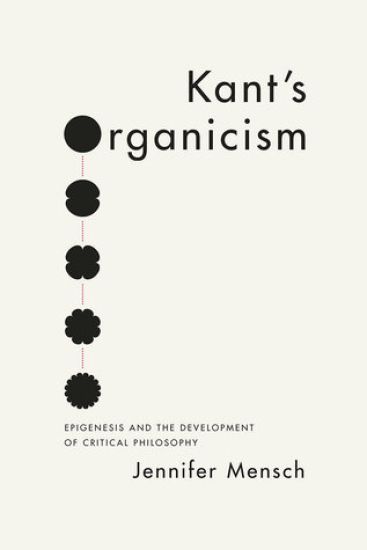
Kant's Organicism

Kant's Organicism

Jennifer Mensch

University of Chicago Press
2013
sidottu
Because it laid the foundation for nearly all subsequent epistemologies, Immanuel Kant's "Critique of Pure Reason" has overshadowed his other interests in natural history and the life sciences, which scholars have long considered as separate from his rigorous theoretical philosophy - until now. In "Kant's Organicism", Jennifer Mensch draws a crucial link between these spheres by showing how the concept of epigenesis - a radical theory of biological formation - lies at the heart of Kant's conception of reason. As Mensch argues, epigenesis was not simply a metaphor for Kant but centrally guided his critical philosophy, especially the relationship between reason and the categories of the understanding. Offsetting a study of Kant's highly technical theory of cognition with a mixture of intellectual history and biography, she situates the epigenesis of reason within broader investigations into theories of generation, genealogy, and classification, and against later writers and thinkers such as Goethe and Darwin. Distilling vast amounts of research on the scientific literature of the time into a concise and readable book, Mensch offers one of the most refreshing looks not only at Kant's famous first Critique but at the history of philosophy and the life sciences as well.

Action Versus Contemplation

Action Versus Contemplation

Jennifer Summit; Blakey Vermeule

University of Chicago Press
2018
sidottu
"All of humanity's problems stem from man's inability to sit quietly in a room alone," Blaise Pascal wrote in 1654. But then there's Walt Whitman, in 1856: "Whoever you are, come forth! Or man or woman come forth! / You must not stay sleeping and dallying there in the house." It is truly an ancient debate: Is it better to be active or contemplative? To do or to think? To make an impact, or to understand the world more deeply? Aristotle argued for contemplation as the highest state of human flourishing. But it was through action that his student Alexander the Great conquered the known world. Which should we aim at? Centuries later, this argument underlies a surprising number of the questions we face in contemporary life. Should students study the humanities, or train for a job? Should adults work for money or for meaning? And in tumultuous times, should any of us sit on the sidelines, pondering great books, or throw ourselves into protests and petition drives? With Action vs. Contemplation, Jennifer Summit and Blakey Vermeule address the question in a refreshingly unexpected way: by refusing to take sides. Rather, they argue for a rethinking of the very opposition. The active and the contemplative can--and should--be vibrantly alive in each of us, fused rather than sundered. Writing in a personable, accessible style, Summit and Vermeule guide readers through the long history of this debate from Plato to Pixar, drawing compelling connections to the questions and problems of today. Rather than playing one against the other, they argue, we can discover how the two can nourish, invigorate, and give meaning to each other, as they have for the many writers, artists, and thinkers, past and present, whose examples give the book its rich, lively texture of interplay and reference. Â This is not a self-help book. It won't give you instructions on how to live your life. Instead, it will do something better: it will remind you of the richness of a life that embraces action and contemplation, company and solitude, living in the moment and planning for the future. Which is better? Readers of this book will discover the answer: both.
Power in Concert

Power in Concert

Jennifer Mitzen

University of Chicago Press
2013
sidottu
How states cooperate in the absence of a sovereign power is a perennial question in international relations. With Power in Concert, Jennifer Mitzen argues that global governance is more than just the cooperation of states under anarchy: it is the formation and maintenance of collective intentions, or joint commitments among states to address problems together. The key mechanism through which these intentions are sustained is face-to-face diplomacy, which keeps states' obligations to one another salient and helps them solve problems on a day-to-day basis. Mitzen argues that the origins of this practice lie in the Concert of Europe, an informal agreement among five European states in the wake of the Napoleonic wars to reduce the possibility of recurrence. The Concert first institutionalized the practice of jointly managing the balance of power, through its many successes, and Mitzen shows that the words and actions of state leaders in public forums contributed to collective self-restraint and a shared commitment to problem solving-and at a time when communication was considerably more difficult than it is today. Despite the Concert's eventual breakdown, the practice it introduced-of face-to-face diplomacy as a mode of joint problem solving-survived and is the basis of global governance today.
Power in Concert

Power in Concert

Jennifer Mitzen

University of Chicago Press
2013
nidottu
How states cooperate in the absence of a sovereign power is a perennial question in international relations. With Power in Concert, Jennifer Mitzen argues that global governance is more than just the cooperation of states under anarchy: it is the formation and maintenance of collective intentions, or joint commitments among states to address problems together. The key mechanism through which these intentions are sustained is face-to-face diplomacy, which keeps states' obligations to one another salient and helps them solve problems on a day-to-day basis. Mitzen argues that the origins of this practice lie in the Concert of Europe, an informal agreement among five European states in the wake of the Napoleonic wars to reduce the possibility of recurrence. The Concert first institutionalized the practice of jointly managing the balance of power, through its many successes, and Mitzen shows that the words and actions of state leaders in public forums contributed to collective self-restraint and a shared commitment to problem solving-and at a time when communication was considerably more difficult than it is today. Despite the Concert's eventual breakdown, the practice it introduced-of face-to-face diplomacy as a mode of joint problem solving-survived and is the basis of global governance today.
Counter-Amores

Counter-Amores

Jennifer Clarvoe

University of Chicago Press
2011
nidottu
"Counter-Amores I.2". "Proof". Than brandished fire yet will I prove more strong - I burn unshaken, burn and die day-long. The hooked fish, torn, must learn to slip the bait Teasing the hook let go before too late. Not with you, but against you, love, I bruise My mouth, manage myself such pain I choose. I will this torment as I can't will love From you or me - what can a body prove? Though neither yours nor love's, still I'm a slave. Unite me from myself - I'm yours to have. Jennifer Clarvoe's second book, "Counter-Amores", wrestles with and against love. The poems in the title series talk back to Ovid's "Amores", and, in talking back, take charge, take delight, and take revenge. They suggest that we discover what we love by fighting, by bringing our angry, hungry, imperfect selves into the battle. Like a man who shouts for the echo back from a cliff, or the scientist who teaches her parrot to say, "I love you," or the philosopher who wonders what it is like to be a bat, or Temple Grandin's lucid imaginings of the last moments of cattle destined for slaughter, the speakers in these poems seek to find themselves in relation to an ever-widening circle of unknowable others. Yearning for "the sweet cool hum of fridge and fluorescent that sang 'home,'" we're as likely to find "fifty-seven clicks and flickering channels pitched to the galaxy." Song itself becomes a site for gorgeous struggle, just as bella means both "beautiful" and "wars."
Sex and Salvation

Sex and Salvation

Jennifer Cole

University of Chicago Press
2010
sidottu
"Sex and Salvation" chronicles the coming of age of a generation of women in Tamatave in the years that followed Madagascar's economic liberalization. Eager to forge a viable future amid poverty and rising consumerism, many young women entered the sexual economy in hope of finding a European husband. Just as many Westerners believe that young people break with the past as they enter adulthood, Malagasy citizens fear that these women have severed the connection to their history and culture. Jennifer Cole's elegant analysis shows how this notion of generational change is both wrong and consequential. It obscures the ways young people draw on long-standing ideas of gender and sexuality, it ignores how urbanites relate to their rural counterparts, and it neglects the relationship between these husband-seeking women and their elders who join Pentecostal churches. And yet, as talk about the women circulates through the city's neighborhoods, bars, Internet cafes, and churches, it teaches others new ways of being. Cole's sophisticated depiction of how a generation's coming of age contributes to social change eschews a narrow focus on crisis. Instead, she reveals how fantasies of rupture and conceptions of the changing life course shape the everyday ways that people create the future.
Sex and Salvation

Sex and Salvation

Jennifer Cole

University of Chicago Press
2010
nidottu
"Sex and Salvation" chronicles the coming of age of a generation of women in Tamatave in the years that followed Madagascar's economic liberalization. Eager to forge a viable future amid poverty and rising consumerism, many young women entered the sexual economy in hope of finding a European husband. Just as many Westerners believe that young people break with the past as they enter adulthood, Malagasy citizens fear that these women have severed the connection to their history and culture. Jennifer Cole's elegant analysis shows how this notion of generational change is both wrong and consequential. It obscures the ways young people draw on long-standing ideas of gender and sexuality, it ignores how urbanites relate to their rural counterparts, and it neglects the relationship between these husband-seeking women and their elders who join Pentecostal churches. And yet, as talk about the women circulates through the city's neighborhoods, bars, Internet cafes, and churches, it teaches others new ways of being. Cole's sophisticated depiction of how a generation's coming of age contributes to social change eschews a narrow focus on crisis. Instead, she reveals how fantasies of rupture and conceptions of the changing life course shape the everyday ways that people create the future.
Edible Memory

Edible Memory

Jennifer A. Jordan

University of Chicago Press
2015
sidottu
Each week during the growing season, farmers' markets offer up such delicious treasures as brandywine tomatoes, cosmic purple carrots, and pink pearl apples - varieties that are prized by home chefs and carefully stewarded by farmers from year to year. These are the heirlooms and the antiques of the food world, endowed with their own rich histories. But how does an apple become an antique and a tomato an heirloom? In Edible Memory, Jennifer A. Jordan examines the ways that people around the world have sought to identify and preserve old - fashioned varieties of produce and the powerful emotional and physical connections they provide to a shared past. Jordan begins with the heirloom tomato, inquiring into its botanical origins in South America and its culinary beginnings in Aztec cooking to show how the homely and homegrown tomato has since grown to be an object of wealth and taste, as well as a popular symbol of the farm-to-table and heritage foods movements. In the chapters that follow, Jordan combines lush description and thorough research as she investigates the long history of antique apples; changing tastes in turnips and related foods like kale and parsnips; the movement of vegetables and fruits around the globe in the wake of Columbus; and the poignant, perishable world of stone fruits and tropical fruit, in order to reveal the connections - the edible memories - these heirlooms offer for farmers, gardeners, chefs, diners, and home cooks. This deep culinary connection to the past influences not only the foods we grow and consume, but the ways we shape and imagine our farms, gardens, and local landscapes. From the farmers' market to the seedbank to the neighborhood bistro, these foods offer essential keys not only to our past but also to the future of agriculture, the environment, and taste. By cultivating these edible memories, Jordan reveals, we can stay connected to a delicious heritage of historic flavors and to the pleasures and possibilities for generations of feasts to come.
Women, Compulsion, Modernity

Women, Compulsion, Modernity

Jennifer L. Fleissner

University of Chicago Press
2004
sidottu
The 1890s have long been thought one of the most male-oriented eras in American history. But in reading such writers as Frank Norris with Mary Wilkins Freeman and Charlotte Perkins Gilman with Stephen Crane, Jennifer L. Fleissner boldly argues that feminist claims in fact shaped the period's cultural mainstream. ?Women, Compulsion, Modernity? reopens a moment when the young American woman embodied both the promise and threat of a modernizing world. Fleissner shows that this era's expanding opportunities for women were inseparable from the same modern developments--industrialization, consumerism--typically believed to constrain human freedom. With ?Women, Compulsion, and Modernity?, Fleissner creates a new language for the strange way the writings of the time both broaden and question individual agency.
Women, Compulsion, Modernity

Women, Compulsion, Modernity

Jennifer L. Fleissner

University of Chicago Press
2004
nidottu
The 1890s have long been thought one of the most male-oriented eras in American history. But in reading such writers as Frank Norris with Mary Wilkins Freeman and Charlotte Perkins Gilman with Stephen Crane, Jennifer L. Fleissner boldly argues that feminist claims in fact shaped the period's cultural mainstream. ?Women, Compulsion, Modernity? reopens a moment when the young American woman embodied both the promise and threat of a modernizing world. Fleissner shows that this era's expanding opportunities for women were inseparable from the same modern developments--industrialization, consumerism--typically believed to constrain human freedom. With ?Women, Compulsion, and Modernity?, Fleissner creates a new language for the strange way the writings of the time both broaden and question individual agency.
New York Undercover

New York Undercover

Jennifer Fronc

University of Chicago Press
2009
sidottu
To combat behavior they viewed as sexually promiscuous, politically undesirable, or downright criminal, social activists in Progressive-era New York employed private investigators to uncover the roots of society's problems. "New York Undercover" follows these investigators - often journalists or social workers with no training in surveillance - on their information-gathering visits to gambling parlors, brothels, and meetings of criminal gangs and radical political organizations. Drawing on the hundreds of detailed reports that resulted from these missions, Jennifer Fronc reconstructs the process by which organizations like the National Civic Federation and the Committee of Fourteen generated the knowledge they needed to change urban conditions. This information, Fronc demonstrates, eventually empowered government regulators in the Progressive era and beyond, strengthening a federal state that grew increasingly repressive in the interest of pursuing a national security agenda. Revealing the central role of undercover investigation in both social change and the constitution of political authority, "New York Undercover" narrates previously untold chapters in the history of vice and the emergence of the modern surveillance state.
Kant's Organicism

Kant's Organicism

Jennifer Mensch

University of Chicago Press
2015
nidottu
Offsetting a study of Kant's theory of cognition with a mixture of intellectual history and biography, Kant's Organicism offers readers an accessible portrait of Kant's scientific milieu in order to show that his standing interests in natural history and its questions regarding organic generation were critical for the development of his theoretical philosophy. By reading Kant's theoretical work in light of his connection to the life sciences - especially his reflections on the epigenetic theory of formation and genesis - Jennifer Mensch provides a new understanding of much that has been otherwise obscure or misunderstood in it. "Epigenesis"- a term increasingly used in the late eighteenth century to describe an organic, nonmechanical view of nature's generative capacities - attracted Kant as a model for understanding the origin of reason itself. Mensch shows how this model allowed Kant to conceive of cognition as a self-generated event and thus to approach the history of human reason as if it were an organic species with a natural history of its own. She uncovers Kant's commitment to the model offered by epigenesis in his first major theoretical work, the Critique of Pure Reason, and demonstrates how it informed his concept of the organic, generative role given to the faculty of reason within his system as a whole. In doing so, she offers a fresh approach to Kant's famed first Critique and a new understanding of his epistemological theory.
Sexual Exploitation of Teenagers

Sexual Exploitation of Teenagers

Jennifer Ann Drobac

University of Chicago Press
2016
sidottu
When we consider the concept of sexual abuse and harassment, our minds tend to jump either towards adults caught in unhealthy relationships or criminals who take advantage of children. But the millions of maturing teenagers who also deal with sexual harassment can fall between the cracks. When it comes to sexual relationships, adolescents pose a particular problem. Few teenagers possess all of the emotional and intellectual tools needed to navigate these threats, including the all too real advances made by supervisors, teachers, and mentors. In Sexual Exploitation of Teenagers, Jennifer Drobac explores the shockingly common problem of maturing adolescents who are harassed and exploited by adults in their lives. Reviewing the neuroscience and psychosocial evidence of adolescent development, she explains why teens are so vulnerable to adult harassers. Even today, in an age of increasing public awareness, criminal and civil law regarding the sexual abuse of minors remains tragically inept and irregular from state to state. Drobac uses six recent cases of teens suffering sexual harassment to illuminate the flaws and contradictions of this system, skillfully showing how our current laws fail to protect youths, and offering an array of imaginative legal reforms that could achieve increased justice for adolescent victims of sexual coercion.
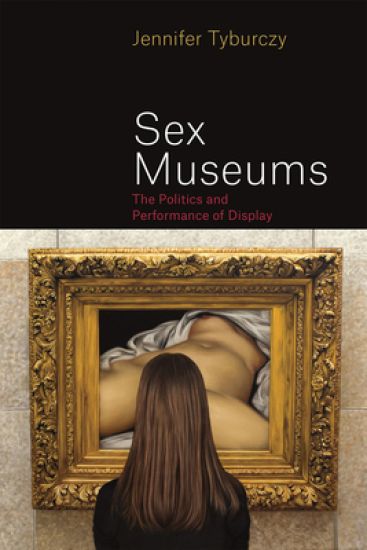
Sex Museums

Sex Museums

Jennifer Tyburczy

University of Chicago Press
2016
sidottu
All museums are sex museums. In Sex Museums, Jennifer Tyburczy takes a hard look at the formation of Western sexuality-particularly how categories of sexual normalcy and perversity are formed-and asks what role museums have played in using display as a technique for disciplining sexuality. Most museum exhibits, she argues, assume that white, patriarchal heterosexuality and traditional structures of intimacy, gender, and race represent national sexual culture for their visitors. Sex Museums illuminates the history of such heteronormativity at most museums and proposes alternative approaches for the future of public display projects, while also offering the reader curatorial tactics-what she calls queer curatorship-for exhibiting diverse sexualities in the twenty-first century. Tyburczy shows museums to be sites of culture-war theatrics, where dramatic civic struggles over how sex relates to public space, genealogies of taste and beauty, and performances of sexual identity are staged. Delving into the history of erotic artifacts, she analyzes how museums have historically approached the collection and display of the material culture of sex, which poses complex moral, political, and logistical dilemmas for the Western museum. Sex Museums unpacks the history of the museum and its intersections with the history of sexuality to argue that the Western museum context-from its inception to the present-marks a pivotal site in the construction of modern sexual subjectivity.
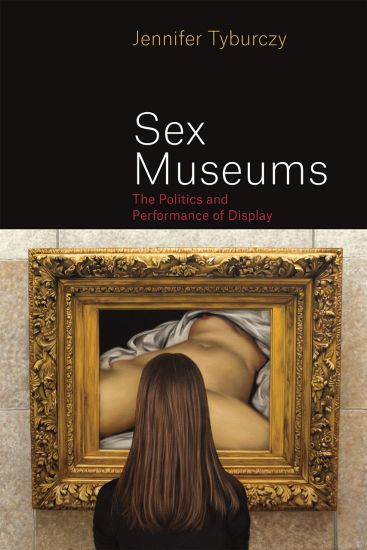
Sex Museums

Sex Museums

Jennifer Tyburczy

University of Chicago Press
2016
nidottu
All museums are sex museums. In Sex Museums, Jennifer Tyburczy takes a hard look at the formation of Western sexuality-particularly how categories of sexual normalcy and perversity are formed-and asks what role museums have played in using display as a technique for disciplining sexuality. Most museum exhibits, she argues, assume that white, patriarchal heterosexuality and traditional structures of intimacy, gender, and race represent national sexual culture for their visitors. Sex Museums illuminates the history of such heteronormativity at most museums and proposes alternative approaches for the future of public display projects, while also offering the reader curatorial tactics-what she calls queer curatorship-for exhibiting diverse sexualities in the twenty-first century. Tyburczy shows museums to be sites of culture-war theatrics, where dramatic civic struggles over how sex relates to public space, genealogies of taste and beauty, and performances of sexual identity are staged. Delving into the history of erotic artifacts, she analyzes how museums have historically approached the collection and display of the material culture of sex, which poses complex moral, political, and logistical dilemmas for the Western museum. Sex Museums unpacks the history of the museum and its intersections with the history of sexuality to argue that the Western museum context-from its inception to the present-marks a pivotal site in the construction of modern sexual subjectivity.
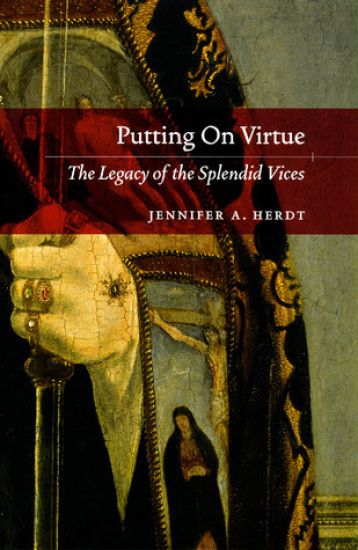
Putting On Virtue

Putting On Virtue

Jennifer A. Herdt

University of Chicago Press
2012
nidottu
Augustine famously claimed that the virtues of pagan Rome were nothing more than splendid vices. This critique reinvented itself as a suspicion of acquired virtue as such, and true Christian virtue has, ever since, been set against a false, hypocritical virtue alleged merely to conceal pride. "Putting On Virtue" reveals how a distrust of learned and habituated virtue shaped both early modern Christian moral reflection and secular forms of ethical thought. Jennifer A. Herdt develops her claims through an argument of broad historical sweep, which brings together the Aristotelian tradition, as taken up by Thomas Aquinas, with the early modern thinkers who shaped modern liberalism. In chapters on Luther, Bunyan, the Jansenists, Mandeville, Hume, Rousseau, and Kant, she argues that efforts to make a radical distinction between true Christian virtue and its tainted imitations actually created an autonomous natural ethics separate from Christianity. This secular value system valorized pride and authenticity, while rendering graced human agency less meaningful. Ultimately, "Putting On Virtue" traces a path from suspicion of virtue to its secular inversion, from confession of dependence to assertion of independence.
Putting On Virtue

Putting On Virtue

Jennifer A. Herdt

University of Chicago Press
2008
sidottu
Augustine famously claimed that the virtues of pagan Rome were nothing more than splendid vices. This critique has reinvented itself as a suspicion of acquired virtue as such, and true Christian virtue has, ever since, been set against a false, hypocritical virtue alleged merely to conceal pride. "Putting On Virtue" reveals how a distrust of learned and habituated virtue shaped both early modern Christian moral reflection and secular forms of ethical thought.Jennifer A. Herdt develops her claims through an argument of broad historical sweep, which brings together the Aristotelian tradition as taken up by Thomas Aquinas with the early modern thinkers who shaped modern liberalism. In chapters on Luther, Bunyan, the Jansenists, Mandeville, Hume, Rousseau, and Kant, she argues that efforts to guard a radical distinction between true Christian virtue and its tainted imitations, ironically, fostered the emergence of an autonomous natural ethics that valorized pride and authenticity, while rendering graced human agency increasingly unintelligible. Ultimately, "Putting On Virtue" traces a path from suspicion of virtue to its secular inversion, from confession of dependence to assertion of independence.
Seven Shots

Seven Shots

Jennifer C. Hunt

University of Chicago Press
2010
sidottu
On July 31, 1997, a six-man Emergency Service team from the NYPD raided a terrorist cell in Brooklyn - and thus narrowly prevented a devastating suicide bombing of the New York subway. "Seven Shots" tells the dramatic story of that raid, the painstaking police work that went into it, and its unexpected aftermath, which drew the officers involved into a long-standing conflict with other rank-and-file police and publicity-hungry top brass. Drawing on her own experience working in the NYPD and a wide network of police contacts, Jennifer C. Hunt tracks the lives of three officers on the Emergency Service team and two bomb technicians from the day of the raid through their struggles with their superiors - which began when they balked at being used as political props and escalated to arguments over tactics, training, and promotion - on to 9/11, when they once again found themselves risking their lives on the front lines of the battle against terrorism. Throughout her fast-paced narrative, she maintains a strikingly fine-grained, street-level view, allowing us to understand the cops on their own terms - and often in their own words. The result is a compelling insider's picture of the world of elite police work, from precincts and squad cars to physical dangers and family strain. As gripping as an Ed McBain novel - and just as steeped in New York cop culture - "Seven Shots" takes readers on an unforgettable journey behind the shield and into the hearts of the city's sentinels.
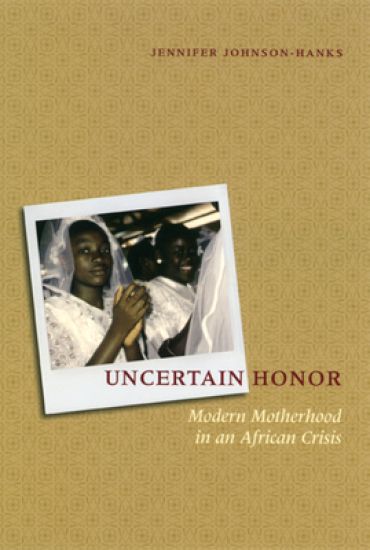
Uncertain Honor

Uncertain Honor

Jennifer Johnson-Hanks

University of Chicago Press
2005
sidottu
In most countries, educated women have fewer children and have them later than uneducated women. In "Uncertain Honor", Jennifer Johnson-Hanks argues that this demographic fact has social causes by offering a rich case study of contraception, abortion, and informal adoption among educated, ethnic Beti women in southern Cameroon. Combining insights from demography and cultural anthropology, Johnson-Hanks argues that Beti women delay motherhood as part of a broader attempt to assert a modern form of honor only recently made possible by formal education, Catholicism, and economic change. Through itinerant school careers and manipulations of marriage, educated Beti women now manage their status as mothers in order to coordinate major life events in the face of social and economic uncertainty. Carefully researched and clearly written, "Uncertain Honor" offers an intimate look at the lives of African women trying to reconcile motherhood with new professional roles in a context of dramatic social change.
Uncertain Honor

Uncertain Honor

Jennifer Johnson-Hanks

University of Chicago Press
2005
nidottu
In most countries, educated women have fewer children and have them later than uneducated women. In "Uncertain Honor", Jennifer Johnson-Hanks argues that this demographic fact has social causes by offering a rich case study of contraception, abortion, and informal adoption among educated, ethnic Beti women in southern Cameroon. Combining insights from demography and cultural anthropology, Johnson-Hanks argues that Beti women delay motherhood as part of a broader attempt to assert a modern form of honor only recently made possible by formal education, Catholicism, and economic change. Through itinerant school careers and manipulations of marriage, educated Beti women now manage their status as mothers in order to coordinate major life events in the face of social and economic uncertainty. Carefully researched and clearly written, "Uncertain Honor" offers an intimate look at the lives of African women trying to reconcile motherhood with new professional roles in a context of dramatic social change.